


British businesses should "take a risk on Libya" and get more involved in the country, Libya's ambassador to the UK has told The National.
Salah Mrehil said elections are key to resolving the country's long-standing political problems, but he is hopeful Britain can play a major part in his country's future.
“We would love the UK’s role to be bigger and I always tell our friends to get more involved,” said Mr Mrehil, in London. “At the end of the day, if you don’t take the risk, you don’t get the profit.”
With an abundance of oil reserves, an extensive Mediterranean coastline and a vastly underdeveloped infrastructure, the rewards are very promising. But more than a decade on from the 2011 revolution, whether they can be reaped remains a matter for Libya's multifarious fighting politicians to resolve.
Bringing British businesses to Libya
In early November, the Libyan British Business Council will be hosting a business delegation to Tripoli to meet Libyan business leaders from the state and private sectors.
Supported by Caroline Hurndall, the British Ambassador to Libya, and the UK Department for International Trade, the trip — the first of its kind in several years — will bring together Libyan and British businesses to address requirements across the economy.
With a focus on oil and gas, banking, infrastructure and power, at least 30 British businesspeople are set to meet leaders of Libya’s key industries, including the National Oil Corporation and the Renewable Energy Authority of Libya.
Sitting on Africa’s largest proven reserves of oil, Libya’s fractious politics have come at a high cost. The country’s oil production resumed in July after a three-month hiatus following the blockade of ports and fields by rival armed groups in eastern Libya.
The country’s current output stands at about 1.2 million barrels a day, a promising development but still well below Libya’s peak of 3 million in the 1980s.
The hope is that British businesses can be wooed into investing in the country’s dilapidated and conflict-wrecked infrastructure, to help Libya reap the benefits of today's high petroleum prices.
“It would help our budget but Libyan oil would also help stabilise the international market,” said Mr Mrehil.
Earlier this year, British oil and gas major BP agreed to resume oil and gas exploration activities in Libya, which were first halted more than a decade ago during the 2011 uprising.
If Libya can find and maintain a peaceful political resolution, the development of gas would be a critical boon for the country’s economic growth, as well for European markets.
Elections 'only way' to peace and prosperity in Libya
Eleven years after the killing of former Libyan leader Muammar Qaddafi on October 20, 2011 brought a gruesome end to the dictator’s 42-year regime, the oil-rich country is far from fulfilling the goals of the revolution that ended his rule.
The demands for freedom and dignity that prompted the Nato-backed popular uprising are only fleeting mirages in Libya’s vast desert terrain, as citizens endure electricity cuts of up to 18 hours a day, rising poverty and worsening security.
Competing governments and militias in a country awash with weapons promise little more than a strained stalemate that could erupt at any time, as in August this year when at least 32 people were killed in clashes in the capital Tripoli.
-
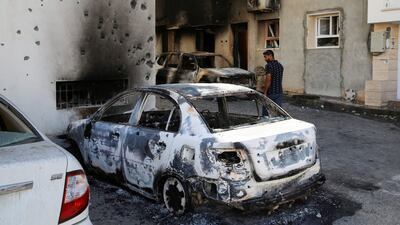
A car burnt during clashes in Tripoli. Reuters -
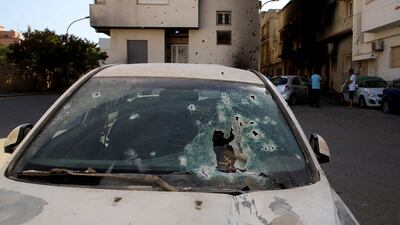
A car's smashed windshield. Reuters -
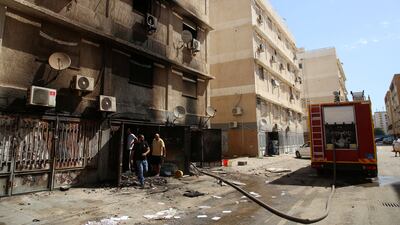
Firefighters put out a fire inside a shop. Reuters -
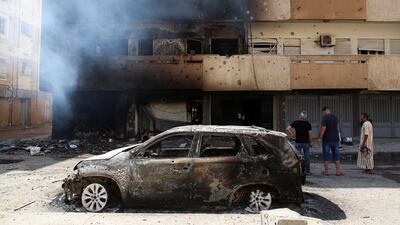
A burning building. Reuters -
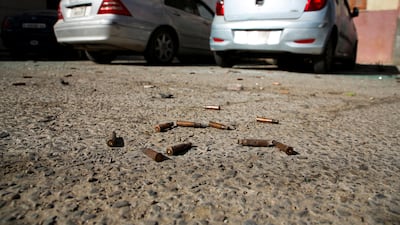
Empty bullets are found on the ground. Reuters -
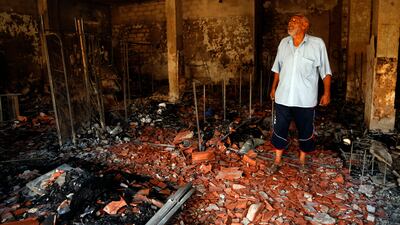
A man surveys the damage from clashes in the Libyan capital of Tripoli. AP -
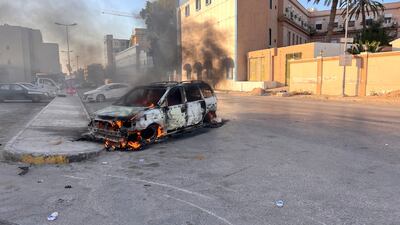
A car burns in the street. Reuters -

Fighters loyal to the head of Libya's Government of National Unity gather in the street. Reuters -
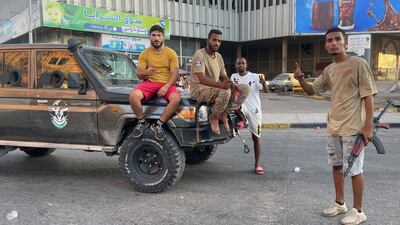
Fighters loyal to the Government of National Unity following clashes between rival Libyan groups. AFP -
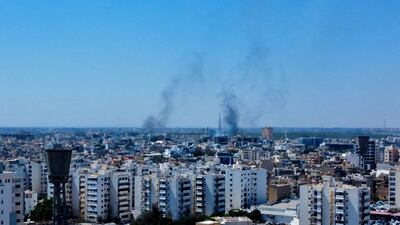
Smoke rises following the fighting. Reuters -
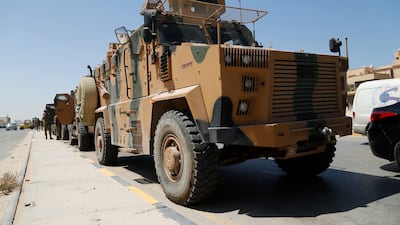
Clashes broke out on Saturday between rival militias, a health official said. AP -
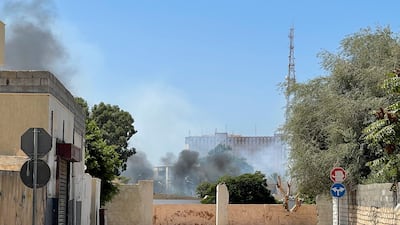
The fighting broke out in various districts of Tripoli, as two rival governments yet again vie for power in the oil-rich but impoverished North African country. AFP -
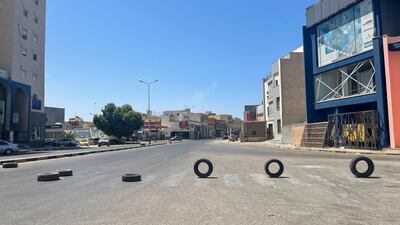
Tyres are used to section off a road in Tripoli. AFP -
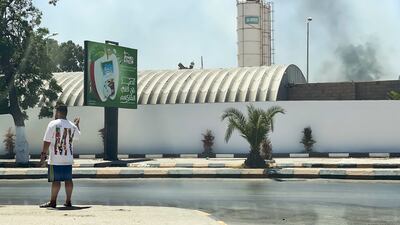
The fighting wounded civilians and raised fears of all-out conflict in a country facing a grave political crisis. AFP -
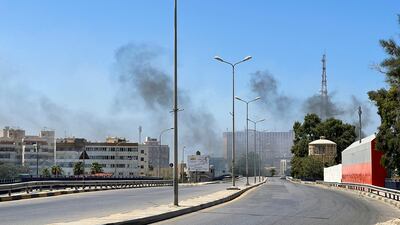
Smoke billows as gunfire rings out in the capital. AFP -
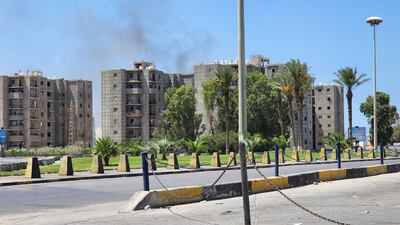
Fighting has left Tripoli completely deserted. AFP -
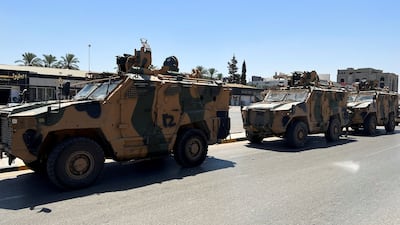
Military vehicles of the 444 Brigade, backing the Government of National Unity patrol the streets. Reuters


Elections — which were meant to take place in December 2021 but were postponed following disagreements over who could run — are seen as the only way out of the impasse, if they can actually get off the ground.
Speaking to The National in his office at the Libyan Embassy in London, Mr Mrehil said Libyans needed their day at the ballot box.
“It is the only way to get us out of the current situation. Libyans are fed up otherwise, we’ve tried everything else — we tried to split the country, we tried to share power, we tried to fight, it’s time for something else,” said the ambassador.
Despite the summer offensive against the Tripoli-based Government of National Accord (GNA), which Mr Mrehil represents, from the rival Libyan National Army (LNA) in the east, the ambassador is “optimistic” that elections will happen soon.

The arrival of UN special representative Abdoulaye Bathily in Libya earlier this month raised hopes.
“I think we are close, very close,” said Mr Mrehil, suggesting ballots will open before the end of 2023.
However, in his first address to the UN Security Council on October 24, Mr Bathily painted a more pessimistic picture.
Describing the situation in Libya as needing “a consensus state re-legitimation process”, he said legislative and presidential elections were “paramount” but that a “political deadlock persists with no clear end in sight to the prolonged stalemate over the executive.”
“Efforts to resolve the remaining outstanding issues related to the constitutional basis for elections do not appear to lead to concrete action by the relevant actors, further delaying prospects for the holding of inclusive, free and fair elections aimed at ending the transition and reinstating the legitimacy of institutions,” Mr Bathily told the council.
After meeting rival leaders across the country, the former Senegalese minister and diplomat said his UN mandate aimed to get the rival leaders to “agree on political, constitutional, legal and security measures to advance preparations for elections as soon as possible in keeping with the aspirations clearly expressed by the Libyan people.”
Can the UK government influence Libya's leaders?
From Saif Al Islam Qaddafi, the former playboy son of the late Qaddafi turned would-be political candidate, to Abdul Hamid Dbeibah, Libya’s current prime minister whose interim leadership was expected to hold until last year’s elections, and Fathi Bashagha, the "other" prime minister elected by Libya’s House of Representatives in the east after the elections were postponed, the question of who should and will stand in elections remains a major stumbling block to them actually taking place.
Senior research fellow and Libya specialist at the Chatham House think tank, Tim Eaton, said the political ping-pong was Libya’s “constant Catch-22”.
“Most of the elites in the top positions have concluded that they'd be better off trying to remain in their positions and negotiate something else, rather than going for an election. So that's been the constant Catch-22," Mr Eaten told The National.
"Everybody will say that the current status quo is not acceptable and that it can't be left like this and that we need an interim administration ahead of elections, but then everybody will focus on dominating the interim administration and the question of the elections just gets kicked down the road. I think that's the puzzle for the international community,” he said.
On the question of who should put their hat in any election ring and who should step aside, Mr Mrehil is typically diplomatic, calling on “everyone to be flexible for the benefit of the country” and to “compromise” — though he did not rule out Mr Dbeibah putting himself forward as a candidate “if the constitution allows it.”
However, the ambassador’s diplomatic efforts are focused on pushing the UK to play a critical part in Libya’s future, urging the current penholder at the Security Council to “exert its pressure and influence” to achieve elections.
“If the [UK Foreign, Commonwealth & Development Office] pushes for elections then I will have done my job,” says Mr Mrehil. “They are very encouraging, they are very keen for that and I would love the UK’s role to be greater.”

