



King Charles III has personally thanked people who helped to organise Queen Elizabeth II’s journey from Balmoral after her death.
The king and Queen Consort Camilla visited the Victoria and Albert Halls in Ballater, near the Scottish home of the royal family, where they attended a reception on Tuesday to thank the community.
They met some of the 550 people who supported the operation and helped to organise events.
Guests included council workers, civic leaders and pupils from Ballater's Crathie School.
Officers from Police Scotland, as well as the fire and ambulance services, were also in attendance.
The king and queen consort are also expected to see the tractors that formed a tribute to the late queen at Banchory, and meet the horses and riders that lined the route of the cortege as it travelled south from Balmoral, through Aberdeenshire, to Edinburgh on its six-hour journey.
Queen Elizabeth II's funeral: extraordinary images from an extraordinary day — in pictures
-
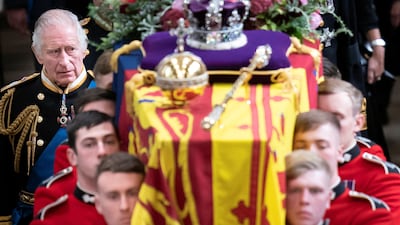
King Charles III follows behind the coffin of Queen Elizabeth II, draped in the Royal Standard with the Imperial State Crown and the Sovereign's orb and sceptre on top, as it is carried out of Westminster Abbey after her state funeral. Reuters -
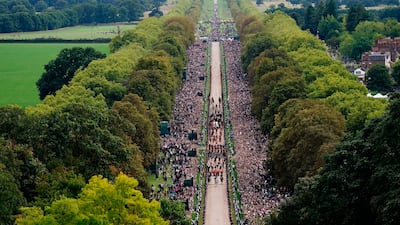
The ceremonial procession of the coffin of Queen Elizabeth travels down the Long Walk as it arrives at Windsor Castle for the Committal Service at St George's Chapel. AP -
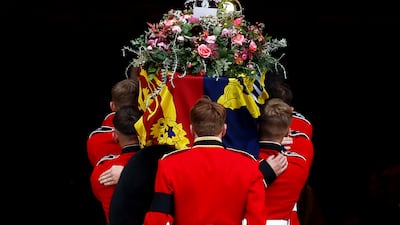
Pall bearers carry the coffin into St. George's Chapel, in Windsor. AP -
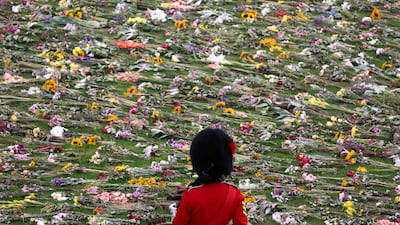
A Royal Guard stands by floral tributes at Windsor Castle. AFP -

The coffin of Queen Elizabeth is pulled on a gun carriage by Royal Navy sailors to Westminster Abbey. Getty Images -
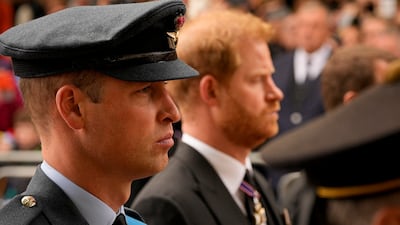
Prince William and Prince Harry follow the coffin of the queen after her state funeral in Westminster Abbey. AP -

Emma, the monarch's fell pony, stands as Queen Elizabeth's coffin passes at Windsor Castle. PA -

Members of the royal household stand with Queen Elizabeth's Corgis, Muick and Sandy, as they await the funeral cortege at St. George's Chapel, Windsor. AP -
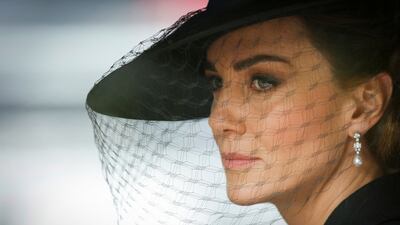
Catherine, Princess of Wales, attends the state funeral service in London. AFP -
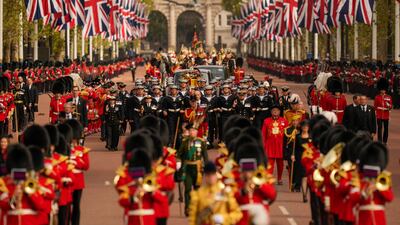
The coffin of Queen Elizabeth is pulled along The Mall following her funeral service in Westminster Abbey. AP -
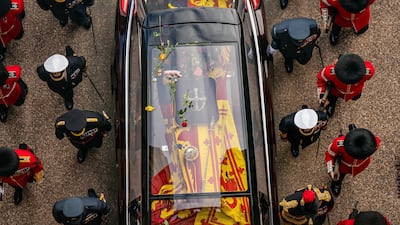
Flowers thrown by the public lie on the hearse carrying the coffin as it arrives at Windsor Castle. AP -

King Charles at the state funeral in London. Reuters -
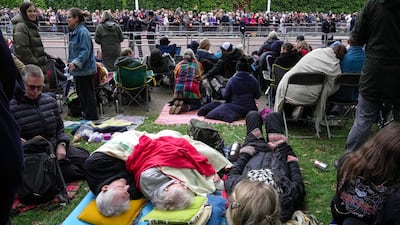
People sleep before the funeral service at Westminster Abbey. AFP -

A giant screen honouring the late queen at Piccadilly Circus in London. EPA -
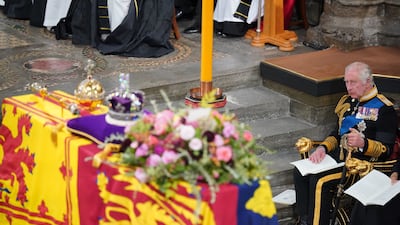
King Charles looks towards the coffin of his mother at Westminster Abbey. Getty Images -
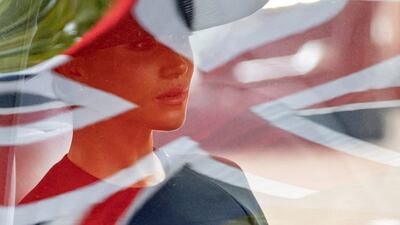
Meghan, Duchess of Sussex, sitting in a car as a British flag is reflected in its window. AFP -
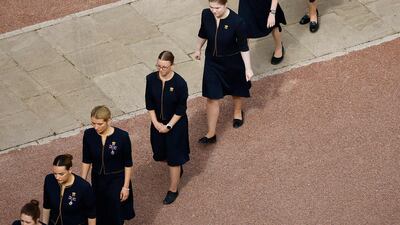
Buckingham Palace household staff return through the gates of the palace after paying their respects. AFP -
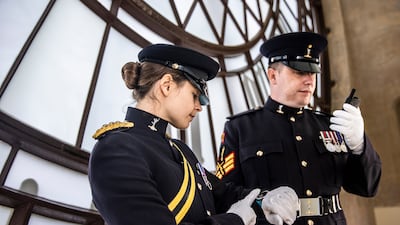
Staff Sergeant Yeoman Darren Fowler, right, and Captain Rebecca Cooper from the Royal Signals at the Elizabeth Tower, checking that Big Ben Chimes in time with gunfire during the state funeral procession. EPA -
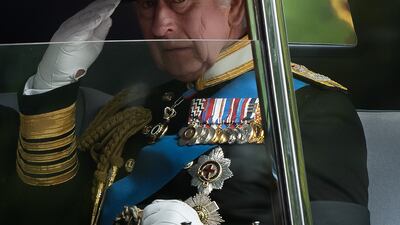
King Charles salutes as he is driven past Wellington Arch in London. Getty Images -

The London skyline is seen as the procession moves down The Mall. Getty Images -
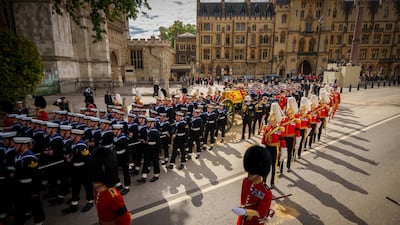
The coffin of the queen is pulled on a gun carriage by Royal Navy sailors from Westminster Abbey. Getty Images -
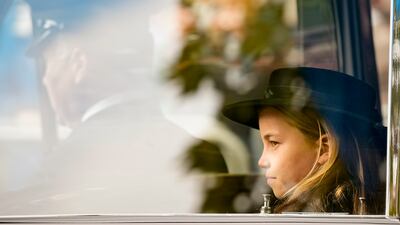
Princess Charlotte arrives by car ahead of the funeral in central London. AP -
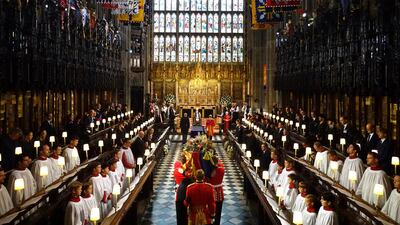
The coffin is carried into St George's Chapel for the Committal Service, in Windsor Castle. AP -

A woman cries in London's Hyde Park while watching the funeral service. AP -
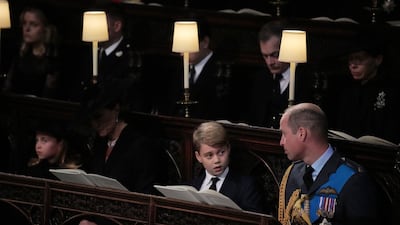
Prince George looks towards his father Prince William during the Committal Service at St George's Chapel. Getty Images -
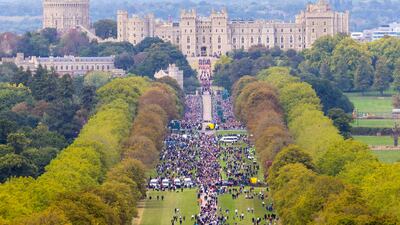
Queen Elizabeth's coffin is driven along the Long Walk towards Windsor Castle. Reuters -
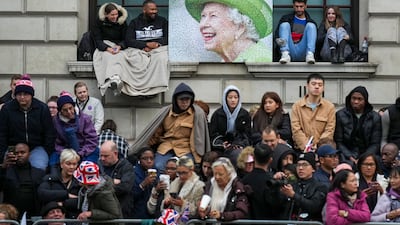
People waiting along the route that the coffin will be pulled on a gun carriage in central London. AP -

King Charles and the Queen Consort Camilla follow the coffin at St George's Chapel. AP -

The Royal State Hearse arrives at Windsor Castle. Getty Images -
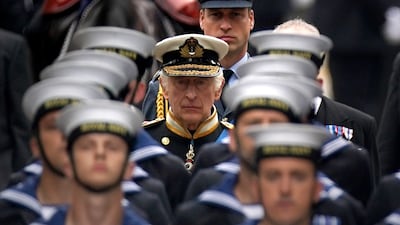
King Charles follows the State Gun Carriage as it carries the coffin at Westminster Abbey. PA -
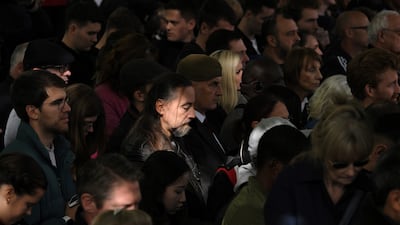
Members of the public gather to see the coffin as it travels from Westminster Abbey to Wellington Arch in London. Getty Images -
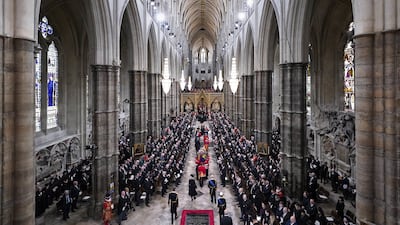
King Charles and members of the royal family follow behind the coffin as it is carried into Westminster Abbey. PA -
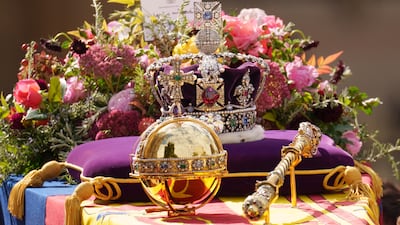
The Imperial State Crown resting on the coffin. Getty Images -
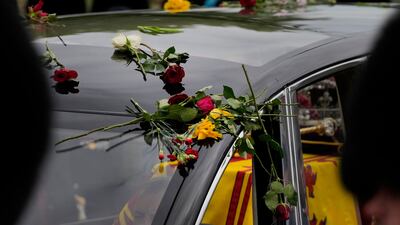
The hearse transporting the coffin is covered in flowers thrown by the public. AFP -
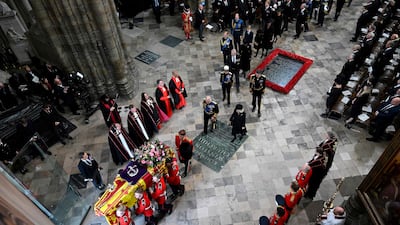
The Bearer Party of The Queen's Company, 1st Battalion Grenadier Guards carries the coffin from Westminster Abbey. AFP


People came out in cities and in rural areas, where farmers parked their tractors side by side and horse riders gathered to pay their respects.
About 25,000 people lined the streets across the county as the queen's cortege made its way to the Scottish capital last month, where she was laid to rest at St Giles' Cathedral.
The queen’s children, led by the current monarch, walked in procession behind the queen’s coffin as it made its way to the cathedral.
The queen died on September 8 at her Balmoral estate, with Princess Anne, her only daughter, by her side.
Members of her family — Prince William, Prince Andrew, Prince Edward and his wife Sophie, the Countess of Wessex — were en route to see her at the time.
Procession of Queen Elizabeth II's coffin through Edinburgh — in pictures
-
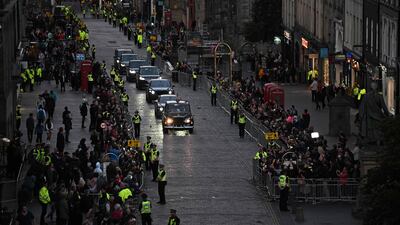
Members of the royal family arrive to attend a vigil at St Giles' Cathedral, in Edinburgh, on Monday for Queen Elizabeth II. AFP -
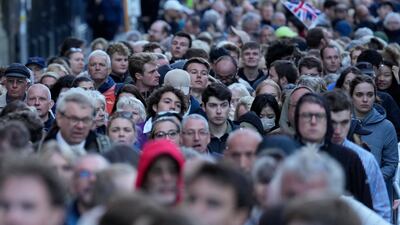
People queue to enter St Giles' Cathedral where Queen Elizabeth's coffin arrived earlier on Monday. It will rest there for 24 hours to enable the people of Scotland to pay their last respects. AP -
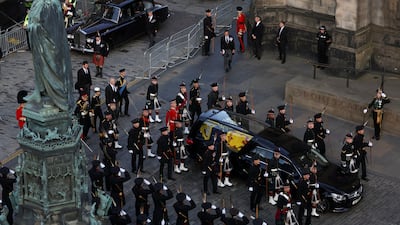
The hearse carrying the coffin of Queen Elizabeth II arrives at St Giles' Cathedral, Edinburgh, for a service of prayer and reflection. -
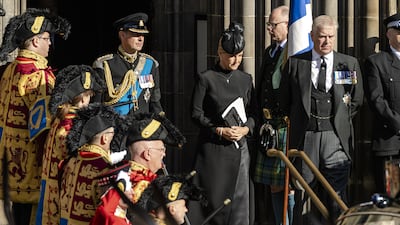
The Earl and Countess of Wessex and the Duke of York leave St Giles' Cathedral after the service of prayer and reflection for the queen's life on Monday. -

The Princess Royal, her husband Vice Admiral Timothy Laurence, King Charles III and the Queen Consort leave St Giles' Cathedral after the service of prayer and reflection for Queen Elizabeth II's life. -

People attend the procession of Queen Elizabeth II's coffin, from the Palace of Holyroodhouse to St Giles' Cathedral, on the Royal Mile in Edinburgh, Scotland, on Monday. AP -
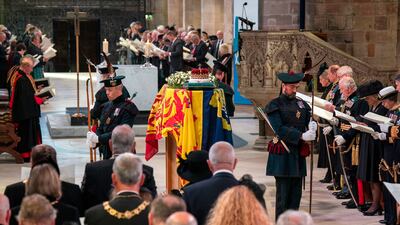
The Crown of Scotland sits on the coffin of Queen Elizabeth II inside St Giles' Cathedral in Edinburgh. AFP -
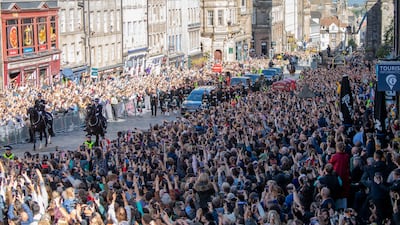
King Charles, Princess Royal Anne, Prince Andrew, Duke of York, Prince Edward, Earl of Wessex, and Vice Admiral Timothy Laurence walk behind the hearse as it moves along the Royal Mile from the Palace of Holyroodhouse to St Giles' Cathedral in Edinburgh, Scotland. Getty -
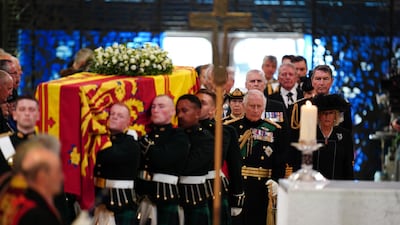
King Charles III follows Queen Elizabeth II's coffin as it enters the cathedral for a service of prayer and reflection at St Giles' Cathedral, Edinburgh. PA -
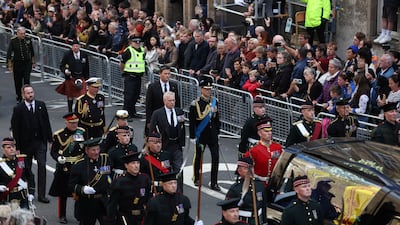
King Charles, Princess Anne, Prince Andrew and Prince Edward follow the hearse carrying the coffin of their mother, Queen Elizabeth, on the Royal Mile in Edinburgh. Reuters -
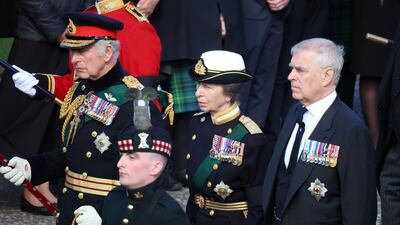
King Charles, Princess Anne and Prince Andrew walk behind the hearse. Reuters -
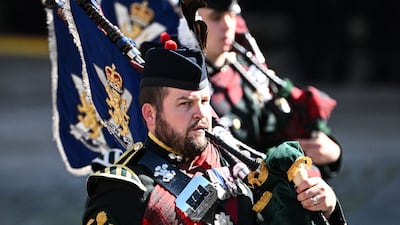
The Royal Company of Archers, the King's Bodyguard for Scotland, arrive at St Giles' Cathedral in Edinburgh. AFP -
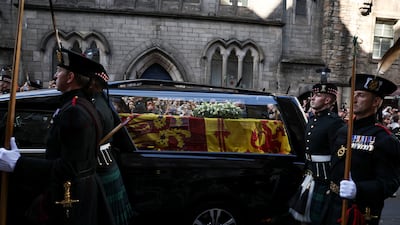
The hearse carrying the coffin of the queen travels slowly on the Royal Mile in Edinburgh. Reuters -
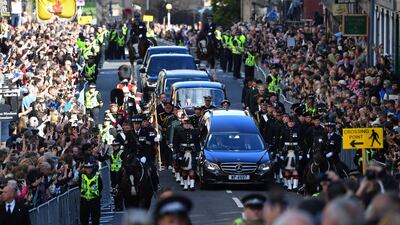
Members of the public gather to watch the procession, from the Palace of Holyroodhouse to St Giles Cathedral, on the Royal Mile. AFP -
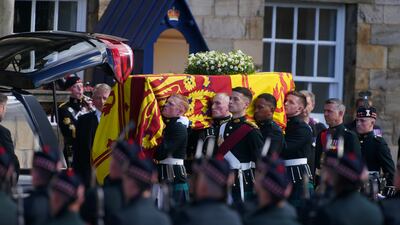
Royal guards carry Queen Elizabeth's coffin at the start of the procession. PA -

Royal archers outside St. Giles' Cathedral. Getty -
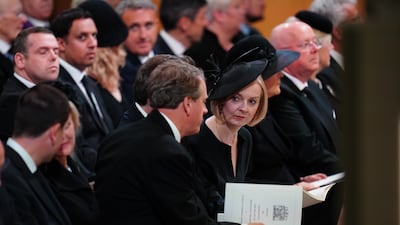
British Prime Minister Liz Truss attends a Service of Prayer and Reflection for the Life of Queen Elizabeth at St Giles' Cathedral. PA -
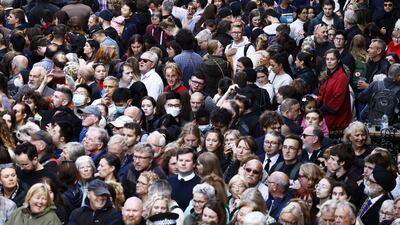
Crowds gather near Mercat Cross ahead of the procession in Edinburgh. PA -
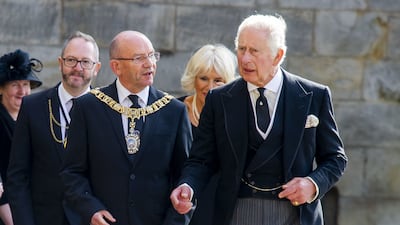
King Charles with Lord Provost of Edinburgh Robert Aldridge at the Ceremony of the Keys at the Palace of Holyroodhouse, Edinburgh. PA -
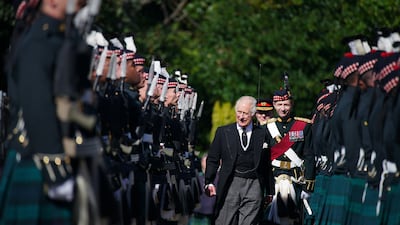
King Charles inspects the Guard of Honour as he arrives for the Ceremony of the Keys at the Palace of Holyroodhouse. Getty -
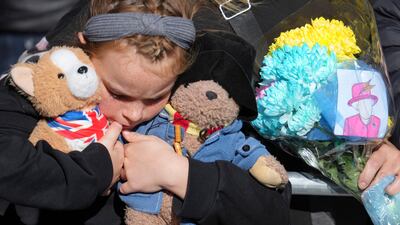
A young girl holds a Paddington bear and a Corgi dog stuffed toys while waiting to watch the procession. Getty -
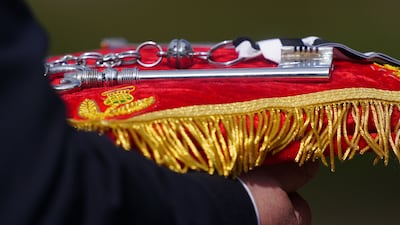
The Keys of the City of Edinburgh, to be offered to King Charles, during the Ceremony of the Keys at the Palace of Holyroodhouse. AFP -
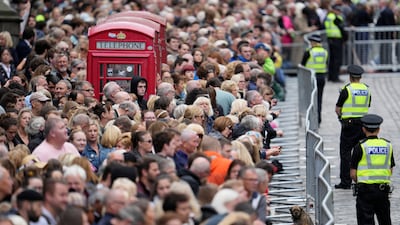
Crowds gather to watch the procession in Edinburgh. AP -
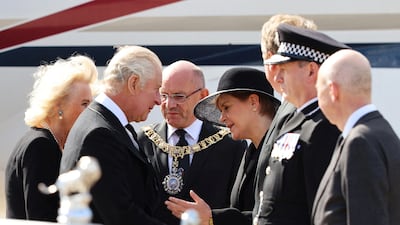
King Charles talks with Scotland's First Minister Nicola Sturgeon as he arrives at Edinburgh Airport. Reuters -
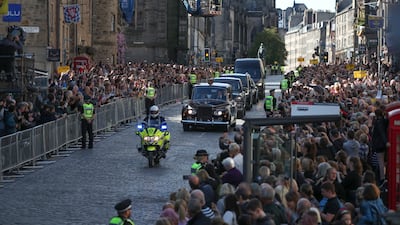
A convoy of cars with King Charles heads to Holyroodhouse. AP -
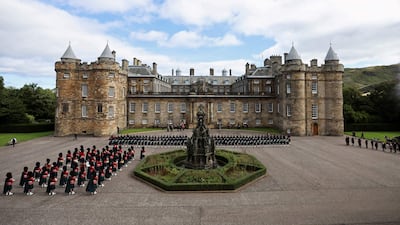
The honour guard outside the Palace of Holyroodhouse. AFP -

Police officers keep guard ahead of the arrival King Charles in Edinburgh. Reuters


The queen had a deep connection to Scotland, which she visited each summer, and she referred to the 30,000-hectare Balmoral estate as her “second home”.
She carried out her first royal duties in Scotland in Aberdeen in 1944 when she was only a teenager and yet to ascend to the throne.
She completed her final duties two days before her death, inviting new Prime Minister Liz Truss to form a government.
She died of old age, according to her death certificate.

