

Heatwaves could become so extreme in the coming decades that human life will be unsustainable in some world regions, international humanitarian groups warned on Monday.
Heatwaves are forecast to “exceed human physiological and social limits” in the sub-Sahara and the Horn of Africa, the United Nations and the Red Cross said.
They also warned that South and South-west Asia face similar extreme events triggering “large-scale suffering and loss of life”.
“As the climate crisis goes unchecked, extreme weather events, such as heatwaves and floods, are hitting the most vulnerable people the hardest,” said UN humanitarian chief Martin Griffiths.
“The humanitarian system is not equipped to handle crisis of this scale on our own.”
Heatwaves in Somalia and Pakistan this year hint at a future of deadlier, more frequent and more intense heat-related emergencies, the groups said.
-
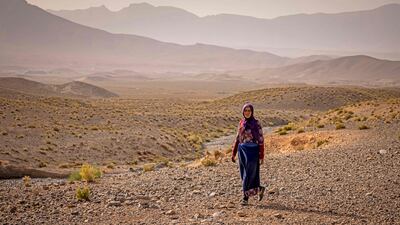
Amazigh Ida Ouchaali at an encampment near the village of Amellagou, where some of the last people to keep Morocco's nomadic traditions reside. They say their ancient lifestyle has become impossible to sustain as climate change brings ever more intense droughts. All photos: AFP -
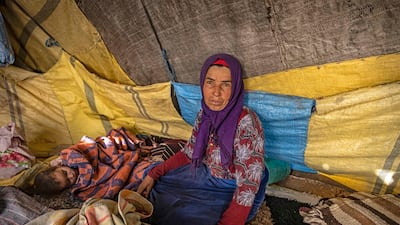
Amazigh Ida Ouchaali belongs to a community of about 25,000 people at the last census in 2014. Its numbers are down by two-thirds in a decade. -
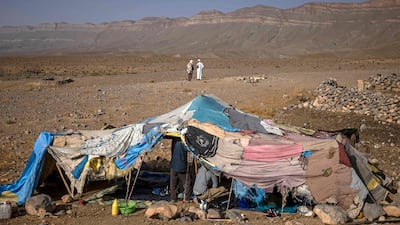
Amazigh tents near the village of Amellagou in Morocco. Ida Ouchaali's tribe spent centuries roaming the country to find food for their animals, but their way of life is steadily disappearing. Ms Ouchaali says she is 'exhausted' by her fight for survival. -

Amazigh women in Amellagou carry out their daily chores. -
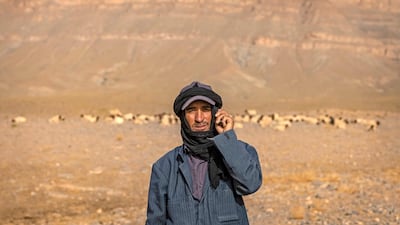
An Amazigh man poses for a picture next to a herd of sheep near the village of Amellagou. Water for livestock is hard to find and the harsh climate threatens his way of life. -
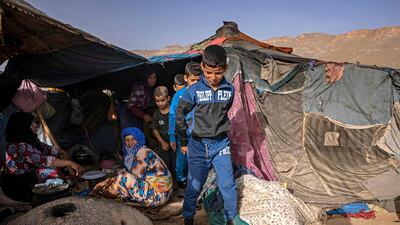
Amazigh families at Amellagou worry about the future of their children. One teenager says the young want to 'turn the page on nomadism'. -
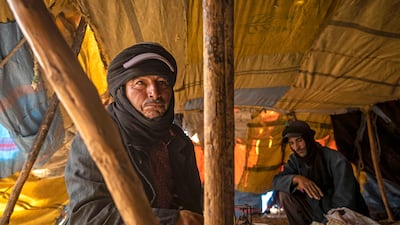
Amazigh Moha Ouchaali is in his 50s. 'Everything has changed,' he says. 'I don't recognise myself anymore in the world of today.' -
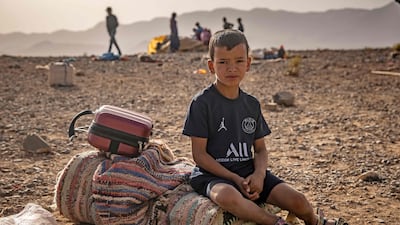
An Amazigh boy and his belongings in the Moroccan desert. -
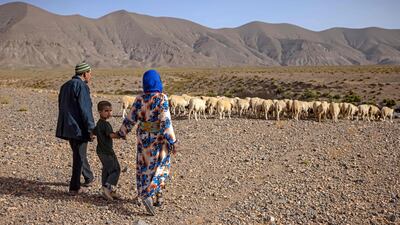
Children of Amazigh families grow up in a shrinking community. At one time there were nearly 500 tents around the village of Amellagou but now there are less than a tenth of that. -

Each generation of Amazigh face social and economic changes that make their lives more difficult. Laws passed by Morocco that would defend the nomadic way are simply ignored by other people, they say. -
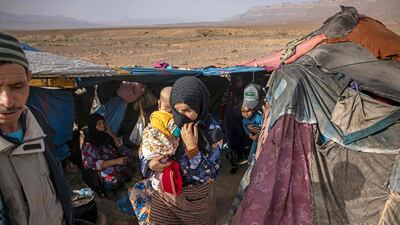
Amazigh sheltering at Amellagou say they recall a time when nomadic people were welcomed by settled communities but such hospitality is largely gone. -
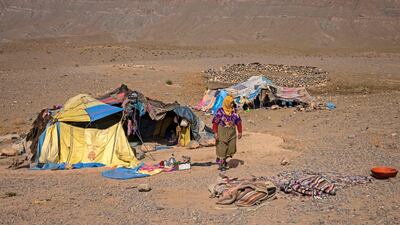
Driss Skounti says he has little hope for the future. 'Nomadic life has an identity and a tradition steeped in history, but is doomed to disappear within 10 years.'


“We don't want to dramatise it, but clearly the data shows that it does lead towards a very bleak future,” said Red Cross secretary general Jagan Chapagain.
The UN's Office for the Co-ordination of Humanitarian Affairs (Ocha) and the International Federation of Red Cross and Red Crescent Societies (IFRC) released the report in advance of next month's Cop27 climate change summit in Egypt.
“There are clear limits beyond which people exposed to extreme heat and humidity cannot survive,” the report said.
“There are also likely to be levels of extreme heat beyond which societies may find it practically impossible to deliver effective adaptation for all.
“On current trajectories, heatwaves could meet and exceed these physiological and social limits in the coming decades, including in regions such as the sub-Sahara and South and South-west Asia.”
They said aggressive steps needed to be taken immediately to avert potentially recurrent heat disasters, and avoid “large-scale suffering and loss of life, population movements and further entrenched inequality”.
The report said extreme heat was a “silent killer”, claiming thousands of lives each year as the deadliest weather-related hazard — and the dangers were set to grow at an “alarming rate” due to climate change.
According to a study cited by the report, the number of poor people living in extreme heat conditions in urban areas will jump by 700 per cent by 2050, particularly in West Africa and South-east Asia.
“Projected future death rates from extreme heat are staggeringly high — comparable in magnitude by the end of the century to all cancers or all infectious diseases — and staggeringly unequal,” the report said.
Agricultural workers, children, the elderly and pregnant and breastfeeding women are at higher risk of illness and death, the report claimed.
OCHA and IFRC suggested steps to help combat the effect of extreme heatwaves, including providing early information to help people and authorities react in time, finding new ways of financing local-level action, and testing more “thermally appropriate” emergency shelter and “cooling centres”.

