

As so often through the decades of her long reign, it was her quiet dignity and obvious sincerity that captured the nation’s mood and its attention when the queen gave her coronavirus broadcast on the BBC in April 2020.
Sympathising with her subjects about the physical and emotional cost of the pandemic, she referenced her first broadcast, made in 1940 with her younger sister Princess Margaret, to the evacuated children of Britain about the pain of separation caused by war.
As one of the dwindling number of people who heard the familiar strains of We’ll Meet Again, sung for the first time by Vera Lynn in 1939, the words with which she ended her speech had added poignancy. The certainty and delicate emphasis as she said “we will meet again”, gave hope and heart to many.
12 portraits of Queen Elizabeth II - in pictures
No one doubted her girlish voice either when she said in 1947 in a speech to the Commonwealth on her 21st birthday, and still Princess Elizabeth: “I declare before you all that my whole life, whether it be long or short, shall be devoted to your service and the service of our great imperial family to which we all belong.”
The queen’s old-fashioned values were such that no one ever had to doubt her. Shakespeare’s “My word is my bond” might have been written during the time of her namesake and fellow queen, Elizabeth I, but it is all the better applied to Elizabeth II.
-
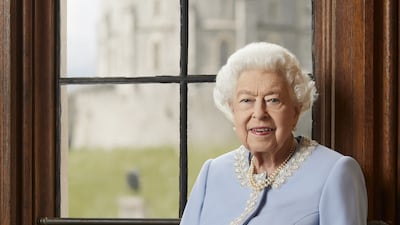
The most recent official portrait of Queen Elizabeth II, at Windsor Castle, was for her platinum jubilee. The image is part of the Platinum Jubilee: The Queen's Coronation exhibition, on view at Windsor Castle until September 26. Photo: Ranald Mackechnie -
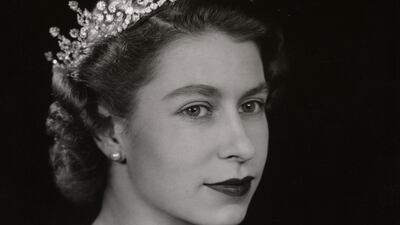
This portrait, issued by the Royal Collection Trust, was taken by photographer Dorothy Wilding in 1952, and is featured in the Platinum Jubilee: The Queen's Accession exhibition, on view at Buckingham Palace until October 2. Photo: Royal Collection Trust -

This portrait of Queen Elizabeth by British artist Lucian Freud was finished in 2001 and caused an outcry. The image is a part of the Platinum Jubilee: The Queen's Coronation exhibition. Reuters -
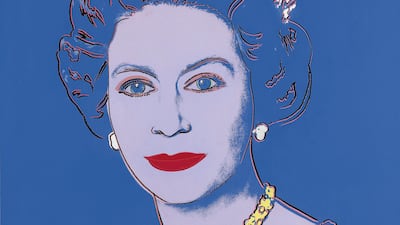
The monarch was featured in Andy Warhol's 'Reigning Queens' series of portraits created in 1985. The pop art print, although not officially commissioned, was later brought into the Royal Collection. The image is a part of Platinum Jubilee: The Queen's Coronation exhibition. Photo: Royal Collection Trust -
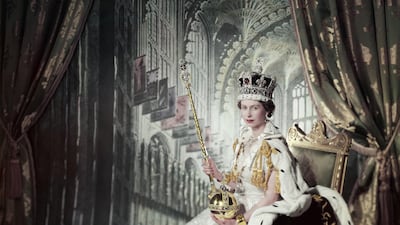
This image of Queen Elizabeth II on her Coronation Day on June 2, 1953, was taken by royal photographer Cecil Beaton, and remains one of the most famous portraits of the monarch. The image is a part of the Platinum Jubilee: The Queen's Coronation exhibition. Photo: Royal Collection Trust -
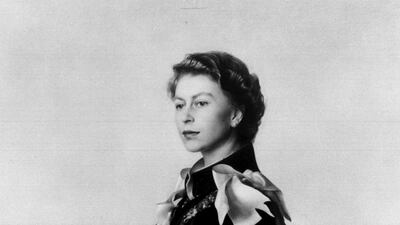
The portrait of Queen Elizabeth II painted by Pietro Annigoni, was finished in 1956 and commissioned by the Fishmongers Company in the City of London. The image is a part of the Platinum Jubilee: The Queen's Coronation exhibition. PA -
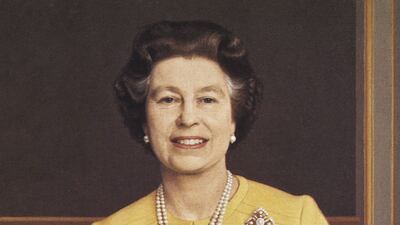
Michael Leonard's portrait of Queen Elizabeth II was painted for her 60th birthday, and commissioned by 'Reader's Digest'. The image is a part of the Platinum Jubilee: The Queen's Coronation exhibition. Photo: Reader's Digest / Shutterstock -

Nigerian artist Chinwe Chukwuogo-Roy painted this portrait of Queen Elizabeth II, which was commissioned by the Commonwealth to mark her 2002 golden jubilee on March 10, 2002. The image is a part of the Platinum Jubilee: The Queen's Coronation exhibition. Photo: Royal Collection Trust -
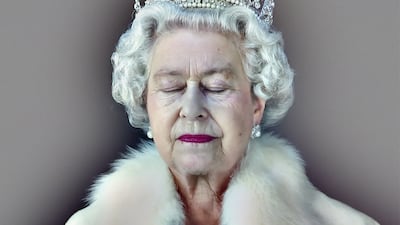
Artist Chris Levine made headlines with his controversial portrait titled 'Lightness of Being', which shows the queen with her eyes closed. The image is a part of the Platinum Jubilee: The Queen's Coronation exhibition. Photo: Royal Collection Trust -
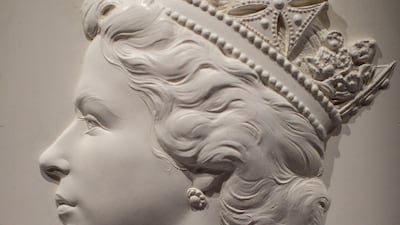
The 1963 plaster cast known as the 'Dressed Head' by Arnold Machin, provided the portrait of Queen Elizabeth II to be used on British stamps from 1967. The image is a part of the Platinum Jubilee: The Queen's Coronation exhibition. Getty Images -
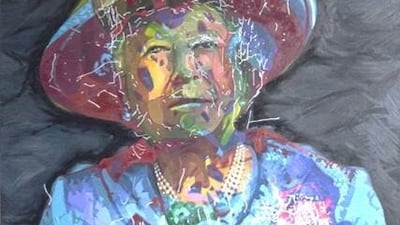
This recent portrait of the monarch titled 'Algorithm Queen', was painted by an ultra-realistic humanoid robot artist called Ai-Da Robot for the platinum jubilee. -
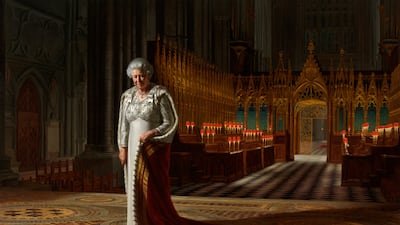
Ralph Heimans's portrait of Queen Elizabeth II was commissioned to mark her 60 years on the throne and hung in the Chapter House of Westminster Abbey. The image is a part of the Platinum Jubilee: The Queen's Coronation exhibition. Photo: Dean and Chapter of Westminster / AFP


She was such an institution that it’s easy to forget she wasn’t supposed to have become queen at all. Born in 1926, she was the daughter of King George V’s second son, and had little expectation of succeeding to the throne until her uncle, King Edward VIII, abdicated in 1936 to marry the divorced American socialite Wallis Simpson.
United Kingdom: country in mourning as Queen Elizabeth dies - in pictures
-

A well-wisher kisses the hand of King Charles III outside Buckingham Palace after the death on Thursday of Queen Elizabeth II. King Charles, who spent much of his 73 years preparing for the role, on Friday planned to meet the prime minister and address a nation grieving the only British monarch most of the world had known. He takes the throne in an era of uncertainty for his country and the monarchy itself. AP -

King Charles III and Queen Consort Camilla arriving at Buckingham Palace, London, after travelling from Balmoral following the death of Queen Elizabeth II on Thursday. PA -

King Charles and the queen consort outside Buckingham Palace. PA -

King Charles and the queen consort view tributes left outside Buckingham Palace, London, after the death of Queen Elizabeth on Thursday. PA -
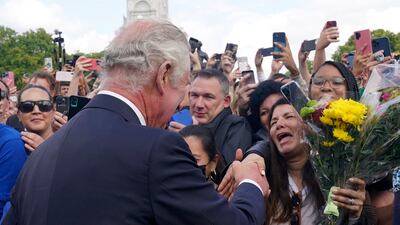
King Charles greets well-wishers outside Buckingham Palace. AP -
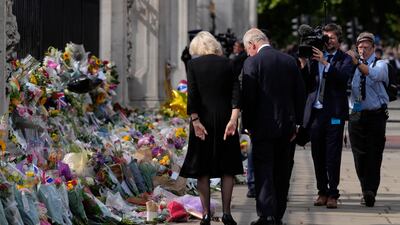
King Charles and the queen consort read messages left by mourners at Buckingham Palace in London. Queen Elizabeth II, Britain's longest-reigning monarch and a rock of stability through much of a turbulent century, died on Thursday, after 70 years on the throne. She was 96. AP -
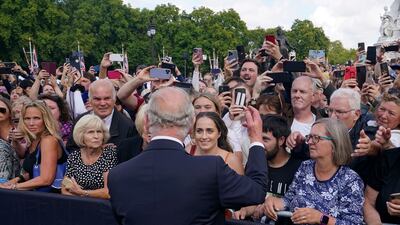
King Charles greets well-wishers at Buckingham Palace after the death on Thursday of his mother, Queen Elizabeth II. AP -

King Charles and Queen Consort Camilla view tributes left outside Buckingham Palace after the death of Queen Elizabeth II. PA -

Outside Buckingham Palace on the first day of public mourning after the death of Queen Elizabeth II. The queen's death at the age of 96 marks the start of a tumultuous 10 days for the UK in which a queen is buried, a nation will mourn its longest-reigning monarch, and a new king is proclaimed. Bloomberg -
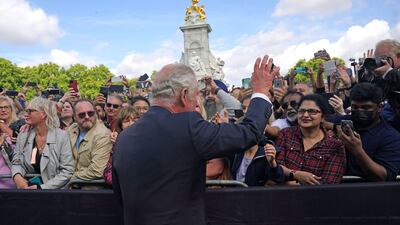
King Charles during a walkabout to view tributes left outside Buckingham Palace. PA -

King Charles outside Buckingham Palace on Friday. AP -

King Charles and Queen Consort Camilla surrounded by crowds of well-wishers in London. Reuters -
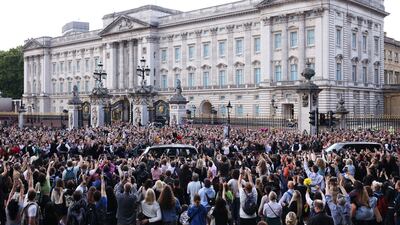
The car carrying King Charles and the queen consort arrives at Buckingham Palace with the Union Flag at half mast. Getty Images -

People gather at the Queen Victoria Memorial opposite Buckingham Palace on Thursday night after the death of Queen Elizabeth II. Reuters -
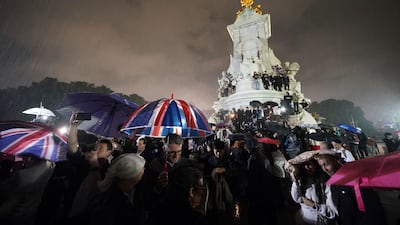
People gather at the Queen Victoria Memorial opposite Buckingham Palace after the death of Queen Elizabeth II. PA -

Mourners gather outside Buckingham Palace on Thursday night. PA -
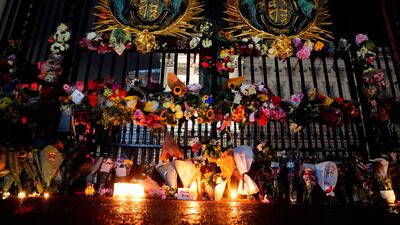
Tributes and candles left outside Buckingham Palace in London after the queen's death was announced. PA -
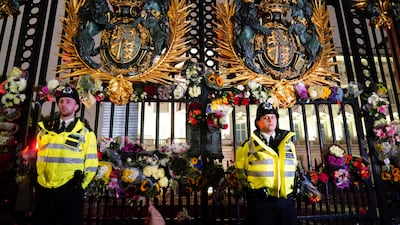
Police officers stand among floral tributes left outside Buckingham Palace. PA -
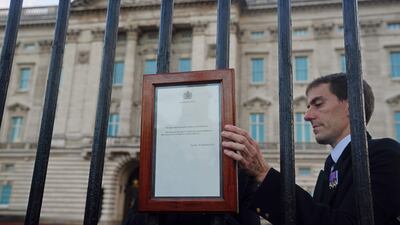
A member of the royal household staff posts a notice on the gates of Buckingham Palace announcing the death of Queen Elizabeth. AFP -
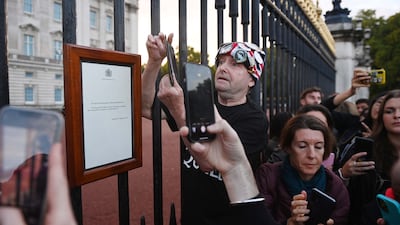
Royal follower John Loughrey, wearing a Union Jack hat, photographs the official announcement of the queen's death. EPA -
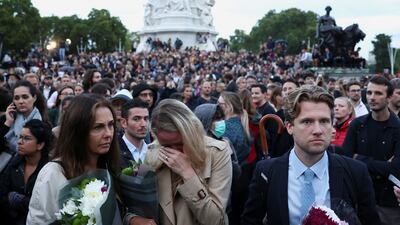
Mourners outside Buckingham Palace. Reuters -
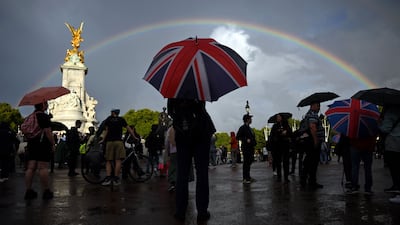
A man with a Union flag umbrella shelters from the rain near the Queen Victoria Memorial. AFP -
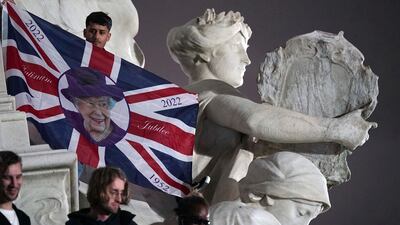
Mourners on the Queen Victoria Memorial outside Buckingham Palace. PA -

The crowds outside Buckingham Palace on Thursday night. PA -

Mourners at the vigil outside Buckingham Palace. PA -
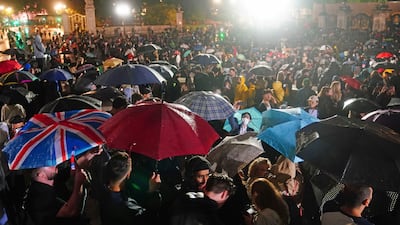
Mourners at the vigil outside Buckingham Palace. PA -
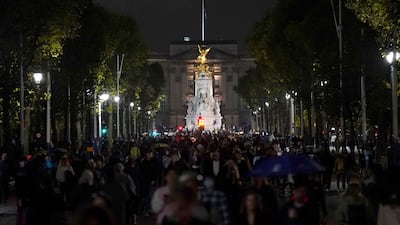
Londoners walk down The Mall that leads to Buckingham Palace on Thursday night. PA -
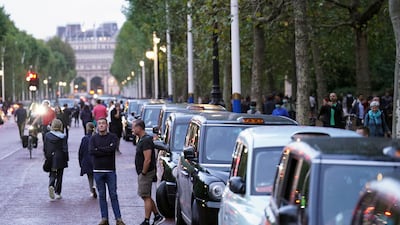
Taxis lined up along The Mall leading to Buckingham Palace in London after the announcement of the death of Queen Elizabeth. PA -
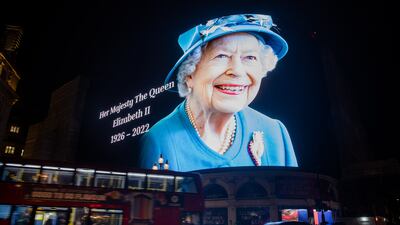
The advertising screens in Piccadilly Circus in London mark the death of the queen. Getty -
An image of Queen Elizabeth II is displayed on The BT Tower in London. Getty -
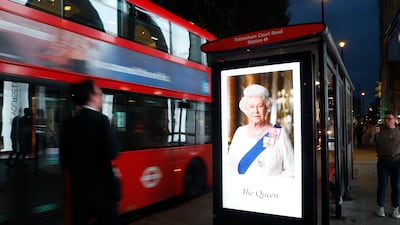
A bus stop on Tottenham Court road in London displays an image of the queen. Getty -
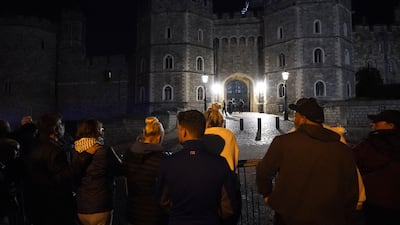
Mourners gather outside Windsor Castle, Berkshire. PA -
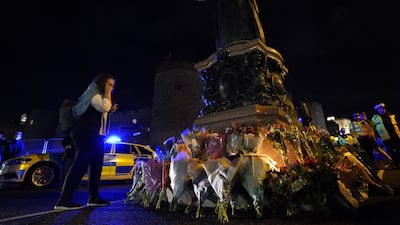
Flowers are left under the Queen Victoria statue outside Windsor Castle. PA -

Candles and flowers form a makeshift memorial at the Queen Victoria statue outside Windsor Castle. PA -
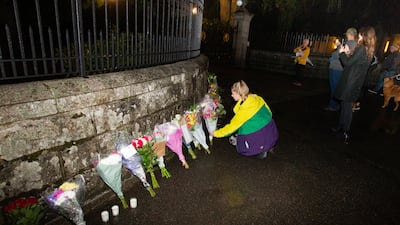
People lay floral tributes outside Balmoral Castle, Scotland, on Thursday night. EPA -

People lay floral tributes outside Balmoral Castle, Scotland, Britain, 08 September 2022. EPA -
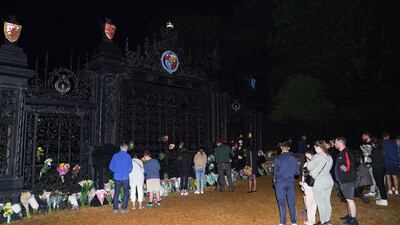
People pay their respects at the gate of Sandringham House in Norfolk. PA -
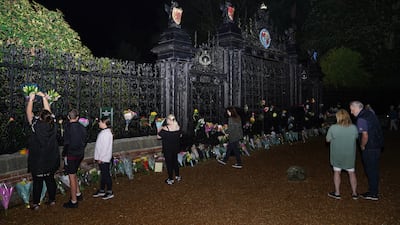
People pay their respects at the gate of Sandringham House in Norfolk. PA


After the death of her father, King George VI, the 25-year-old Princess Elizabeth was called upon to assume the throne in 1952, beginning a reign that has spanned the better part of a century.
Her life encompassed the Second World War, the Independence of India from Britain and the partition of India and Pakistan in 1947, the Cold War, the first Moon landing in 1969, the Falklands War in 1982, the demolition of the Berlin wall in 1989, the handover of Hong Kong to China in 1997 and, more recently, the 21st-century paroxysms of Brexit.
In terms of her own remarkable achievements, only five years after her wedding to Prince Philip, her coronation ceremony in 1953, also held in Westminster Abbey, was the first to be broadcast live on television.
Flags lowered to mark the passing of Queen Elizabeth II - in pictures
-
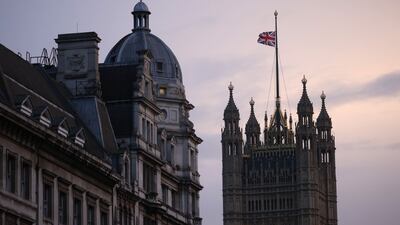
The Union flag is lowered at the Houses of Parliament following the death of Queen Elizabeth II on September 08, 2022 in London, England. Getty -
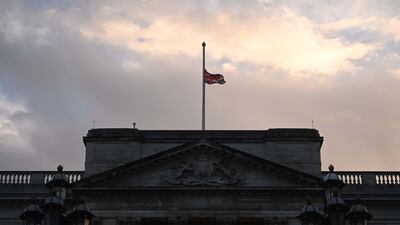
The Union Flag lowered at half mast at Buckingham Palace following the official announcement of the death of Queen Elizabeth II, London, Britain, 08 September 2022. EPA -
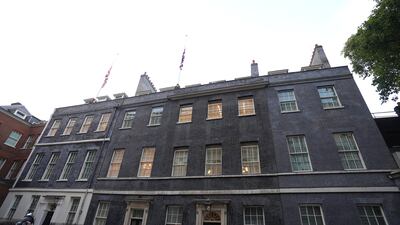
The Union Flag above Downing Street, in central London is flown at half mast following the announcement of the death of Queen Elizabeth II. PA -

Defence Forces military police lower the Irish flag to half mast outside government buildings in Dublin following the announcement of the death of Queen Elizabeth II. PA -
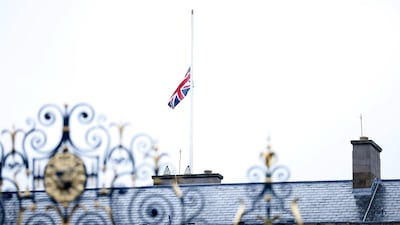
The Union flag flies at half mast at Hillsborough Castle, Northern Ireland. PA -

Flags being lowered to half mast outside The Scottish Parliament building at Holyrood in Edinburgh following the announcement of the death of Queen Elizabeth II. PA -
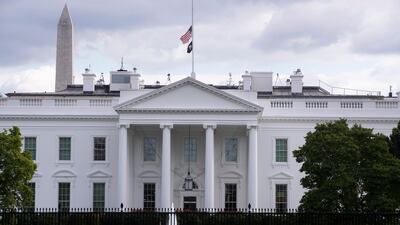
The United States national flag flies at half-staff over the White House by proclamation of US President Joe Biden, to honor the late Queen Elizabeth II of Britain following her death, in Washington, DC, USA, 08 September 2022. EPA -
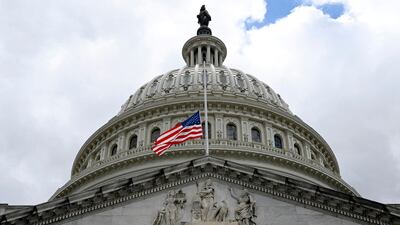
The US flag flies at half-staff at the US Capitol in Washington, DC, on September 8, 2022 following the death of Britain's Queen Elizabeth II. AFP -
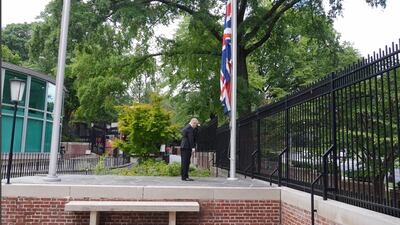
Frame grab from a video showing a member of the British Embassy staff lowering the flag outside the embassy to half staff upon news of the death of Queen Elizabeth II in Washington, DC, USA, 08 September 2022. EPA -
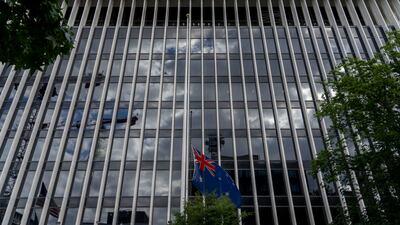
The Australian flag files at half-staff at the Australian Embassy, Thursday, September 8, 2022, in Washington, after Queen Elizabeth II, Britain's longest-reigning monarch and a rock of stability across much of a turbulent century, died Thursday after 70 years on the throne. AP -

The Canadian flag flies at half-staff over the Canadian Embassy in Washington, Thursday, September 8, 2022, after Queen Elizabeth II, Britain's longest-reigning monarch and a rock of stability across much of a turbulent century, died Thursday after 70 years on the throne. AP -
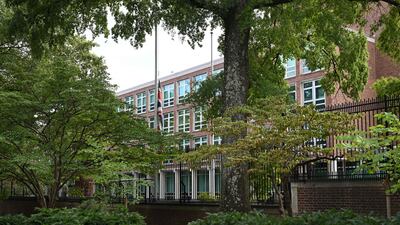
The Union flag flies at half-staff at the British Embassy in Washington, DC, on September 8, 2022, following the death of Queen Elizabeth II. AFP -
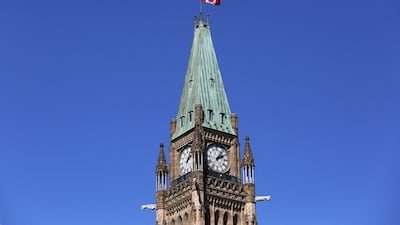
A Canadian flag flies at half-staff at the top of the Peace Tower after the death of Britian's Queen Elizabeth II on September 8, 2022 in Ottawa. AFP -
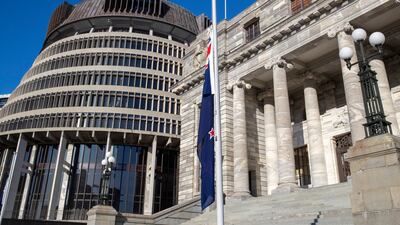
The New Zealand flag at half-mast outside Parliament, in Wellington, New Zealand following the death of Queen Elizabeth II, Friday, September 9, 2022. AP -
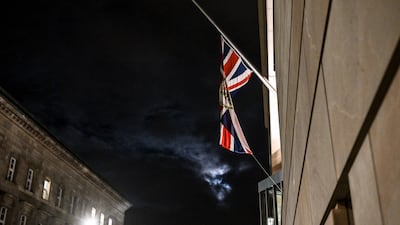
A Union flag flies at half-mast at the British embassy in Berlin, Germany 08 September 2022, following the death of Britain's Queen Elizabeth II. EPA -
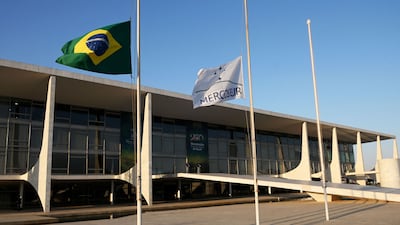
The Brazilian and the MERCOSUR flags fly at half-mast at the Planalto Palace after the death of Britain's Queen Elizabeth II, in Brasilia, on September 8, 2022. AFP -
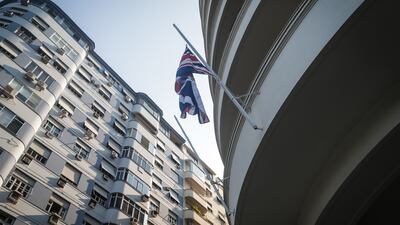
The Union flag at half-staff due to the death of Queen Elizabeth II, at the British Consulate General, in Rio de Janeiro, Brazil, 08 September 2022. EPA -
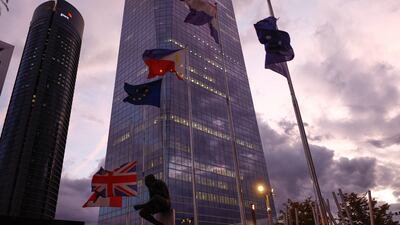
Union flags flies at half-mast at the British embassy in Madrid, Spain, 08 September 2022, following the death of Britain's Queen Elizabeth II. EPA


About 27 million people in the UK watched it, and 11 million more listened on the radio. In 1977, on June 7, the queen with Prince Philip by her side, rode in the Gold State Coach from Buckingham Palace to St Paul’s Cathedral to celebrate her 25th year on the throne.
There, she repeated that long-ago pledge to devote her life to service, saying that: “Although that vow was made in my salad days when I was green in judgment, I do not regret nor retract one word of it.”
In 2002, she celebrated 50 years on the throne. This was followed by her diamond, sapphire and platinum jubilee celebrations in 2012, 2017 and this year. She is the country’s longest-serving monarch.
-
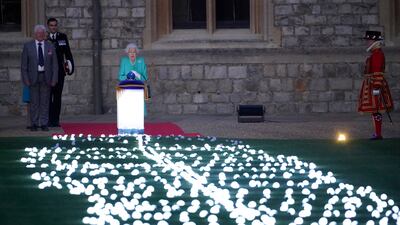
Britain's Queen Elizabeth II leads the lighting of the principal jubilee beacon, part of the platinum jubilee celebrations, at Windsor Castle. Reuters -
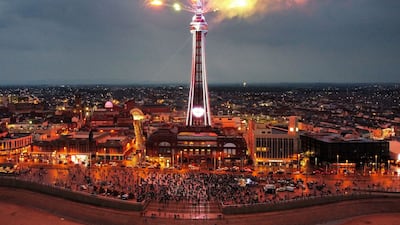
Fireworks explode above Blackpool Tower to celebrate the jubilee. Reuters -
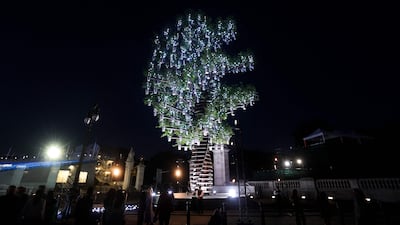
The 'Tree Of Trees' by designer Thomas Heatherwick at a special ceremony for the lighting of the principal beacon at Buckingham Palace, London. AFP -
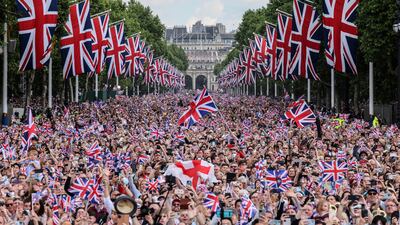
Thousands wait for the royal family to appear on the balcony of Buckingham Palace, on the first day of celebrations to mark Queen Elizabeth II's platinum jubilee. AP -
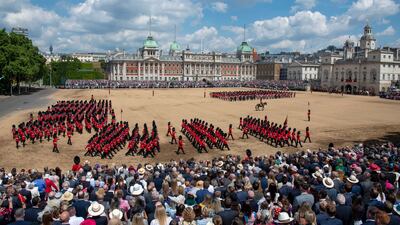
The Trooping the Colour ceremony is carried out at Horse Guards, London. AP -
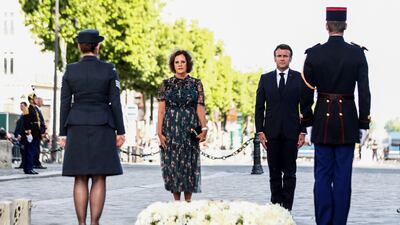
French President Emmanuel Macron stands next to British ambassador to France Menna Rawlings, after rekindling the flame under the Arc de Triomphe in Paris to mark the British queen's platinum jubilee. Reuters -

Francis Mwangi, 13, uses an Oculus virtual reality headset to visit Buckingham Palace virtually during platinum jubilee celebrations in Nyeri, Kenya. Reuters -

The Red Arrows perform a flypast over the Horse Guards parade, London. Trooping The Colour is a military ceremony performed by regiments of the British Army. It has taken place since the mid-17th century. Getty Images -
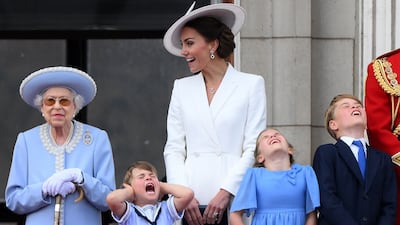
Prince Louis holds his ears as he stands next to Queen Elizabeth, his mother Catherine, Duchess of Cambridge, Princess Charlotte and Prince George to watch a special flypast from the Buckingham Palace balcony. AFP -
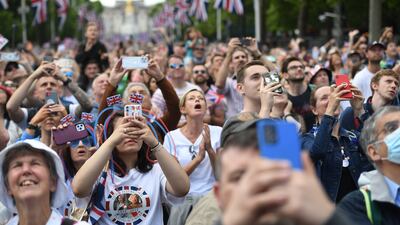
Crowds gather to watch a flypast by the Red Arrows during Queen Elizabeth's platinum jubilee celebrations. EPA -
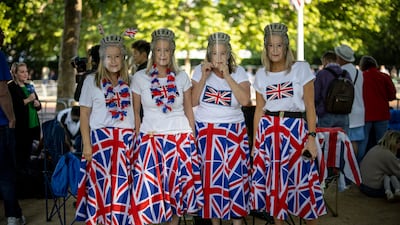
Royal fans wear Queen Elizabeth masks during jubilee celebrations. EPA -
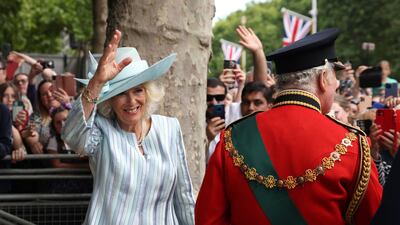
Camilla, Duchess of Cornwall, and Prince Charles greet royal well-wishers near Buckingham Palace. Bloomberg -
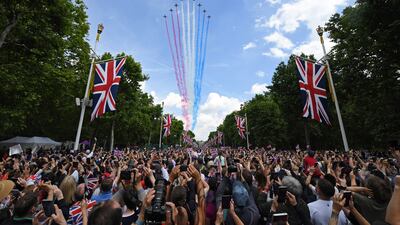
Spectators watch the RAF flypast on The Mall after the Trooping the Colour parade in London. Getty Images -
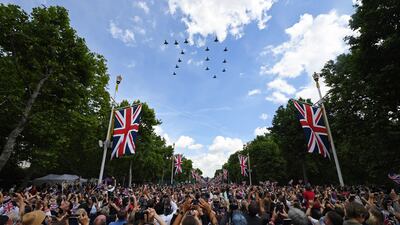
The RAF flypast on The Mall to mark the 70th anniversary of the accession of Queen Elizabeth II on February 6, 1952. Getty Images -

From left, the Duchess of Cornwall, the Prince of Wales , Queen Elizabeth II , the Duchess of Cambridge, Prince Louis, Princess Charlotte, Prince George, and the Duke of Cambridge, on the balcony of Buckingham Palace to view the RAF flypast on day one of the platinum jubilee celebrations. PA -
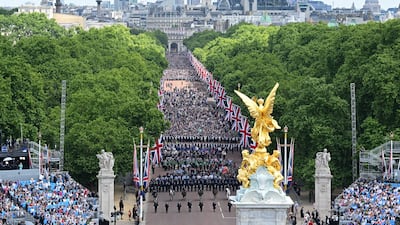
Members of the public fill The Mall ahead of a fly-past over Buckingham Palace during Trooping The Colour in London. Trooping The Colour, also known as The Queen's Birthday Parade, is a military ceremony performed by regiments of the British Army that has taken place since the mid-17th century. Getty Images -
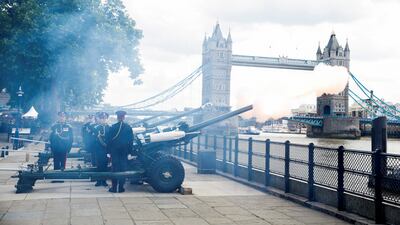
Members of the Honourable Artillery Company perform a gun salute during celebrations to mark the platinum jubilee of Britain's Queen Elizabeth II, at the Tower of London. Reuters -
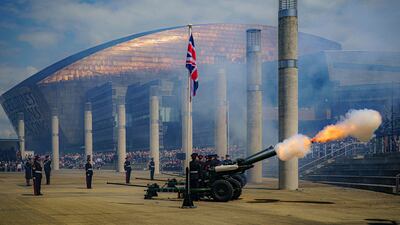
The Royal Gun Salute in Cardiff to mark the start of the platinum jubilee weekend. AP -
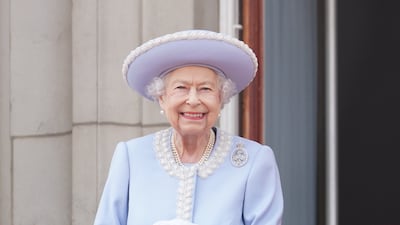
Queen Elizabeth II watches from the balcony during Trooping the Colour at Horse Guards Parade, central London, on day one of the platinum jubilee weekend celebrations. PA -
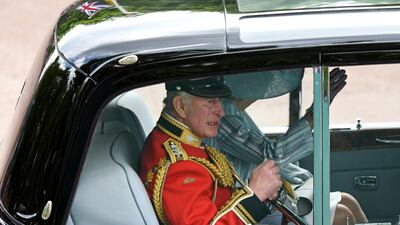
Prince Charles being driven to the parade. Getty -
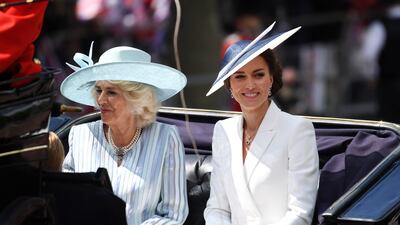
Camilla, Duchess of Cornwall, with Catherine, Duchess of Cambridge at the Trooping the Colour parade. Getty -
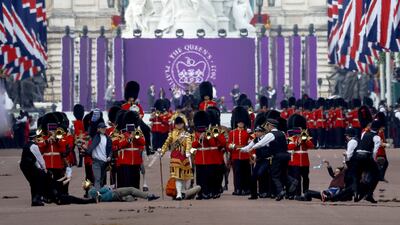
Police officers intervene as protesters try to disrupt the ceremony during the queen's platinum Jubilee celebrations on The Mall in London. Reuters -
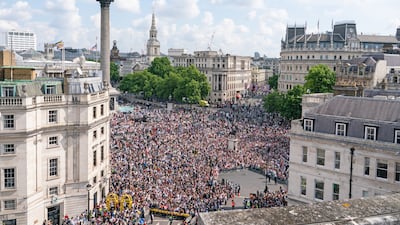
The Mall is packed for the wekeend's celebrations. PA -

The Kings Troop of the Royal Horse Artillery ride down The Mall on their way to fire the ceremonial gun. AP -
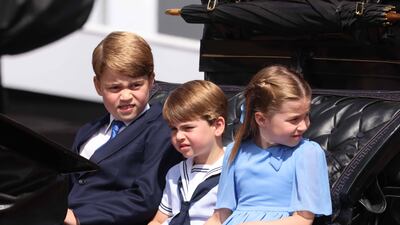
(L-R) Prince George of Cambridge, Prince Louis of Cambridge and Princess Charlotte of Cambridge travel in a horse-drawn carriage during Trooping The Colour. Getty -
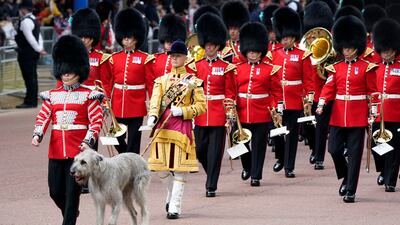
An Irish wolfhound leads as soldiers march along The Mall. AP -
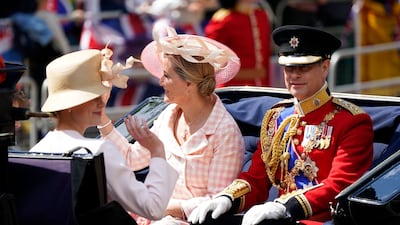
Prince Edward and his wife Sophie, Countess of Wessex ride in a carriage as the Royal Procession leaves Buckingham Palace for the Trooping the Color ceremony. AP -

The BT tower in central London bears a message to Queen Elizabeth II. AFP -
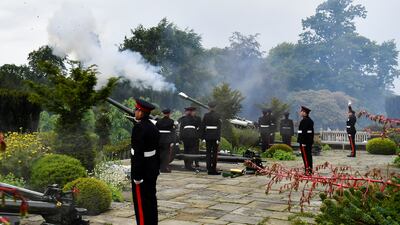
The 206 Battery of the Royal Artillery, the Ulster Gunners, fire a midday commemorative gun salute in honour of the beginning of the queen's platinum jubilee celebrations, at Hillsborough Castle, Northern Ireland. Reuters -
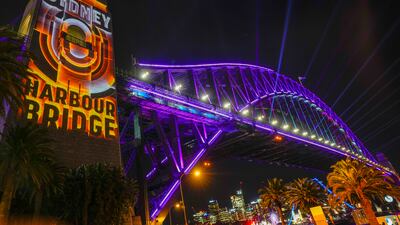
Sydney Harbour Bridge is illuminated in 'Royal Purple' to mark the 70th anniversary of the coronation of Queen Elizabeth II. AP -
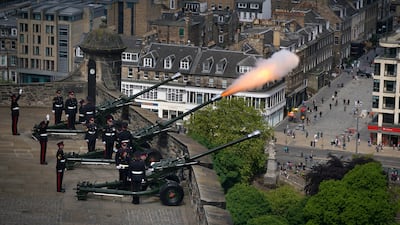
The 105th Regiment Royal Artillery, The Scottish and Ulster Gunners during the royal gun salute at Edinburgh Castle. PA -

Marching in Horse Guards Parade, central London. Getty -
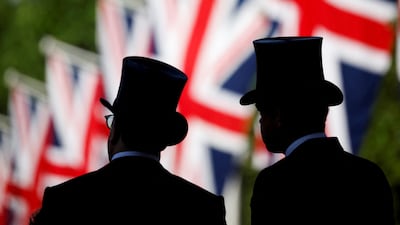
People gather at The Mall in London to celebrate Queen Elizabeth II's platinum jubilee. Reuters -

Camilla, Duchess of Cornwall, is driven along The Mall. Huge crowds are expected in the city as the UK marks the jubilee. AFP -
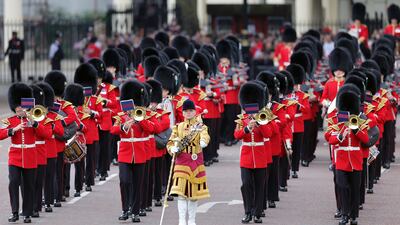
The Band of the Welsh Guards make their way to the Trooping the Colour event in London. AP -
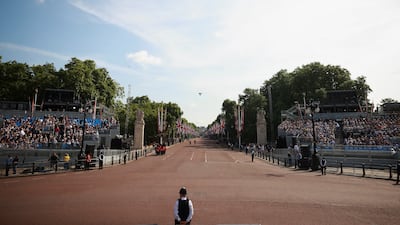
The platinum jubilee marks the 70th anniversary of the queen taking the throne. Reuters -

Jubilant crowds in London. Reuters -
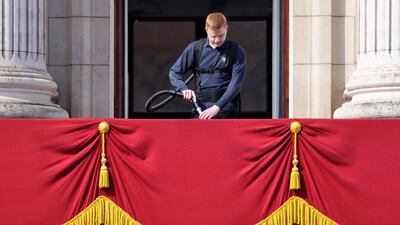
A Buckingham Palace staff member cleans the balcony where the queen is expected to wave to well-wishers. AFP -
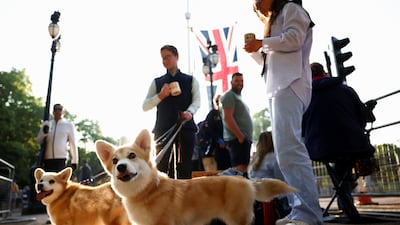
A man walks his corgis Chuckles and Bunting down The Mall during the celebrations. Reuters -

Police officers cycle down The Mall. Reuters -
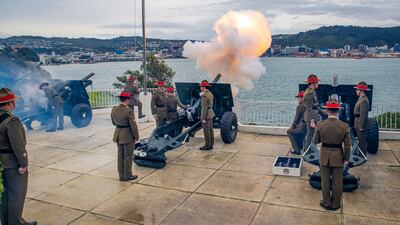
The Royal Regiment of New Zealand Artillery fires field guns at Point Jerningham, to mark the 70th anniversary of the coronation of Queen Elizabeth II, in Wellington, New Zealand. AP -
The official platinum jubilee portrait of Queen Elizabeth, taken at Windsor Castle recently. Photo: Buckingham Palace -
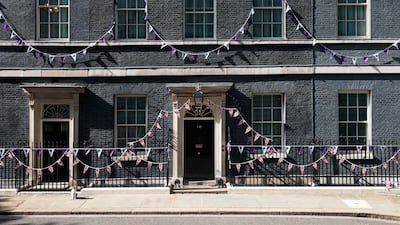
Larry the Cat, Chief Mouser to the Cabinet Office, sits outside Downing Street, London, adorned in bunting before the platinum jubilee celebrations, in London. AP -

A look-alike of Queen Elizabeth waves at people in London. The queen's platinum jubilee will be celebrated from June 2 to June 5 to mark the 70th anniversary of her accession to the throne on February 6, 1952. EPA -

People walk along The Mall in London, before the start of the Queen's platinum jubilee weekend. AP -
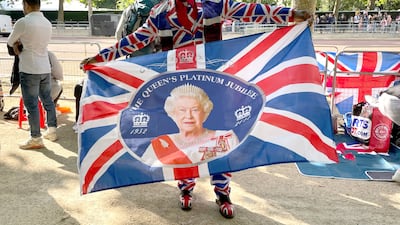
Joseph Afrane, 58, originally from Ghana, lives in Battersea, London, and is planning to attend all the official platinum jubilee events. PA -
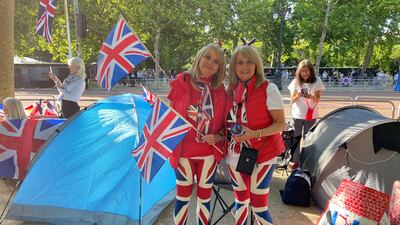
Twins Linda Whitfield and Janice Jones, 59, from County Durham, are camping on The Mall to ensure they have a good view of the celebrations. PA -
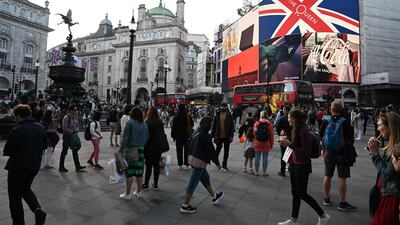
Members of the public walk through Piccadilly Circus before the platinum jubilee celebrations for Queen Elizabeth. AFP


Although she was a constitutional monarch who remains politically neutral, the queen retained the ability to give a regular audience to a prime minister during his or her term of office at which she has a right and a duty to express her views on government matters.
In total, the queen saw 15 prime ministers during her reign, including Boris Johnson, whose resignation she accepted on Tuesday before performing the simple constitutional duty known as the “kissing of hands” with the new incumbent, Liz Truss, at Balmoral, her Aberdeenshire estate, rather than at Buckingham Palace or Windsor Castle.
Sir Winston Churchill, the wartime prime minister, lost the 1945 general election but returned to Downing Street in 1951, so when she became queen in 1952, the 77-year-old statesman was her first prime minister and, some believe, her favourite. They enjoyed their weekly meetings, and these lengthened from 30 minutes to two hours.
Margaret Thatcher’s relationship with the queen has always fascinated biographers. The Grantham grammar-school girl was the queen’s eighth prime minister, and by far the most unusual.
All her previous premiers had been men, and they had fallen into two loose groups. First, there were the upper-class, old-fashioned Tories, such as Sir Winston and Sir Anthony Eden, her first two prime ministers. Then there were the Labour men, Harold Wilson and James Callaghan, socialists in theory, but deeply patriotic, even socially conservative in practice.
-

Queen Elizabeth II welcomes Liz Truss during an audience where she invited the newly elected leader of the Conservative party to become Prime Minister and form a new government, at Balmoral Castle, Scotland, Britain September 6, 2022. Reuters -
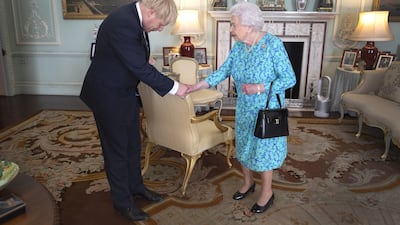
Queen Elizabeth II welcomes newly elected leader of the Conservative party Boris Johnson at Buckingham Palace, London, where she invited him to become UK prime minister and form a new government in July 2019. PA -
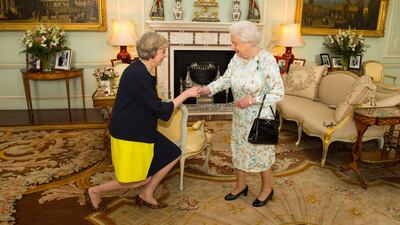
Queen Elizabeth with Theresa May in 2016. PA -

The queen and David Cameron shake hands at Buckingham Palace when he became prime minister in 2010. PA -
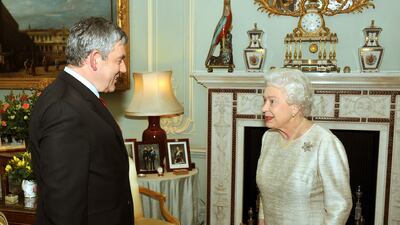
The queen greets Gordon Brown at the palace in 2010. After five days of negotiations, a Conservative and Liberal Democrat coalition government was confirmed, with Mr Brown resigning as PM. Getty Images -
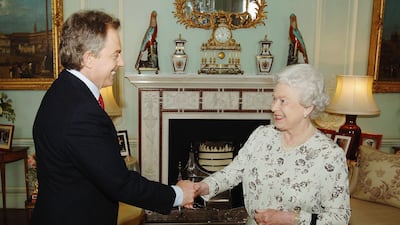
Newly re-elected prime minister Tony Blair shakes hands with Queen Elizabeth in 2005. Getty Images


There were certainly tensions between the two women. Since her accession in 1952, the queen had always been devoted to the principle of national unity. Yet within two years of Mrs Thatcher’s arrival, Britain seemed more divided than ever. A devastating recession threw at least three million people out of work.
On July 20, 1986, The Sunday Times ran a front-page story claiming that the queen privately felt Mrs Thatcher’s approach to be “uncaring, confrontational and socially divisive”. The source was the palace press secretary, Michael Shea, but the queen herself was mortified.
She rang Mrs Thatcher immediately to apologise, and the relationship survived. When Baroness Thatcher died in April 2013, the queen took the unusual step of attending the ceremonial funeral, a personal decision and an indication of the queen’s respect for her first, and at the time her only, female prime minister.
Tony Blair was described in some palace quarters as a “head of state-in-waiting”, and there were courtiers who were not enamoured by what they saw as his encouragement of a “people’s monarchy”.
Gordon Brown was reported to have had a good but formal relationship with her majesty. David Cameron was caught on camera telling Michael Bloomberg, the mayor of New York at the time, that the queen had “purred down the line” when he telephoned and told her the result of the Scottish independence referendum. He was forced to apologise for this breach of etiquette.

Theresa May was the second female prime minister of the queen’s reign, taking up her post in July 2016 in the wake of the Brexit vote more than a quarter of a century after Mrs Thatcher stood down. It was reported at the time that the queen was sad to see Mrs May step down.
It was a huge credit to the queen that she managed relationships with this disparate group of people, from all walks of life and different political backgrounds, on a weekly basis. Furthermore, she has hosted 152 state visits, and met 13 out of 14 US presidents. Her travels have taken her to 110 countries across six continents. She is probably the most travelled monarch in the world.
When she became queen in 1952, she also became the head of Commonwealth realms — a group of sovereign territories and protectorates that consider the queen to be their head of state. As of 2021, there are 15 states that fall under the Commonwealth realm, including Jamaica, Grenada, Australia, the Bahamas and Canada. These 15 countries are also members of the Commonwealth of Nations of which the queen served as the head.
During her reign, the queen visited every country in the Commonwealth — with the exception of Cameroon, which joined in 1995 and Rwanda, which joined in 2009 — and made many repeat visits. In fact, one third of her total overseas visits were to Commonwealth countries.
In a decision made by Prince Philip, the queen agreed to the making of a documentary about her young family in 1969. Just as the television filming of her coronation was innovative, so too was this public broadcast revealing some private royal moments with footage including the queen, the Duke of Edinburgh and their children enjoying a barbecue at their Scottish home at Balmoral. Prince Charles is seen water-skiing, while a young Prince Edward asks his mother for an ice cream.

The film was criticised by some for trivialising the royal family and The Times later reported that “the queen regretted giving the BBC behind-the-scenes access for the 1969 film and requested it never be broadcast again”.
It has not all been plain sailing for her majesty. Although they married in 1981 to huge fanfare, the marriage of the Prince of Wales and Princess Diana deteriorated and in 1992 they announced their decision to separate.
Prince Andrew, her second son, and his wife, Sarah Ferguson, also separated, while Princess Anne divorced her husband, Mark Phillips. Later that year, a fire broke out in Windsor Castle, destroying more than 100 rooms.
In a speech delivered to mark the 40th anniversary of her succession, Queen Elizabeth remarked that 1992 “has turned out to be an ‘Annus Horribilis’”.

Public criticism of the royal family grew after Prince Charles and Princess Diana’s divorce in 1996 and especially after Princess Diana’s death in a car crash in Paris the following summer. The queen initially remained at her estate in Balmoral to comfort and shield her grandsons and refused to allow the flag to fly at half-staff over Buckingham Palace, by convention lowered only for those of royal birth.
At the urging of advisers, she revised her stance on the flag, returned to London to greet crowds of mourners and delivered a rare televised address to a nation grieving after the death of her daughter-in-law.
The celebration of her 50th year on the throne was marred by a personal double loss, when her beloved younger sister, Princess Margaret, and their mother, the Queen Mother, died within weeks of each other in 2002.
Nonetheless, the first British monarch since Queen Victoria to celebrate a golden jubilee, and stalwart as ever, she travelled more than 64,000 kilometres that year, including visits to the Caribbean, Australia, New Zealand and Canada. She also visited 70 cities and towns in 50 counties in the UK.
Compared with the tumultuous 1990s, the start of Queen Elizabeth’s second half century on the throne was characterised by warm relations between the nation and its royal family, and in 2005 most of the British public supported Prince Charles’s wedding to Mrs Camilla Parker-Bowles.

The happy marriage of her eldest grandson Prince William to Kate Middleton took place in April 2011 and the births of their three children ― the queen’s first great grandchildren ― followed promptly, first Prince George, then Princess Charlotte and Prince Louis.
As third in the line of succession after his grandfather and his father, Prince George is widely expected to become king one day. His birth marked the first time since Queen Victoria’s reign that three generations of direct heirs to the British throne were alive at the same time.
In May 2011, the queen and Prince Philip visited the Republic of Ireland at the invitation of President Mary McAleese. Although she had frequently visited Northern Ireland over the course of her reign, this was her first to the Republic of Ireland, and the first by a British monarch in 100 years.
The visit, during which she expressed her “sincere thoughts and deep sympathy” for the victims of the troubled Anglo-Irish past, was widely celebrated as the beginning of a new era of friendship.
Perhaps no other event during Queen Elizabeth’s reign symbolised the modernising monarchy more than the wedding of Prince Harry to Meghan Markle, a divorced, mixed-race American actress. Although the queen reportedly gave her quick approval to the match, the relationship between the couple and the British media, as well as other members of the royal family, grew increasingly tense after the marriage.
-
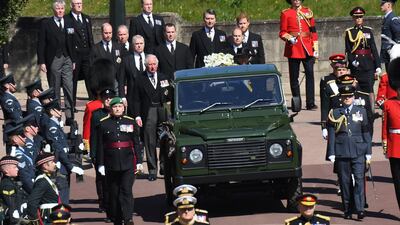
Members of the British royal family and military officials follow Prince Philip, the Duke of Edinburgh's coffin during his funeral at Windsor Castle, England. Getty -
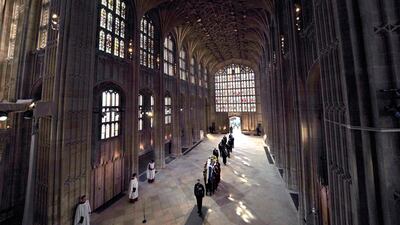
Pallbearers carry Prince Philip's coffin into the chapel with only 30 guests in attendance because of coronavirus pandemic restrictions. AFP -

People walking at Windsor Castle after Prince Philip's funeral on Saturday. AP -
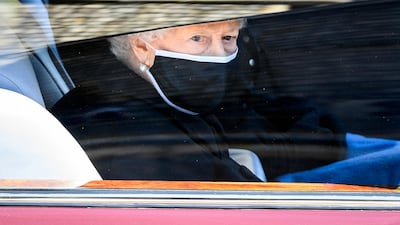
Queen Elizabeth II during the funeral of her husband. They married on 20 November 1947 and he served as Prince Consort until his death on April 9, months short of his 100th birthday. Getty -
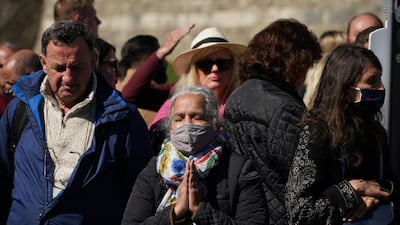
Members of the public take part in a two-minute silence outside Windsor Castle during the funeral of Prince Philip. Getty -
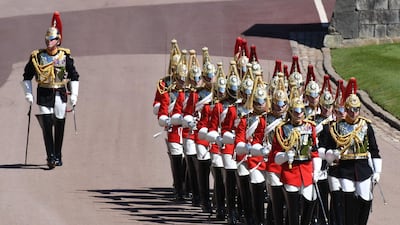
Members of the Household Cavalry march ahead of the funeral service of Prince Philip in Windsor Castle. Getty -
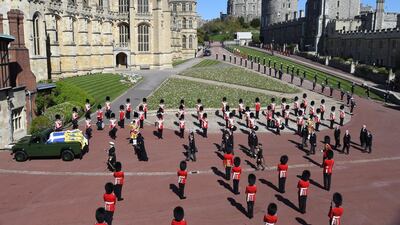
Coronavirus restrictions meant social distancing. Getty. -
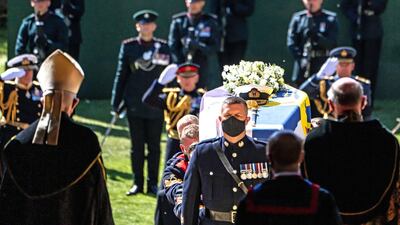
Prince Philip's coffin is carried into his funeral service at St George's Chapel at Windsor Castle. Getty -
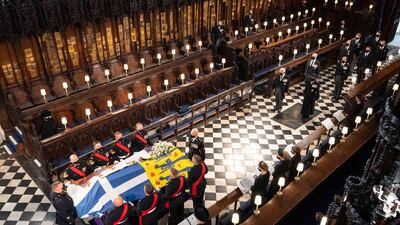
Queen Elizabeth watches as pallbearers carry the coffin of the Duke of Edinburgh during his funeral at St George's Chapel in Windsor Castle. AP -
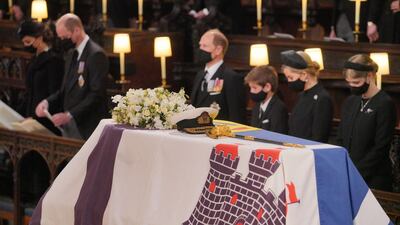
Left to right: Catherine, Duchess of Cambridge; Prince William, Duke of Cambridge; Prince Edward, Earl of Wessex; Viscount Severn; and Sophie, Countess of Wessex attend the funeral service of Prince Philip, the Duke of Edinburgh inside St George's Chapel in Windsor Castle. AFP -
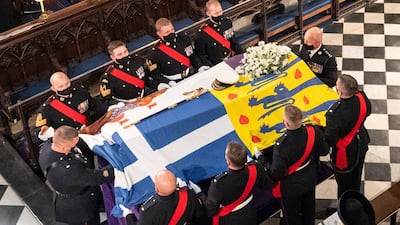
Pallbearers carry the coffin of the Duke of Edinburgh during his funeral, at St George's Chapel in Windsor Castle. Prince Philip died April 9 at the age of 99. AP -
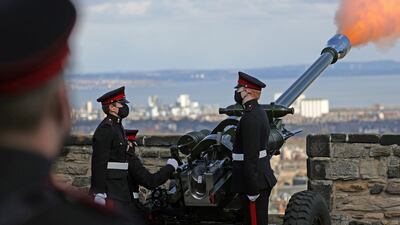
A gun salute at Edinburgh Castle. A single round was fired followed by a single round a minute later to begin and end a national minute's silence immediately before the funeral service of Britain's Prince Philip. Reuters -
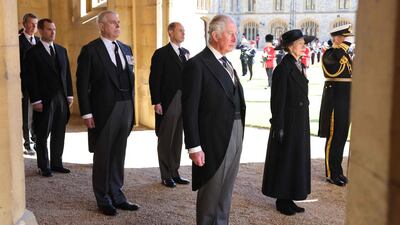
From second left: Peter Phillips; Prince Andrew, Duke of York; Prince Edward, Earl of Wessex; Prince Charles, Prince of Wales and Princess Anne, Princess Royal, attend the ceremonial funeral procession of Prince Philip, Duke of Edinburgh. AFP -
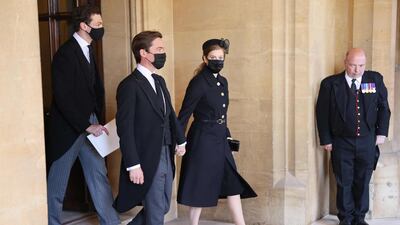
Princess Beatrice of York and her husband Edoardo Mapelli Mozzi attend the funeral ceremony of Prince Philip, Duke of Edinburgh at Windsor Castle. AFP -
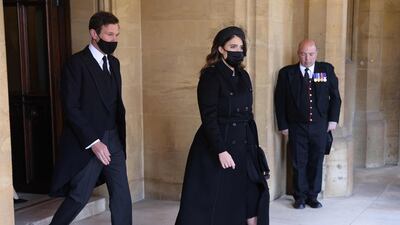
Princess Eugenie of York and her husband Jack Brooksbank attend the funeral of Prince Philip, Duke of Edinburgh. AFP


In 2020, the Duke and Duchess of Sussex announced they were stepping back from their role as senior royals and moved to southern California with their son, Archie, born in 2019, and where their daughter, named Lilibet after the queen's childhood nickname, was born last year.
As head of their own family and throughout everything, Prince Philip was always beside the queen, or as he once jokingly complained, “two steps behind” his wife, marking the order of precedence. He was never officially prince consort; at the coronation, he swore to be her “liegeman of life and limb”.
He died in April 2021 and, because of Covid-19 measures, the queen was obliged to sit isolated at his funeral in St George’s Chapel at Windsor Castle. The queen may have pledged to serve her subjects be her life “long or short”, but Prince Philip served her throughout their long 70-year marriage.
After a period of mourning, she resumed her duties ― true to her original pledge ― and although illness reduced her outings of late, when seen in public, she displayed her usual smiling demeanour.
Queen Elizabeth II was a source of continuity and stability, not just for Britain, but for all those nations and peoples under her aegis. To paraphrase the British national anthem only slightly, she has “long reigned over us, happy and glorious”.

