

UK police have revealed the painstaking detective work and series of clues provided by freed captives that helped identify the mysterious gang of terrorists who became known as the ISIS Beatles.
Police set out how they had to connect the dots between incidents that happened years apart and in vastly different geographical areas - one of which included an overheard conversation about an English Defence League demonstration on the anniversary of 9/11.
The ISIS Beatles carried out acts of brutality in the terror group's heartland in Syria before three were captured and one was killed.
Alexanda Kotey was jailed in the US in April for his part in the torture and murder of American hostages, while El Shafee Elsheikh will be sentenced on Friday over his role in the group.
Ringleader Mohammed Emwazi was killed in a drone strike in 2015 and Aine Davis was jailed in Turkey in 2017. Emwazi was identified by police as the masked man in videos showing hostages being murdered.
“This was a remarkable investigation where really determined and highly skilled officers and staff pieced together and unearthed tiny fragments of information gathered from isolated events that occurred years earlier and thousands of miles from where the offence took place,” said Commander Richard Smith, counter-terrorism chief at the Metropolitan Police.
-
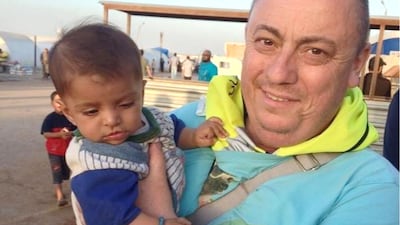
A family photo of ISIS beheading victim Alan Henning. -
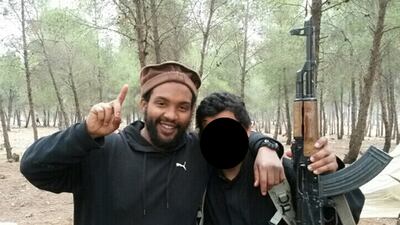
Aine Davis was arrested in 2015 near Istanbul and was part of the four-man ISIS cell nicknamed the Beatles. Shutterstock -

Carl Mueller - the father of Kayla Mueller who was killed by ISIS militants - hugs one of Kayla's friends, Rodwan Safar Jalani, after the announcement of the guilty verdict for ISIS member El Shafee Elsheikh. AFP -
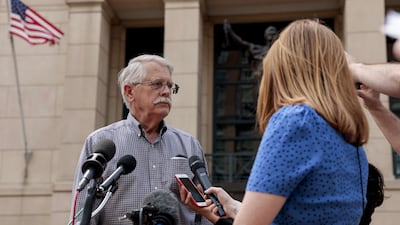
Mr Mueller speaks to reporters outside a courthouse after the announcement of the guilty verdict for Elsheikh. AFP -
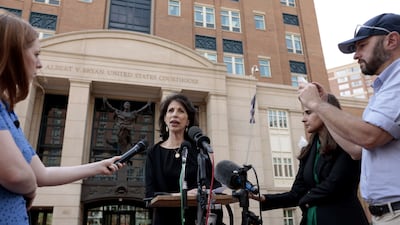
Diane Foley - mother of James Foley, an American journalist who was kidnapped and later beheaded by ISIS members in Syria in 2014 - speaks after the announcement of the guilty verdict for Elsheikh. AFP -

Ms Foley speaks after Elsheikh was convicted by a US federal jury of assisting in the kidnapping and deaths of four Americans. AFP -
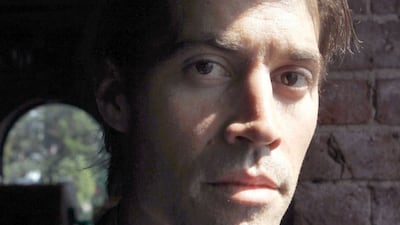
Freelance journalist James Foley was murdered by group known as the ISIS Beatles on August 19, 2014. The National -

Carl Mueller speaks to reporters outside of the Albert V Bryan US Courthouse in Alexandria, Virginia. AFP -
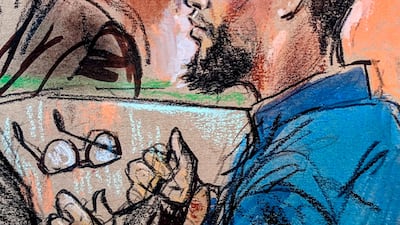
El Shafee Elsheikh was found guilty of engaging in lethal hostage-taking and conspiracy to commit murder. Reuters -
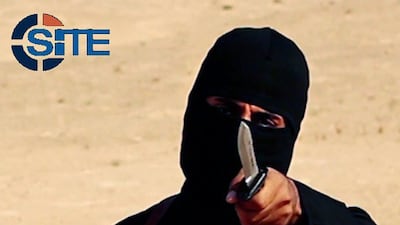
Mohammed Emwazi was one of four British members of ISIS who were known as 'The Beatles'. AP -
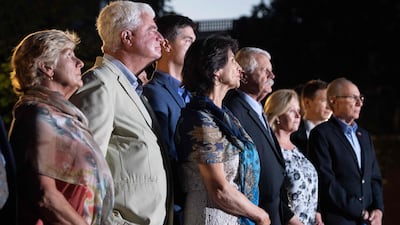
Diane Foley (centre) stands alongside Carl Mueller and Marsha Mueller as well as other family members of two other killed ISIS hostages. AFP -
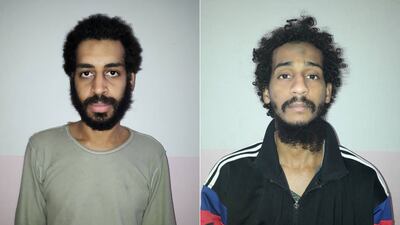
Members of ISIS group known as 'The Beatles', Alexanda Kotey and El Shafee Elsheikh, were captured in northern Syria in January 2018 and had their UK citizenships revoked. Reuters -
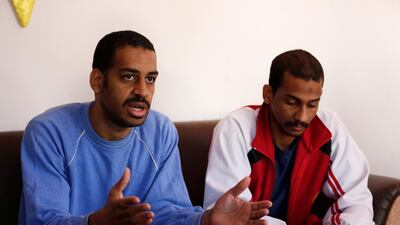
Alexanda Kotey (left) and El Shafee Elsheikh were accused of being part of a group of four British extremists who made up an ISIS cell known as 'The Beatles'. AP -
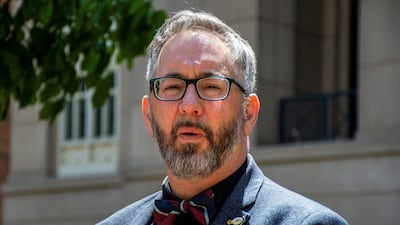
Mike Haines, the brother of murdered aid worker David Haines, speaks to the news media. Reuters


“They were able to piece these fragments together and the sum of their parts was significant evidence which helped bring these men to justice.”
The investigation began in 2012, when British journalist John Cantlie and American photojournalist James Foley were taken hostage in Syria.
Police had no indication of who was behind it and interviewed released hostages who said the group apparently included men who were British citizens.
The group came to be known as The Beatles because of their British accents.

A “very significant” breakthrough came when a freed hostage told officers about hearing the men mention being arrested in the UK at an English Defence League counter-protest on the anniversary of 9/11.
Investigators looked into the clue and discovered that Kotey and Elsheikh had been detained in the area on September 11, 2011 — 10 years after the Al Qaeda attack on the US — at a Muslims Against Crusades counter-demonstration.
They were part of a group arrested on suspicion of involvement in a stabbing but were released without charge.
In 2014, messages from Elsheikh were discovered by police after a mobile phone belonging to his brother, Khalid, was seized in a firearms investigation. Pictures showed Elsheikh in combat gear and holding a gun.
“I would describe it as one of the most significant international terrorism cases we've ever seen brought to trial,” Mr Smith said of the ISIS Beatles case.
“The level of savagery in the propaganda videos described by the hostages who were held captive and subjected to physical assault was truly shocking.”
Police compared the footage with interviews held with him in the UK in 2012, while he was being questioned over a series of thefts, and matched his voice.
After Kotey and Elsheikh were captured, a case was pulled together by the Metropolitan Police and given to the attorney general, who authorised 139 charges, but the prosecution proceeded in the US.
Kotey was sentenced on eight counts: four of hostage-taking resulting in death; conspiracy to commit hostage-taking resulting in death; conspiracy to murder US citizens outside of the country; conspiracy to provide material support to terrorists, hostage-taking and murder, resulting in death; and conspiracy to provide material support to a designated foreign terrorist organisation resulting in death.
He was charged in relation to the killings of four US hostages: journalists Foley and Steven Sotloff as well as aid workers Peter Kassig and Kayla Mueller.
Mr Smith added: “I'm delighted, in this case, to see that these two very evil men have been brought to justice.”

