


There is a “danger of getting desensitised” to Russia’s war in Ukraine, Conservative peer and former party leader Lord William Hague has warned.
Russia’s actions as the “main thing happening and the threat to everybody’s security and economic prosperity”, said the former foreign secretary amid the Tory leadership contest.
“Imagine if there hadn’t been a Ukraine war, that if suddenly terrorists had taken over one of the biggest nuclear power plants in Europe and were stacking explosives around it and starting to shell people from it," Lord Hague told Times Radio.
"That would be the biggest news in the world, it would be what everybody in Europe would be talking about.
“We’re getting so used to, ‘Oh, there’s a war going on over there’, that when that happens, the Russians are firing from around that plant, to put explosives and mines there, potentially, a potential nuclear catastrophe, in the view of the International Atomic Energy Agency, it’s not such big news any more, is it?
“I mean, it is on the news but it’s not dominating things, so this sort of getting desensitised to the war is a dangerous thing, because it is the main thing happening and the threat to everybody’s security and economic prosperity, in the end.”
He cautioned Europe against appeasement, warning that Russian President Vladimir Putin “will come back for more”.
Ukraine crisis latest - in pictures
-
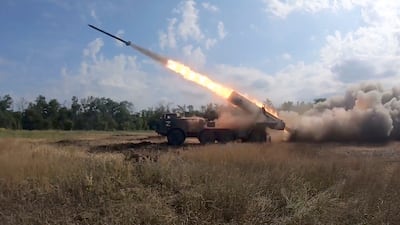
A Russian multiple-launch 'Hurricane' rocket system in action during battles in an undisclosed area in Ukraine. EPA -
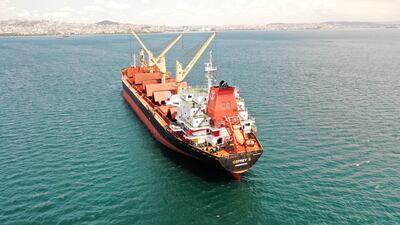
The Turkish bulk carrier 'Osprey S' is anchored off the shore near Istanbul. The vessel was expected to arrive in Ukraine's Chornomorsk port carrying grain, becoming the first ship to arrive at a Ukrainian port during the war. Reuters -
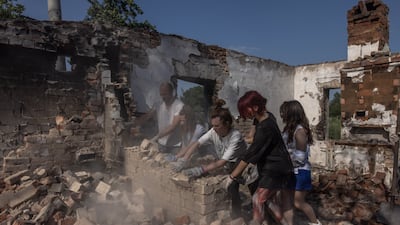
Young volunteers from the 'Repair Together' initiative, together with the local residents, clear rubble from a house that was destroyed during fighting, in Ivanivka, Chernihiv region. EPA -
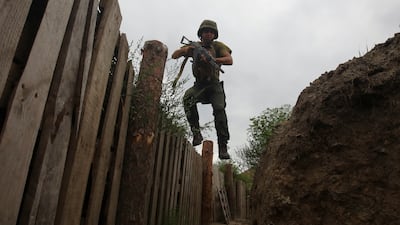
A member of the Ukrainian National Guard jumps into a trench at a position near a front line, in the Kharkiv region. Reuters -
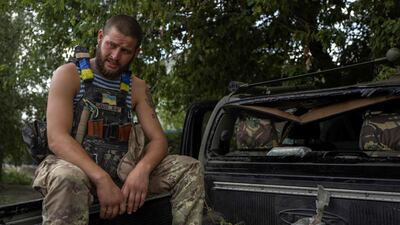
A Ukrainian soldier after a rocket fragment hit his car, in Bakhmut. AFP -

Combine harvesters of the Continental Farmers Group agricultural company harvest wheat in the Ternopil region of Ukraine. Getty Images -
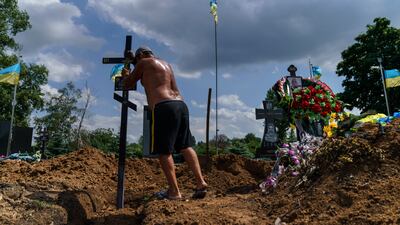
A cemetery worker places a cross on the grave of Ukrainian soldier Serhiy Marchenko, who died aged 26, after his burial in Pokrovsk, Donetsk region. AP -
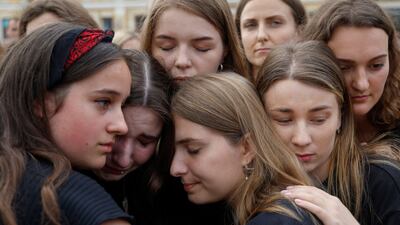
Women attend a rally of relatives and friends of defenders of the Azovstal Iron and Steel Works in Mariupol. Reuters -
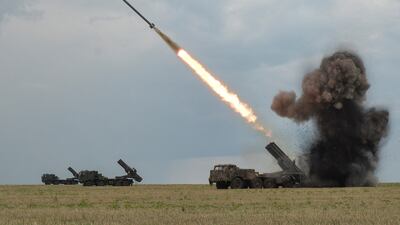
Ukrainian troops fire with a BM27 Uragan multiple-launch rocket system, in the Kharkiv region. Reuters -
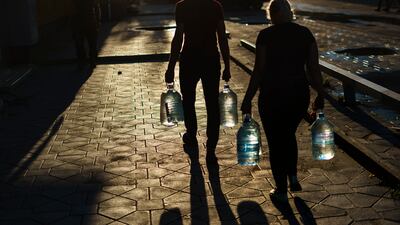
A couple carry water bottles after filling them up at a store in Pokrovsk, Donetsk region. AP -
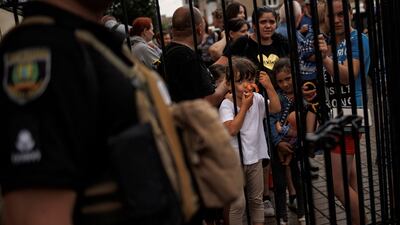
A girl holds a doll as people wait in Pokrovsk, to board a train to Dnipro and Lviv, during an evacuation effort from war-affected areas of eastern Ukraine. Reuters -
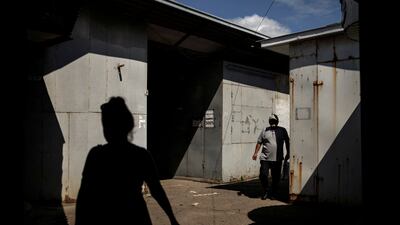
People make their way through the partially-closed Market of Kramatorsk. Reuters


“We won’t solve anything in our own domestic situation if we lose the will to support a country that is struggling for its own democracy, fighting for its own territory," he said.
"There’s a danger here that some people might think [in] Britain or perhaps more so in Italy, Germany, France, that this problem can be bought off.
“Really, the point is it can’t be bought off because if you buy it off, Putin will come back for more, and we have learnt through history that this can be a terrible error, appeasing a dictator.
“I’m raising this argument because I think there is a danger of people forgetting the main thing that’s happening and the dangers that it presents over the coming months.”
UK defence intelligence says Russia’s actions have “likely undermined the security and safety” of operations at Europe’s largest nuclear power plant.
The Ministry of Defence earlier raised concerns about the Zaporizhzhia facility, which was taken over by Russian troops shortly after the February 24 invasion of Ukraine.
UN nuclear chief Rafael Grossi last week said that the power plant, in the south-eastern Ukrainian city of Enerhodar, is “completely out of control”.
Russia poses a direct threat to Nato security, says alliance chief - video
In a phone call on Tuesday afternoon, Boris Johnson and French President Emmanuel Macron agreed on the importance of not allowing “western war fatigue” to disrupt support of Ukraine.
“On Ukraine, the prime minister and President Macron both stressed the importance of the international community continuing to support the people of Ukraine in their struggle," Downing Street said.
“They agreed that UK and French efforts to train and equip Ukrainian troops were making a significant difference in the war, and that western war fatigue cannot be allowed to set in.
"President Macron praised the prime minister’s leadership on Ukraine.”

