


Travel disruption is likely to continue into the summer holidays after rail unions set another strike date for better pay, jobs and conditions.
Members of the Rail, Maritime and Transport union (RMT) at train companies and Network Rail are scheduled to walk out for 24 hours on July 27.
The strike was announced after union leaders rejected a new offer from Network Rail which they described as “paltry”.
The offer was for a 4 per cent pay rise backdated to January, another 2 per cent next year and a further 2 per cent conditional on achieving “modernisation milestones”.
The RMT said it has yet to receive a pay offer or guarantees over job losses from the train operating companies (TOCs).
The RMT said it will be consulting other unions that have mandates for strike action in the coming days, with talk of co-ordinated walkouts.
Members of the drivers’ union Aslef and the Transport Salaried Staffs’ Association (TSSA) at train companies have backed industrial action in recent days.
“The offer from Network Rail represents a real terms pay cut for our members and the paltry sum is conditional on RMT members agreeing to drastic changes in their working lives,” said RMT general secretary Mick Lynch.
“We have made progress on compulsory redundancies, but Network Rail are still seeking to make our members poorer when we have won in some cases double what they are offering, with other rail operators.
“The train operating companies remain stubborn and are refusing to make any new offer which deals with job security and pay,” he said.
“Strike action is the only course open to us to make both the rail industry and government understand that this dispute will continue for as long as it takes, until we get a negotiated settlement.
“The public who will be inconvenienced by our strike action need to understand that it is the government’s shackling of Network Rail and the TOCs that means the rail network will be shut down for 24 hours.”
-
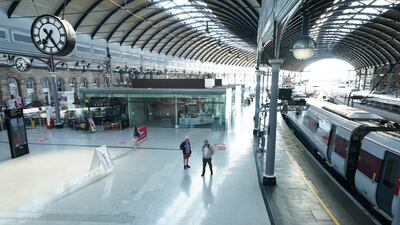
Passengers at a near empty Newcastle station on Thursday morning, as train services continue to be disrupted following the nationwide strike by members of the Rail, Maritime and Transport union. PA -

A passenger looks at the departures board at Waterloo station in London. PA -
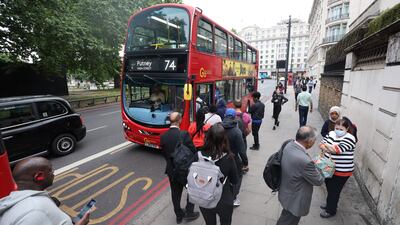
Members of the public queue for a bus near Marble Arch in London. PA -
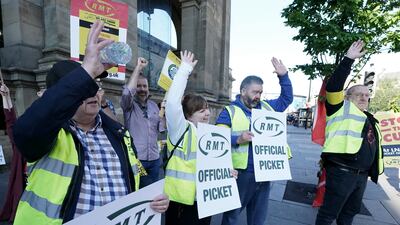
RMT union members outside Newcastle station. PA -
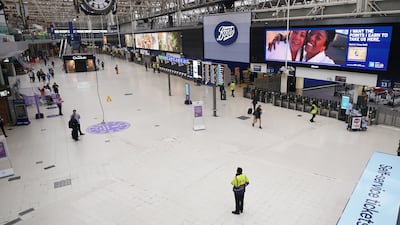
Passengers at a deserted Waterloo East station in London. PA -
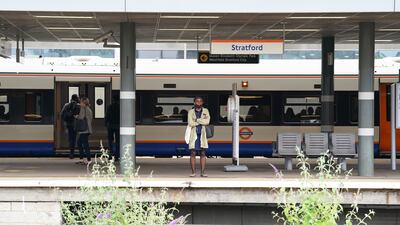
A passenger waits for a train at Stratford station in London. PA -
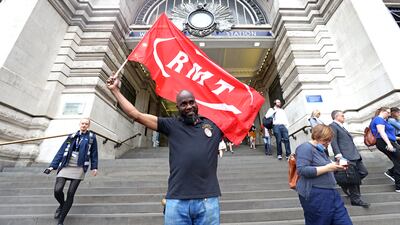
A RMT union member outside Waterloo station in London. PA -

Trains sit in sidings at Heaton Depot in Newcastle. PA -
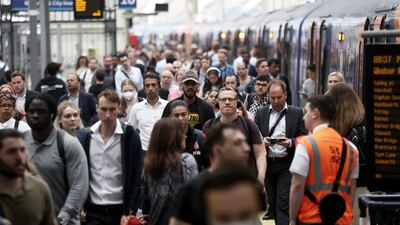
Passengers leaving a train at Waterloo station. PA


The RMT held three strikes last month which crippled services across the country.
“This latest round of action will cause more misery for millions and take money out of the industry at a time when passenger numbers remain 20 per cent below pre-pandemic levels, making it harder to afford a pay increase,” a Rail Delivery Group representative said.
“We want to give our people a pay raise, but to do that we have bring working practices that are in some cases decades-old up to date so that we can adapt to new, more leisure-led travel patterns – including making Sunday part of the standard working week so that services are more reliable at weekends.
“The alternative is asking taxpayers to shoulder the burden after contributing over £600 per household to keep the railway running during the pandemic, or asking passengers to pay even higher fares when they too are feeling the pinch – and that simply isn’t fair.
“Instead of staging more counterproductive strikes, we ask the RMT to come back to the table so we can deliver a deal that works for our people, our passengers and for taxpayers.”
Almost 700 TSSA members at Great Western Railway (GWR), Greater Anglia and TransPennine Express have voted for industrial action in a dispute over pay, conditions and job security.
Members at GWR backed strikes and other forms of industrial action and passed the required threshold for both.
Those at Greater Anglia and TransPennine Express voted in favour of strikes and action short of a strike. The legal threshold for a strike ballot was not met.
The union is demanding a guarantee of no compulsory redundancies for 2022, no unagreed changes to terms and conditions, and a pay increase which reflects the escalating cost of living.
TSSA has not named dates for industrial action at these companies but will consider next steps with workplace reps.
Disputes are escalating across the rail industry, with the growing likelihood of widespread disruption.
“This is a great set of result for our union and comes hard on the heels of similar votes at a raft of other train operating companies and our Network Rail members,” said TSSA general secretary Manuel Cortes.
“The results demonstrate that our members are utterly determined to fight for their pay, jobs and conditions by strike action or action short of a strike, which means they can’t cover for other trade unions’ members taking strike action.
“They are right to do so amid the escalating Tory cost-of-living crisis and with a chaotic government hellbent on making swingeing cuts to our rail network while inflation rages.
“It would be unwise for any rail company to ignore the feelings of our membership. We are already in the process of speaking to workplace reps about next steps in this dispute,” he said.
“If ministers had any sense they would come to the table and sort this out, so we have a fair settlement for workers who were hailed as heroes in the pandemic.”
“The railway must reform and modernise, and yesterday the RMT were offered a fair deal which would see salaries of their members rise by up to 8 per cent after two years to deliver just that,” Transport Secretary Grant Shapps said.
“The average rail worker already earns £44,000, significantly more than the people who will be most affected by their walkout – the very same people who stumped up £600 per household to keep the railway running throughout the pandemic and ensure not a single person lost their job.
“Chaos cynically timed for the day before the Commonwealth Games begins, in a bid to disrupt the travel of thousands trying to attend an event the whole country is looking forward to.
“The industry is already on life support and by insisting on working against its employers, instead of with them, the RMT risks pulling the plug for good,” Mr Shapps said.
Andrew Haines, Network Rail chief executive, said the prospect of disruption was “incredibly frustrating”.
“It is also deeply worrying that these strikes have clearly been designed to disrupt spectators heading to the opening of the Commonwealth Games in Birmingham on July 28, an event of huge national significance.
“We have been clear that we can only fund an increase from our own budgets, and the only way we can afford that is by modernising working practices.
“The RMT’s rejection of our latest offer can only mean they want a pay increase to be funded either by more taxpayer support or higher passenger fares, neither of which we think are fair.
“We urge the RMT to call this action off, get back round the table with us and show some willingness to compromise.”
The TSSA announced its members at Avanti West Coast will also strike on July 27, to coincide with the RMT action.
Its members deal with customers, tickets and carrying out station platform duties.
Avanti — the west coast mainline operator — was the first of a dozen train companies plus Network Rail which were successfully balloted for industrial action by TSSA over pay, job security and conditions.
“I have been clear from the start, our members are utterly determined to fight for their pay, jobs and conditions,” Mr Cortes said.
“That is why this strike action at Avanti is necessary and only taken as a last resort after the lack of a fresh offer from the employer, even though we announced the result of our industrial action ballot at the end of June.
“We have a government hell bent on making swingeing cuts to our rail network in the face of a cost-of-living crisis and not even giving Avanti and other companies the bargaining power needed to find a settlement which is fair to our members.
“Ministers in this chaotic Conservative government would do well to sit up and take notice right now because our members are serious and have shown they mean business.
“These are the same people who were hailed as heroes in the pandemic and now see their pay, jobs and conditions threatened. Our union will back them to the hilt, and this is only the beginning.
“Our demands are simple — a no compulsory redundancies guarantee, a pay rise which meets the rate of inflation and no unagreed changes to terms and conditions.
“We are always ready to negotiate but only on a serious basis, but as things stand we are now facing the reality of a summer of discontent across our railways.”

