


Heathrow Airport criticised the UK's Border Force as its financial figures for the first quarter of the year were announced.
After weeks of long queues at Heathrow, there are plans to hire more than 1,000 additional security officers to prepare for the summer season, the company said.
But Heathrow said that while it was prepared to play its part in ensuring ease of travel, the Home Office, which controls the border, must take responsibility, too.
“A smooth arrival is more important than ever as many people begin travelling again, and we rely on Border Force having the right plans and resources in place for the summer peak,” Heathrow said in a report released on Monday.
In recent weeks there has been a surge in demand for travel out of Britain after coronavirus travel restrictions were lifted in their entirety in March.
Staff shortages at Heathrow meant thousands of passengers had to wait for hours for security and passport checks.

There were also lengthy queues at Manchester and Birmingham airports, where staff shortages meant similar problems.
About 9.7 million passengers used Heathrow in the first three months of the year, which was in line with forecasts, the company said.
The west London airport has updated its 2022 passenger forecast from 45.5 million to 52.8 million, or 65 per cent of pre-pandemic numbers.
Despite this, Heathrow said it will not make a profit in 2022 as “demand remains very volatile”.
The losses incurred during the pandemic by Heathrow, the UK’s busiest airport, have exceeded £4 billion ($5.1bn).
“Demand remains very volatile, and we expect these passenger numbers to drop off significantly after the summer,” a spokesman for the airport said.
“We are already seeing airlines cancelling services into the autumn, and the realities of higher fuel costs, lower GDP growth, the war in Ukraine and the pandemic will drag on demand.
“We are still in a pandemic, with many markets still closed, nearly 80 per cent with testing and vaccination requirements, and another variant of concern could mean the return of UK travel restrictions.”
The airport reported a big surge in demand for last-minute bookings over the Easter holiday, and the summer period is expected to bring more demand.
Heathrow said more than 95 per cent of passengers went through security checks within five minutes at Easter.
Terminal 4, which has been closed since the pandemic began in 2020, will be back in operation by July to ease pressure on the terminals in operation — T2, T3 and T5.
-
Long queues of passengers snaked around Heathrow Airport in London in the first week of April. Photo: Jessica Oliver / Twitter -
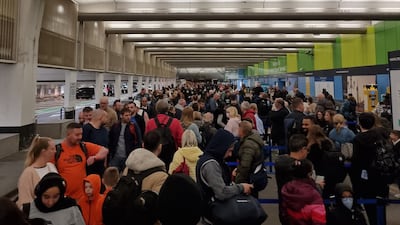
Queues at Manchester Airport on Thursday morning. Bosses at Heathrow and Manchester airports are braced for a nightmare weekend as staff shortages look likely to hamper what is expected to be the travel industry’s busiest day of the year to date. Photo: Richard James -
A busy Manchester Airport on Tuesday morning. Photo: Megan Thwaites / Twitter -
Manchester Airport, as seen on Monday morning, is hit by setbacks as the busy holiday season kicks off. Photo: Gareth Melling's Twitter -
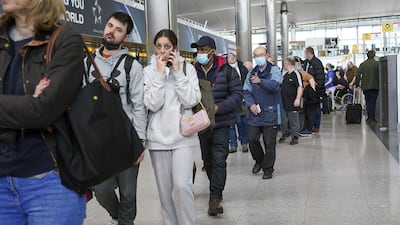
People queuing to go through security at Heathrow Terminal 2. PA -
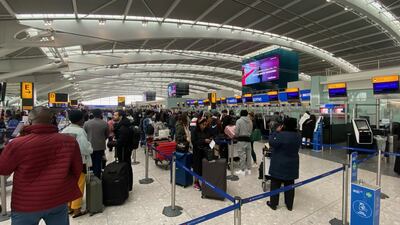
People queue to check-in at Heathrow Terminal 5. PA -
One passenger at the airport said it took two hours to clear check-in at Manchester Airport. Photo: Luke Maher's Twitter -
Queues at Manchester Airport's Terminal 2. Photo: @LancsHT/Twitter -
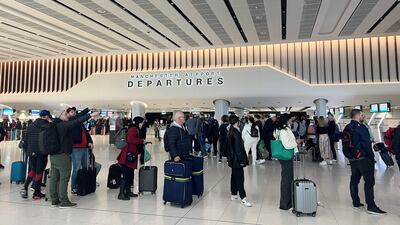
Passengers queue for security screening in the departures area of Terminal 2 at Manchester Airport. Reuters -
Heathrow Airport's Terminal 2 is crammed with people Photo: Twitter -
One passenger said it took three and a half hours to check in a single suitcase. Photo: Martin Duggan's Twitter -
Passengers wait at border control of Heathrow Terminal 2. Photo: Martin Duggan's Twitter -
A packed Heathrow Terminal 2 check-in hall. Photo: Twitter -
Passengers shared photos showing corridors packed with people. Photo: Twitter -
Arrivals queue at Heathrow Airport. Photo: Sven Kili's Twitter


The company said it is assisting airlines, ground handlers and retailers to recruit staff after thousands of workers were laid off during the coronavirus period. About 12,000 jobs have opened up at the airport as the travel industry recovers.
“I want to thank colleagues who worked very hard to ensure the start of 2022 has gone to plan, and I want to reassure passengers that we’re redoubling our efforts to ensure this summer’s journeys go safely and smoothly,” said John Holland-Kaye, Heathrow chief executive.
“These past few weeks have only reinforced our view that passengers want easy, quick and reliable journeys every time they travel, and we can continue to deliver that for less than a 2 per cent increase in ticket prices.
-
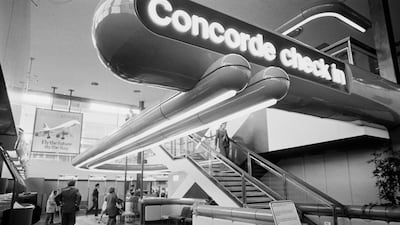
Heathrow Airport in London, the UK's busiest, has been a travel hub for decades. Here The National takes a look back at Heathrow through the years. All photos: Getty Images -
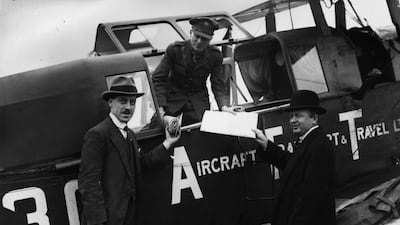
An Airco De Havilland biplane of the British airline, Aircraft Transport and Travel Limited, about to leave on the company’s inaugural flight from Hounslow Heath Aerodrome, later known as Heathrow, to Le Bourget, Paris, in August 1919 -
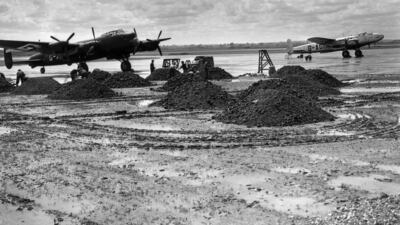
Waterlogged runways at London Airport - Heathrow's original name - one week before it became Britain's main aerial gateway to the US in 1946 -
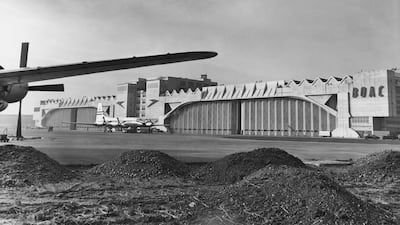
The new BOAC maintenance headquarters at London Airport circa 1955 -
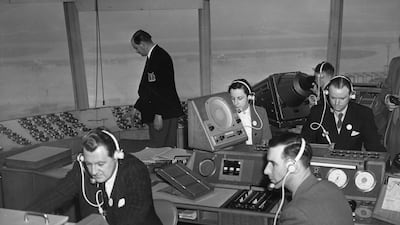
The air traffic control room at the airport's new terminal in 1955 -
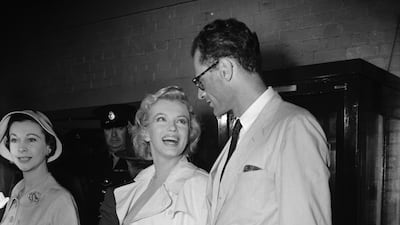
US film star Marilyn Monroe with her husband, playwright Arthur Miller, after arriving at the airport in July 1956 -
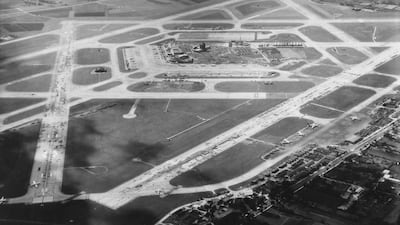
An aerial view showing the runways in 1958 -

The arrivals and departures board in 1960 -

A new airport gift shop, selling items by Chanel, Wedgwood and Pringle of Scotland, in 1961 -
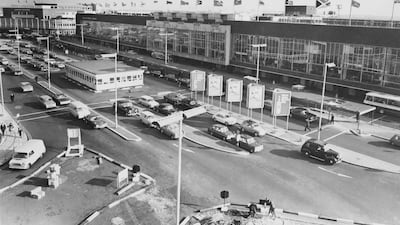
The Queen's Building and the No. 1 Building Europa at Heathrow in 1965 -
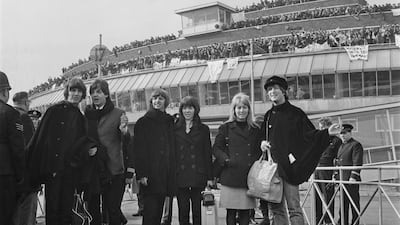
The Beatles leave Heathrow for Salzburg in Austria, to resume filming of the movie Help!, in 1965 -
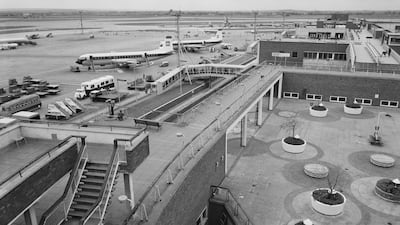
Passenger terminal gates at Heathrow in 1966 -
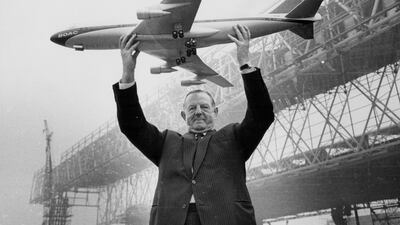
Keith Granville, managing director of BOAC, holding up a model of the Boeing 747 jet, with the new aircraft hangars under construction in the background, at Heathrow in 1969 -
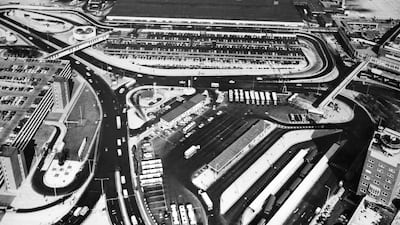
An aerial view of Heathrow in 1970 -
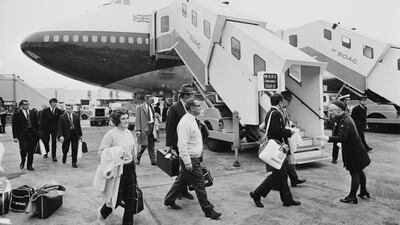
Passengers boarding the first BOAC Jumbo Jet 747 used for a commercial flight, from London Heathrow to New York, in 1971 -
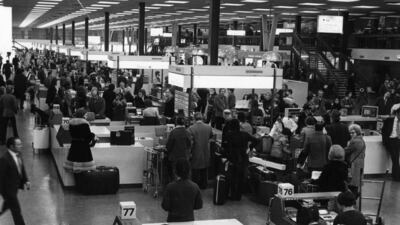
Passengers going through the departure lounge at Heathrow in 1973 -
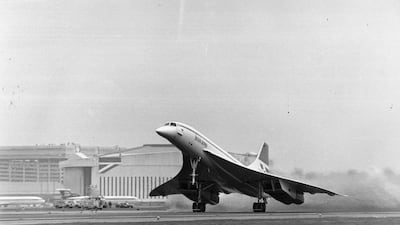
Concorde takes off from Heathrow on her first commercial flight for British Airways in 1976 -
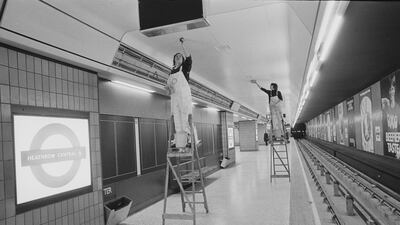
Men at work finalising the Heathrow Central underground station before its opening in 1977 -
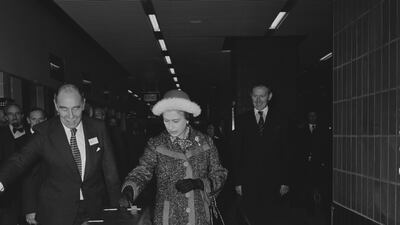
Queen Elizabeth II passing though the Tube gates at Heathrow Central station on its opening in 1977 -
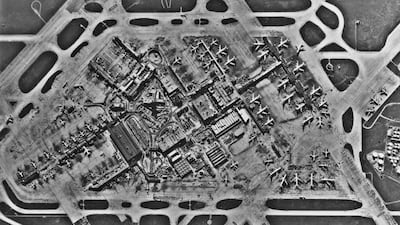
An aerial view of Heathrow in 1978 -

Passengers waiting near a departures board in 1979 -
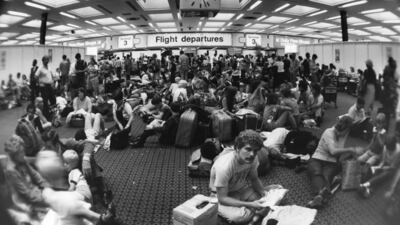
Holidaymakers waiting in the departure lounge at Terminal 3 of Heathrow in 1981 -
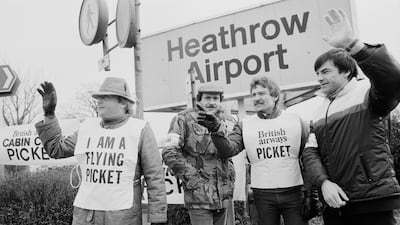
British Airways employees protesting at Heathrow in 1984 -
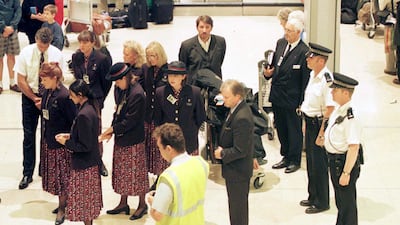
Passengers and staff observe a silence in Heathrow's Terminal One to mark the beginning of the funeral of Diana, Princess of Wales, in 1997 -
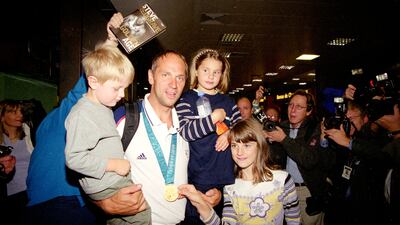
Rower Steve Redgrave at Heathrow with daughters Sophie and Natalie and son Zak after returning from the Sydney 2000 Olympic Games with his gold medal -
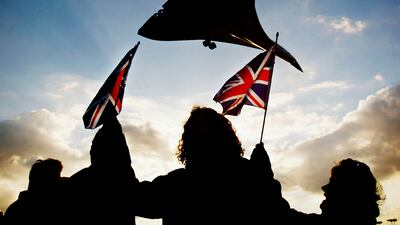
Spectators watch the last Concorde land at Heathrow in 2003 -
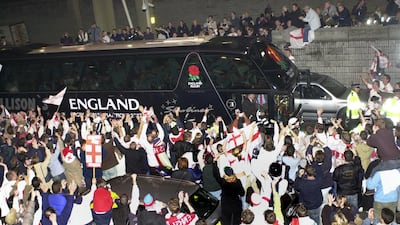
Fans surround the coach carrying the England rugby team at Heathrow, as they arrived from Sydney after winning the World Cup in 2003 -
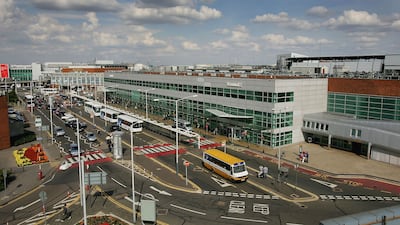
Heathrow's Terminal 2 in 2004 -
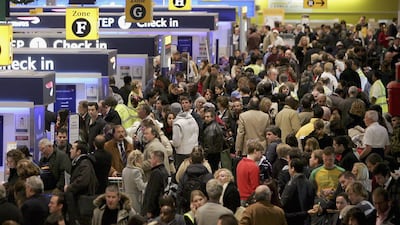
Passengers queue to check in at Terminal 1 of Heathrow Airport during the Christmas 2006 and New Year period -
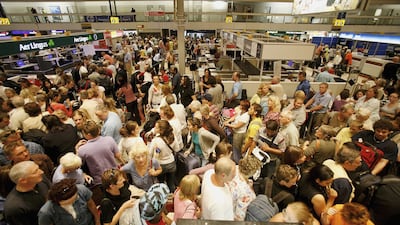
Passengers wait at Terminal 1 on August 10, 2006, after airport security was raised to critical when a terrorist plot to blow up planes in mid-flight from the UK to the US was disrupted by police -
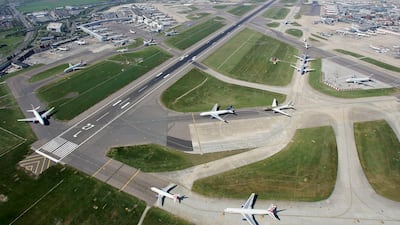
Planes queueing to take off at Heathrow in 2007 -
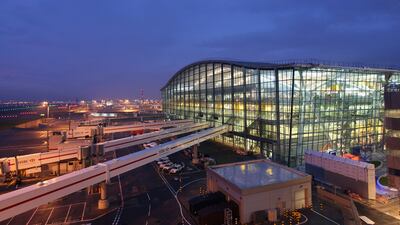
The new Terminal 5 at Heathrow in 2008 -
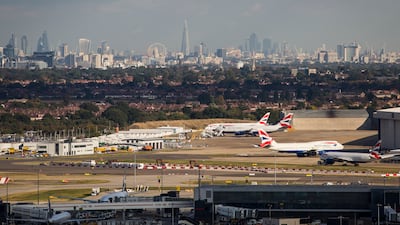
Aircraft at Heathrow Airport in front of the London skyline in 2016 -
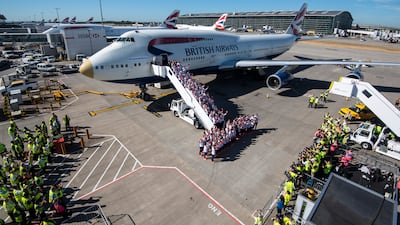
Members of Team GB arrive from Rio de Janeiro at Heathrow, after returning from the 2016 Olympics, which saw Great Britain's strongest performance at the Games in over a century -

A composite photo shows planes taking off from Heathrow in November 2016. Forty-two planes were captured between 10.17am and 11.17am and a montage was created from those single images -
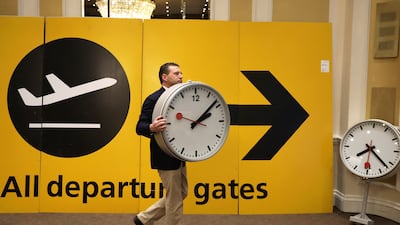
Items are arranged during an auction preview at Heathrow in 2018. The contents of Terminal 1, which closed in 2015, were being sold -
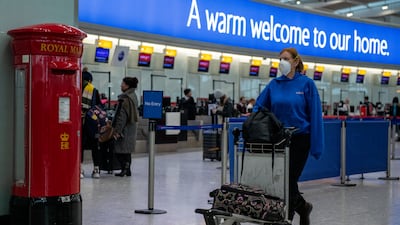
An airline passenger wearing a face mask pushes her bags through Heathrow's Terminal 5 during the coronavirus pandemic in 2020 -
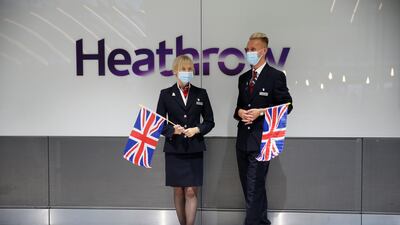
British Airways employees welcome Olympians returning from the Tokyo Olympics in 2021 -
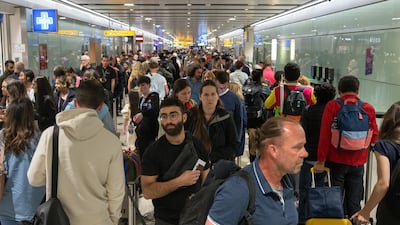
Travellers wait in a long queue to pass through the security check in 2022


“The CAA [Civil Aviation Authority] should be aiming to secure this win for passengers instead of pushing plans which will cut investment in service, increase queues and make delays a permanent feature post-Covid,” he said.
“We have a lot of work to do to reclaim Heathrow’s crown as Europe’s largest airport, which will deliver more competition and choice for passengers and more growth for Britain, and we need the regulator to help us do it.”

