


Live updates: follow the latest news on Russia-Ukraine
British Prime Minister Boris Johnson has indicated that he believes negotiations with Russia to end Vladimir Putin’s invasion of Ukraine are doomed to fail.
Mr Johnson on Wednesday compared dealing with the Russian president to negotiating with a “crocodile when it’s got your leg in its jaws”.
Speaking on a flight to India, Mr Johnson said Mr Putin might only seek to negotiate in earnest if he managed to seize a significant portion of Ukraine.
But he said that at that point, the Russian president might try to launch another assault on Kyiv.
Mr Johnson said Ukrainian president Volodymyr Zelenskyy had a “maximalist” approach to wanting to get back territory seized by Russia in the east of Ukraine.
But he said he believed Mr Zelenskyy was open to negotiations on Crimea, which was annexed by Mr Putin’s forces in 2014.
“It’s for the Ukrainians to decide their future," Mr Johnson said. "Nothing should be decided about Ukraine without Ukraine.
“But I think it’s very hard to see how the Ukrainians can negotiate with Putin now, given his manifest lack of good faith and his strategy, which is evident, to try to engulf and capture as much of Ukraine as he can, and then perhaps have some sort of negotiation from a position of strength, or even to launch another assault on Kyiv.
“So I really don’t see how the Ukrainians can easily sit down and come to some kind of accommodation.
“How can you negotiate with a crocodile when it’s got your leg in its jaws? That’s the difficulty the Ukrainians face.”
-
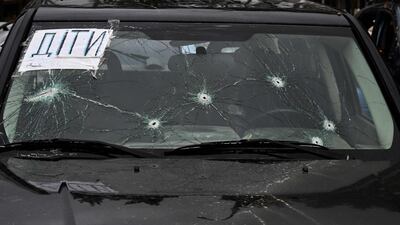
A sign that reads 'Children' is fixed on to a car windscreen riddled with bulletholes in Irpin, Ukraine. AFP -
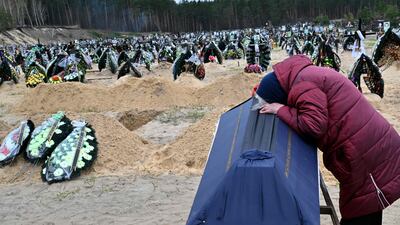
A woman weeps next to her husband's coffin at a cemetery in Irpin. AFP -
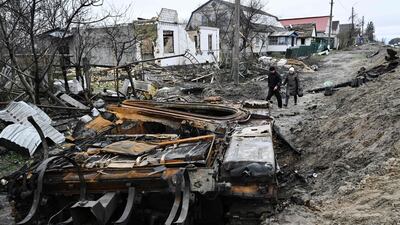
Residents walk amid debris of a charred Russian tank next to destroyed houses in the village of Zalissya. AFP -
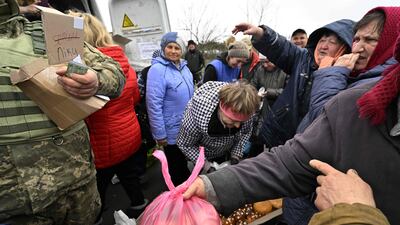
Volunteers distribute food to residents in Zalissya. AFP -
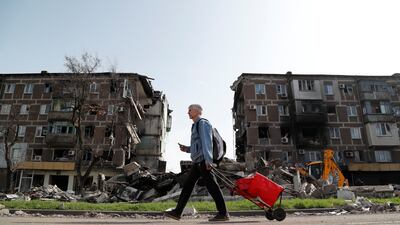
A man walks past a damaged apartment building in the southern port city of Mariupol. Reuters -
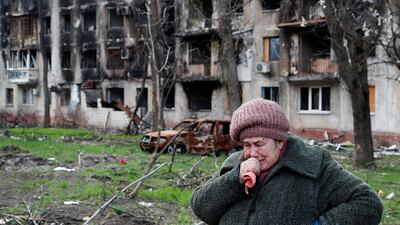
Tamara, 71, cries in front of a destroyed apartment building in Mariupol. Reuters -
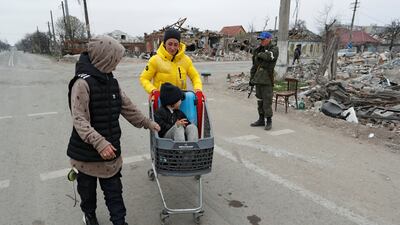
Local residents push a cart with a child past destroyed buildings in Mariupol. Reuters -
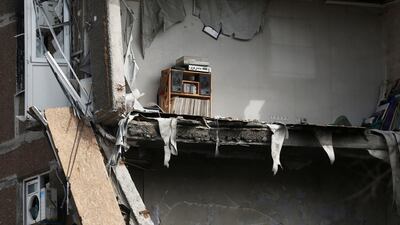
A record player sits among debris inside an apartment in Mariupol. Reuters -
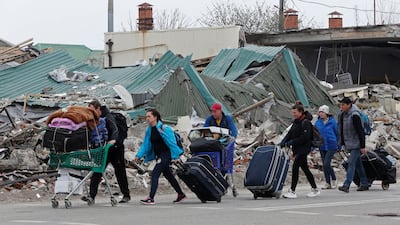
Residents carry belongings past a destroyed building in Mariupol. Reuters -
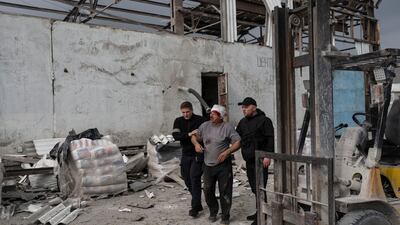
Security guards help an injured man following a Russian bombing of a factory in Kramatorsk. AP -

A man receives first aid treatment. AP -

Soldiers collect explosives after recent battles in the village of Moshchun, close to Kyiv. AP -
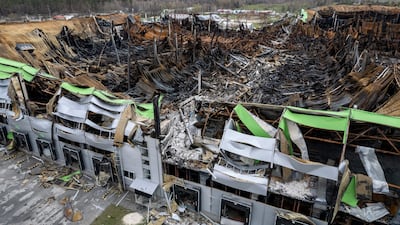
The Komodor logistics park lies in ruins after being bombed and burnt during the Russian invasion near Makarov. Getty Images -
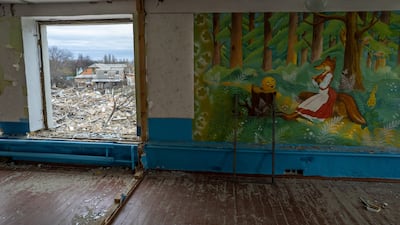
A room in a kindergarten stands windowless in Makarov. Getty Images -
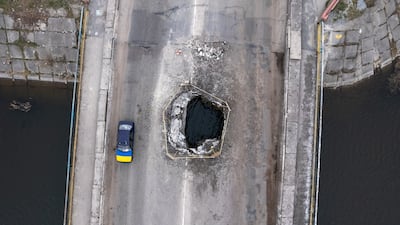
A vehicle draped with a Ukrainian flag passes over a war-damaged bridge in Makarov. Getty Images -
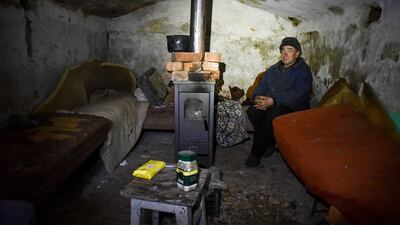
A man sits in a basement that was used as a bomb shelter in the village of Kukhari. EPA -
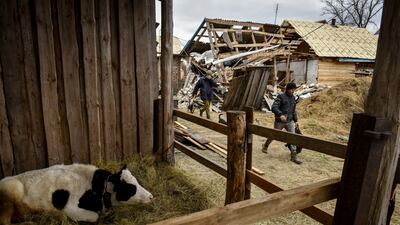
Local residents clean the area around a destroyed farm in Kukhari. EPA -
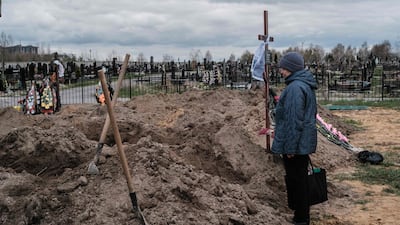
Nadia looks at her husband's coffin at a cemetery in Bucha. He was killed during the war. AFP -
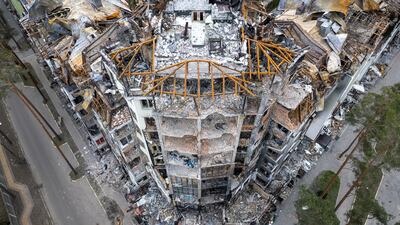
Mangled buildings in Irpin point to the ravages of the ongoing war. Getty Images -
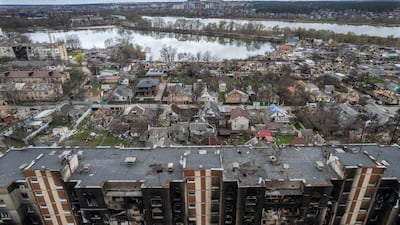
A burnt apartment tower in Irpin. Getty Images -
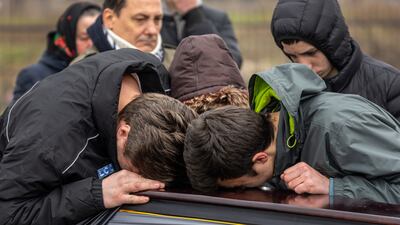
Family members grieve during the funeral of Ruslan Nechyporenko, 47, in Bucha. Getty Images -

An abandoned Russian military position in Borodyanka town near Kyiv. EPA -

Heavily pregnant Dr Marta Kopan, who fled Kyiv with her husband Dr Maxim Motsya and their three-year-old son Makar, narrates their ordeal at a relative's place in Lviv. AP -

A Ukrainian officer searches for unexploded explosives as he passes by an Antonov An-225, the world's biggest cargo aircraft, destroyed during the war on the outskirts of Kyiv. AP -

A woman stands amid the destruction caused when a civilian building was hit by a Russian missile in Lviv, western Ukraine. Getty Images -
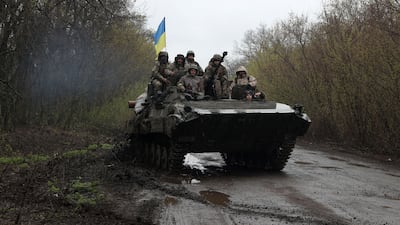
Ukrainian soldiers on an armoured personnel carrier, near the front line with Russian troops, in Izyum district, Kharkiv region, north-eastern Ukraine. AFP -
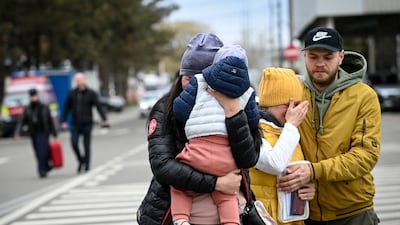
Ukrainian refugees arrive at the Siret border crossing between Romania and Ukraine. AFP -

Ukranian soldiers in a trench look out across the front line near Kharkiv. AFP -
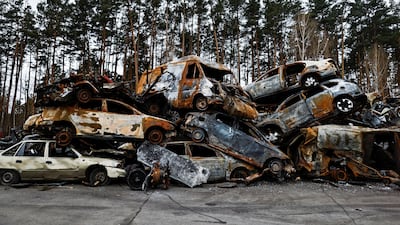
Cars destroyed in Russian attacks, in Irpin, near Kyiv. The scene of fierce fighting, the town was occupied by Russian forces. Reuters -
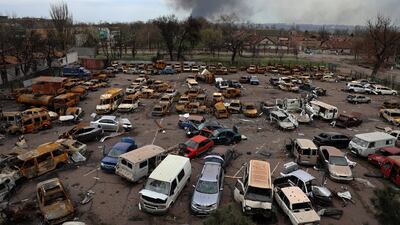
Damaged and destroyed vehicles at Illich Iron and Steel Works Metallurgical Plant, in an area controlled by Russian-backed separatists in besieged south-eastern city Mariupol. AP -
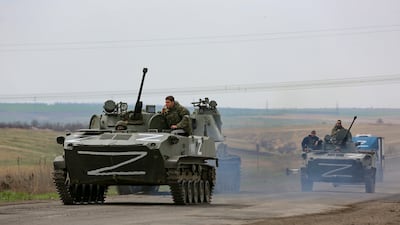
Russian military vehicles in an area controlled by Moscow-backed separatists near Mariupol. AP -
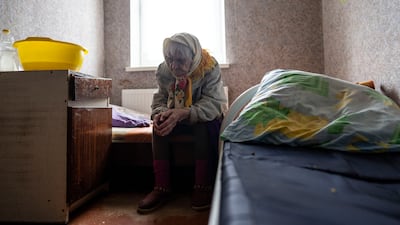
An elderly woman waits do be evacuated from a hospice in Chasiv Yar city, in Donetsk, eastern Ukraine. At least 35 residents have been helped to flee from the region that has been under attack for weeks. AP -
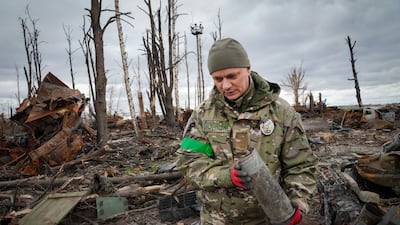
A Ukrainian Interior Ministry serviceman collects unexploded shells, grenades and mines, following fierce fighting in Hostomel. AP


“I don’t see how Putin can be taken to be a valid interlocutor now.”
But Mr Johnson did suggest that Mr Zelenskyy, who he recently visited in Kyiv and frequently calls, could be open to negotiation on Crimea.
“The view of the president of Ukraine, if I understood him correctly – I speak to him a lot – is he would actually like Russian forces to be expelled from their existing positions in Donetsk and Luhansk.
“That’s a pretty maximalist position. On Crimea, they’re not so maximalist.”

