


The decision by ministers to take “a scythe” to UK overseas aid spending meant support to 15 developing countries was slashed by more than half and cut entirely for another three, a report says.
In 2020, the UK government announced it would cut spending on foreign aid from 0.7 per cent of gross national income to 0.5 per cent because of pressure caused by the coronavirus pandemic.
That was despite the 0.7 per cent pledge for official development assistance being written into law.
The National Audit Office, in its review of the decision, said the move “disproportionately affected” bilateral programmes, with existing multilateral funding through the World Bank, UN Agency and others protected because of legal and political commitments.
In its report — Managing Reductions In Official Development Assistance Spending — published on Thursday, the watchdog said the Foreign, Commonwealth and Development Office (FCDO) had to chop its assistance budget for 2021-22 by £4.2 billion ($5.5bn).
The speed at which assessments had to be made in “planning for a significant reduction in spending in the coming year” meant officials “did not complete a thorough review of the impact on outcomes”, the 79-page report said.
The effect on bilateral aid budgets meant there was an overall reduction of 53 per cent, with spending downgraded for 35 of 44 country and regional offices that had development assistance programmes in the previous year.
Meg Hillier, chairwoman of the House of Commons public accounts committee, said vulnerable people were left without desperately needed support.
The Labour MP backed the auditor’s assessment that the office must work with the Treasury to prepare for foreign aid spending to return to its pre-pandemic level.
-
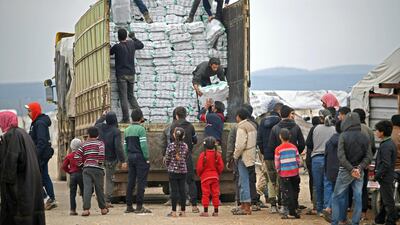
Displaced Syrians queue to receive humanitarian aid, consisting of heating material and drinking water, at a camp in the town of Mehmediye. AFP -

Pakistani flood survivors catch water bottles distributed by military helicopter in Bssera village near Muzaffargarh. Pakistan issued fresh flood warnings putting parts of Punjab and Sindh on alert. AFP -

A Pakistani health worker administers polio vaccine drops to Afghan refugee children during a polio vaccination campaign in Lahore. AFP -

People gather prior to a food distribution at the Internally displaced person camp (IDP) of Farburo in Gode, near Kebri Dahar, southeastern Ethiopia. AFP -
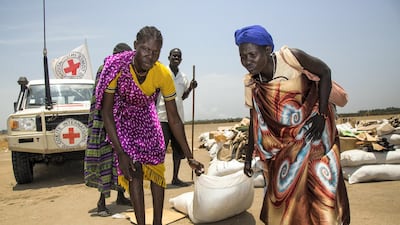
Women carry a sack of seeds in the opposition controlled town of Thonyor. The United Nations warned of a growing risk of mass deaths from starvation among people living in conflict and drought-hit areas of the Horn of Africa and Nigeria. AFP


Chancellor of the Exchequer Rishi Sunak said the government intended to return to the 0.7 per cent target when it was not borrowing for day-to-day spending and when underlying debt was falling.
In the 2021 spending review, the government expected this to be in 2024-2025 but it depends on how the UK economy performs, the national auditor said.
“The impact on public finances from Covid meant government took a scythe to UK overseas aid spending," Ms Hillier said.
“Cutting fast and deep across its programmes meant FCDO had to make compromises, which inevitably increased risks to value for money.
“Ultimately, the cuts mean vulnerable people living in the most difficult parts of the world, such as Syria, face being without the support they desperately need.
“The FCDO must now prepare for when public finances return to a healthier state, so it can ensure an increased aid budget is spent effectively on those who need it most.”
Gareth Davies, the head of the National Audit Office, said the “speed and depth of reductions has had an immediate impact locally and the effect on long-term value for money is not yet known”.
“FCDO must build its understanding of how the spending reductions have affected development outcomes to help it plan its approach to future budget allocations, including a planned return to the 0.7 per cent ODA target,” Mr Davies said.

Bond, the UK network representing international aid agencies, said the report showed that decisions were made without enough consultation.
“This report confirms what we feared from the outset," said Abigael Baldoumas, policy and advocacy manager at Bond.
“The scale and speed of the cuts ... meant decisions were taken without sufficient consultation with FCDO’s partners or any consideration for the harm they would cause marginalised communities, undermining both UK aid’s value for money and its contribution to alleviating poverty.
“We now know just how opaque the process was, how rushed and outsized the cuts to bilateral programmes were, and have more detail about where the cuts fell.
“The UK government must learn from its mistakes and implement the [auditor's] recommendations, including assessing the impacts of the cuts, improving transparency and preparing for a return to 0.7 per cent.”
The Foreign Office has been approached for comment.

