


Live updates: follow the latest news on Russia-Ukraine
A group of Ukrainian orphans taken from their war-torn country by a Scottish charity can travel to the UK, Home Secretary Priti Patel has said.
Ms Patel said the 48 children, who were taken out of Ukraine and into Poland by the Dnipro Kids organisation, have been given approval to travel to Britain.
Scottish National Party Westminster leader Ian Blackford raised their plight in the House of Commons on Wednesday, saying that the Home Office was the “only obstacle” in bringing them to the safety of the UK.
“It is deeply troubling that children from the charity Dnipro Kids have been caught up in Putin’s brutal invasion of Ukraine," Ms Patel said on Thursday.
“I have been working directly with the Ukrainian government and asked for their permission to bring these children to the UK.
“I am extremely grateful to the authorities in Ukraine, who have now confirmed to me that the children can come here.
“We are working urgently with Poland to ensure the children’s swift arrival to the UK."
Dnipro Kids, which was established by fans of Hibernian Football Club, took the children from its orphanage in Dnipro after the Russian invasion.
-

A woman cries near a building damaged by shelling in Kyiv as Russia's attack on Ukraine continues. EPA -
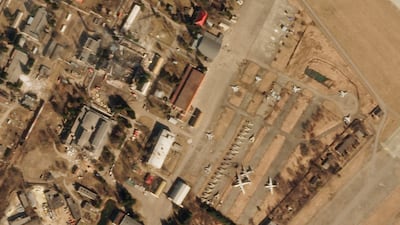
A satellite photo from Planet Labs PBC shows the damage from a Russian strike on Lviv's international airport. AP -
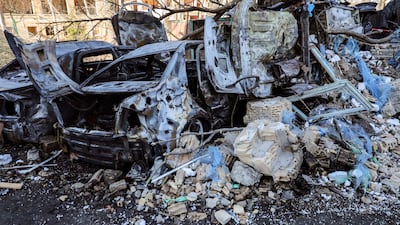
Destroyed cars hit by shelling in Kyiv. EPA -
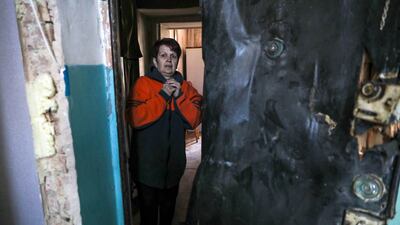
A woman stands in her home after her building was damaged by shelling in Kyiv. EPA -
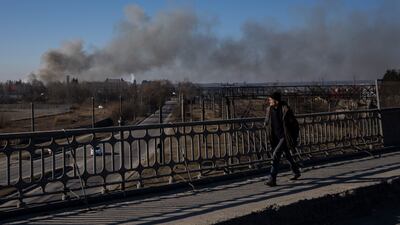
A pedestrian looks at a cloud of smoke rising after an explosion in Lviv. AP -
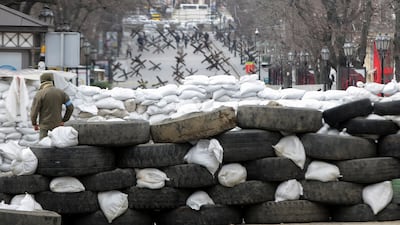
General view of a street behind a barricade in the southern Ukrainian city of Odesa. EPA -
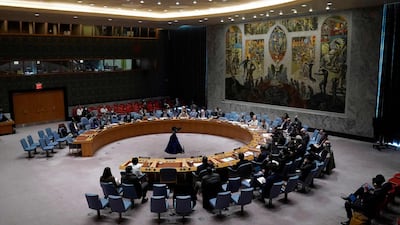
The UN Security Council meets on threats to international peace and security in New York. AFP -
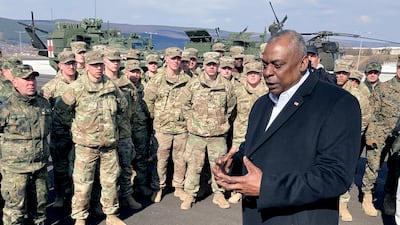
US Defence Secretary Lloyd Austin speaks with US troops at an army training range in Bulgaria. AP -

Empty strollers are seen outside the Lviv city council building during an action to highlight the number of children killed during the Russian invasion of Ukraine. AFP -

Children play on the stage of the theatre of the Ukrainian House where a shelter for refugees has been installed in Przemysl, south-eastern Poland. AFP -
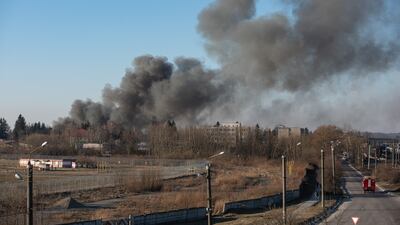
Smoke is seen above buildings close to the airport in Lviv, Ukraine. Lviv's mayor said the airport was not hit, but an area nearby. Getty Images -
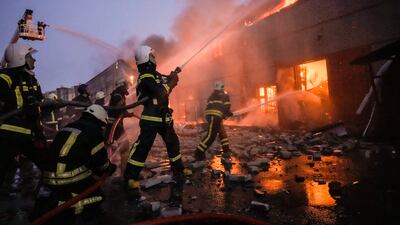
Ukrainian firefighters try to extinguish a blaze at a warehouse after a bombing in Kyiv. AP Photo -

President Volodymyr Zelenskiy presents flowers to Kateryna Vlasenko, 16 - who was injured as she fled with her family from the town of Vorzel - at a hospital in Kyiv. Reuters -
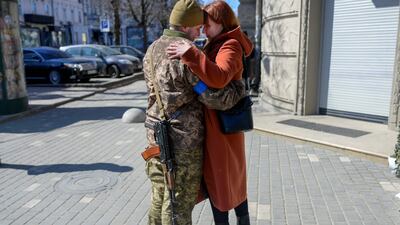
Igor, a 40 year-old Ukranian soldier, embraces his wife in front of his military basement in the centre of Odesa. AFP -
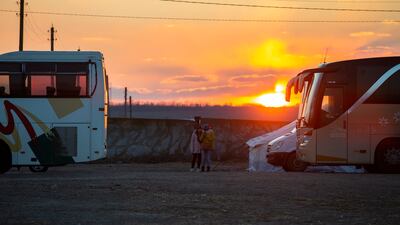
Ukrainian refugees arrive at the reception centre near Palanca Village, about 3 kilometres from the Moldova-Ukraine border. EPA -
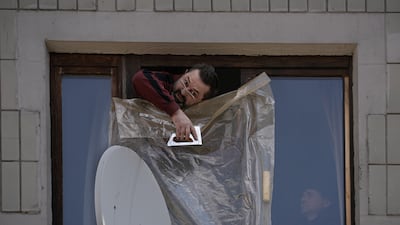
Broken windows after parts of a Russian missile, shot down by Ukrainian air defences, hit an apartment block in Kyiv. AP -

People clear debris outside a medical centre damaged by the same Russian missile after it was intercepted. AP -

A police officer looks through the window of a damaged flat in Kyiv. One person was killed and three injured when debris from a downed rocket hit an apartment in the Ukrainian capital. AFP -
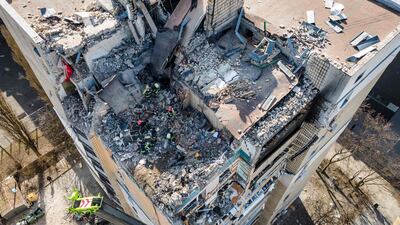
Firemen working in the rubble after extensive damage in Kyiv. AFP -
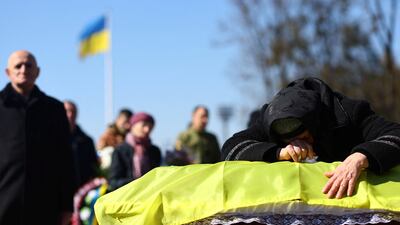
Family members and comrades of Ivan Skrypny, who was killed in a rocket attack on a military base in Yavoriv, pay their last respects at his memorial service in Lviv, Ukraine. Reuters -

A man feels the despair as his home was hit by debris from a downed rocket in Kyiv. Russian troops trying to encircle the capital have launched early morning strikes on the city for several successive days. AFP -
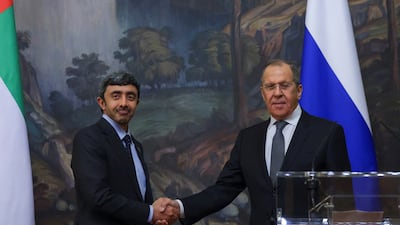
UAE Foreign Minister Sheikh Abdullah bin Zayed shakes hands with Russia's Foreign Minister Sergey Lavrov during a news conference following their talks in Moscow. Reuters -

The Donetsk Regional Theatre of Drama, which was destroyed by an air strike during Russia's military onslaught in Mariupol, Ukraine. Reuters -
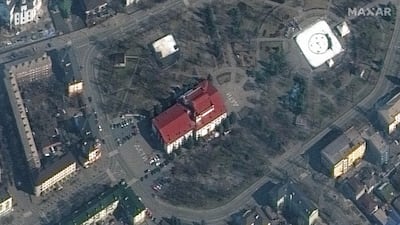
A satellite image of the theatre before the bombing, with the word 'children' written in Russian in large white letters on the pavement in front of and behind the building. Reuters -
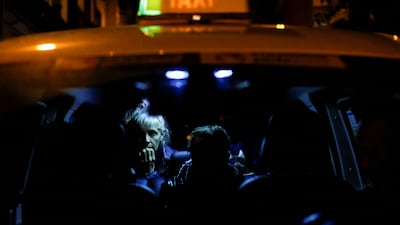
A Ukrainian woman and her family in a taxi displaying the colours of the Ukrainian flag upon arriving in Madrid with a group of Spanish taxi drivers who drove to Poland to support the mass evacuation of refugees. Reuters -

A sanitised train arrives in Kielce, Poland, carrying children with oncological diseases who fled Russia's invasion of Ukraine. Reuters -
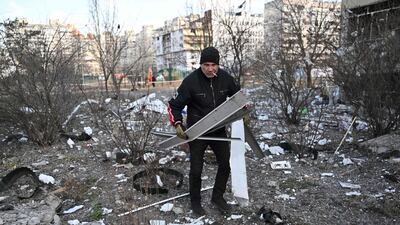
A man outside a damaged housing block after it was hit by debris from a downed rocket in Kyiv. AFP -
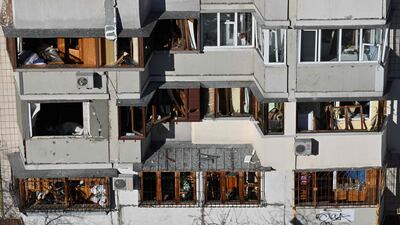
A residential building damaged by a blast wave at the scene where debris from a downed rocket hit a nearby apartment block in Kyiv. AFP -
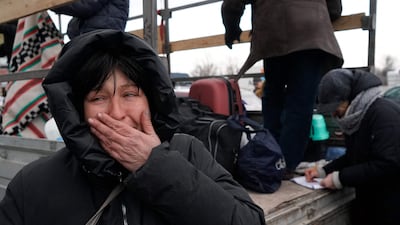
Evacuees from Mariupol are seen upon arrival at the car park of a shopping centre on the outskirts of the city of Zaporizhzhia, which is now a registration centre for displaced people. AFP -
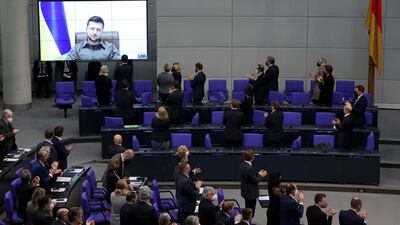
Legislators applaud Volodymyr Zelenskyy, Ukraine's president, after an address via video link at the Bundestag in Berlin. Bloomberg


“I’m absolutely delighted that we’ve managed to achieve this breakthrough and that, all things being well, Scotland will welcome 48 Ukrainian children and their guardians to safety on Monday,” Mr Blackford said.
“While this process has been more difficult than it needed to be, all that matters now is that these children will be in a place of safety and I am pleased beyond words.
“I want to pay tribute to everyone who has worked hard to make this happen, including the Scottish charity Dnipro kids, the Ukrainian and Polish authorities, the Scottish government, Edinburgh City Council and all those who have helped to resolve issues at the Home Office.
“It’s essential that the UK government learns lessons and removes unnecessary barriers and delays to supporting displaced children and families.
“Not all children will be in the position of having guardians and adults to support them, and the Home Office must ensure there are safe, smooth and quick ways for them to access visas and reach safety.
"It’s far from clear to me how that can happen under the present system."
Scottish Secretary Alister Jack said: “It is great news that the Dnipro Kids will soon be on their way to Scotland," said Scottish Secretary Alister Jack.
“We have all been moved by their story and I’m very glad the UK government was able to move so quickly to smooth their passage here.
“I’m very grateful to the Hibs fans’ Dnipro Kids charity and all others involved in getting the children out of Ukraine safely.
"Scotland has a proud history of supporting refugees, and I’m sure these young people will be made incredibly welcome when they get here.”

