



Tube and bus users in the UK capital woke up on Tuesday to a 5 per cent fare rise, the biggest increase in nearly a decade, and the first Tube strike since the start of the pandemic, with another one planned for Thursday.
Both hike and strike follow the UK government’s Budget and Comprehensive Spending Review in October last year, which disbursed £7 billion ($9.38bn) to improve urban transport elsewhere in England, but provided no new funding for its capital city.
At the time, Mayor Sadiq Khan said the decision took “London for granted” and would lead to a significant deterioration in service levels.
He said money was needed urgently to maintain and revamp the Tube network, improve road surfaces and convert the bus fleet from internal combustion engines to electric.
The mayor was not a lone voice in decrying the move. Eighty-two signatories of a letter sent to UK Chancellor Rishi Sunak on behalf of London businesses and organisations were equally concerned.
The letter expounded the need for “robust public transport services as part of a wider integrated network” for logistical, economical and climatic reasons.
London may be the centre of the country’s wealth but there is widespread poverty in the capital.
The letter points out that many impoverished Londoners depend on public transport “to access – and provide – vital jobs, education and services”.
The impact of a moribund transport system in London, could undermine the country’s "most powerful economic engine [and] would hold back the UK’s economic recovery”.
Whitehall and City Hall at loggerheads
The letter didn't fall on deaf ears but its clarion call was only partially heeded, with long-term tensions between Whitehall and City Hall colouring the government's response.
In late February, the Department for Transport announced a further £200 million would be given to TFL, taking government financial support for the operator since the pandemic began to close to £5 billion.
The possibility of additional capital investment was floated, but was made contingent “on the mayor and TfL’s co-operation with the government”, as well as the meeting of various conditions attached to previous support the operator has received during the pandemic.
These include a consultation on how TfL could raise between £500 million and £1 billion of additional yearly revenue from 2023, achieve operating cost savings of up to £400 million in 2022 to 2023, and move its pension fund into a “financially sustainable position”.
To meet these commitments, Sadiq Khan is being told to make cuts to existing services, make TfL staff poorer by reducing their pensions and find ways to raise money that don’t trouble the Treasury’s coffers – despite London’s economy generating a net £38.8 billion for the Treasury in 2019.
Given London's transport network plays such an integral role in the function and success of London's economy, an underfunded and poorly performing network will likely harm the capital's overall economic output - meaning less revenue for Treasury in the long term.

The government's short termism was called out by Silviya Barrett, head of policy and research at the Campaign for Better Transport, who dismissed the latest financial package for TfL as “disappointing”.
“It’s essential that we don’t see a decline in service levels,” she told The National.
“This would lead to fewer people travelling on tubes and buses, which could fuel a downward spiral and reverse the progress in the modal shift [change from one form of transport to another] made pre-pandemic.”
Ms Barrett here highlighted one of the most troubling aspects of TfL’s turmoil: before the pandemic, the capital's transport network was seen as an exemplar for other UK cities to follow.
TfL’s passenger problem
Since TFL was created 21 years ago, the devolved operator reached the point where it was funded with no direct operational subsidy from central government. Instead, it covered 72 per cent of its costs with revenue from passengers – nearly twice the level of some UK cities.
As with so many other aspects of life, however, Covid turned this conspicuous strength into a glaring weakness.
TFL figures show total passenger journeys on the Tube fell from 1.3 billion in the financial year of 2019/20 to 296 million in 2020/21.
The effect on revenue was brutal, with passenger income dropping from £2.73 billion to £650m.
TFL could maybe absorb the losses if they were limited to the pandemic. The problem is that while the danger posed by Covid is now receding, the changes it has left behind appear permanent.
Institute for Economic Affairs
Of these changes, one of the most prominent is the shift to discretionary homeworking.
This trend was highlighted in a report released earlier in February by the UK’s Institute of Economic Affairs. It forecast rail would be “hit particularly hard by changes in travel habits, as many rail users – concentrated in high-income groups and white-collar jobs – have been able to shift to working from home and virtual meetings with ease”.
This finding would have made particularly grim reading for Sadiq Khan, because revenue from the Tube props up the rest of London’s travel network.
The low passenger-low revenue paradigm prompted the IEA to recommend the government further retrench subsidies to the rail network.
“Lower than expected passenger numbers make the high level of rail subsidies even more difficult to justify, especially in the context of harmful tax increases and pressure on the public finances,” said Dr Richard Wellings, report editor and former IEA deputy research director.
TfL funding model an outlier
The IEA is a staunch advocate of free markets and so most of its conclusions call for less government intervention.
Tellingly, its conclusion here is not shared by authorities in the US and France where New York and Paris are operating in far less adversarial circumstances and enjoy far greater state support.
This means they are less reliant on passenger numbers to sustain services, and thus better protected against seismic disruptions to the transport continuum such as Covid-19.
Richard Brown, deputy director of think tank Centre for London, crunched the numbers and found that 72 per cent of London’s transport revenue was generated by fares, compared with 41 per cent in New York and 36 per cent in Paris.
TfL’s passenger dependence is a relatively current phenomenon. As recently as 2011, more than 50 per cent of its revenue was from a central government grant.
Sadiq Khan put forward a proposal last year to devolve the money Londoners pay in Vehicle Excise Duty to the capital to diversify TfL’s passenger-centric model. Such fiscal ringfencing operates successfully in both New York and Paris, but the UK government rebuffed it.
Metropolitan Transport Authority data show that in New York in 2018, the policy raised $2.3 billion for the city’s transport network. A similar amount in London from this policy would be transformative.
Ms Barrett believes the UK government needs to undergo a complete transport mindset shift.
“Public transport is an essential service and should be a guaranteed provision just like education and healthcare,” she said.
“It’s just completely rethinking the funding model so it delivers not only for the passengers that are using the service but for the wider society in terms of providing economic environmental social benefits.
“It saves money for the NHS [National Heath Service] too. If people are walking and cycling and using public transport rather than driving everywhere, we’ll have a healthier society.
“This is what many of the European countries understand; they are funding public transport to the extent that there are services available everywhere.”
Getting people out of their cars
Ms Barrett also wants to see more obstacles put up to car use as “the harder is to use your car in cities, the more attractive public transport will become”.
She listed higher road prices and more provisional parking charges, workplace parking levies and clean air zones as some of the ordnance that could be harnessed to this effect.
London is already doing many of these things, but Ms Barrett would like to see an acceleration and urged Sadiq Khan to expedite plans for distance-based road use charging.
Mr Khan “is saying that he’s going for it but not until the next election and I would be looking to implement that much quicker as that will bring revenue for public transport which is safe from [government] cuts,” she said.
The danger of a punitive approach to car use at a time when public transport is becoming more expensive and less readily available is clear: ordinary Londoners will find their daily travel options both prohibitive and onerous.
Yet Sadiq Khan needs to keep the wheels on London buses and trains going round and round, not just all day long, but all night long too. If he is to do so without the state support availed to other global cities, then he is going to have to make some pretty tough choices – and it appears likely the losers will be private road users.
2021 Urban Mobility Readiness Index – in pictures
-
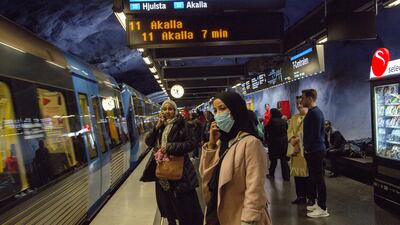
1. Stockholm – overall score: 73.7. Getty Images -

2. San Francisco – overall score: 73.3. Bloomberg -
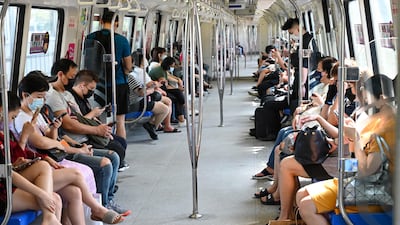
3. Singapore – overall score: 72.8. AFP -

4. Helsinki – overall score: 71.6. AFP -
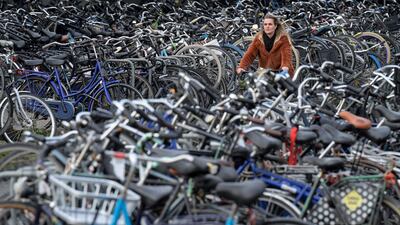
5. Amsterdam – overall score: 71.5. AFP -
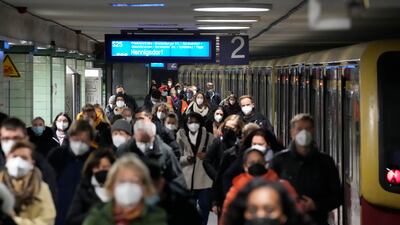
6. Berlin – overall score: 70.3. AP Photo -
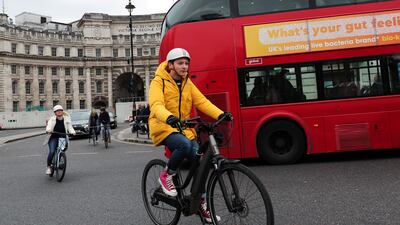
7. London – overall score: 70.3. Reuters -
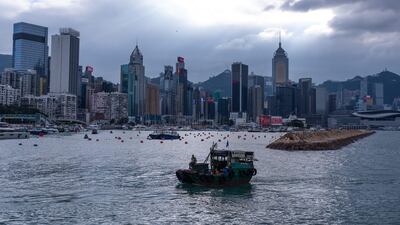
8. Hong Kong – overall score: 70.3. AFP -
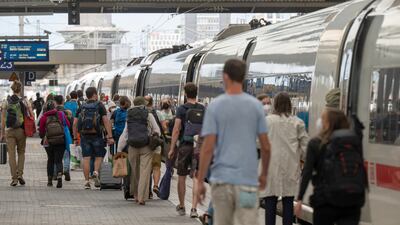
9. Munich – overall score: 70.2. AP Photo -
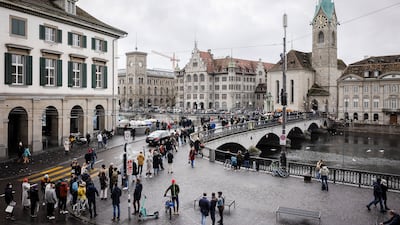
10. Zurich – overall score: 68.9. Reuters



