


An aid group suing the French and British coastguards over the deaths of 27 migrants in the English Channel claims people calling for help were “laughed at” by rescuers on a voyage days earlier.
Utopia 56, a French volunteer group, filed manslaughter charges against authorities on both sides of the Channel over the tragedy on November 24.
It accused coastguards of failing to help the struggling migrants despite distress calls from the flimsy boat, which deflated and capsized in the water.
The lawsuit is intended to “remind our governments that it is urgent to question the policies at our borders, which take human lives every day”, Utopia 56 spokesman Nikolai Posner said.
The group cited a separate incident four days earlier in which another group of migrants were said to have received similarly short shrift from rescuers.
“If I call 999, they say call France,” one migrant was quoted as saying in a voice message from the boat, referring to the British emergency number.
“When we call France, they tell us to contact the United Kingdom. They’re both laughing at us.”
It was separately announced on Monday that 16 of the victims of the deadly journey on November 24 would be repatriated to Iraqi Kurdistan this week.
This month, 26 victims were formally identified, including seven women, a teenager and a 7-year-old girl. The identity of one person remains unknown. It was the worst migrant shipwreck on record in the Channel.
In the aftermath of the disaster, two survivors gave accounts to Kurdish media of distress calls going unanswered as their boat deflated.
Utopia 56 said it “intends that investigations be carried out to determine the responsibilities of the French and British rescue services in this tragedy”.
It accused the French maritime prefect of the Channel and North Sea, the Regional Operational Centre for Surveillance and Rescue of Gris-Nez in the Pas-de-Calais department, and the UK’s coastguard, of failures that contributed to the disaster.
Migrants were abandoned to their fate “despite calls to the English and French rescue services”, the group claimed. The British side appeared not to be investigating at all, it said.
-
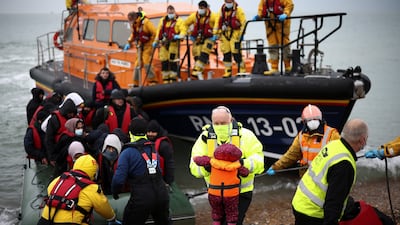
Migrants are brought ashore at Dungeness by RNLI Lifeboat members after crossing the Channel. Reuters -
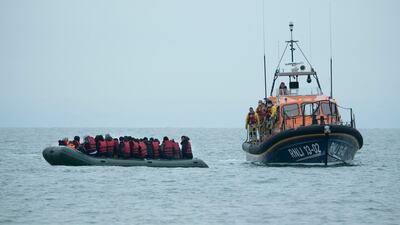
The past three years have seen a significant rise in attempted Channel crossings by migrants, despite the dangers. AFP -
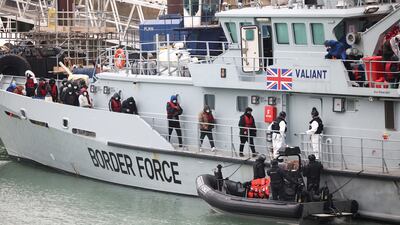
Migrants on board a Border Force rescue boat line up to disembark at Dover harbour after crossing the Channel. Reuters -
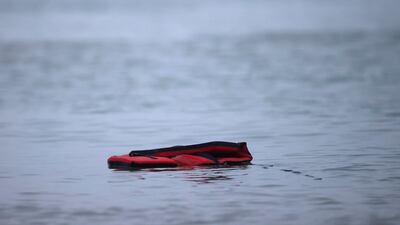
A life jacket is left in the water after a group of more than 40 migrants got on an inflatable dinghy to leave the coast of northern France and cross the Channel. Reuters -
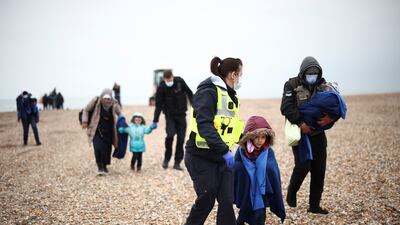
Migrants are escorted by Border Force staff in Dungeness, after being brought ashore by an RNLI lifeboat. Reuters -
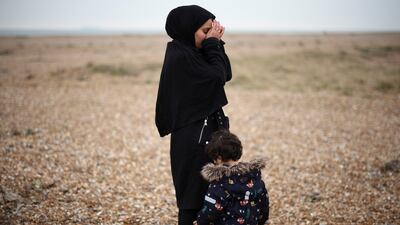
A woman with a child is brought ashore safely. Reuters -
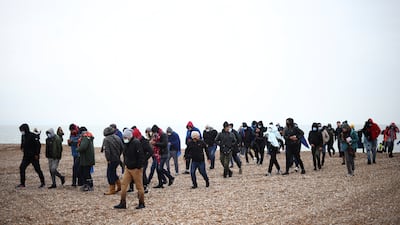
Migrants walk along a British beach after being brought ashore by an RNLI lifeboat. Reuters -

At least 27 migrants bound for Britain died on Wednesday when their boat sank in the English Channel. AP -
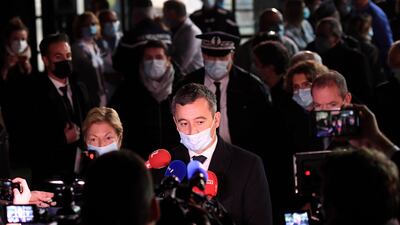
French Interior Minister Gerald Darmanin speaks to the press in Calais, northern France, after the tragedy. AP -
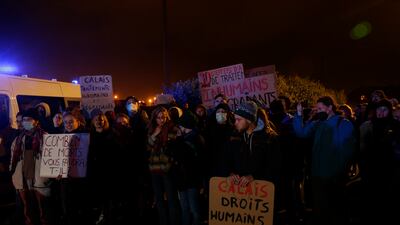
France's interior minister has called it the biggest tragedy involving migrants on the dangerous crossing to date. AP -
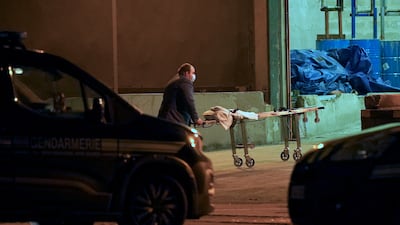
A man wheels a gurney into a warehouse in Calais, where it is believed the bodies of migrants are being transported. PA -
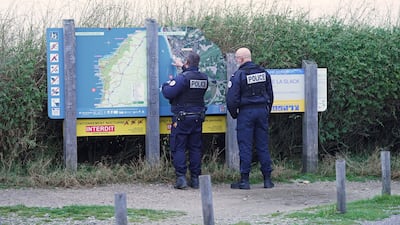
French police look at a map of the coast at Wimereux, in northern France. The stretch of beach is believed to be used by migrants aiming to cross the Channel. PA -
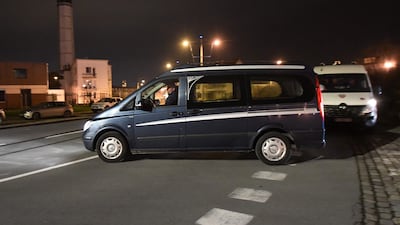
A funeral van leaves the port of Calais. AFP -
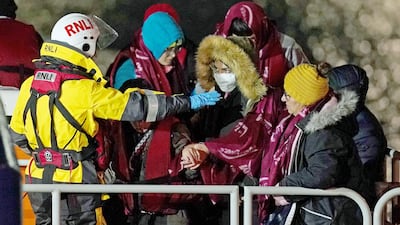
A group of people thought to be migrants are brought to Dover by the RNLI. PA


The Paris prosecutor’s office confirmed it had received the lawsuit. A spokeswoman for the French Maritime Prefecture said an investigation was under way into the calls received on the night of the disaster.
“Sometimes we receive hundreds of calls in a night, each call is dealt with, and we have to work out which boat they are referring to,” she said.
Callers sometimes express a preference to be taken in by British rescuers, she said, but this would not change France’s obligation to help.
The British coastguard declined to comment on the complaint, but said it had received more than 90 alerts from the Channel on the day of the tragedy.
“Every call was answered, assessed and acted upon, including the deployment of search and rescue resources where appropriate”.
In London, proceedings have also formally been launched by the families of the victims from Iraqi Kurdistan.
Britain and France traded blame for the Channel crossings following the disaster, adding further tensions to a strained post-Brexit relationship. Journeys have tripled this year compared with 2020.
France said the lack of legal asylum routes to Britain, and an attractive clandestine labour market, was luring people across the Channel. It banished the UK from emergency talks after an open letter from Prime Minister Boris Johnson that angered French President Emmanuel Macron.
Meanwhile, London has not hidden its frustration that the patrols it partly finances on the French coast are not putting a stop to the perilous crossings.

