• Donations for flood victims in the church of St Nicholas and Rochus in Mayschoss, in Ahrweiler district, Rhineland-Palatinate, western Germany. Volunteer group Syrian Volunteers in Germany helped with the relief effort in Ahrweiler.
    Donations for flood victims in the church of St Nicholas and Rochus in Mayschoss, in Ahrweiler district, Rhineland-Palatinate, western Germany. Volunteer group Syrian Volunteers in Germany helped with the relief effort in Ahrweiler.
  • Houses destroyed by flooding in Mayschoss. The floods were the worst seen in Germany for 60 years, with at least 180 people killed.
    Houses destroyed by flooding in Mayschoss. The floods were the worst seen in Germany for 60 years, with at least 180 people killed.
  • A volunteer disposes of an electrical item as the clean-up effort continues after flooding in Euskirchen, North Rhine-Westphalia, western Germany.
    A volunteer disposes of an electrical item as the clean-up effort continues after flooding in Euskirchen, North Rhine-Westphalia, western Germany.
  • A tractor crosses a bridge over the River Ahr, next to a flood-damaged bridge in the parish of Kreuzberg, Rhineland-Palatinate.
    A tractor crosses a bridge over the River Ahr, next to a flood-damaged bridge in the parish of Kreuzberg, Rhineland-Palatinate.
  • Volunteers join the clearing-up effort at a retirement home at the town of Erftstadt, North Rhine-Westphalia.
    Volunteers join the clearing-up effort at a retirement home at the town of Erftstadt, North Rhine-Westphalia.
  • The aftermath of flooding in Gemuend, North Rhine Westphalia.
    The aftermath of flooding in Gemuend, North Rhine Westphalia.
  • Local residents hand out pizzas to members of the German armed forces at a temporary bridge built over the River Ahr, near Bad Neuenahr, Rhineland-Palatinate.
    Local residents hand out pizzas to members of the German armed forces at a temporary bridge built over the River Ahr, near Bad Neuenahr, Rhineland-Palatinate.
  • A destroyed clothes store in Ahrbrueck in the Ahrweiler district.
    A destroyed clothes store in Ahrbrueck in the Ahrweiler district.
  • A car is guided across a temporary bridge over the River Ahr in Insul.
    A car is guided across a temporary bridge over the River Ahr in Insul.
  • Cars swept away by flooding lie washed up at Erftstadt-Blessem, North Rhine-Westphalia.
    Cars swept away by flooding lie washed up at Erftstadt-Blessem, North Rhine-Westphalia.
  • German armed forces help with the clear up operation at Schuld, near Bad Neuenahr.
    German armed forces help with the clear up operation at Schuld, near Bad Neuenahr.
  • Clearing up in the aftermath of the floods in Ahrweiler.
    Clearing up in the aftermath of the floods in Ahrweiler.

Europe's deadly flooding 'more intense and more likely' because of climate change


Simon Rushton
  • English
  • Arabic

Climate change made the extreme rainfall and floods that devastated Germany and Belgium last month at least 20 per cent more likely to happen, scientists said on Tuesday.

Severe rainfall is now up to nine times more likely in western Europe and downpours are also between 3 and 19 per cent more intense, research published by the World Weather Attribution scientific consortium found.

At least 190 people in western Germany and 38 people in Belgium's southern Wallonia region were killed in mid-July.

Scientists gave a warning of more extreme weather to come.

“We will definitely get more of this in a warming climate,” said the WWA co-leader Friederike Otto, a climate scientist at the University of Oxford.

“Extreme weather is deadly. This is an urgent global challenge and we need to step up to it. The science is clear and has been for years.”

She said the floods showed “even developed countries are not safe from severe impacts of extreme weather that we have seen and known to get worse with climate change".

  • Around $3.5 trillion is required between now and 2050 to meet targets for a 'sustainable path', according to the International Energy Agency. AP Photo
    Around $3.5 trillion is required between now and 2050 to meet targets for a 'sustainable path', according to the International Energy Agency. AP Photo
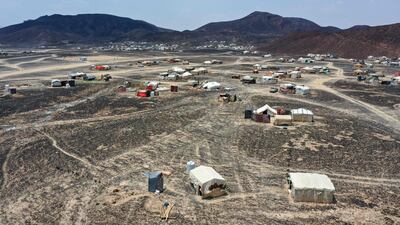
  • The makeshift Suweida camp for internally displaced people in Yemen’s Marib province. The effects of climate change have exacerbated the displacement of local populations during the country’s war. AFP
    The makeshift Suweida camp for internally displaced people in Yemen’s Marib province. The effects of climate change have exacerbated the displacement of local populations during the country’s war. AFP
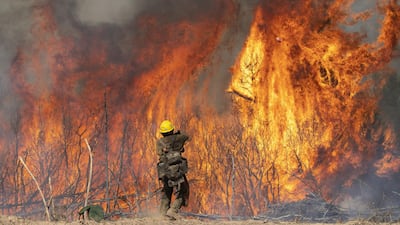
  • A firefighter monitors a controlled burn, near Jolon, California.Frequent wildfires are an indication of climate change further getting out of control, say environmentalists. Bloomberg
    A firefighter monitors a controlled burn, near Jolon, California.Frequent wildfires are an indication of climate change further getting out of control, say environmentalists. Bloomberg
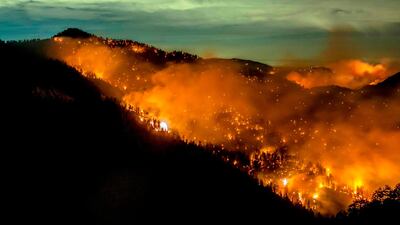
  • Wildfire burns through the Angeles National Forest in Los Angeles County, north of Azusa, California. AFP
    Wildfire burns through the Angeles National Forest in Los Angeles County, north of Azusa, California. AFP
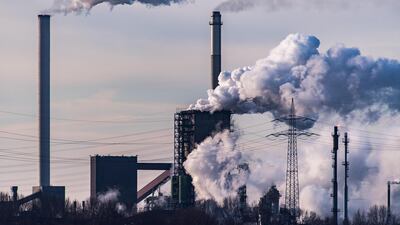
  • Steam rises from a steel mill in Duisburg, Germany. Some countries are using the coronavirus pandemic to wind back climate change commitments, say environmentalists. Getty Images
    Steam rises from a steel mill in Duisburg, Germany. Some countries are using the coronavirus pandemic to wind back climate change commitments, say environmentalists. Getty Images
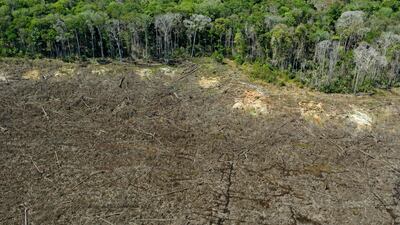
  • A deforested area close to Sinop, Mato Grosso State, Brazil. Deforestation in Brazil's Amazon rainforest rose by almost 22 percent from August 2020 to July 2021, compared with the same period the year before, reaching a 15-year high. AFP
    A deforested area close to Sinop, Mato Grosso State, Brazil. Deforestation in Brazil's Amazon rainforest rose by almost 22 percent from August 2020 to July 2021, compared with the same period the year before, reaching a 15-year high. AFP

WWA scientists used regional weather records and computer simulations to compare the July flooding with what might have been expected in a world unaffected by climate change.

Because warmer air holds more moisture, summer downpours in this region of northern Europe are now 3-19 per cent heavier than they would be without global warming, the scientists found.

And the event itself was anywhere from 1.2 to 9 times – or 20 per cent to 800 per cent – more likely to have occurred. The broad range of uncertainty was explained partly by a lack of historical records, WWA said.

People check for victims in flooded cars on a road in Erftstadt, Germany. AP

“Climate change increased the likelihood [of the floods] but climate change also increased the intensity,” said Frank Kreienkamp, from the German weather service.

Extreme weather events have plagued the planet this summer, from a deadly Canadian heatwave to wildfires across the Siberian Arctic.

“The fact that people are losing their lives in one of the richest countries in the world – that is truly shocking,” said climate scientist Ralf Toumi of Imperial College London, who was not involved in the study. “Nowhere is safe.”

The rainfall over Europe from July 12 to July 15 triggered flooding that swept away houses and power lines in Germany, Belgium and elsewhere.

“It was a very rare event,” said Maarten van Aalst, director of the International Red Cross Red Crescent Climate Centre.

“On the other hand it has already become more likely than before and it will become more likely in the future. Sadly, people tend to be prepared for the last disaster.”


COMPANY%20PROFILE
%3Cp%3E%3Cstrong%3EName%3A%3C%2Fstrong%3E%20PlanRadar%3Cbr%3E%3Cstrong%3EStarted%3A%20%3C%2Fstrong%3E2013%3Cbr%3E%3Cstrong%3ECo-founders%3A%20%3C%2Fstrong%3EIbrahim%20Imam%2C%20Sander%20van%20de%20Rijdt%2C%20Constantin%20K%C3%B6ck%2C%20Clemens%20Hammerl%2C%20Domagoj%20Dolinsek%3Cbr%3E%3Cstrong%3EBased%3A%20%3C%2Fstrong%3EVienna%2C%20Austria%3Cbr%3E%3Cstrong%3ESector%3A%20%3C%2Fstrong%3EConstruction%20and%20real%20estate%3Cbr%3E%3Cstrong%3ECurrent%20number%20of%20staff%3A%20%3C%2Fstrong%3E400%2B%3Cbr%3E%3Cstrong%3EInvestment%20stage%3A%20%3C%2Fstrong%3ESeries%20B%3Cbr%3E%3Cstrong%3EInvestors%3A%3C%2Fstrong%3E%20Headline%2C%20Berliner%20Volksbank%20Ventures%2C%20aws%20Gr%C3%BCnderfonds%2C%20Cavalry%20Ventures%2C%20Proptech1%2C%20Russmedia%2C%20GR%20Capital%3C%2Fp%3E%0A
Dust and sand storms compared

Sand storm

  • Particle size: Larger, heavier sand grains
  • Visibility: Often dramatic with thick "walls" of sand
  • Duration: Short-lived, typically localised
  • Travel distance: Limited 
  • Source: Open desert areas with strong winds

Dust storm

  • Particle size: Much finer, lightweight particles
  • Visibility: Hazy skies but less intense
  • Duration: Can linger for days
  • Travel distance: Long-range, up to thousands of kilometres
  • Source: Can be carried from distant regions
UAE v Ireland

1st ODI, UAE win by 6 wickets

2nd ODI, January 12

3rd ODI, January 14

4th ODI, January 16

Updated: August 24, 2021, 4:33 PM