Paricutin volcano in Mexico - in pictures
-

A church tower where lava from the Paricutin volcano buried the church decades ago, in San Juan Parangaricutiro, Mexico. All photos: AP -

An altar in the church. The lava from Paricutin eventually covered 18.5 square kilometres -

Geologists, volcanologists and seismologists follow an old lava flow to the crater of Paricutin -
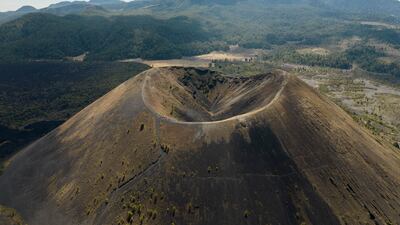
The volcano's birth in February 1943 and nine-year eruption were a cornerstone in the study of monogenetic volcanos. The crater of the volcano is about 200m across -
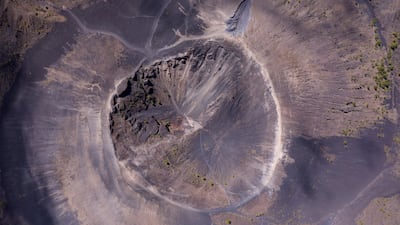
The ground is still hot atop the crater of Paricutin, the first volcano of its kind to have its full life cycle documented by modern science -
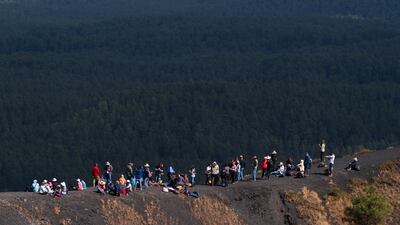
A group from an international vulcanology congress on the crater lip -

Residents of San Juan Nuevo Parangaricutiro celebrate the birth of the volcano in 1943 -
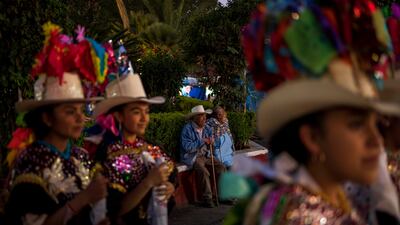
Abel Aguilar, centre left, and his wife at the celebration. Aguilar was five years old when Paricutin erupted for the first time. He said he and other children went to 'see the lava walk like that, real slow' -

An exhibition of images from the first day of the Paricutin eruption -
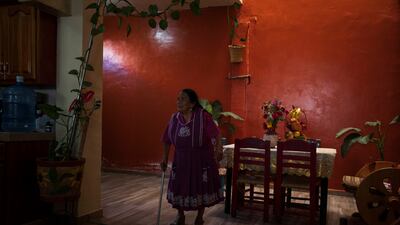
Guadalupe Ruiz, 92, in her home in San Juan Nuevo Parangaricutiro. Ruiz remembers a feeling 'like water rising underground' and, finally, it was 'like a thunderclap or a kick from a horse' -

Residents watch a small replica of the eruption. Residents of San Juan left the community and rebuilt their town and church elsewhere. The old town was buried under 15m of lava


Most popular today

