• This image provided by the U.S. government and DigitalGlobe and annotated by the source, shows damage to the infrastructure at Saudi Aramco's Abaqaiq oil processing facility in Buqyaq, Saudi Arabia. The drone attack Saturday on Saudi Arabia's Abqaiq plant and its Khurais oil field led to the interruption of an estimated 5.7 million barrels of the kingdom's crude oil production per day, equivalent to more than 5% of the world's daily supply. AP
    This image provided by the U.S. government and DigitalGlobe and annotated by the source, shows damage to the infrastructure at Saudi Aramco's Abaqaiq oil processing facility in Buqyaq, Saudi Arabia. The drone attack Saturday on Saudi Arabia's Abqaiq plant and its Khurais oil field led to the interruption of an estimated 5.7 million barrels of the kingdom's crude oil production per day, equivalent to more than 5% of the world's daily supply. AP
  • an Aramco oil facility at the edge of the Saudi capital Riyadh. Saudi Arabia raced today to restart operations at oil plants hit by drone attacks which slashed its production by half, as Iran dismissed US claims it was behind the assault. The Tehran-backed Huthi rebels in neighbouring Yemen, where a Saudi-led coalition is bogged down in a five-year war, have claimed thi weekend's strikes on two plants owned by state giant Aramco in eastern Saudi Arabia. AFP
    an Aramco oil facility at the edge of the Saudi capital Riyadh. Saudi Arabia raced today to restart operations at oil plants hit by drone attacks which slashed its production by half, as Iran dismissed US claims it was behind the assault. The Tehran-backed Huthi rebels in neighbouring Yemen, where a Saudi-led coalition is bogged down in a five-year war, have claimed thi weekend's strikes on two plants owned by state giant Aramco in eastern Saudi Arabia. AFP
  • An Aramco oil facility near al-Khurj area, just south of the Saudi capital Riyadh. Saudi Arabia raced today to restart operations at oil plants hit by drone attacks which slashed its production by half, as Iran dismissed US claims it was behind the assault. The Tehran-backed Huthi rebels in neighbouring Yemen, where a Saudi-led coalition is bogged down in a five-year war, have claimed thi weekend's strikes on two plants owned by state giant Aramco in eastern Saudi Arabia. AFP
    An Aramco oil facility near al-Khurj area, just south of the Saudi capital Riyadh. Saudi Arabia raced today to restart operations at oil plants hit by drone attacks which slashed its production by half, as Iran dismissed US claims it was behind the assault. The Tehran-backed Huthi rebels in neighbouring Yemen, where a Saudi-led coalition is bogged down in a five-year war, have claimed thi weekend's strikes on two plants owned by state giant Aramco in eastern Saudi Arabia. AFP
  • A satellite image from Planet Labs Inc., shows thick black smoke rising from Saudi Aramco's Abqaiq oil processing facility in Buqyaq, Saudi Arabia.The weekend drone attack on one of the world’s largest crude oil processing plants that dramatically cut into global oil supplies is the most visible sign yet of how Aramco’s stability and security is directly linked to that of its owner -- the Saudi government and its ruling family. AP
    A satellite image from Planet Labs Inc., shows thick black smoke rising from Saudi Aramco's Abqaiq oil processing facility in Buqyaq, Saudi Arabia.The weekend drone attack on one of the world’s largest crude oil processing plants that dramatically cut into global oil supplies is the most visible sign yet of how Aramco’s stability and security is directly linked to that of its owner -- the Saudi government and its ruling family. AP
  • A false-color image from the European Commission's Sentinel-2 satellite shows Saudi Aramco's Abqaiq oil processing facility in Buqyaq, Saudi Arabia. Yemen's Houthi rebels claimed to have launched drone attacks on the world's largest oil processing facility in Saudi Arabia and a major oil field Saturday, sparking huge fires and halting about half of the supplies from the world's largest exporter of oil. Black char marks at the center of the facility suggest the attack struck at the heart of the processing facility. AP
    A false-color image from the European Commission's Sentinel-2 satellite shows Saudi Aramco's Abqaiq oil processing facility in Buqyaq, Saudi Arabia. Yemen's Houthi rebels claimed to have launched drone attacks on the world's largest oil processing facility in Saudi Arabia and a major oil field Saturday, sparking huge fires and halting about half of the supplies from the world's largest exporter of oil. Black char marks at the center of the facility suggest the attack struck at the heart of the processing facility. AP
  • This image provided by the U.S. government and DigitalGlobe and annotated by the source, shows a pre-strike overview at Saudi Aramco's Khurais oil field in Buqyaq, Saudi Arabia. The drone attack Saturday on Saudi Arabia's Abqaiq plant and its Khurais oil field led to the interruption of an estimated 5.7 million barrels of the kingdom's crude oil production per day, equivalent to more than 5% of the world's daily supply. AP
    This image provided by the U.S. government and DigitalGlobe and annotated by the source, shows a pre-strike overview at Saudi Aramco's Khurais oil field in Buqyaq, Saudi Arabia. The drone attack Saturday on Saudi Arabia's Abqaiq plant and its Khurais oil field led to the interruption of an estimated 5.7 million barrels of the kingdom's crude oil production per day, equivalent to more than 5% of the world's daily supply. AP
  • This image provided by the U.S. government and DigitalGlobe and annotated by the source, shows damage to the infrastructure at at Saudi Aramco's Kuirais oil field in Buqyaq, Saudi Arabia. The drone attack Saturday on Saudi Arabia's Abqaiq plant and its Khurais oil field led to the interruption of an estimated 5.7 million barrels of the kingdom's crude oil production per day, equivalent to more than 5% of the world's daily supply. AP
    This image provided by the U.S. government and DigitalGlobe and annotated by the source, shows damage to the infrastructure at at Saudi Aramco's Kuirais oil field in Buqyaq, Saudi Arabia. The drone attack Saturday on Saudi Arabia's Abqaiq plant and its Khurais oil field led to the interruption of an estimated 5.7 million barrels of the kingdom's crude oil production per day, equivalent to more than 5% of the world's daily supply. AP
  • This image provided by the U.S. government and DigitalGlobe and annotated by the source, shows a pre-strike overview at Saudi Aramco's Abaqaiq oil processing facility in Buqyaq, Saudi Arabia. The drone attack Saturday on Saudi Arabia's Abqaiq plant and its Khurais oil field led to the interruption of an estimated 5.7 million barrels of the kingdom's crude oil production per day, equivalent to more than 5% of the world's daily supply. AP
    This image provided by the U.S. government and DigitalGlobe and annotated by the source, shows a pre-strike overview at Saudi Aramco's Abaqaiq oil processing facility in Buqyaq, Saudi Arabia. The drone attack Saturday on Saudi Arabia's Abqaiq plant and its Khurais oil field led to the interruption of an estimated 5.7 million barrels of the kingdom's crude oil production per day, equivalent to more than 5% of the world's daily supply. AP
  • A satellite image provided by NASA Worldview shows fires following drone strikes on two major oil installation owned by the state giant Aramco, in eastern Saudi Arabia, and claimed by the Tehran-backed Huthi rebels in neighbouring Yemen, where a Saudi-led coalition is bogged down in a five-year war. Saudi Arabia raced on September 15, 2019 to restart operations at oil plants hit by drone attacks which slashed its production by half, as Iran dismissed US claims it was behind the assault. The peninsula in the image is Qatar and the island (top) is Bahrain. AFP PHOTO / NASA Worldview
    A satellite image provided by NASA Worldview shows fires following drone strikes on two major oil installation owned by the state giant Aramco, in eastern Saudi Arabia, and claimed by the Tehran-backed Huthi rebels in neighbouring Yemen, where a Saudi-led coalition is bogged down in a five-year war. Saudi Arabia raced on September 15, 2019 to restart operations at oil plants hit by drone attacks which slashed its production by half, as Iran dismissed US claims it was behind the assault. The peninsula in the image is Qatar and the island (top) is Bahrain. AFP PHOTO / NASA Worldview
  • This image provided by the U.S. government and DigitalGlobe and annotated by the source, shows damage to the infrastructure at Saudi Aramco's Khurais oil field in Buqyaq, Saudi Arabia. The drone attack Saturday on Saudi Arabia's Abqaiq plant and its Khurais oil field led to the interruption of an estimated 5.7 million barrels of the kingdom's crude oil production per day, equivalent to more than 5% of the world's daily supply. AP
    This image provided by the U.S. government and DigitalGlobe and annotated by the source, shows damage to the infrastructure at Saudi Aramco's Khurais oil field in Buqyaq, Saudi Arabia. The drone attack Saturday on Saudi Arabia's Abqaiq plant and its Khurais oil field led to the interruption of an estimated 5.7 million barrels of the kingdom's crude oil production per day, equivalent to more than 5% of the world's daily supply. AP

US report on Saudi Aramco attack shows strikes came from north


  • English
  • Arabic

New evidence and analysis of weapons debris recovered from the attack on Saudi oil facilities on September 14 indicate the strike probably came from the north reinforcing the assessment that Iran was behind it, American officials said on Thursday.

A number of drones and missiles hit Saudi Aramco’s Abqaiq and Khurais oil processing facilities on September 14, knocking out around 50 per cent of the country’s crude oil production.

While the Houthi rebels in Yemen have claimed responsibility, both Saudi Arabia and the US have asserted that they do not have the capability for such a sophisticated attack.

In an interim report, seen by Reuters ahead of a presentation on Thursday to the UN Security Council, Washington assessed that before hitting its targets, one of the drones crossed a location about 200 kilometres to the north-west of the attack site.
"This, in combination with the assessed 900km maximum range of the unmanned aerial vehicle, indicates with high likelihood that the attack originated north of Abqaiq," site of one of the attacks, the interim report said.
It said the US had identified several similarities between the drones used in the raid and an Iranian designed and produced model known as the IRN-05 UAV.
US special envoy for Iran, Brian Hook, said that the newly declassified information was more evidence that Tehran was behind the attack.
"The UAVs flew into Saudi Arabia from the north, and the recovered debris is consistent with Iranian-produced materiel," Mr Hook said.
"As many nations have concluded, there are no plausible alternatives to Iranian responsibility."

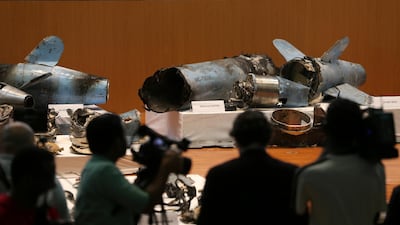
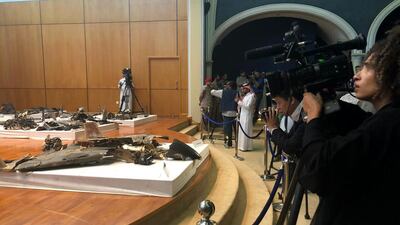
  • Remains of the missiles which were used to attack an Aramco oil facility are displayed during a news conference in Riyadh, Saudi Arabia September 18, 2019. Reuters
    Remains of the missiles which were used to attack an Aramco oil facility are displayed during a news conference in Riyadh, Saudi Arabia September 18, 2019. Reuters
  • Journalists film what Saudi military spokesman Col. Turki al-Malki said was evidence of Iranian weaponry used in the attack targeted Saudi Aramco's facilities, during a press conference in Riyadh, Saudi Arabia, Wednesday, September 18, 2019. AP Photo
    Journalists film what Saudi military spokesman Col. Turki al-Malki said was evidence of Iranian weaponry used in the attack targeted Saudi Aramco's facilities, during a press conference in Riyadh, Saudi Arabia, Wednesday, September 18, 2019. AP Photo
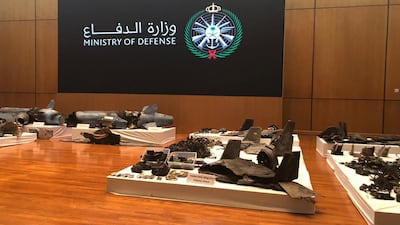
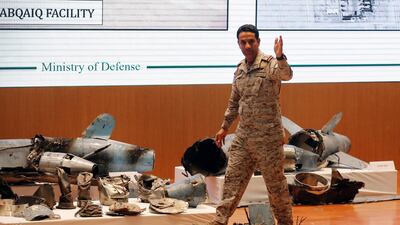
  • The Saudi military displays what they say are an Iranian cruise missile and drones used in recent attack on its oil industry at Saudi Aramco's facilities, during a press conference in Riyadh, Saudi Arabia, Wednesday, September 18, 2019. AP Photo
    The Saudi military displays what they say are an Iranian cruise missile and drones used in recent attack on its oil industry at Saudi Aramco's facilities, during a press conference in Riyadh, Saudi Arabia, Wednesday, September 18, 2019. AP Photo
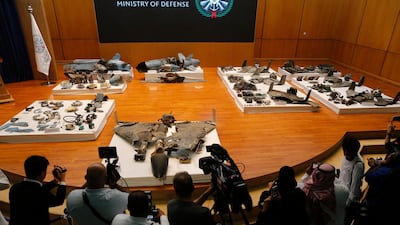
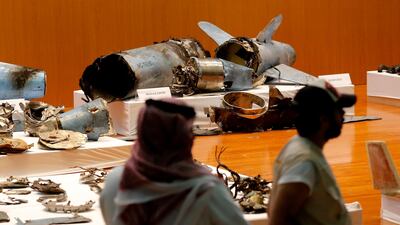
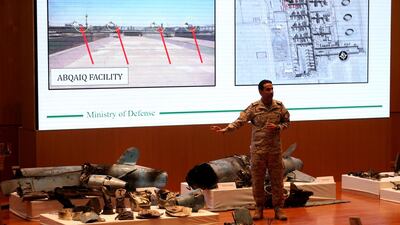
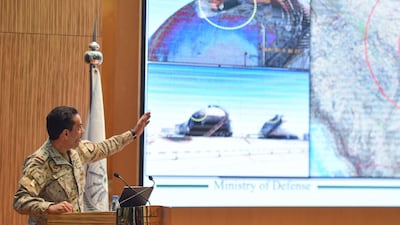
  • Drone wreckage said to be from the attack on the Aramco Aquaiq oil refinery sits on display during a Ministry of Defense news conference in Riyadh, Saudi Arabia, on Wednesday, September 18, 2019. Bloomberg
    Drone wreckage said to be from the attack on the Aramco Aquaiq oil refinery sits on display during a Ministry of Defense news conference in Riyadh, Saudi Arabia, on Wednesday, September 18, 2019. Bloomberg
  • Journalists look at drone wreckage said to be from the attack on the Aramco Aquaiq oil refinery displayed during a Ministry of Defense news conference in Riyadh, Saudi Arabia, on Wednesday, September 18, 2019.Bloomberg
    Journalists look at drone wreckage said to be from the attack on the Aramco Aquaiq oil refinery displayed during a Ministry of Defense news conference in Riyadh, Saudi Arabia, on Wednesday, September 18, 2019.Bloomberg
  • Saudi military spokesman Col. Turki Al Malki displays what he describes as an Iranian cruise missile and drones used in the attack, during a press conference in Riyadh, Saudi Arabia, Wednesday, September 18, 2019. AP Photo/Amr Nabil
    Saudi military spokesman Col. Turki Al Malki displays what he describes as an Iranian cruise missile and drones used in the attack, during a press conference in Riyadh, Saudi Arabia, Wednesday, September 18, 2019. AP Photo/Amr Nabil
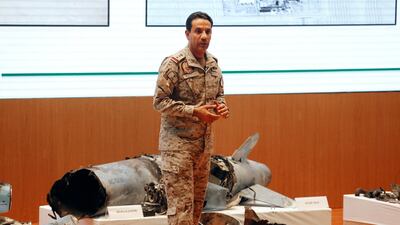
  • Saudi military spokesman Col. Turki Al Malki displays what he describes as an Iranian cruise missile and drones used in the attack, during a press conference in Riyadh, Saudi Arabia, Wednesday, September 18, 2019. AP Photo/Amr Nabil
    Saudi military spokesman Col. Turki Al Malki displays what he describes as an Iranian cruise missile and drones used in the attack, during a press conference in Riyadh, Saudi Arabia, Wednesday, September 18, 2019. AP Photo/Amr Nabil
  • Saudi defence ministry spokesman Colonel Turki Al-Malik displays remains of the missiles which Saudi government says were used to attack an Aramco oil facility, during a news conference in Riyadh, Saudi Arabia September 18, 2019. REUTERS/Hamad I Mohammed
    Saudi defence ministry spokesman Colonel Turki Al-Malik displays remains of the missiles which Saudi government says were used to attack an Aramco oil facility, during a news conference in Riyadh, Saudi Arabia September 18, 2019. REUTERS/Hamad I Mohammed
  • Saudi Colonel Turki bin Saleh al-Malki speaks during a press conference in Riyadh on September 18, 2019, following the weekend attacks on Saudi Aramco's facilities in Abqaiq and Khurais. Saudi Arabia said that strikes on its oil infrastructure came from the "north" and were sponsored by Iran, but that the kingdom was still investigating the exact launch site. / AFP / Fayez Nureldine
    Saudi Colonel Turki bin Saleh al-Malki speaks during a press conference in Riyadh on September 18, 2019, following the weekend attacks on Saudi Aramco's facilities in Abqaiq and Khurais. Saudi Arabia said that strikes on its oil infrastructure came from the "north" and were sponsored by Iran, but that the kingdom was still investigating the exact launch site. / AFP / Fayez Nureldine

But the report noted that the analysis of the weapons debris did not definitely reveal the origin of the strike that knocked out half of Saudi Arabia's oil production.
"At this time, the US intelligence community has not identified any information from the recovered weapon systems used in the September 14 attacks on Saudi Arabia that definitively reveals an attack origin," it said.
The new findings include declassified information, a State Department official told Reuters
Some of the craft flew over Iraq and Kuwait en route to the attack, a western intelligence source was quoted by the report as saying, giving Iran plausible deniability.

The 17-minute strike by 18 drones and three low-flying missiles caused a spike in oil prices, fires and damage, and shut down more than 5 per cent of global oil supply.
Saudi Arabia said on October 3 that it had fully restored oil output.
The US presented its findings to a session of the UN Security Council on Thursday as it hopes to gain more support for its policy to isolate Iran and force it to the negotiating table for a new nuclear deal.
"The damage at the oil facilities shows that the attack came from the north, not from the south, as you would expect if the Houthis were responsible," US ambassador to the UN, Kelly Craft, told the Security Council on Thursday.
UN political affairs chief Rosemary DiCarlo stressed to the council that the world body  was still reviewing components and collecting and analysing information on the missiles.

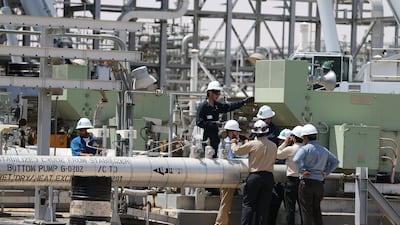
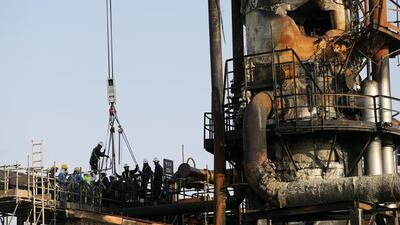
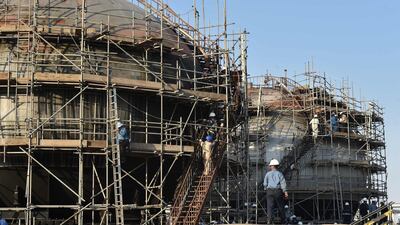
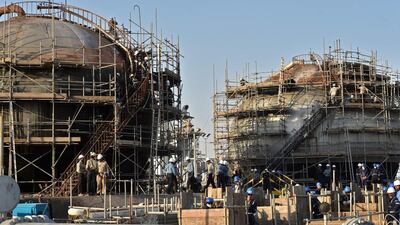
  • Workers are seen at the damaged site of Saudi Aramco oil facility in Khurais. Reuters
    Workers are seen at the damaged site of Saudi Aramco oil facility in Khurais. Reuters
  • Workers are seen at the damaged site of Saudi Aramco oil facility in Khurais. Reuters
    Workers are seen at the damaged site of Saudi Aramco oil facility in Khurais. Reuters
  • Workers are seen at the damaged site of Saudi Aramco oil facility in Khurais. Reuters
    Workers are seen at the damaged site of Saudi Aramco oil facility in Khurais. Reuters
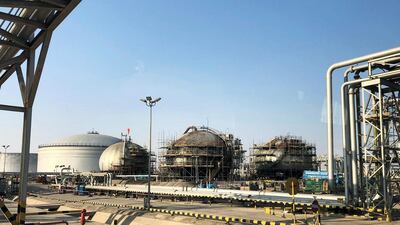
  • A view of the damaged site of Saudi Aramco oil facility in Khurais. Reuters
    A view of the damaged site of Saudi Aramco oil facility in Khurais. Reuters
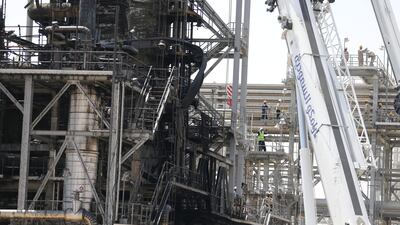
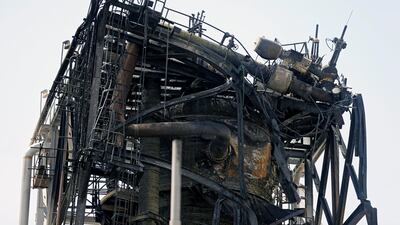
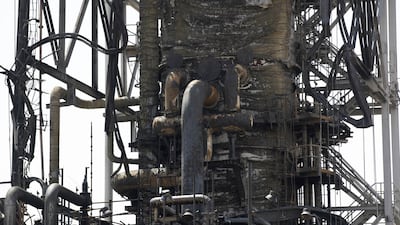
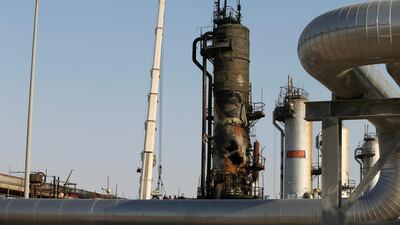
  • Charred pipework sits on a processing unit at Saudi Aramco's Khurais oil field plant. Bloomberg
    Charred pipework sits on a processing unit at Saudi Aramco's Khurais oil field plant. Bloomberg
  • Workers are seen at the damaged site of Saudi Aramco oil facility in Khurais. Reuters
    Workers are seen at the damaged site of Saudi Aramco oil facility in Khurais. Reuters
  • Workers are seen at the damaged site of Saudi Aramco oil facility in Khurais. Reuters
    Workers are seen at the damaged site of Saudi Aramco oil facility in Khurais. Reuters
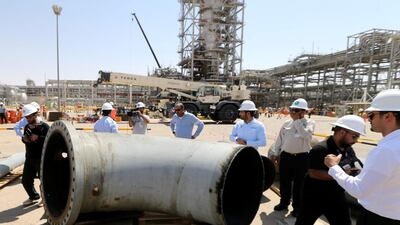
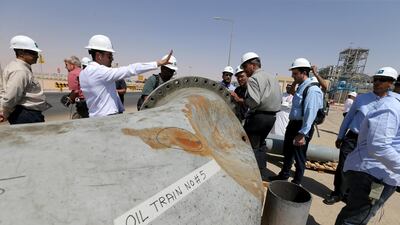
  • A damaged pipeline is seen at Saudi Aramco oil facility in Khurais. Reuters
    A damaged pipeline is seen at Saudi Aramco oil facility in Khurais. Reuters
  • A damaged pipeline is seen at Saudi Aramco oil facility in Khurais. Reuters
    A damaged pipeline is seen at Saudi Aramco oil facility in Khurais. Reuters
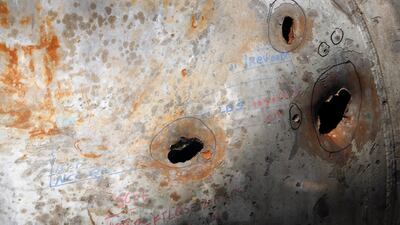
  • Holes caused by fragments of a missile are seen in a damaged pipe in the Aramco's Khurais oil field. AP Photo
    Holes caused by fragments of a missile are seen in a damaged pipe in the Aramco's Khurais oil field. AP Photo
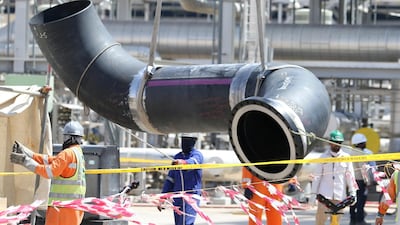
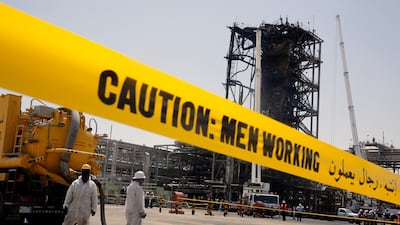
  • Workers fix a new section pipeline in Khurais. Reuters
    Workers fix a new section pipeline in Khurais. Reuters
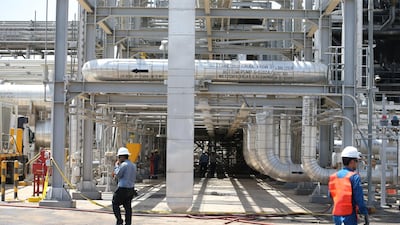
  • Workers at Aramco's oil processing facility in Khurais, near Dammam. AP Photo
    Workers at Aramco's oil processing facility in Khurais, near Dammam. AP Photo
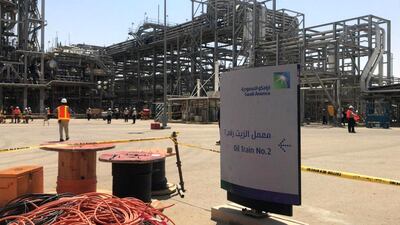
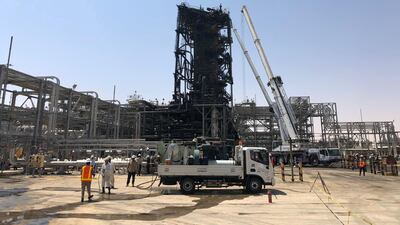
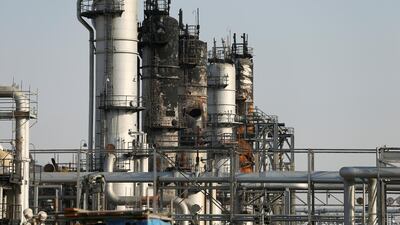
  • View of the damaged site of Saudi Aramco oil facility in Abqaiq. Reuters
    View of the damaged site of Saudi Aramco oil facility in Abqaiq. Reuters
  • View of the damaged site of Saudi Aramco oil facility in Abqaiq. Reuters
    View of the damaged site of Saudi Aramco oil facility in Abqaiq. Reuters
  • View of the damaged site of Saudi Aramco oil facility in Abqaiq. Reuters
    View of the damaged site of Saudi Aramco oil facility in Abqaiq. Reuters
  • Workers are seen at the damaged site of Saudi Aramco oil facility in Abqaiq. Reuters
    Workers are seen at the damaged site of Saudi Aramco oil facility in Abqaiq. Reuters
  • Employees work in Abqaiq oil processing plant. AFP
    Employees work in Abqaiq oil processing plant. AFP
  • Employees work in Abqaiq oil processing plant. AFP
    Employees work in Abqaiq oil processing plant. AFP
  • A general view of the damaged site of Saudi Aramco oil facility in Abqaiq. Reuters
    A general view of the damaged site of Saudi Aramco oil facility in Abqaiq. Reuters

In a similar report last week, the UN said it was "unable to independently corroborate" that missiles and drones used in the attacks came from Iran.

But the report said that Yemen's Houthi rebels "have not shown to be in possession, nor been assessed to be in possession" of the type of drones used in the attacks on Aramco.
Washington's interim assessment also included pictures of drone parts including the engine identified by the US as "closely resembling" or "nearly identical" to those that observed on other Iranian drones.
It provided pictures of a compass circuit board that was recovered from the attack with a marking that is likely indicating a potential manufacturing date written in the Persian calendar year, the report assessed.
The name of a company believed to be associated with Iran, Sadra, was also identified on a wiring harness label from the September 14 wreckage, the report said.

Brian Hook, the US special representative for Iran. Reuters

The US, European powers and Saudi Arabia all blamed the September 14 attack on Iran.
Yemen's Houthi group claimed responsibility for the attacks, and Iran, which supports the Houthis, denied any involvement. Yemen is south of Saudi Arabia.
Iran's leadership reportedly approved the attacks but decided to stop short of a direct confrontation that could trigger a devastating US response.
It opted instead to hit the Abqaiq and Khurais oil plants of US ally Saudi Arabia, officials said.
Reuters reported a Middle East source, who was briefed by a country investigating the attack, said the launch site was the Ahvaz air base in southwest Iran, which is about 650km north of Abqaiq.
US President Donald Trump last year withdrew from a 2015 nuclear deal between world powers and Iran and reimposed sanctions on Tehran with the aim of choking crude sales, Iran's main source of revenues.
As part of its maximum pressure strategy, Washington has also sanctioned dozens of Iranian entities, companies and people to cut Tehran's revenue.


Kill%20
%3Cp%3E%3Cstrong%3EDirector%3A%3C%2Fstrong%3E%20Nikhil%20Nagesh%20Bhat%3C%2Fp%3E%0A%3Cp%3E%3Cstrong%3EStarring%3C%2Fstrong%3E%3A%20Lakshya%2C%20Tanya%20Maniktala%2C%20Ashish%20Vidyarthi%2C%20Harsh%20Chhaya%2C%20Raghav%20Juyal%3C%2Fp%3E%0A%3Cp%3E%3Cstrong%3ERating%3A%3C%2Fstrong%3E%204.5%2F5%3Cbr%3E%3C%2Fp%3E%0A
Tamkeen's offering
  • Option 1: 70% in year 1, 50% in year 2, 30% in year 3
  • Option 2: 50% across three years
  • Option 3: 30% across five years 
THE CLOWN OF GAZA

Director: Abdulrahman Sabbah 

Starring: Alaa Meqdad

Rating: 4/5

The five pillars of Islam

1. Fasting 

2. Prayer 

3. Hajj 

4. Shahada 

5. Zakat 

Conservative MPs who have publicly revealed sending letters of no confidence
  1. Steve Baker
  2. Peter Bone
  3. Ben Bradley
  4. Andrew Bridgen
  5. Maria Caulfield​​​​​​​
  6. Simon Clarke 
  7. Philip Davies
  8. Nadine Dorries​​​​​​​
  9. James Duddridge​​​​​​​
  10. Mark Francois 
  11. Chris Green
  12. Adam Holloway
  13. Andrea Jenkyns
  14. Anne-Marie Morris
  15. Sheryll Murray
  16. Jacob Rees-Mogg
  17. Laurence Robertson
  18. Lee Rowley
  19. Henry Smith
  20. Martin Vickers 
  21. John Whittingdale
Who's who in Yemen conflict

Houthis: Iran-backed rebels who occupy Sanaa and run unrecognised government

Yemeni government: Exiled government in Aden led by eight-member Presidential Leadership Council

Southern Transitional Council: Faction in Yemeni government that seeks autonomy for the south

Habrish 'rebels': Tribal-backed forces feuding with STC over control of oil in government territory

Profile of Bitex UAE

Date of launch: November 2018

Founder: Monark Modi

Based: Business Bay, Dubai

Sector: Financial services

Size: Eight employees

Investors: Self-funded to date with $1m of personal savings

Race card

6.30pm: Maiden (TB) Dh 82,500 (Dirt) 1.600m

7.05pm: Maiden (TB) Dh 82,500 (D) 2,000m

7.50pm: Handicap (TB) Dh 82,500 (D) 1,600m

8.15pm: The Garhoud Sprint Listed (TB) Dh 132,500 (D) 1,200m

8.50pm: The Entisar Listed (TB) Dh 132,500 (D) 2,000m

9.25pm: Conditions (TB) Dh 120,000 (D) 1,400m

MATCH INFO

Borussia Dortmund 0

Bayern Munich 1 (Kimmich 43')

Man of the match: Joshua Kimmich (Bayern Munich)

The President's Cake

Director: Hasan Hadi

Starring: Baneen Ahmad Nayyef, Waheed Thabet Khreibat, Sajad Mohamad Qasem 

Rating: 4/5