

Iranian officials deliberately put the life of an ailing human rights lawyer at risk when they overruled doctors and insisted she be returned to Evin jail during treatment for a heart condition, her husband has claimed.
Nasrin Sotoudeh, 57, spent four days in hospital last month before being shifted back to prison where she is serving a 38-year term for collusion and propaganda against the government.
Her husband Reza Khandan said that at least six of the guards sent to keep a 24-hour watch at her bedside later tested positive for coronavirus.
In a statement to campaigners, Mr Khandan said doctors who reviewed her records “consider her transfer back to prison as a deliberate attempt to put her life in danger”.
-
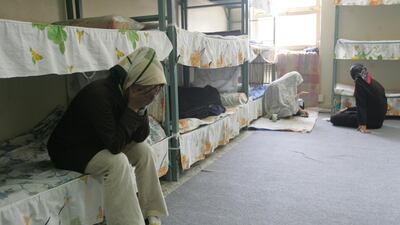
Iranian women inmates sit in their cell at Evin jail, north of Tehran. AFP/file -
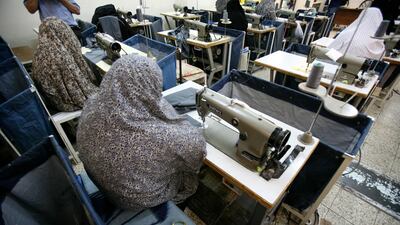
Tehran's Evin prison holds domestic and international inmates. AFP/file -
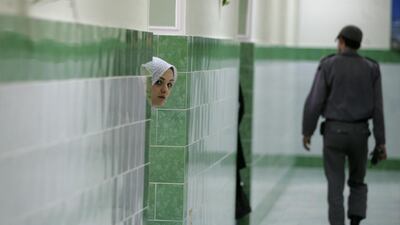
An Iranian inmate peers from behind a wall as a guard walks by. AFP/file -
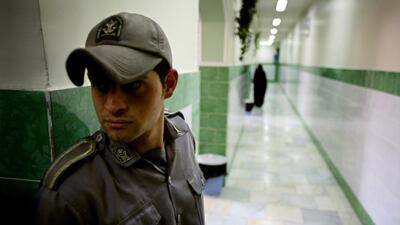
A prison guard stands along a corridor in Tehran's Evin prison. Reuters/file -

The Evin prison workshop in Tehran in 1989. AP/file -
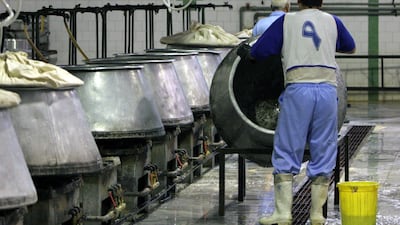
Iranian prisoners work in a kitchen at Evin prison in 2006. AP/file -

Evin prison was built in 1972 and has thousands of inmates. Reuters/file -
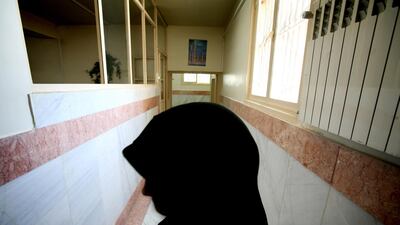
A female prison guard stands on duty in Tehran's Evin prison. File -
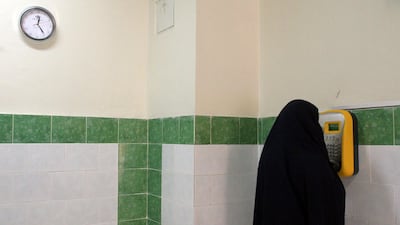
A female prisoner makes a call in a corridor in the Evin prison. AP/file


Ms Sotoudeh had been campaigning for the release of political prisoners in Iranian jails but ended a 45-day hunger strike shortly after being returned to prison.
Some 120,000 prisoners were given temporary leave from prison because of the pandemic but most political prisoners were not included.
Ms Sotoudeh has now been sent back to join the general prison population. She is without medical supervision and her health problems continue.
“The prison doctors were shocked that she was returned to the prison with such haste and without proper medical treatment, especially considering her continued hunger strike,” said Mr Khandan.
“One of the prison doctors strongly protested against her being returned to prison in such condition.”
The US-based Centre for Human Rights in Iran (CHRI), which campaigns on behalf of political prisoners, said that she should be returned to hospital for continued treatment.
“Nasrin Sotoudeh’s life is in danger because the authorities in Iran are withholding proper medical treatment, in complete violation of Iranian and international law; this is tantamount to attempted murder,” said Hadi Ghaemi, CHRI executive director.
Ms Sotoudeh is best known for defending human rights activists, women who remove their headscarves, and opposition leaders.
Her plight has drawn global support with the UN, legal organisations and campaign groups calling for her release. She will not be eligible for release until she has served 12 years following her arrest in 2018.

