

Jordan began inoculating its citizens against coronavirus on Wednesday with the aim of vaccinating a fifth of the country’s ten million people.
Officials said government hospitals in the northern provinces of Irbid and Mafraq started giving the first vaccinations in the morning.
Centres in Amman experienced delays, partly due to more demand for the vaccine than outlaying areas. At the Queen Alia military hospital in north Amman, at least 80 people took the vaccine.
But the first day was marked by a relatively low turnout. The number of people due to take the vaccine on Wednesday ranged from hundreds in Amman, to 60 in Mafraq, 46 in the province of Aqaba on the Red Sea, and 17 people in the southern province of Maan, officials said.
At a government clinic in the middle-class Jubaiha district on the outskirts of Amman elderly people were sitting on the sidewalk with their children as they waited for hours to take the vaccine.
"As you see, it is a mess," said Naim Abu Sharq, a US-educated engineer who spent a large portion of his career in the Gulf.
The vaccines are being administered to people who had registered on a government internet portal to take it and received SMS messages to come.
About 200,000 Jordanians registered, compared with the two million target.
Ali Smadi, a retiree, said he "expected the organisation to be better than this".
"This is the first day and is obvious there is a bit of chaos," he said, expressing ambivalence about the vaccine.
"Whether I take it or not nothing will change I am a retired person and I do not go out a lot and and from the beginning I have been taking precautions and wearing my mask," he said.
Heath officials urged people to register to take the vaccine, saying those the government had acquired are safe.
-
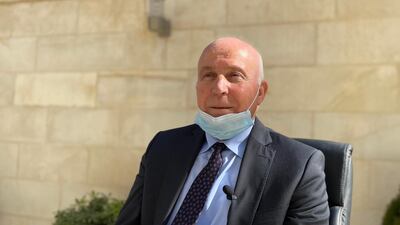
Dr Adel Belbaisi, Executive Director Advisor of Global Health Development, has been working with Jordan's Ministry of Health in the Kingdom's Covid-19 response. Amy McConaghy/The National -
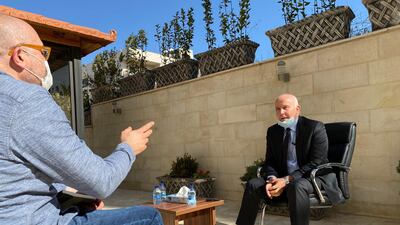
Public health expert Dr Adel Belbaisi speaks with The National on Jordan's upcoming vaccination programme. Amy McConaghy/The National -
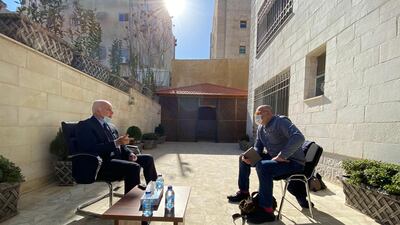
Public health expert Dr Adel Belbaisi speaks with The National on Jordan's upcoming vaccination programme. Amy McConaghy/The National -

The first batch of the Pfizer-BioNTech vaccine arrives at Jordan's Queen Alia international airport in Amman on January 11, 2021. AFP -
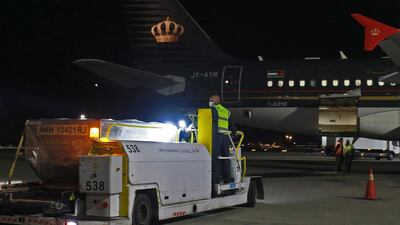
The first batch of the Pfizer-BioNTech vaccine arrives at Jordan's Queen Alia international airport in Amman on January 11, 2021. AFP -
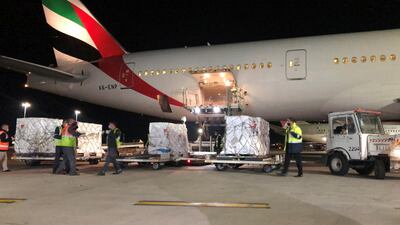
Workers unload the first batch of Covid-19 vaccines arriving in Amman on January 9, 2021. Reuters -
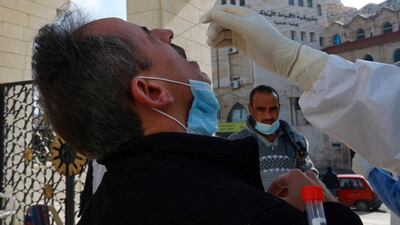
A member of the Jordanian health ministry's epidemiological investigation team, takes a random nasal swab to test for Covid-19, from a man leaving the King Abdullah I mosque following the Friday noon prayers, in the capital Amman, on December 18, 2020. AFP -

A member of the Jordanian health ministry's epidemiological investigation team, takes a random nasal swab to test for Covid-19, from a man leaving the King Abdullah I mosque following the Friday noon prayers, in the capital Amman, on December 18, 2020. AFP -
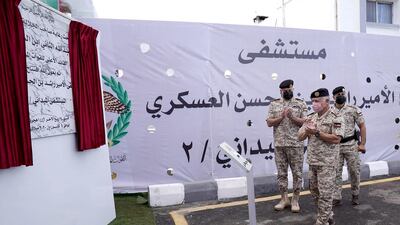
Jordan's King Abdullah II attends the inauguration of a military field hospital for Covid-19 patients in Irbid Governorate. AFP -
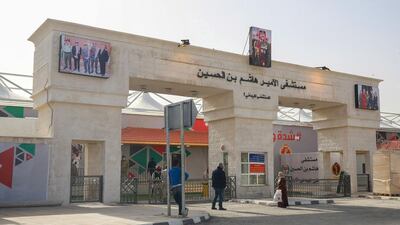
People wait at the main entrance of the Prince Hashem bin Hussein field hospital, Jordan's first Covid-19 field hospital, in the city of Zarqa. AFP


“This is an important opportunity, do not waste it. You will not be harmed by the vaccines,” Firas Hawari, head of country’s pandemic combat centre, said on state media.
The vaccines are being administered after a surge of coronavirus deaths and infections in Jordan, which started in October, prompted the government to re-impose a curfew in November. The authorities in between held elections for the mostly nominal parliament, and turn-out was a record low at less than 30 per cent.
Most of Jordan's official 4,076 deaths and 310,000 infections were recorded since October.
Jordan's King Abdullah told the government on Tuesday to ease coronavirus restrictions, a day ahead of the start of the vaccinations.
Prime Minister Bisher Al Khasawneh announced on Wednesday that a curfew that had been imposed all-day on Fridays has been lifted, but that a daily curfew from midnight to 6am will remain in force.
He also said the government aims to reopen schools gradually in the fall semester
Officials say that the rate of increase in infections has declined in the past few weeks, and the king said the public health situation is "witnessing a marked improvement".

