
Iran said a record 229 people died in the past 24 hours from its outbreak of the coronavirus, health ministry figures showed on Tuesday.
Iran, the Middle East country hardest hit by the pandemic, began relaxing its lockdown in mid-April, at least partly to boost an economy battered by US sanctions.
The Islamic republic has recorded a total of 14,634 deaths from the coronavirus, health ministry spokeswoman Sima Sadat Lari said on state TV, adding that there have been 278,827 infections and 242,351 recoveries.
The previous record of deaths from the new coronavirus in a 24-hour period was on July 9, when health ministry figures showed 221 people had died.
-
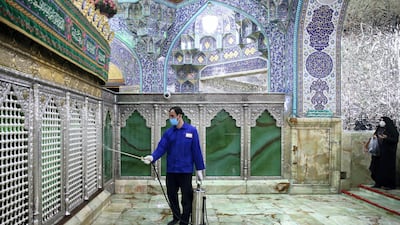
An Iranian sanitary worker disinfects Qom's Masumeh shrine on February 25, 2020 to prevent the spread of the coronavirus. AFP -
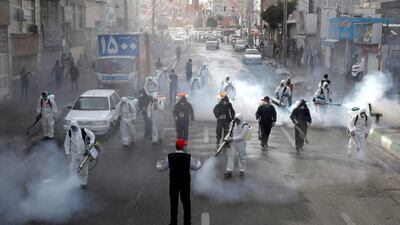
Iranian Firefighters disinfect streets in the capital Tehran in a bid to halt the wild spread of coronavirus on March 13, 2020. AFP -
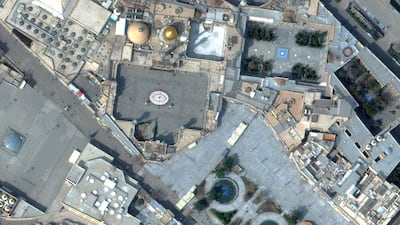
A nearly empty Hazrat Masumeh Shrine in Qom, Iran on March 1, 2020. AFP -
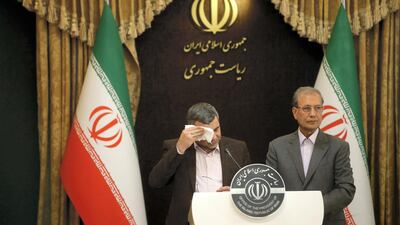
Iranian Deputy Health Minister Iraj Harirchi (left) wipes the sweat off his face, during a press conference with the Islamic republic's government spokesman Ali Rabiei in the capital Tehran on February 24, 2020. AFP -

An image grab of footage obtained from Iranian State TV IRINN on February 25, 2020, shows Iran's deputy health minister Iraj Harirchi speaking in a video apparently shot by himself, regarding being infected with coronavirus. AFP -
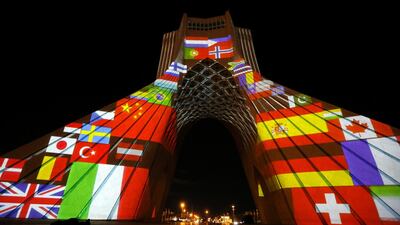
Iran's Azadi (Freedom) Tower is lit up with flags and messages of hope in solidarity with all the countries affected by the coronavirus pandemic, in Tehran on March 31, 2020. AFP -
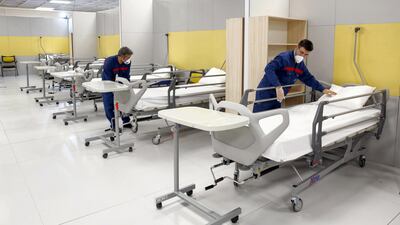
Iranian workers set up a makeshift hospital inside the Iran Mall, northwest of Tehran, on March 21, 2020 amid the coronavirus outbreak. - Iran said that 123 more people had died from coronavirus, raising the official death toll to 1,556 in the Islamic republic, one of the world's worst affected countries. AFP -
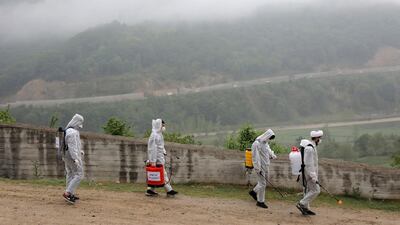
Volunteers wearing protective clothing, take part in disinfecting a village during the coronavirus outbreak, in the outskirts of the city of Ghaemshahr, in north of Iran, on Wednesday, April 29, 2020. AP Photo -
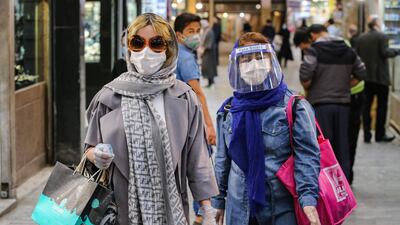
Shoppers clad in protective gear, including face masks and shields and latex gloves, due to the coronavirus pandemic, walk through the Tajrish Bazaar in Iran's capital Tehran on April 25, 2020. AFP -
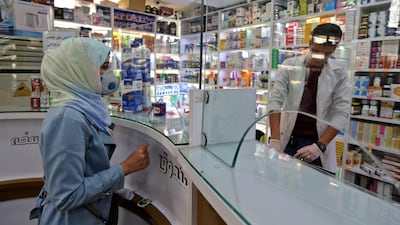
A customer wears a protective masks at a pharmacy in the Iranian capital Tehran on February 24, 2020. AFP -

A Tehran Municipality worker cleans a bus to avoid the spread of Covid-19 on February 26, 2020. AFP -
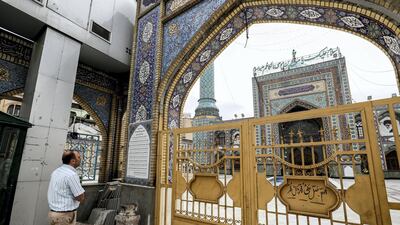
A man stands by the closed gate outside the Imamzadeh Saleh in the Iranian capital Tehran's Shemiran district on April 25, 2020 . AFP -

Labourers unloading medical equipment and coronavirus testing kits provided by the World Health Organisation, from a UAE military transport plane upon their arrival at Mehrabad International Airport in Iran's capital Tehran. AFP


While the official number of cases is in the tens of thousands, President Hassan Rouhani said last week that as many as 25 million Iranians may have had the contagion.
"Our estimate is that, so far, 25 million Iranians have been infected with this virus and about 14,000 have lost their lives," Mr Rouhani said.
Hospitals in Iran face acute shortages of medical personnel and beds as the country tackles a powerful second wave of the Covid-19 pandemic, a senior official with Tehran’s anti-coronavirus task force, Reza Jalili-Khoshnood, said last week.
His comments contrasted with Mr Rouhani’s regular assurances that Iran has sufficient supplies of medical personnel and facilities.
He and Supreme Leader Ayatollah Ali Khamenei, the highest authority in the country, are now regularly shown on state media wearing a mask, a means of encouraging ordinary Iranians to also use masks more frequently.
The surge in cases led authorities on Saturday to reimpose restrictions for a week in Tehran, including banning religious and cultural functions, closing boarding schools, cafes, indoor pools, amusement parks and zoos.
From Sunday, 22 cities and towns in the southwestern Khuzestan province were under a three-day lockdown.

