
The Jerusalem church built at the site many see as the holiest in Christianity reopened on Wednesday after a three-day closure protest against Israeli tax proposals that left thousands of visitors locked outside.
The two men who act as keepers of the key of the Church of the Holy Sepulchre opened its large wooden doors at around 4am, ending the protest that began on Sunday at noon.
Shortly afterwards, a group of pilgrims emerged from the still dark corridors of Jerusalem's Old City to visit the sacred site.
"We prayed in front of the doors every day since Sunday," said Francois-Roch Ferlet, 29, visiting with a group of 50 people from France, standing near the ornate shrine encasing the traditional site of Jesus's tomb inside the church.
They were due to leave later on Wednesday and were relieved they were able to visit.The church is built where Christians believe Jesus was crucified, buried and resurrected. Custody of it is shared by the Greek Orthodox, Armenian and Roman Catholic denominations.
-
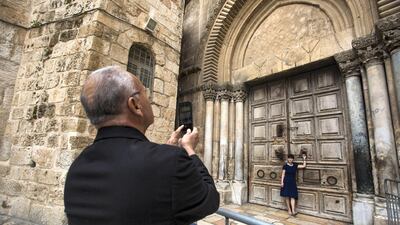
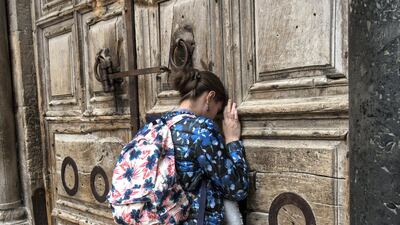
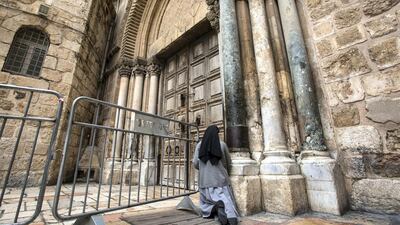
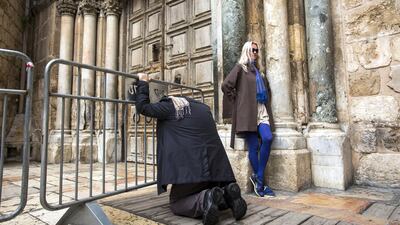
Jerusalem's Church of the Holy Sepulchre, built at the site where Christians believe Jesus was buried, remained closed on Monday in protest at Israeli tax measures and a proposed property law. All photos by Heidi Levine for The National -
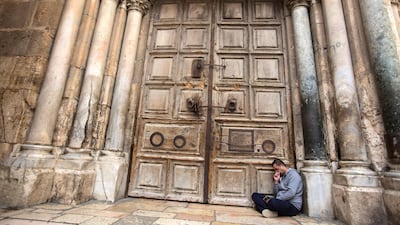
Christian leaders took the rare step of closing the church, seen as the holiest site in Christianity, on Sunday at noon in a bid to pressure Israeli authorities into abandoning the measures. -
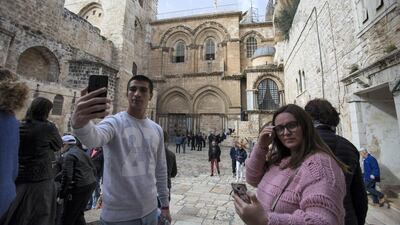
The church, a major pilgrimage site, would be closed until further notice. -
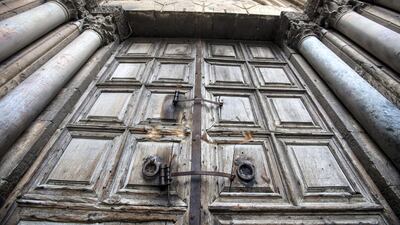
The church remained closed on Monday morning, with church officials saying it was not clear when it would reopen. -
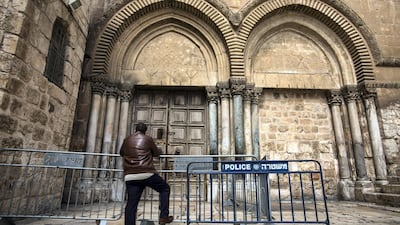
The Greek Orthodox, Armenian and Roman Catholic denominations share custody of the building. -
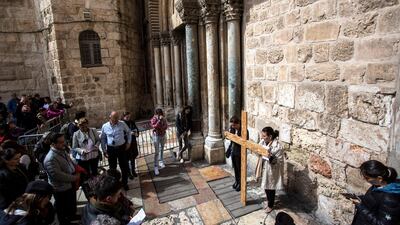
Christian leaders have been angered over attempts by Israeli authorities in Jerusalem to enforce tax collection on church property they consider commercial, saying exemptions only apply to places of worship or religious teaching. -
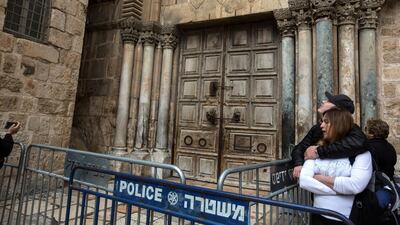
Separately, Christian leaders say legislation being considered by Israel's government would allow church property to be expropriated. -
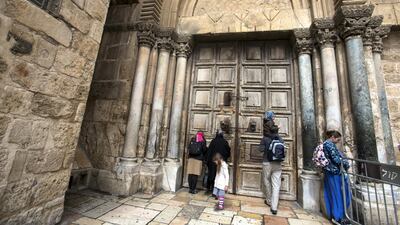
Christian pilgrims pray by the closed wooden doors of the Church of the Holy Sepulchre. -
-
-
Jerusalem Mayor Nir Barkat says the city is due 650 million shekels (Dh684.5m) in uncollected taxes on church properties. -
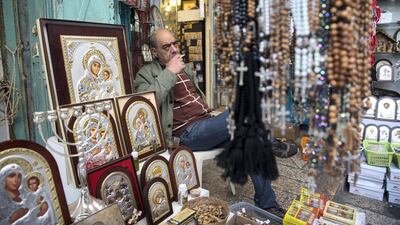
Shop owners near the Church of the Holy Sepulchre in the Old City of Jerusalem.


The closure seemed to be the longest since at least 1990.
Christian leaders decided to reopen the church after Israel on Tuesday suspended tax measures they strongly oppose.
__________________
Read more:
Christians close doors of famous Jerusalem church to protest taxes
__________________
A planned law that Christian leaders said would allow Israel to expropriate church land is also to be shelved.
A statement from Prime Minister Benjamin Netanyahu's office said a "professional team" would be appointed to come up with a solution to the tax measures imposed by Israeli authorities in Jerusalem.
Israeli Regional Co-operation Minister Tzachi Hanegbi will also look into the issue of land sales in Jerusalem by Christian bodies, which prompted the proposed law that is now also suspended.
Christian leaders are in part angry over attempts by Israeli authorities in Jerusalem to enforce tax collection on church property they consider commercial, saying exemptions only apply to places of worship or religious teaching.
Jerusalem Mayor Nir Barkat said the city was due 650 million shekels ($186 million) in uncollected taxes on church properties.
He stressed the Church of the Holy Sepulchre and all other churches were exempt, with the changes only affecting establishments like "hotels, halls and businesses" owned by churches.
Christian leaders said the measure jeopardised their ability to conduct their work, which also includes social services to those in need.
A separate controversial bill seeks to allay fears of Israelis who live in homes on lands previously held by the Greek Orthodox Church and which were sold to private developers, according to the lawmaker proposing the legislation.
The bill would allow certain lands sold by the Greek Orthodox Church to be handed over to the state, which would then compensate those who bought it from the church.
"This reminds us all of laws of a similar nature which were enacted against the Jews during a dark period in Europe," Christian leaders said in a statement on Sunday.
Recent land sales by the Greek Orthodox Church – a major landowner in Jerusalem – to unknown buyers have drawn fire from both Israelis and Palestinians.
Palestinians fear the sales will favour Israeli settlement construction in east Jerusalem, while Israelis are concerned over private developers' intentions for the land.
The dispute over the taxes and proposed law is also linked to the Israeli-Palestinian conflict.
The church is located in Israeli-annexed east Jerusalem, which the Palestinians see as the capital of their future state. Israel sees the whole city as its undivided capital.
Christians in Jerusalem are mainly Palestinians and Arab Israelis.
The decision to close the church was extremely rare.
In 1990, Christian sites including the Holy Sepulchre were closed for a day to protest the installation of Jewish settlers near the church.
Christian sites were shut for two days in 1999 to protest the planned construction of a mosque near Nazareth's Church of the Annunciation, where tradition holds the Angel Gabriel announced to Mary she was to become the mother of Jesus.

