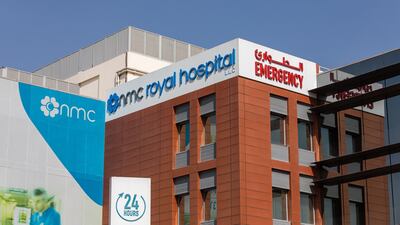

Oman expects the number of coronavirus cases in the country to reach 500 a day at its peak, the country's health minister said on Thursday.
The Sultanate recorded 109 new cases on Thursday, bringing the country's overall infections to 1,019 and four deaths.
"We expect to record peak cases to be about 500 infections a day, 150 of which will require intensive care," Oman's Health Minister, Ahmed Mohammed Al Saeedi, said.
Precautionary measures must be taken seriously, the minister said. The number of cases, he said, are still on the rise.
The country is expected to reach its peak during the week of April 23, the minister said.
-

Iraqi health workers at a hospital in the central Iraqi city of Karbala. AFP -
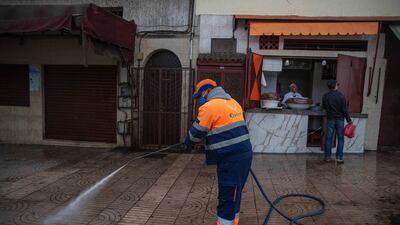
A worker disinfects a street to prevent the spread of the coronavirus during a state of emergency in Rabat, Morocco. AP -

The deserted Corniche Beirut seaside promenade during the lockdown against the coronavirus pandemic in Beirut, Lebanon. EPA -
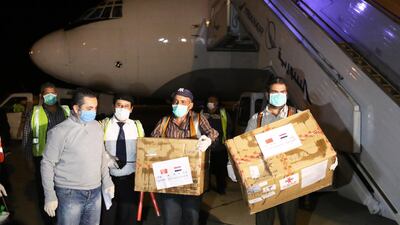
Syrian workers unload medical supplies from China at the International Airport in Damascus, Syria. EPA -
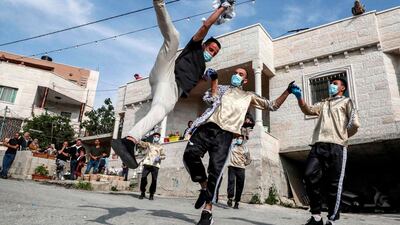
Dancers of the Palestinian Jafra Dabke Team perform a traditional dabke dance for people confined because of the coronavirus pandemic lockdown in the village of Tarqumia, north-west of Hebron, in the occupied West Bank. AFP -
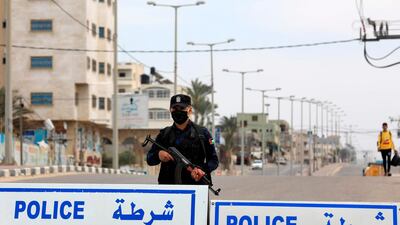
A policeman wearing protective gear as a precaution against the coronavirus guards a security checkpoint in Gaza City. AFP -
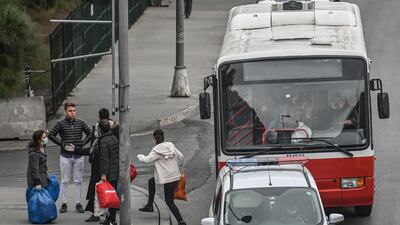
Released women prisoners meet their families as they get off a bus near Bakirkoy women's prison in Istanbul. AFP -

A man walks on a bridge near a bus station in Istanbul a day after Turkish President ordered a fresh lockdown to stop the spread of the coronavirus. AFP -

A released woman prisoner hugs her mother after alighting a bus near Bakirkoy women's prison in Istanbul. AFP -
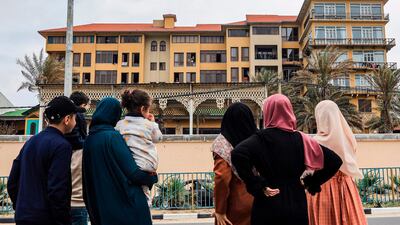
Members of a Palestinian family look at Al Mathaf hotel, where their relatives are quarantined, to limit the spread of the coronavirus pandemic, in Gaza City. AFP -

A staff member at a coronavirus screening tent at Al Bashir hospital in Amman, Jordan. EPA -
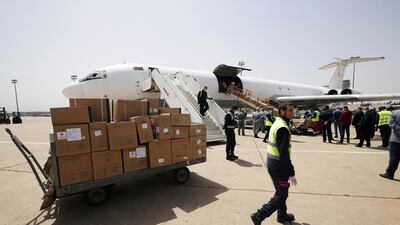
Workers unload medical supplies from China at Houari Boumediene International Airport in Algiers, Algeria. EPA -
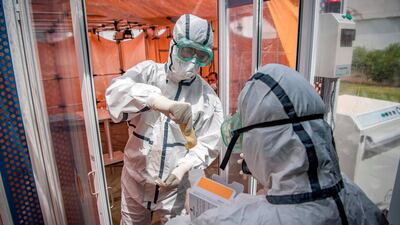
Members of the medical staff at the Mohammmed V military hospital during the coronavirus pandemic crisis, in the Moroccan capital Rabat. AFP -
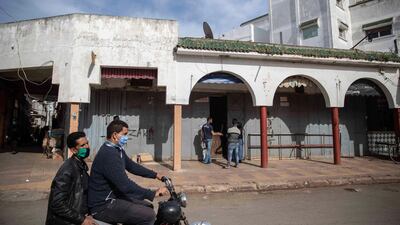
People wearing a face mask drive past empty shops during a state of emergency in Rabat, Morocco. AP


"Cases are on the rise but we have not seen a sharp rise but rather a slowdown, which is less than the global levels," Mr Al Saeedi said.
Oman begun using convalescent plasma to treat those infected this week.
The procedure includes using blood of recovered individuals, who are thought to have the coronavirus antibodies in their system, on infected patients.
"The procedure was carried out in co-operation between the Central Blood Bank and the Royal Hospital and a number of other sectors, and we will see the results in the coming days," Mr Al Saeedi said.
But the procedure is expensive.
"For intensive care patients it reached 1,000 riyals (Dh9,537) per day and for laboratory testing it ranges between 20-50 riyals, additional costs must be included," Mr Al Saeedi said.
The health minister described the disease as an "enemy that cannot be seen that can be combated by social distancing".
Oman has taken extensive measures to curb the spreading of the virus during the past few weeks.
Most public venues have been shut and the government has locked down Muscat Governorate, which includes the capital.
Earlier this week, the government advised its ministries and other sectors to cut spending and announced measures to support the private sector and safeguard Omani jobs.
The finance ministry said that government agencies must cut their budgets by at least 10 per cent.

