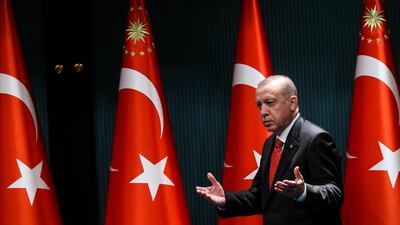
Turkey's parliament passed a controversial bill on Wednesday giving neighbourhood patrols greater powers, with critics accusing President Recep Tayyip Erdogan of wanting to build a loyal "militia".
The new law gives "nightwatchmen", who walk the streets at night to report burglaries and disturbances, almost the same powers as police.
They will now be allowed to carry firearms and have the powers to stop and search people.
With more than 28,000 members, the nightwatchmen institution – which is attached to the interior ministry and dates back more than 100 years – has grown considerably after an attempted coup in July 2016 against Mr Erdogan.
The bill's debate in parliament triggered heated exchanges, with deputies even coming to blows during a feisty session on Tuesday.
Mr Erdogan's AKP party, which put forward the bill, says the new rules will enable the nightwatchmen to more effectively help law enforcement by thwarting burglaries and preventing assaults on the streets.
In old Turkish films the guards are portrayed as benevolent uncles patrolling the streets with a whistle between their lips, on the lookout for troublemakers.
But the opposition accused Erdogan of authoritarianism by setting up a loyal armed force.
"They are using the institution of nightwatchmen to set up a militia," Mahir Polat from the main opposition CHP party said on Tuesday, adding the police should be reinforced if needed.
-
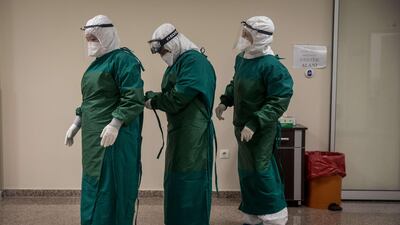
Medical staff get dressed in personal protective equipment before cleaning and disinfecting a bed after a Covid-19 patient was discharged from the Kartal Dr Lutii Kirdar Education and Research Hospital’s Intensive Care Unit on May 08, 2020 in Istanbul. Getty Images/AFP -
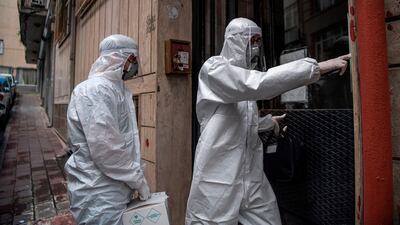
Health officers wearing protective clothing rings a door entry point to collect swab samples from confined people who are believed to have been in contact with coronavirus patients, in Istanbul. AFP -

A health officer wearing protective clothing checks the temperature of a resident, believed to have been in contact with coronavirus patients. AFP -
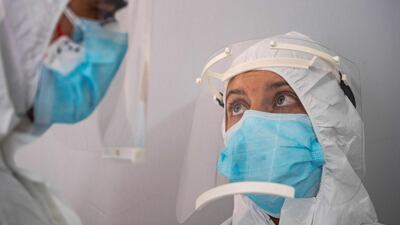
Health officer wearing protective clothing speak as they prepare before travelling to collect swab samples from confined people who are believed to have been in contact with coronavirus patients. AFP -

Health officer wearing protective clothing speak as they prepare before travelling to collect swab samples from confined people who are believed to have been in contact with coronavirus patients. AFP -

Health officer wearing protective clothing speak as they prepare before travelling to collect swab samples from confined people who are believed to have been in contact with coronavirus patients. AFP -
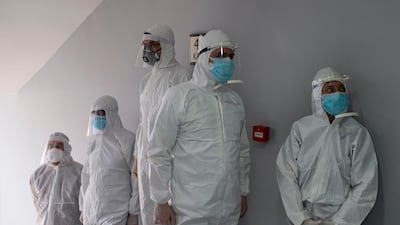
Health officer wearing protective clothing speak as they prepare before travelling to collect swab samples from confined people who are believed to have been in contact with coronavirus patients. AFP -

Health officer wearing protective clothing speak as they prepare before travelling to collect swab samples from confined people who are believed to have been in contact with coronavirus patients. AFP -

Medical workers dressed in personal protective equipment write patient reports inside a Covid-19 ICU unit at the Kartal Dr Lutii Kirdar Education and Research Hospital in Istanbul. Getty Images/AFP -
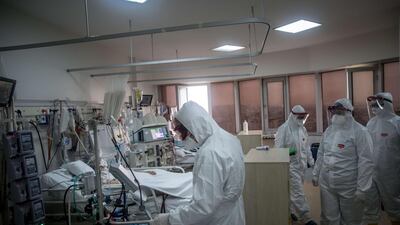
A doctor looks at a Covid-19 patient’s monitor during his rounds at the Marmara University Pendik Education and Research Hospital Intensive Care Unit on May 08, 2020 in Istanbul. Chris McGrath/Getty Images/AFP -

Medical staff get dressed in personal protective equipment before assisting Covid-19 patients in the Kartal Dr Lutii Kirdar Education and Research Hospital, Intensive Care Unit. Getty Images/AFP -
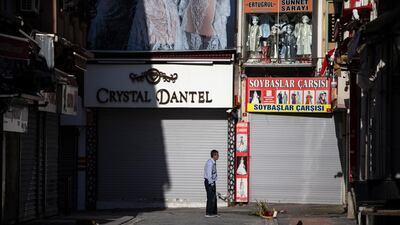
A man stands in front of the closed shops at Istanbul's old bazaar Tahtakale during curfew in Istanbul. EPA -
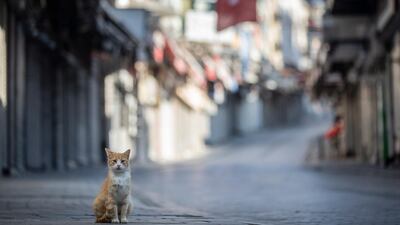
A cat stands at Istanbul's old bazaar Tahtakale during curfew in Istanbul. EPA -

Closed shops at Istanbul's old bazaar Tahtakale during curfew in Istanbul. EPA


Under the law, the nightwatchmen will have the authority to demand people identify themselves, to use force and carry weapons and to apprehend suspects.
"You cannot give someone a gun and send them into the street with broad authority after 40 days of training," Engin Altay, a deputy from the main opposition Republican People's Party, said last week.
Omer Faruk Gergerlioglu, a lawmaker from the pro-Kurdish Peoples' Democratic Party (HDP), also criticised the level of guards' education, saying they would only have a few hours of training regarding human rights.
"This law is not about protecting the people or the district. It is a law to protect the state from the people," he said in a speech in parliament during debate on the law, warning of a rise in violent incidents involving security forces.
The return of the neighbourhood guards coincided with upheaval following the failed 2016 coup. Turkey has jailed tens of thousands of people and suspended or sacked 150,000 civil servants and security personnel in what critics call a crackdown on dissent and Ankara says is necessitated by security threats.
Police data shows that last year the number of police officers in Turkey rose 7.9 per cent to more than 260,000 with the number of neighbourhood guards nearly doubling to more than 21,000. This year the number of guards is set to rise to 30,000, according to one AKP deputy.
The Interior Ministry has defended the increased role given to neighbourhood guards, saying the daily average of home burglaries nationwide had fallen by 47 per cent to 151 since the force was revitalised.
It said guards undergo three months of training and then have two months of practical training, with 20 per cent of them being university graduates.

