With the world beset by conflict and the international squabbling prompted by the coronavirus pandemic, it is perhaps not surprising that there is no obvious favourite for the 2020 Nobel Peace Prize.
The award, given in honour of the 19th century chemist and businessman Alfred Nobel, is the most coveted of the annual prizes for outstanding achievements in medicine, physics, chemistry, literature and economics.
When he bequeathed his fortune to create the prizes, Nobel stipulated that they should be awarded to those “who, during the preceding year, shall have conferred the greatest benefit on mankind”.
Nelson Mandela, Martin Luther King Jr, Mother Teresa, Mikhail Gorbachev, the Dalai Lama and Anwar Sadat are some of the towering historical figures who have become Nobel Peace Prize laureates.
This year there are 318 contenders, comprising 211 people and 107 organisations nominated for the prize.
The Nobel panel has been secretive about its selection of laureates but in recent weeks three favourites have emerged.
They are climate change activist Greta Thunberg, the World Health Organisation and New Zealand Prime Minister Jacinda Ardern.
Greta Thunberg

When the Nobel Peace Prize is announced, Greta Thunberg’s climate change strike will be in its 112th week.
Her Fridays for the Future protest has, in two short years, helped to galvanise public opinion over climate change.
Ms Thunberg has become the face and voice of the campaign agitating for change as a climate crisis looms.
At just 17, she might fit the bill in a year where a global pandemic is being touted as a foretaste of the chaos to be wrought by climate change.
The activist began her protest in August 2018 when she was 15.
She has in the past who years addressed the UN, US Congress and the UK Parliament, and met heads of state and government and met other world leaders.
She was Time magazine's 2019 person of the year.
The World Health Organisation

Some experts have suggested the WHO should win the 2020 prize because of the clear message it would make about the need for international unity in the face of the coronavirus pandemic.
While the Nobel Committee has not shied away from controversial or political decisions in the past, a vote of confidence in the WHO now could be risky move.
First, it could be too early for the committee to decide how well the organisation has dealt with the pandemic.
The global health agency has not been universally praised for its handling of the virus, with the US being particularly loud in its criticism.
And the WHO may be less likely than the other frontrunners to win for technical reasons. Nominations closed at the start of February, before Covid-19 started to have a global impact.
Jacinda Ardern

The New Zealand Prime Minister was considered a potential winner of the 2019 Peace Prize for her handling of the Christchurch terror attacks.
Over the past year, her stock could only have grown as she led New Zealand’s exemplary coronavirus response.
After the March 2019 attacks on Friday prayers at mosques in Christchurch, Ms Ardern emerged as a unifying figure.
Since the outbreak of the coronavirus, New Zealand has regularly been praised as having one of the best, if not the very best, record on beating the disease in the world.
In the past week, the country has loosened its Covid-19 restrictions for the second time, with new domestic cases falling to zero.
Even if she misses out on the Nobel Prize for a second time, Ms Ardern may be content with a win at the polls.
Her party is projected a big win in October 17 elections and has a double-digit lead over its rival.
-
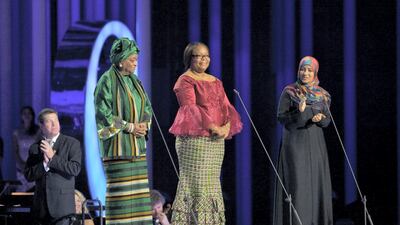
2011 - Ellen Johnson Sirleaf, Leymah Gbowee and Tawakul Karman, “for their non-violent struggle for the safety of women and for women’s rights to full participation in peace-building work”. Getty Images -
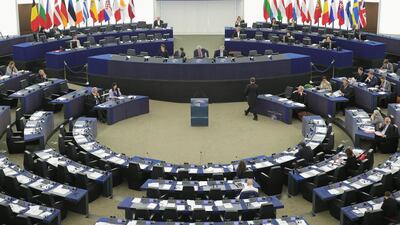
2012 - The European Union (EU), “for over six decades contributed to the advancement of peace and reconciliation, democracy and human rights in Europe”. Getty Images -
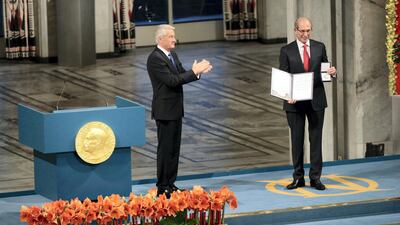
2013 - The Organisation for the Prohibiton of Chemical Weapons (OPCW), “for its extensive efforts to eliminate chemical weapons”. AFP -
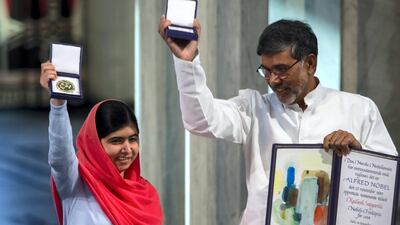
2014 - Malala Yousafzai and Kailash Satyarthi, “for their struggle against the suppression of children and young people and for the right of all children to education”. Getty Images -

2015 - National Dialogue Quartet, “for its decisive contribution to the building of a pluralistic democracy in Tunisia”. Getty Images -
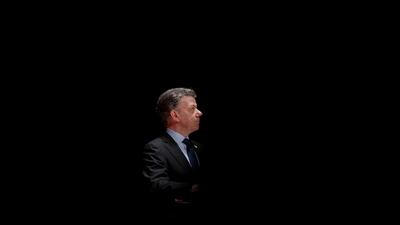
2016 - Former President of Colombia Juan Manuel Santos, “for his resolute efforts to bring the country’s more than 50-year-long civil war to an end”. Getty Images -
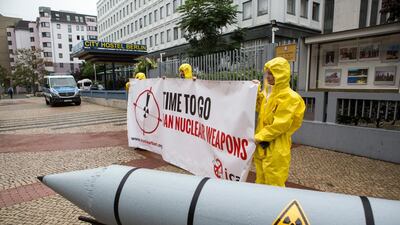
2017 - International Campaign to Abolish Nuclear Weapons (ICAN), “for its work to draw attention to the catastrophic humanitarian consequences of any use of nuclear weapons and for its ground-breaking efforts to achieve a treaty-based prohibition of such weapons”. Getty Images -
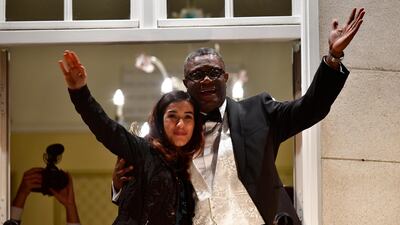
2018 - Denis Mukwege and Nadia Murad, “for their efforts to end the use of sexual violence as a weapon of war and armed conflict”. AFP -
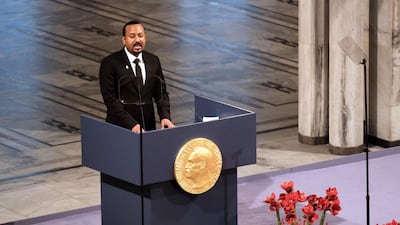
2019 - Ethiopia's Prime Minister Abiy Ahmed Ali, “for his efforts to achieve peace and international cooperation, and in particular for his decisive initiative to resolve the border conflict with neighbouring Eritrea”. Getty Images -
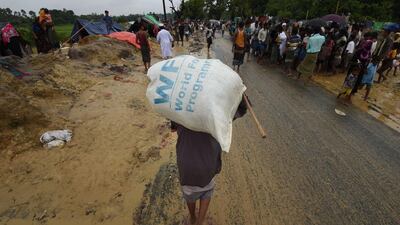
2020 - World Food Progamme, “for its efforts to combat hunger, for its contribution to bettering conditions for peace in conflict-affected areas and for acting as a driving force in efforts to prevent the use of hunger as a weapon of war and conflict”. AFP



