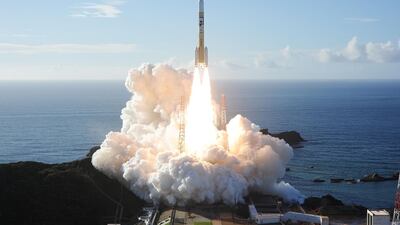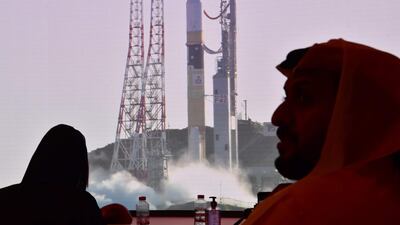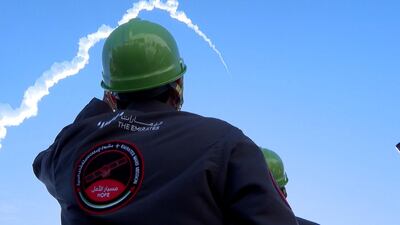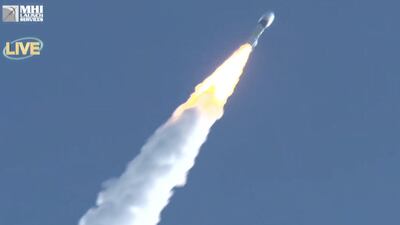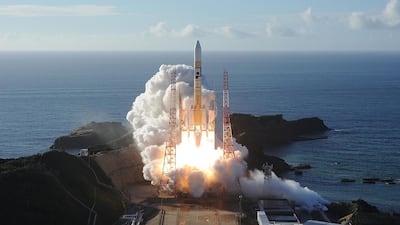
TOPSHOT - In this handout photograph taken and released on July 20, 2020 by Mitsubishi Heavy Industries an H-2A rocket carrying the Hope Probe known as "Al-Amal" in Arabic, developed by the Mohammed Bin Rashid Space Centre (MBRSC) in the United Arab Emirates (UAE) to explore Mars, blasts off from Tanegashima Space Centre in southwestern Japan. The first Arab space mission to Mars blasted off on July 20 aboard a rocket from Japan, with the probe dubbed "Hope" successfully separating about an hour after liftoff. - --- RESTRICTED TO EDITORIAL USE - MANDATORY CREDIT "AFP PHOTO / (MITSUBISHI HEAVY INDUSTRIES)" - NO MARKETING NO ADVERTISING CAMPAIGNS - DISTRIBUTED AS A SERVICE TO CLIENTS --- / AFP / Mitsubishi Heavy Industries / Handout / --- RESTRICTED TO EDITORIAL USE - MANDATORY CREDIT "AFP PHOTO / (MITSUBISHI HEAVY INDUSTRIES)" - NO MARKETING NO ADVERTISING CAMPAIGNS - DISTRIBUTED AS A SERVICE TO CLIENTS ---
TOPSHOT - In this handout photograph taken and released on July 20, 2020 by Mitsubishi Heavy Industries an H-2A rocket carrying the Hope Probe known as "Al-Amal" in Arabic, developed by the Mohammed B

Mars missions embody ‘humankind driven by curiosity’


Jamie Prentis
  • English
  • Arabic

Missions to Mars such as the UAE's Hope probe are more than merely scientific exploration and could help cheer people up amid the coronavirus pandemic, a senior European space official has suggested.

Johann-Dietrich Worner, director general of the European Space Agency, said exploration of Mars had in his opinion three main benefits, which included developing high-end technology for future use.

He also said much could be learnt from the Red Planet given its similarities to Earth, at a panel event on Monday during a virtual version of England’s Farnborough International Airshow.

“The third thing is for me the most important one. This is humankind driven by curiosity; whether we like it or not, it is like that,” he said.

  • The Hope probe launches from Japan's Tanegashima Space Centre on July 20. AFP
    The Hope probe launches from Japan's Tanegashima Space Centre on July 20. AFP
  • It will take the spacecraft, which later detached from the rocket, about 200 days to reach the Red Planet, arriving in February 2021. Courtesy: Mitsubishi Heavy Industries
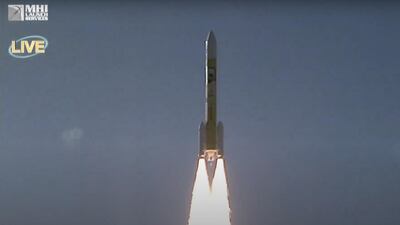
    It will take the spacecraft, which later detached from the rocket, about 200 days to reach the Red Planet, arriving in February 2021. Courtesy: Mitsubishi Heavy Industries
  • The launch of the rocket is captured on video at Japan's Tanegashima Space Centre. Courtesy: Mitsubishi Heavy Industries
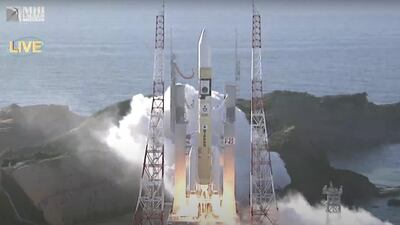
    The launch of the rocket is captured on video at Japan's Tanegashima Space Centre. Courtesy: Mitsubishi Heavy Industries
  • The first homegrown Arab space mission drew in interest from across the globe. Courtesy: Mitsubishi Heavy Industries
    The first homegrown Arab space mission drew in interest from across the globe. Courtesy: Mitsubishi Heavy Industries
  • The launch of the rocket from Japan's Tanegashima Space Centre. Courtesy: Mitsubishi Heavy Industries
    The launch of the rocket from Japan's Tanegashima Space Centre. Courtesy: Mitsubishi Heavy Industries
  • Waiting for the launch in the morning light. MHI Launch Services twitter
    Waiting for the launch in the morning light. MHI Launch Services twitter
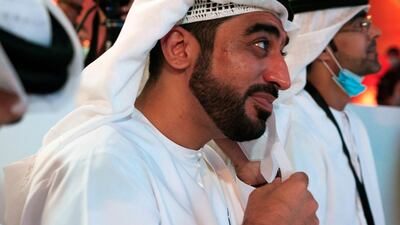
  • Emirati journalists clap as they watch the launch of the Hope space probe at Mohammed bin Rashid Space Centre in Dubai. AP
    Emirati journalists clap as they watch the launch of the Hope space probe at Mohammed bin Rashid Space Centre in Dubai. AP
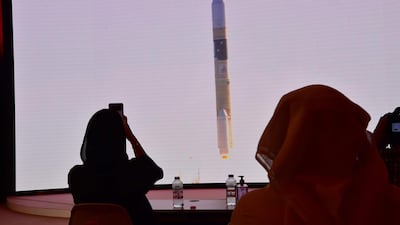
  • A broadcasting of the launch of the Hope Mars probe at the Mohammed Bin Rashid Space Centre in Dubai. AFP
    A broadcasting of the launch of the Hope Mars probe at the Mohammed Bin Rashid Space Centre in Dubai. AFP
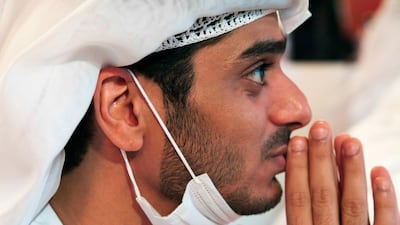
  • An Emirati man wipes a tear away with his face mask while watching the launch of the Hope space probe at Mohammed bin Rashid Space Centre in Dubai. AP
    An Emirati man wipes a tear away with his face mask while watching the launch of the Hope space probe at Mohammed bin Rashid Space Centre in Dubai. AP
  • Mohammed Al Mannaee, an announcer with Dubai TV, reacts as he watches the launch. AP
    Mohammed Al Mannaee, an announcer with Dubai TV, reacts as he watches the launch. AP
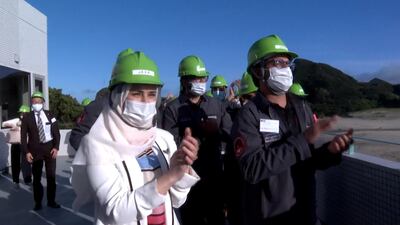
  • Sarah Al Ameeri and the UAE team watch the launch at at the Tanegashima Space Centre
    Sarah Al Ameeri and the UAE team watch the launch at at the Tanegashima Space Centre
  • The UAE team watch the launch of the Mars Hope probe at at the Tanegashima Space Centre.
    The UAE team watch the launch of the Mars Hope probe at at the Tanegashima Space Centre.
  • Sarah Al Ameeri and the UAE team watch the launch at at the Tanegashima Space Centre
    Sarah Al Ameeri and the UAE team watch the launch at at the Tanegashima Space Centre
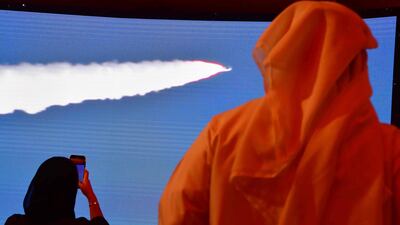
  • A screen broadcasts the launch of the Mars probe at Mohammed bin Rashid Space Centre in Dubai. AFP
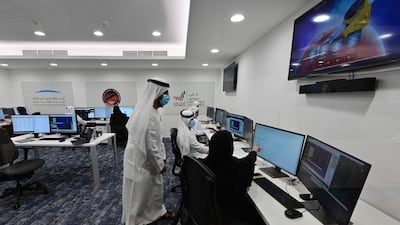
    A screen broadcasts the launch of the Mars probe at Mohammed bin Rashid Space Centre in Dubai. AFP
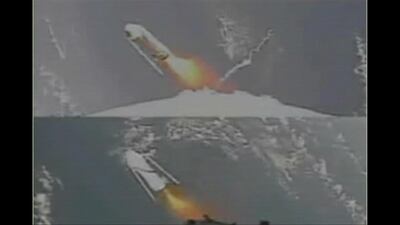
  • Solid rocket booster (SRB-A) was separated after burnout during the launch of the H-2A rocket carrying the Hope Probe, developed by the Mohammed Bin Rashid Space Centre (MBRSC) in the United Arab Emirates (UAE) for the Mars explore, are recorded by cameras onboard the rocket after the lauch from Tanegashima Space Center on the island of Tanegashima, Japan. REUTERS
    Solid rocket booster (SRB-A) was separated after burnout during the launch of the H-2A rocket carrying the Hope Probe, developed by the Mohammed Bin Rashid Space Centre (MBRSC) in the United Arab Emirates (UAE) for the Mars explore, are recorded by cameras onboard the rocket after the lauch from Tanegashima Space Center on the island of Tanegashima, Japan. REUTERS
  • A screen broadcasts the launch of the Mars probe at Mohammed bin Rashid Space Centre in Dubai. AFP
    A screen broadcasts the launch of the Mars probe at Mohammed bin Rashid Space Centre in Dubai. AFP
  • The launch of the rocket from Japan's Tanegashima Space Centre. Courtesy: MHI Launch Services
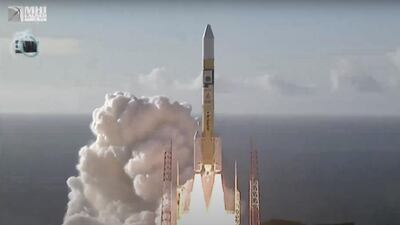
    The launch of the rocket from Japan's Tanegashima Space Centre. Courtesy: MHI Launch Services
  • Omran Sharaf, the project director for the Hope space probe, speaks on his mobile phone at Mohammed bin Rashid Space Centre in Dubai. AP
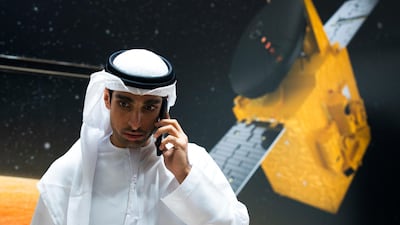
    Omran Sharaf, the project director for the Hope space probe, speaks on his mobile phone at Mohammed bin Rashid Space Centre in Dubai. AP
  • Sarah Al Ameeri, Minister of State for Advanced Sciences of United Arab Emirates, celebrates with Naohiko Abe, Mitsubishi Heavy Industries (MHI) Senior Vice President, Head of Integrated Defence and Space Systems, after the successful launch of the H-2A rocket carrying the Hope Probe, developed by the Mohammed Bin Rashid Space Centre (MBRSC) in the United Arab Emirates (UAE) for the Mars explore, at Tanegashima Space Center on the island of Tanegashima, Japan. REUTERS
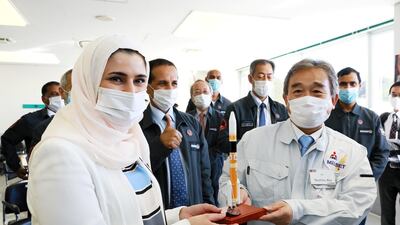
    Sarah Al Ameeri, Minister of State for Advanced Sciences of United Arab Emirates, celebrates with Naohiko Abe, Mitsubishi Heavy Industries (MHI) Senior Vice President, Head of Integrated Defence and Space Systems, after the successful launch of the H-2A rocket carrying the Hope Probe, developed by the Mohammed Bin Rashid Space Centre (MBRSC) in the United Arab Emirates (UAE) for the Mars explore, at Tanegashima Space Center on the island of Tanegashima, Japan. REUTERS
  • Emiratis are pictured at the Mohammed Bin Rashid Space Centre in Dubai ahead of the expected launch of the "Hope" Mars probe from Japan. AFP
    Emiratis are pictured at the Mohammed Bin Rashid Space Centre in Dubai ahead of the expected launch of the "Hope" Mars probe from Japan. AFP
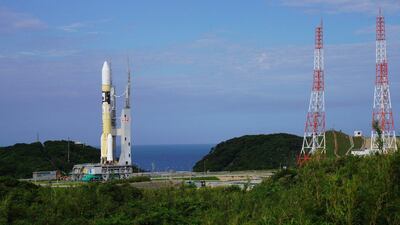
  • The weather was clear over Tanegashima Island in southern Japan on Sunday after weeks of rain and cloudy conditions. Courtesy: Dubai Media Office
    The weather was clear over Tanegashima Island in southern Japan on Sunday after weeks of rain and cloudy conditions. Courtesy: Dubai Media Office
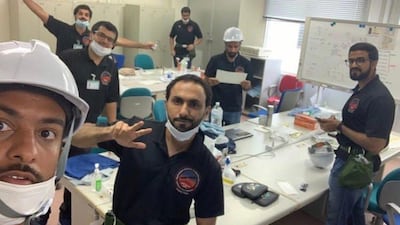
  • Emirati engineers wave in a picture taken on Sunday from Japan's Tanegashima Space Centre. Courtesy: Emirates Mars Mission / UAE Space Agency
    Emirati engineers wave in a picture taken on Sunday from Japan's Tanegashima Space Centre. Courtesy: Emirates Mars Mission / UAE Space Agency
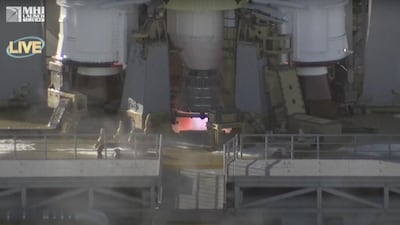
  • The launch of the rocket from Japan's Tanegashima Space Centre. Screengrab courtesy MHI Launch Services
    The launch of the rocket from Japan's Tanegashima Space Centre. Screengrab courtesy MHI Launch Services

“Therefore when people see what we are doing in space, they are fascinated. That’s the case all the time, and that is good. Fascination is a positive mood in our brain, much better than all these coronavirus things. So therefore it is positive, fascination is positive,” Mr Worner added.

“Mars is delivering all of this and Mars is very special because we still expect to find something there like life.”

The successful launch of the Hope probe was in contrast to Europe's own efforts to launch a mission to Mars this month, which did not go ahead. ExoMars' Rosalind Franklin rover is a joint venture between Europe's space agency and Russia's Roscosmos.

Dr Graham Turnock, chief executive of the UK Space Agency, said there was a limited window only every two years to launch missions to Mars because of the planet’s orbit.

“Obviously it’s really disappointing. So many people worked so hard together on the Rosalind Franklin rover and get it ready for launch. Not being able to do it is obviously a real shame,” he said.

“But a combination of Covid and some really challenging technical issues which we just didn’t feel in the end we had time to resolve, not least given the Covid situation, meant that in this case the best option was just to say, ‘Let’s go again in two years’ time.’”

A decision was made in March to push back the launch after a lack of testing of parachutes needed to land on Mars.

Britain's Middle East minister James Cleverly praised the Hope launch and described it as a pioneering mission.