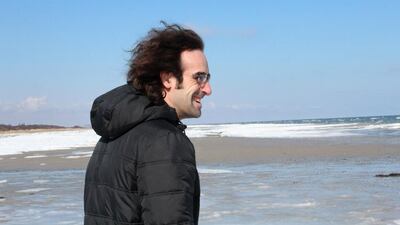

An IT worker living in Denmark for nine years faces deportation to Palestine, a place he left a few days after he was born, after losing his Danish residency on a minor technicality.
Once considered a safe haven for refugees, Denmark's policy on asylum and immigration has become increasingly controversial. The Scandinavian nation has recently been pushing Syrian refugees to return to their war-torn country, claiming it is now safe to do so. But Syria is not the only conflict zone the Danish authorities now deem safe for asylum seekers.
For the past four years, Palestinian Mohamed El Shawa has been fighting a series of misfortunes that have threatened his livelihood, his legal status and potentially his safety.
About five years after arriving in Denmark legally in 2012, Mohamed's residency was not renewed and he has been fighting deportation to Gaza ever since.
"I always wanted to travel. I wanted to leave Egypt and I never thought that would happen. As Palestinians we are always seeking somewhere we can call home," he tells The National.
Mohamed, 36, was raised in Egypt where he lived until he was 27 but there are no pathways to permanent residency or citizenship for Palestinians there.
Harbouring a lifelong dream to travel overseas, Mohamed, who already knew Arabic, English and Spanish and now speaks Danish, was overjoyed when he was accepted for postgraduate study at Denmark’s Aalborg University.
“The moment I arrived to Denmark was the best feeling of my entire life. It felt like I was finally free. Everything was beautiful, everyone was smiling and so friendly and welcoming,” says the master's graduate in international marketing.
After completing his degree in 2014, he was accepted on Denmark's Green Card scheme and began building his career with language courses and internships. By 2017 Mohamed was working full-time for an IT company in Copenhagen, living in his own apartment and was surrounded by close friends – but then a technicality upended everything.
The few hours that cost him everything
In early 2018, Mohamed was shocked to receive a letter from the immigration authorities telling him they would not be renewing his residency and giving him one month to leave the country.
“I was shocked, furious and depressed. I didn’t know what to do. How could I wrap up five years of my life in one month? Where was I supposed to go?” he says.

His appeals were rejected and to further complicate matters, Mohamed’s Egyptian residency had expired and his subsequent application for a visa to Egypt was rejected. With nowhere to go and afraid of becoming an illegal resident in Denmark, Mohamed was forced to seek asylum.
“It’s not like I’ve been travelling around seeking asylum. I had my life here already. There wasn’t another option for me except to stay here.
"I deserved to be in Denmark. When I applied I had been there for six years already. I had my friends. I would have accepted being kicked out if I wasn’t successful or didn’t have a job but to have everything taken away because of a technicality...” he trails off, despondently.
After giving up his job, his apartment and most of his belongings, he spent the past three years moving from one asylum centre to another, attempting to reclaim the life he had built for himself but to no avail.
Mohamed’s asylum application was rejected and the Danish government ordered him to return to his birthplace.
"They consider Gaza my home because I was born there but I've only ever been twice in my life and the last time was in 1998, so I don't even know it. I don't have connections, I have absolutely nothing andGaza now is very different to the one I saw as a child. I don't even know what would happen to me there."
Gaza’s ‘safe’ conflict-zone
He says it is absurd for the Danish authorities to warn their own citizens not to travel to Gaza because of safety concerns but consider it safe for him to live there.
In 2017, the European Court of Justice upheld the EU's designation of Hamas, the authority governing Gaza since 2007, as a terrorist organisation. The territory is under a 14-year Israeli military blockade by land, air and sea and is hit regularly by air strikes.
Home to 1.9 million people living along a 40-kilometre strip, Gaza is one of the world’s most densely populated places. It suffers from regular power cuts and a lack of clean water and sanitation.
"In Denmark, it isn't enough to be coming from somewhere that is dangerous. The applicant has to prove that they themselves are personally in danger," Mohamed's lawyer, Jimmy Vitenson, tells The National.
Given that Mohamed has never lived in Gaza, any danger to his life is difficult to prove although his lawyer argues that does not make him any less vulnerable. “Are they are following the laws? Yes. Is it fair? No,” he says.
Adding to the absurdity of Mohamed’s situation is that he cannot get into Gaza, even if he wanted to. The only way in is through Israel or Egypt but without travel documents for either country he cannot go to where he is effectively being deported.
This might ultimately be what keeps Mohamed in Denmark. Under current rules, the Danish authorities have 18 months to send a person home, after which they have to reconsider a residency permit.
His case may have reached the end of the road in the Danish courts but there is still a chance to appeal at the European Court of Human Rights in Strasbourg.
While he exhausts all legal avenues, Mohamed says helping out in the office of the Ranum asylum centre innorthern Jutland and learning how to code have helped him from sinking into a deep depression.
“I’ve done everything I can and have been co-operating since day one. But I’ve made it crystal clear that I would rather die here than go back to the Gaza strip,” he says.
Protest in Denmark at move to return Syrian refugees to Damascus
Denmark is returning Syrians to their abusers
Greek police arrest Syrian refugees disguised as volleyball team

