


The return of border checks within Europe’s normally free-flowing Schengen zone has been credited with easing a migration crisis in Germany.
Leaked police figures say the number of illegal crossings fell by 40 per cent in the 30 days after Germany notified the EU it was restoring border controls.
Interior Minister Nancy Faeser ordered the checks at the borders with Poland, the Czech Republic and Switzerland to stem almost daily reports of people smuggling.
The border with Austria has also been more tightly guarded for months amid pressure on ministers to cut the numbers of people arriving illegally in German towns and cities.
In the 30 days to October 16, police counted 18,492 illegal entries from those four countries. That figure fell to 11,029 in the 30 days afterwards, according to the statistics obtained by newspaper Welt am Sonntag.
The leaked analysis showed a particularly sharp drop at the Polish border, where crossings fell from 6,411 to 2,795. Federal police are quoted saying the border checks were one of several factors contributing to the decline.
-

People queue for lunch at the initial reception centre for migrants and refugees in Eisenhuettenstadt, Germany. Getty Images -
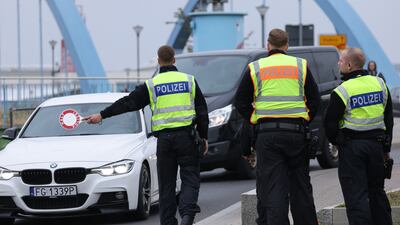
German police check vehicles arriving from Poland at a temporary border checkpoint in Frankfurt. Getty Images -
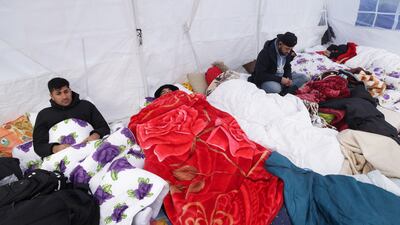
Yazidi men on hunger strike outside the Reichstag in Berlin in an effort to prevent their deportation to Iraq. Getty Images -
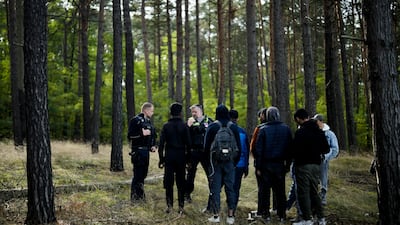
A police officer speaks to migrants who have illegally crossed the border from Poland into Germany, in a forest near Forst, south-east of Berlin. AP -

An employee offers advice to a man from Syria at a shelter for migrants and refugees inside a hangar at the former Tempelhof airport in Berlin. Getty Images -

Two young men from Afghanistan in Tempelhof. Getty Images -

A hostess at a stand of the Edeka grocery shop chain speaks to potential applicants at a job fair for migrants and refugees in Berlin. Getty Images -

Police searching for illegal immigrants stop cars and vans at a checkpoint not far from the Polish border, near Cottbus. Getty Images


Germany’s border police have been instructed to carry out random inspections, set up mobile checkpoints and vary their location to keep traffickers on their toes. Authorities have also reported a rise in successful manhunts for wanted people smugglers.
Members of the Schengen zone are allowed to bring in temporary border checks if there is a “serious threat to public policy or internal security”. Several countries including Austria, Slovenia and Slovakia also have controls in place.
Ms Faeser has repeatedly said the Schengen zone is in danger if Europe cannot get a grip on people smuggling, with fears over immigration fuelling a rise of far-right parties.
Germany’s three-party government has plans to step up deportations of failed asylum seekers and suspected members of criminal gangs, while also making it easier for legal arrivals to obtain a passport.
Under pressure from state governments, Chancellor Olaf Scholz has agreed to explore the option of processing asylum claims overseas, an option similar to Britain’s stalled Rwanda scheme.

