

This year's Nobel Peace Prize has been awarded to jailed Iranian activist, Narges Mohammadi, for her fight against the oppression of women in Iran.
Ms Mohammadi, 51, one of the country's leading human rights activists, has been arrested 13 times, convicted five times and sentenced to a total of 31 years in prison and 154 lashes.
Authorities last arrested her in November and she is currently serving multiple sentences at Tehran's Evin Prison amounting to about 12 years.
Charges include spreading propaganda against the state.
In a statement to The New York Times following her win, she vowed to remain in Iran and continue fighting for human rights.
“I will never stop striving for the realization of democracy, freedom and equality,” she said.
“Surely, the Nobel Peace Prize will make me more resilient, determined, hopeful and enthusiastic on this path, and it will accelerate my pace.”
Last month she contributed an opinion piece for the newspaper from behind bars in which she wrote: “What the government may not understand is that the more of us they lock up, the stronger we become.”
Ms Mohammadi was jailed for taking part in nationwide protests over the death of 22-year-old Mahsa Amini, who died after she was detained by the country’s morality police.
Ms Amini's death sparked one of the most intense challenges to Iran’s theocracy since its 1979 Islamic Revolution. More than 500 people were killed in a heavy security crackdown while over 22,000 others were arrested.
-
Narges Mohammadi, who has been in and out of prison for more than a decade because of her work for women's rights in Iran, has won this year's Nobel Peace Prize. -
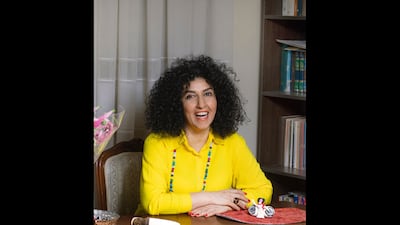
Ms Mohammadi began her career in activism at university, where she wrote articles supporting women’s rights in the student newspaper and was arrested twice. AP -
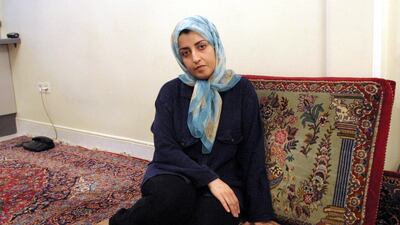
Born in Zanjan, Iran, she studied physics at university and became a professional engineer. AFP -
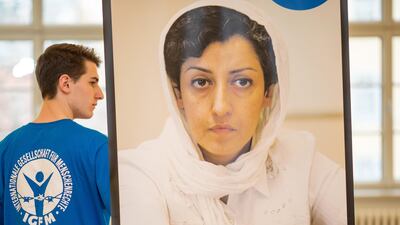
Ms Mohammadi was vice president of the now banned Iranian organisation Defenders of Human Rights and is currently serving a jail sentence in Tehran. EPA -

Ms Mohammadi, pictured in 2005, was awarded the Nobel Peace Prize 'for her fight against women's oppression in Iran and her fight to promote human rights and freedom for all', the panel said. EPA -
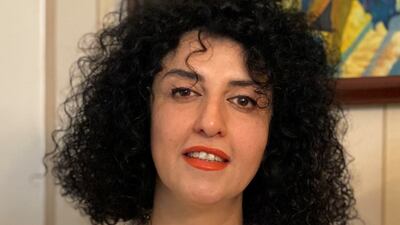
The Iranian human rights activist has been convicted by the regime on numerous occasions. Reuters -
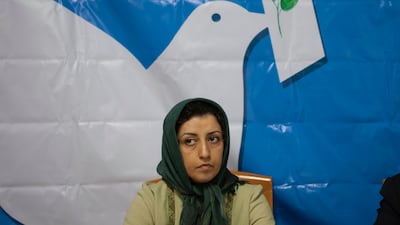
She has also worked as a journalist for several newspapers campaigning for reform. Getty Images -
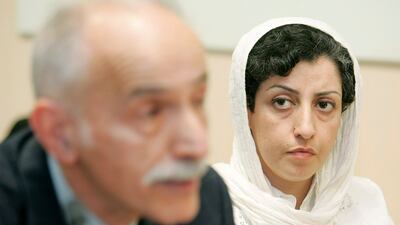
She is serving a 12-year sentence at Evin Prison in Tehran. Charges included spreading propaganda against the state. EPA -
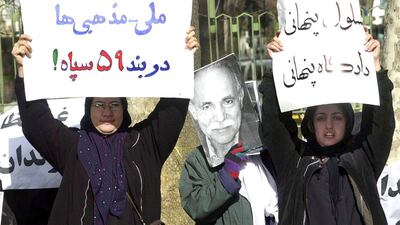
Ms Mohammadi is the wife of dissident Taqi Rahmani, right, pictured protesting in Tehran in 2002. AP Photo


Ms Mohammadi's husband said the prize will embolden her fight for human rights.
Speaking from his home in Paris on Friday, Taghi Rahmani said: "But more importantly, this is in fact a prize for the woman, life and freedom movement.
"This prize is for all the people of Iran, for human rights activists.
"Narges and people like her have chosen this kind of life and, if they are supported, their motivation will increase to pursue their goals."
There was no immediate reaction to Ms Mohammadi's win from Iranian state television and other government-controlled media. Some semi-official news agencies acknowledged it in online messages, citing foreign press reports.
The UN human rights office said her award “highlights the courage and determination of Iranian women”.
It urged Tehran to free Ms Mohammadi and all human rights defenders jailed in Iran, saying "the women of Iran have been an inspiration for the world".
"Their courage and determination in the face of reprisals, intimidation, violence and detention has been remarkable. They have been harassed for what they wear and what they do not wear, and face increasingly stringent legal, social and economic measures against them," said the UN human rights office.
UN spokeswoman Alessandra Vellucci said respect for women's rights had always been an "extremely important point" for the organisation.
"We stand for the rights of women around the world, including in Iran," she told a briefing on Friday.
"Narges Mohammadi's case is emblematic of the huge risks that women take to advocate for the rights of all Iranians. We call for her release and the release of all human rights defenders jailed in Iran."
She is the deputy head of the Defenders of Human Rights Centre, a non-governmental organisation led by Shirin Ebadi, the 2003 Nobel Peace Prize laureate.
Ms Mohammadi is the 19th woman to win the 122-year-old prize and the first since Maria Ressa of the Philippines won the award in 2021 jointly with Russia's Dmitry Muratov.
Hailing Ms Mohammadi as a “freedom fighter”, the head of the Norwegian Nobel Committee started her speech by saying, in Farsi, the words for “woman, life, freedom” – one of the slogans of protests against the Iranian government.
“The Norwegian Nobel Committee has decided to award the 2023 Nobel Peace Prize to Narges Mohammadi for her fight against the oppression of women in Iran and her fight to promote human rights and freedom for all,” Berit Reiss-Andersen said.
The award also recognised the hundreds of thousands of people who have demonstrated against Iranian discrimination and oppression of women, she said.
Earlier this year Ms Mohammadi received the the Unesco/Guillermo Cano World Press Freedom Prize. In 2022, she also won the Reporters Without Borders’ (RSF) Courage Prize. And in 2018 she was awarded the 2018 Andrei Sakharov Prize.
Last year the prize was won by human rights activists from Ukraine, Belarus and Russia, in what was seen as a strong rebuke to Russian President Vladimir Putin and his Belarusian counterpart and ally.
Past winners include the late Nelson Mandela and Mikhail Gorbachev, former US president Barack Obama, Myanmar's Aung San Suu Kyi and the UN.
Unlike the other Nobel categories, which are selected and announced in Stockholm, founder Alfred Nobel decreed that the peace prize be decided and awarded in Oslo by the five-member Norwegian Nobel Committee.
Previous Nobel Peace Prize winners – in pictures
-
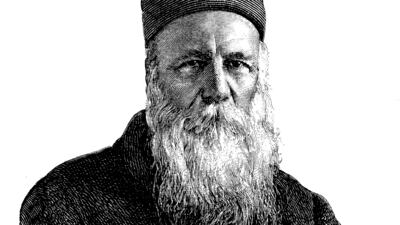
1901. Jean-Henri Dunant. The founder of the Red Cross was awarded the prize 'for his humanitarian efforts to help wounded soldiers and create international understanding'. He shared the first award with Frederic Passy. Getty Images -

1901. Frederic Passy. The French economist and writer was awarded 'for his lifelong work for international peace conferences, diplomacy and arbitration'. Getty Images -
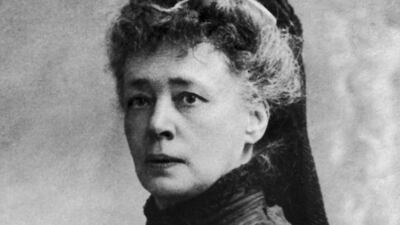
1905. Baroness Bertha von Suttner. The first woman to win the Peace Prize, she was awarded for her work as President of the Permanent International Peace Bureau. She was also the author of the anti-war novel 'Lay Down Your Arms'. Getty Images -
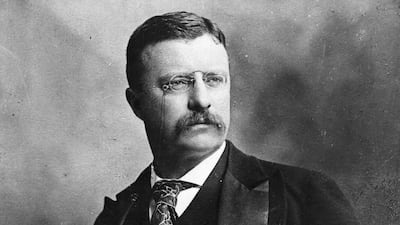
1906. Theodore Roosevelt. The 26th US president was awarded for 'for his role in bringing to an end the bloody war recently waged between two of the world’s great powers, Japan and Russia'. Getty Images -
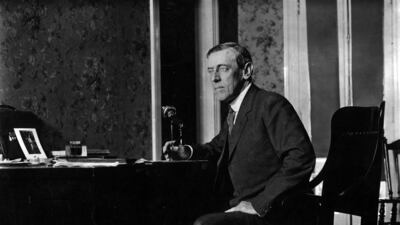
1919. Woodrow Wilson, the 28th US president was awarded 'for his role as founder of the League of Nations'. Getty Images -
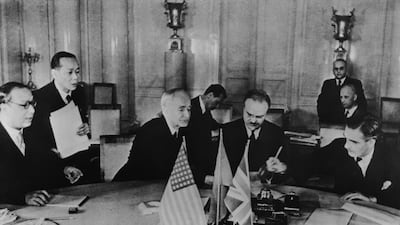
1945. Cordell Hull, centre left, won 'for his indefatigable work for international understanding and his pivotal role in establishing the United Nations'. He is pictured here signing the four-power pact in Moscow in 1943 alongside (L-R) Chinese ambassador to Moscow Foo Ping Shen, Vyacheslav Mikhailovich Molotov of Russia and Anthony Eden of Britain. Getty Images -
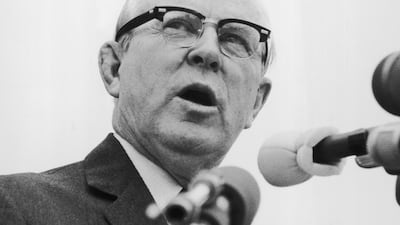
1957. Canadian politician Lester Bowles Pearson was awarded 'for his crucial contribution to the deployment of a United Nations Emergency Force in the wake of the Suez Crisis'. Getty Images -
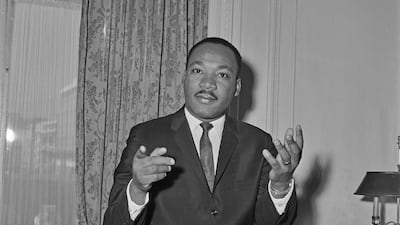
1964. American civil rights campaigner Martin Luther King Jnr was awarded 'for his non-violent struggle for civil rights for the Afro-American population'. Getty Images -
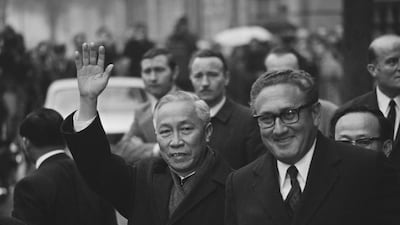
1973. Another shared award, North Vietnamese leader Le Duc Tho and US National Security Adviser Henry Kissinger are pictured here at the Paris Peace Accords during the Vietnam War, January 1973. They were jointly awarded the Nobel Peace Prize later that year 'for jointly having negotiated a cease fire in Vietnam in 1973'. Getty Images -
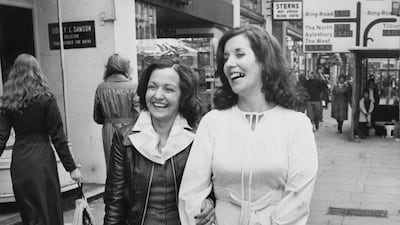
1976. Mairead Corrigan (left) and Betty Williams, co-founders of Community of Peace People, were both awarded 'for the courageous efforts in founding a movement to put an end to the violent conflict in Northern Ireland'. Getty Images -

1978. US president Jimmy Carter, who would go on to be awarded the Peace Prize himself in 2002, is pictured here with Israeli Prime Minister Menachem Begin and Egyptian President Mohamed Anwar Sadat during peace talks at Camp David, Maryland in 1978. That year Mr Begin and Mr Sadat won 'for jointly having negotiated peace between Egypt and Israel in 1978'. Getty Images -
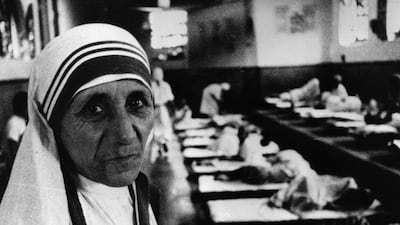
1979. Mother Teresa receiving the Nobel Peace Prize in Oslo, Norway, 'for her work for bringing help to suffering humanity'. Getty Images -
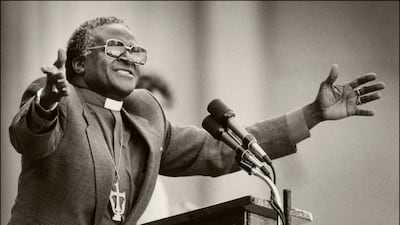
1984. South African religious leader and activist Bishop Desmond Tutu was awarded the prize 'for his role as a unifying leader figure in the non-violent campaign to resolve the problem of apartheid in South Africa'. Pictured here giving an impassioned speech at the University of California Berkeley in 1985. Getty Images -
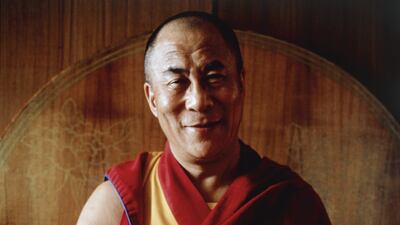
1989. His Holiness the 14th Dalai Lama (Tenzin Gyatso) at his home in Dharamsala, India, circa 1991. He won 'for advocating peaceful solutions based upon tolerance and mutual respect in order to preserve the historical and cultural heritage of his people'. Getty Images -
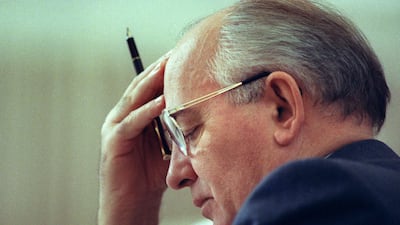
1990. The last Soviet president Mikhail Gorbatchev was awarded 'for the leading role he played in the radical changes in East-West relations'. AFP -
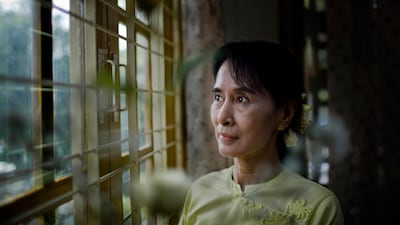
1991. Myanmar democracy figurehead Aung San Suu Kyi became a Peace Prize laureate 'for her non-violent struggle for democracy and human rights'. Getty Images -

1993. South African president Nelson Mandela and second deputy president F.W. de Klerk were jointly awarded 'for their work for the peaceful termination of the apartheid regime, and for laying the foundations for a new democratic South Africa'. Reuters -
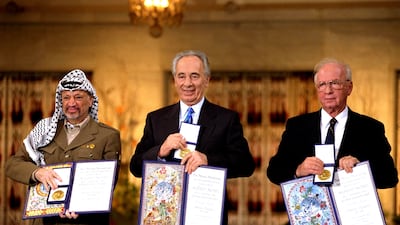
1994. (R-L) Israeli PM Yitzak Rabin, Israeli foreign minister Shimon Peres and Palestinian leader Yaser Arafat, were each Nobel Peace Prize winners, 'for their efforts to create peace in the Middle East'. Getty Images -
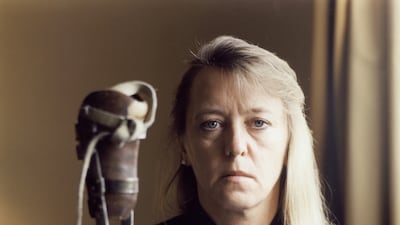
1997. Jody Williams was awarded alongside the International Campaign to Ban Landmines 'for their work for the banning and clearing of anti-personnel mines'. Getty Images -
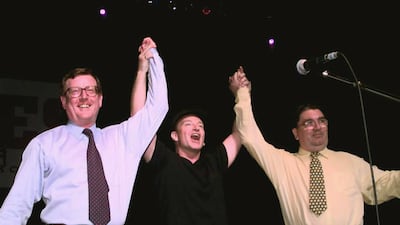
1998. Ulster Unionist leader David Trimble, left, and SDLP leader John Hume, standing with Irish rock band U2's lead singer Bono, were awarded 'for their efforts to find a peaceful solution to the conflict in Northern Ireland'. EPA -

2001. UN secretary general Kofi Annan was a Nobel Peace Prize laureate along with the UN 'for their work for a better organized and more peaceful world'. Getty Images -
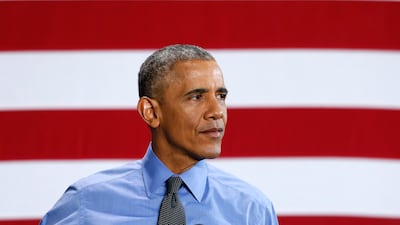
2009. 44th US president Barack Obama was named Nobel Peace Prize winner 'for his extraordinary efforts to strengthen international diplomacy and cooperation between peoples'. EPA -
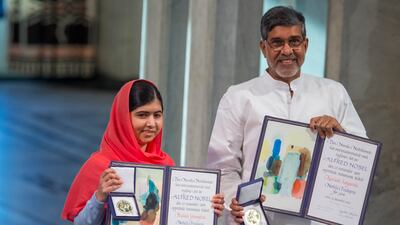
2014. Malala Yousafzai and Kailash Satyarthi accept their Nobel Peace Prize Awards 'for their struggle against the suppression of children and young people and for the right of all children to education'. Getty Images -

2021. Nobel Peace Prize winners Maria Ressa (L) and Dmitry Muratov receive their awards during the ceremony at the City Hall in Oslo. Ms Ressa, from the Philippines, and Mr Muratov, from Russia, were awarded the Nobel Peace Prize for their efforts for freedom of expression. EPA


This is a developing story.

