The Cantref Reservoir in Brecon Beacons National Park, Wales, where water levels dropped during the warm summer this year. PA.

Climate change made 2022 drought 'at least 20 times likelier'


Neil Murphy
  • English
  • Arabic

Human-induced climate change made this summer's drought across the Northern Hemisphere at least 20 times more likely, according to research.

The three months from June to August were the hottest in Europe since records began, and the exceptionally high temperatures led to the worst drought on the continent for centuries.

Researchers from World Weather Attribution, a group of scientists from around the world who study the link between extreme weather and climate change, said this type of drought would only happen once every 400 years if not for climate change.

Now they expect these conditions to repeat every 20 years, given how much the climate has warmed.

Successive heatwaves between June and July, which resulted in temperatures topping 40°C (104°F) in Britain for the first time, caused about 24,000 excess deaths in Europe.

China and North America also experienced unusually high temperatures and exceptionally low rainfall over the period.

“The 2022 summer has shown how human-induced climate change is increasing the risks of agricultural and ecological droughts in densely populated and cultivated regions of the North Hemisphere,” said Sonia Seneviratne, a professor at the Institute for Atmospheric and Climate Science at ETH Zurich in Switzerland and one of the study's contributors.

To quantify the effect of human-caused climate change on soil moisture levels, the team analysed weather data and computer simulations to compare the real climate as it is today, about 1.2°C hotter than pre-industrial levels.

They found that western and central Europe experienced particularly severe drought and substantially reduced crop yields.

Moisture in the top seven centimetres of soil across the Northern Hemisphere was made five times likelier to experience severe drought due to climate change, the study found.

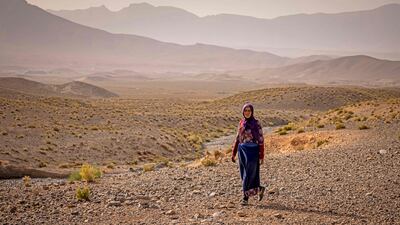
Morocco's last nomads are struggling with climate change — in pictures

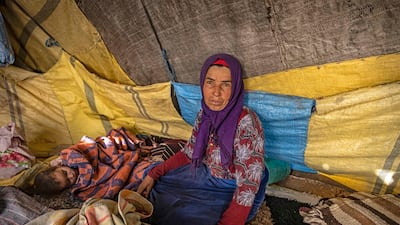
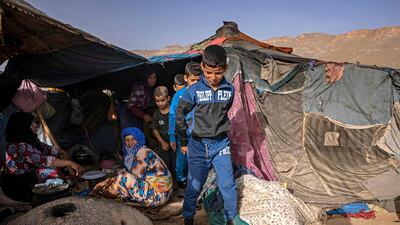
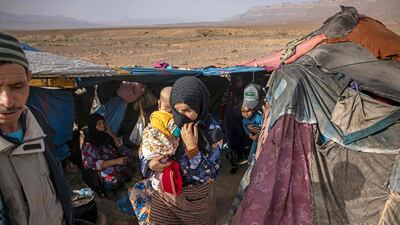
  • Amazigh Ida Ouchaali at an encampment near the village of Amellagou, where some of the last people to keep Morocco's nomadic traditions reside. They say their ancient lifestyle has become impossible to sustain as climate change brings ever more intense droughts. All photos: AFP
    Amazigh Ida Ouchaali at an encampment near the village of Amellagou, where some of the last people to keep Morocco's nomadic traditions reside. They say their ancient lifestyle has become impossible to sustain as climate change brings ever more intense droughts. All photos: AFP
  • Amazigh Ida Ouchaali belongs to a community of about 25,000 people at the last census in 2014. Its numbers are down by two-thirds in a decade.
    Amazigh Ida Ouchaali belongs to a community of about 25,000 people at the last census in 2014. Its numbers are down by two-thirds in a decade.
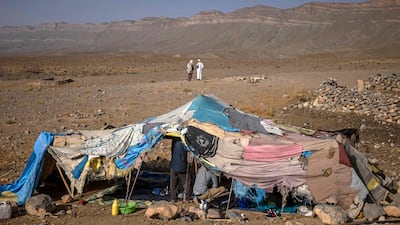
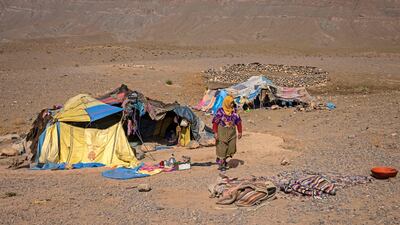
  • Amazigh tents near the village of Amellagou in Morocco. Ida Ouchaali's tribe spent centuries roaming the country to find food for their animals, but their way of life is steadily disappearing. Ms Ouchaali says she is 'exhausted' by her fight for survival.
    Amazigh tents near the village of Amellagou in Morocco. Ida Ouchaali's tribe spent centuries roaming the country to find food for their animals, but their way of life is steadily disappearing. Ms Ouchaali says she is 'exhausted' by her fight for survival.
  • Amazigh women in Amellagou carry out their daily chores.
    Amazigh women in Amellagou carry out their daily chores.
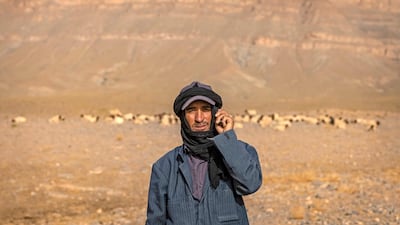
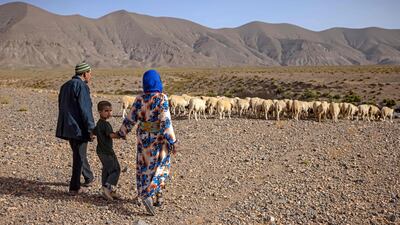
  • An Amazigh man poses for a picture next to a herd of sheep near the village of Amellagou. Water for livestock is hard to find and the harsh climate threatens his way of life.
    An Amazigh man poses for a picture next to a herd of sheep near the village of Amellagou. Water for livestock is hard to find and the harsh climate threatens his way of life.
  • Amazigh families at Amellagou worry about the future of their children. One teenager says the young want to 'turn the page on nomadism'.
    Amazigh families at Amellagou worry about the future of their children. One teenager says the young want to 'turn the page on nomadism'.
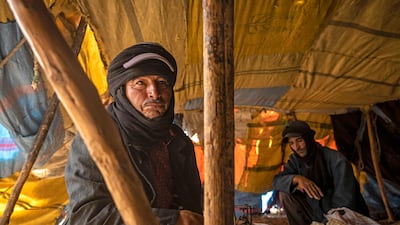
  • Amazigh Moha Ouchaali is in his 50s. 'Everything has changed,' he says. 'I don't recognise myself anymore in the world of today.'
    Amazigh Moha Ouchaali is in his 50s. 'Everything has changed,' he says. 'I don't recognise myself anymore in the world of today.'
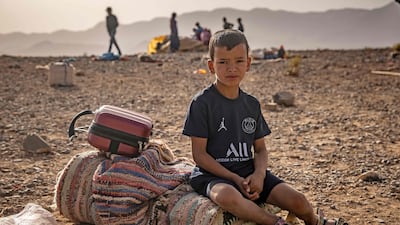
  • An Amazigh boy and his belongings in the Moroccan desert.
    An Amazigh boy and his belongings in the Moroccan desert.
  • Children of Amazigh families grow up in a shrinking community. At one time there were nearly 500 tents around the village of Amellagou but now there are less than a tenth of that.
    Children of Amazigh families grow up in a shrinking community. At one time there were nearly 500 tents around the village of Amellagou but now there are less than a tenth of that.
  • Each generation of Amazigh face social and economic changes that make their lives more difficult. Laws passed by Morocco that would defend the nomadic way are simply ignored by other people, they say.
    Each generation of Amazigh face social and economic changes that make their lives more difficult. Laws passed by Morocco that would defend the nomadic way are simply ignored by other people, they say.
  • Amazigh sheltering at Amellagou say they recall a time when nomadic people were welcomed by settled communities but such hospitality is largely gone.
    Amazigh sheltering at Amellagou say they recall a time when nomadic people were welcomed by settled communities but such hospitality is largely gone.
  • Driss Skounti says he has little hope for the future. 'Nomadic life has an identity and a tradition steeped in history, but is doomed to disappear within 10 years.'
    Driss Skounti says he has little hope for the future. 'Nomadic life has an identity and a tradition steeped in history, but is doomed to disappear within 10 years.'

For the top one metre of soil, known as the root zone, this summer's dryness was made at least 20 times likelier due to global heating.

“Really, what is most relevant for agriculture and ecological impacts is the top one metre of the soil because that's where plants have their roots,” said Prof Seneviratne.

Overall, a Northern Hemisphere drought such as this summer's was now likely to occur once every 20 years in today's climate, compared to once every 400 years in the mid-18th century.

Producers in Europe and China have warned of significantly lower than expected harvests in crop staples due to the dry spell, after food prices hit multi-year highs following Russia's invasion of Ukraine in February.

Friederike Otto, senior lecturer in climate science at the Imperial College London, called the crop shortfall “particularly worrying”.

“It followed a climate change-fuelled heatwave in South Asia that also destroyed crops, and happened at a time when global food prices were already extremely high due to the war in Ukraine,” she said.

Otto said the Northern Hemisphere in general was showing a “pure climate change signal” in its overall warming trends.

Maarten van Aalst, director of the Red Cross Red Crescent Climate Centre and professor of climate and disaster resilience at the University of Twente, said governments needed to do far more to prepare for future heat and drought shocks, which will become ever more frequent as temperatures rise.

“We're talking tens of thousands of people killed by these phenomena and one thing that we are seeing is the impacts compounding and cascading across regions and sectors,” he said.

“It is playing out in front of our eyes even faster than we might have expected.”

The Lowdown

Kesari

Rating: 2.5/5 stars
Produced by: Dharma Productions, Azure Entertainment
Directed by: Anubhav Singh
Cast: Akshay Kumar, Parineeti Chopra


How much of your income do you need to save?

The more you save, the sooner you can retire. Tuan Phan, a board member of SimplyFI.com, says if you save just 5 per cent of your salary, you can expect to work for another 66 years before you are able to retire without too large a drop in income.

In other words, you will not save enough to retire comfortably. If you save 15 per cent, you can forward to another 43 working years. Up that to 40 per cent of your income, and your remaining working life drops to just 22 years. (see table)

Obviously, this is only a rough guide. How much you save will depend on variables, not least your salary and how much you already have in your pension pot. But it shows what you need to do to achieve financial independence.


SPEC%20SHEET%3A%20APPLE%20M3%20MACBOOK%20AIR%20(13%22)
%3Cp%3E%3Cstrong%3EProcessor%3A%3C%2Fstrong%3E%20Apple%20M3%2C%208-core%20CPU%2C%20up%20to%2010-core%20CPU%2C%2016-core%20Neural%20Engine%3C%2Fp%3E%0A%3Cp%3E%3Cstrong%3EDisplay%3A%3C%2Fstrong%3E%2013.6-inch%20Liquid%20Retina%2C%202560%20x%201664%2C%20224ppi%2C%20500%20nits%2C%20True%20Tone%2C%20wide%20colour%3C%2Fp%3E%0A%3Cp%3E%3Cstrong%3EMemory%3A%3C%2Fstrong%3E%208%2F16%2F24GB%3C%2Fp%3E%0A%3Cp%3E%3Cstrong%3EStorage%3A%3C%2Fstrong%3E%20256%2F512GB%20%2F%201%2F2TB%3C%2Fp%3E%0A%3Cp%3E%3Cstrong%3EI%2FO%3A%3C%2Fstrong%3E%20Thunderbolt%203%2FUSB-4%20(2)%2C%203.5mm%20audio%2C%20Touch%20ID%3C%2Fp%3E%0A%3Cp%3E%3Cstrong%3EConnectivity%3A%3C%2Fstrong%3E%20Wi-Fi%206E%2C%20Bluetooth%205.3%3C%2Fp%3E%0A%3Cp%3E%3Cstrong%3EBattery%3A%3C%2Fstrong%3E%2052.6Wh%20lithium-polymer%2C%20up%20to%2018%20hours%2C%20MagSafe%20charging%3C%2Fp%3E%0A%3Cp%3E%3Cstrong%3ECamera%3A%3C%2Fstrong%3E%201080p%20FaceTime%20HD%3C%2Fp%3E%0A%3Cp%3E%3Cstrong%3EVideo%3A%3C%2Fstrong%3E%20Support%20for%20Apple%20ProRes%2C%20HDR%20with%20Dolby%20Vision%2C%20HDR10%3C%2Fp%3E%0A%3Cp%3E%3Cstrong%3EAudio%3A%3C%2Fstrong%3E%204-speaker%20system%2C%20wide%20stereo%2C%20support%20for%20Dolby%20Atmos%2C%20Spatial%20Audio%20and%20dynamic%20head%20tracking%20(with%20AirPods)%3C%2Fp%3E%0A%3Cp%3E%3Cstrong%3EColours%3A%3C%2Fstrong%3E%20Midnight%2C%20silver%2C%20space%20grey%2C%20starlight%3C%2Fp%3E%0A%3Cp%3E%3Cstrong%3EIn%20the%20box%3A%3C%2Fstrong%3E%20MacBook%20Air%2C%2030W%2F35W%20dual-port%2F70w%20power%20adapter%2C%20USB-C-to-MagSafe%20cable%2C%202%20Apple%20stickers%3C%2Fp%3E%0A%3Cp%3E%3Cstrong%3EPrice%3A%3C%2Fstrong%3E%20From%20Dh4%2C599%3C%2Fp%3E%0A
BUNDESLIGA FIXTURES

Friday (all kick-offs UAE time)

Hertha Berlin v Union Berlin (10.30pm)

Saturday

Freiburg v Werder Bremen (5.30pm)

Paderborn v Hoffenheim (5.30pm)

Wolfsburg v Borussia Dortmund (5.30pm)

Borussia Monchengladbach v Bayer Leverkusen (5.30pm)

Bayern Munich v Eintracht Frankfurt (5.30pm)

Sunday

Schalke v Augsburg (3.30pm)

Mainz v RB Leipzig (5.30pm)

Cologne v Fortuna Dusseldorf (8pm)


MOUNTAINHEAD REVIEW

Starring: Ramy Youssef, Steve Carell, Jason Schwartzman

Director: Jesse Armstrong

Rating: 3.5/5

BORDERLANDS

Starring: Cate Blanchett, Kevin Hart, Jamie Lee Curtis

Director: Eli Roth

Rating: 0/5

Company%20profile
%3Cp%3E%3Cbr%3E%3Cstrong%3EName%3A%3C%2Fstrong%3E%20Khodar%3Cbr%3E%3Cstrong%3EBased%3A%3C%2Fstrong%3E%20Cairo%20and%20Alexandria%2C%20in%20Egypt%3Cbr%3E%3Cstrong%3EFounders%3A%3C%2Fstrong%3E%20Ayman%20Hamza%2C%20Yasser%20Eidrous%20and%20Amr%20El%20Sheikh%3Cbr%3E%3Cstrong%3ESector%3A%3C%2Fstrong%3E%20agriculture%20technology%3Cbr%3E%3Cstrong%3EFunding%3A%3C%2Fstrong%3E%20%24500%2C000%3Cbr%3E%3Cstrong%3EInvestors%3A%3C%2Fstrong%3E%20Saudi%20Arabia%E2%80%99s%20Revival%20Lab%20and%20others%3Cbr%3E%3Cstrong%3EEmployees%3A%3C%2Fstrong%3E%2035%3C%2Fp%3E%0A
The specs

Engine: 1.5-litre turbo

Power: 181hp

Torque: 230Nm

Transmission: 6-speed automatic

Starting price: Dh79,000

On sale: Now

Mercer, the investment consulting arm of US services company Marsh & McLennan, expects its wealth division to at least double its assets under management (AUM) in the Middle East as wealth in the region continues to grow despite economic headwinds, a company official said.

Mercer Wealth, which globally has $160 billion in AUM, plans to boost its AUM in the region to $2-$3bn in the next 2-3 years from the present $1bn, said Yasir AbuShaban, a Dubai-based principal with Mercer Wealth.

Within the next two to three years, we are looking at reaching $2 to $3 billion as a conservative estimate and we do see an opportunity to do so,” said Mr AbuShaban.

Mercer does not directly make investments, but allocates clients’ money they have discretion to, to professional asset managers. They also provide advice to clients.

“We have buying power. We can negotiate on their (client’s) behalf with asset managers to provide them lower fees than they otherwise would have to get on their own,” he added.

Mercer Wealth’s clients include sovereign wealth funds, family offices, and insurance companies among others.

From its office in Dubai, Mercer also looks after Africa, India and Turkey, where they also see opportunity for growth.

Wealth creation in Middle East and Africa (MEA) grew 8.5 per cent to $8.1 trillion last year from $7.5tn in 2015, higher than last year’s global average of 6 per cent and the second-highest growth in a region after Asia-Pacific which grew 9.9 per cent, according to consultancy Boston Consulting Group (BCG). In the region, where wealth grew just 1.9 per cent in 2015 compared with 2014, a pickup in oil prices has helped in wealth generation.

BCG is forecasting MEA wealth will rise to $12tn by 2021, growing at an annual average of 8 per cent.

Drivers of wealth generation in the region will be split evenly between new wealth creation and growth of performance of existing assets, according to BCG.

Another general trend in the region is clients’ looking for a comprehensive approach to investing, according to Mr AbuShaban.

“Institutional investors or some of the families are seeing a slowdown in the available capital they have to invest and in that sense they are looking at optimizing the way they manage their portfolios and making sure they are not investing haphazardly and different parts of their investment are working together,” said Mr AbuShaban.

Some clients also have a higher appetite for risk, given the low interest-rate environment that does not provide enough yield for some institutional investors. These clients are keen to invest in illiquid assets, such as private equity and infrastructure.

“What we have seen is a desire for higher returns in what has been a low-return environment specifically in various fixed income or bonds,” he said.

“In this environment, we have seen a de facto increase in the risk that clients are taking in things like illiquid investments, private equity investments, infrastructure and private debt, those kind of investments were higher illiquidity results in incrementally higher returns.”

The Abu Dhabi Investment Authority, one of the largest sovereign wealth funds, said in its 2016 report that has gradually increased its exposure in direct private equity and private credit transactions, mainly in Asian markets and especially in China and India. The authority’s private equity department focused on structured equities owing to “their defensive characteristics.”

Our legal consultants

Name: Hassan Mohsen Elhais

Position: legal consultant with Al Rowaad Advocates and Legal Consultants.

Saturday's results

Women's third round

  • 14-Garbine Muguruza Blanco (Spain) beat Sorana Cirstea (Romania) 6-2, 6-2
  • Magdalena Rybarikova (Slovakia) beat Lesia Tsurenko (Ukraine) 6-2, 6-1
  • 7-Svetlana Kuznetsova (Russia) beat Polona Hercog (Slovenia) 6-4. 6-0
  • Coco Vandeweghe (USA) beat Alison Riske (USA) 6-2, 6-4
  •  9-Agnieszka Radwanska (Poland) beat 19-Timea Bacsinszky (Switzerland) 3-6, 6-4, 6-1
  • Petra Martic (Croatia) beat Zarina Diyas (Kazakhstan) 7-6, 6-1
  • Magdalena Rybarikova (Slovakia) beat Lesia Tsurenko (Ukraine) 6-2, 6-1
  • 7-Svetlana Kuznetsova (Russia) beat Polona Hercog (Slovenia) 6-4, 6-0

Men's third round

  • 13-Grigor Dimitrov (Bulgaria) beat Dudi Sela (Israel) 6-1, 6-1 -- retired
  • Sam Queery (United States) beat Jo-Wilfried Tsonga (France) 6-2, 3-6, 7-6, 1-6, 7-5
  • 6-Milos Raonic (Canada) beat 25-Albert Ramos (Spain) 7-6, 6-4, 7-5
  • 10-Alexander Zverev (Germany) beat Sebastian Ofner (Austria) 6-4, 6-4, 6-2
  • 11-Tomas Berdych (Czech Republic) beat David Ferrer (Spain) 6-3, 6-4, 6-3
  • Adrian Mannarino (France) beat 15-Gael Monfils (France) 7-6, 4-6, 5-7, 6-3, 6-2
Updated: October 06, 2022, 10:24 AM