


Live updates: follow the latest news on Russia-Ukraine
Ukrainian investigators have identified more than 8,000 cases of suspected war crimes since Russia's invasion, Ukraine prosecutor general Iryna Venediktova told a German TV channel on Thursday.
"It's actually 8,600 cases only about war crimes, and more than 4,000 cases that are connected with war crimes," Ms Venediktova told the Deutsche Welle broadcaster.
She has been investigating and tallying the mounting cases of suspected crimes by Russian forces since their invasion of Ukraine on February 24.
There are now more than 8,000 investigators gathering evidence, she said, including state security services, national police and foreign investigators.
The alleged crimes documented include "killing civilians, bombing of civilian infrastructure, torture" and "sexual crimes" that are being reported in the "occupied territory of Ukraine", Ms Venediktova said.
Investigators have no access to occupied territories such as Mariupol, Donetsk or Luhansk, but "we can interview people who were evacuated from those territories", she said.
They are also using "radio connections and audio connections of the occupants".
At a UN session in New York on Wednesday, a senior US official also spoke of credible information that war crimes might have been committed in Donetsk.
"We now have credible information that a Russian military unit operating in the vicinity of Donetsk executed Ukrainians who were attempting to surrender, rather than take them into custody," said Beth Van Schaack, US ambassador at large for global criminal justice.
"If true, this would be in violation of a core principle of the law of war."
-
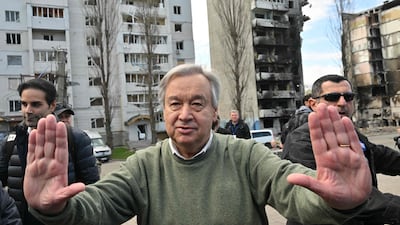
UN Secretary General Antonio Guterres visits Borodyanka, near Kyiv, where Russian forces are accused of killing civilians. AFP -
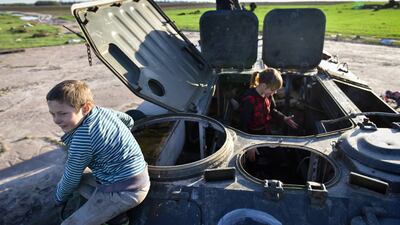
Children play in the wreckage of a Russian armoured vehicle in Lukashivka, Chernihiv region, northern Ukraine. The village has been retaken by Ukrainian forces. EPA -
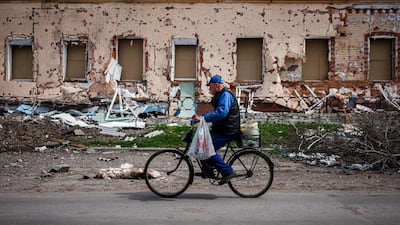
A cyclist passes a destroyed building in Derhachi village, near besieged city Kharkiv, in north-eastern Ukraine. AFP -
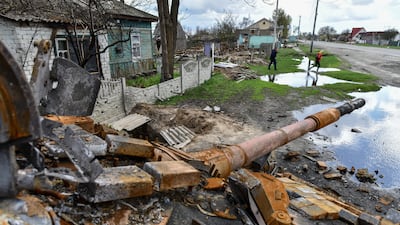
Burnt-out wreckage of a tank in Kolychivka village, Chernihiv region, northern Ukraine. EPA -
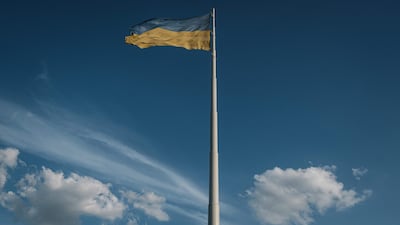
A Ukrainian flag flies in a park in Kramatorsk, Donetsk region, eastern Ukraine. A rocket attack on the city railway station earlier in April killed at least 50 people. AFP -
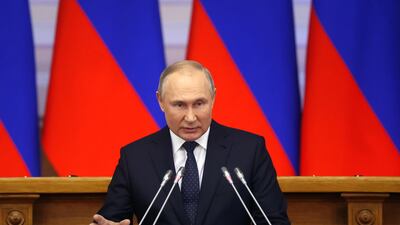
Russian President Vladimir Putin addresses a meeting of MPs in St Petersburg. EPA -

Youngsters Faddei and Oleksandr play in front of a church damaged during Russia's invasion of Ukraine, in the Chernihiv region. Reuters -
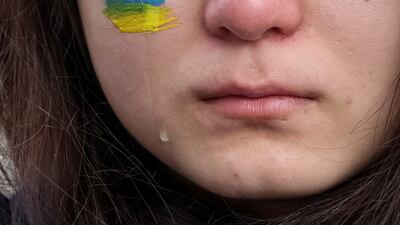
A demonstrator turns emotional as she attends a rally in Kyiv demanding a humanitarian corridor to rescue civilians from Mariupol. Reuters -
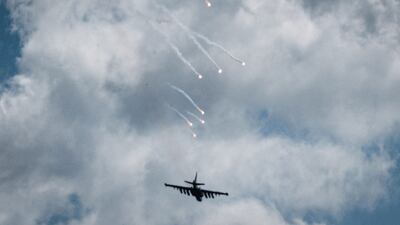
A Ukrainian Sukhoi Su-25 releases decoy flares as it provides air support to Ukrainian ground forces near central city of Yampil. AFP -
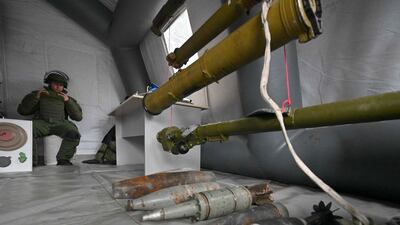
An officer from National Guard of Ukraine surveys weapons left behind by Russian troops in Chernobyl. AFP -

Mr Putin attends a meeting with UN Secretary General Antonio Guterres in Moscow. Reuters -
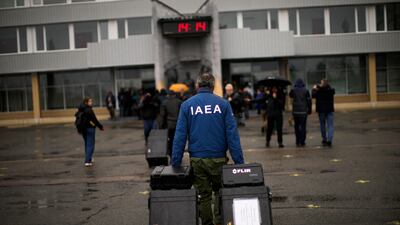
Members of a team from the International Atomic Energy Agency carry equipment as they arrive at the Chernobyl nuclear power plant, in Chernobyl, Ukraine. AP -
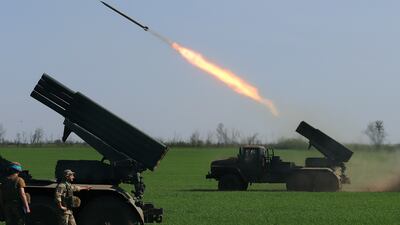
Ukrainian troops fire rockets from the city of Popasna, near Luhansk. EPA -
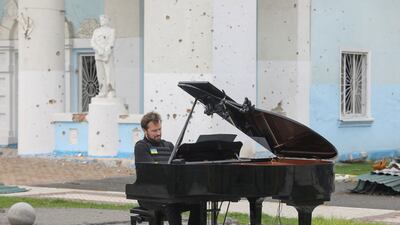
Lithuanian musician Darius Mazintas plays a piano in front of the Central House of Culture destroyed during Russia's invasion, in the town of Irpin, outside Kyiv. Reuters -

Ukrainian refugees Julia, second left, 32, and Miroslava, left, 11, walk away with relatives who received them after they crossed into Poland from Ukraine at the Dorohusk border. AFP -
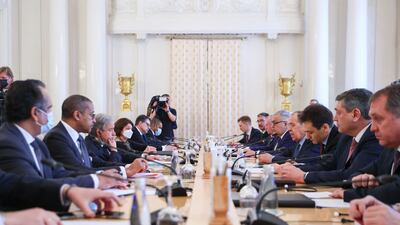
Russian Foreign Minister Sergey Lavrov meets Mr Guterres in Moscow. AFP -
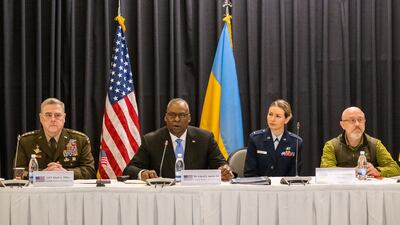
US Chairman of the Joint Chiefs of Staff Gen Mark Milley, left, US Secretary of Defence Lloyd Austin, second left, and Ukrainian Minister of Defence Oleksii Reznikov, right, attend the Ukraine Security Consultative Group meeting at Ramstein airbase in Ramstein-Miesenbach, Germany. Getty Images -
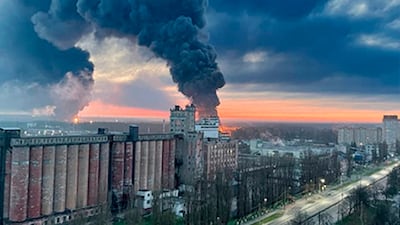
Smoke rises from an oil terminal hit by fire in Bryansk, Russia. AP -
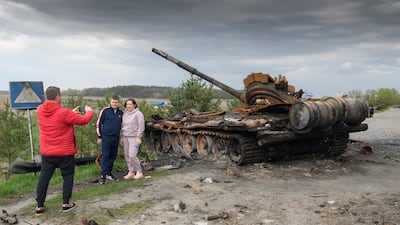
People take pictures by the wreckage of a Russian military vehicle, in the village of Rusaniv, Kyiv region. Reuters -
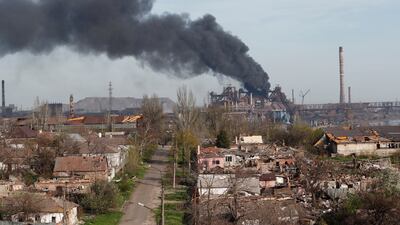
Smoke rises above the Azovstal Iron and Steel Works plant amid fighting in Mariupol, Ukraine. Reuters -
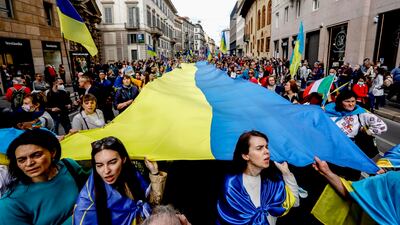
People carry a large Ukrainian flag as they attend a rally to mark the 77th anniversary of Liberation Day in Milan, Italy. The day remembers Italians who fought against the Nazis and Mussolini's troops during the Second World War. EPA -
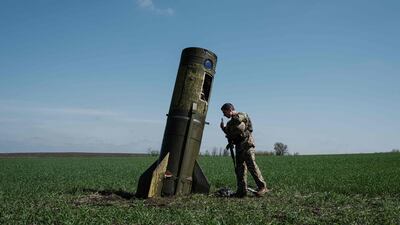
A Ukrainian soldier looks at a Russian ballistic missile's booster stage that fell in a field in Bohodarove, eastern Ukraine. AFP -
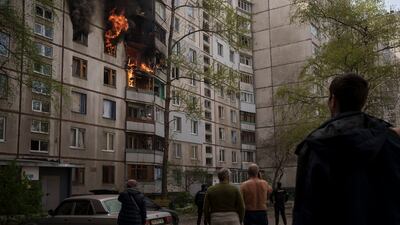
People watch as a residential building burns after Russian bombardment in Kharkiv, Ukraine. AP -

Ukraine's President Volodymyr Zelenskyy meets US Secretary of State Antony Blinken and US Defence Secretary Lloyd Austin. Reuters -
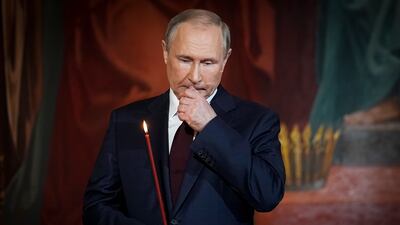
Russian President Vladimir Putin attends the Orthodox Easter service at the Cathedral of Christ the Saviour in Moscow. EPA -
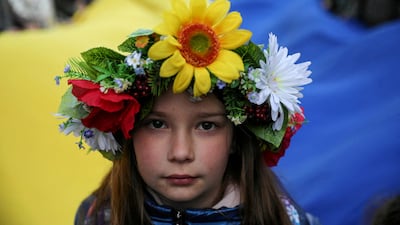
A young girl in front of people carrying a huge Ukrainian flag during a peaceful demonstration entitled 'Solidarity with Ukraine' in Krakow, Poland. Reuters -
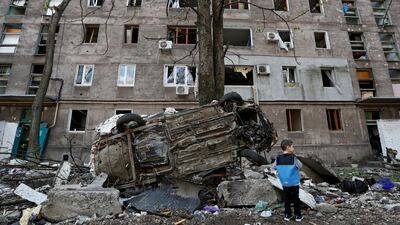
A boy stands next to a wrecked vehicle in front of an apartment damaged during the conflict in the southern port city of Mariupol. Reuters -
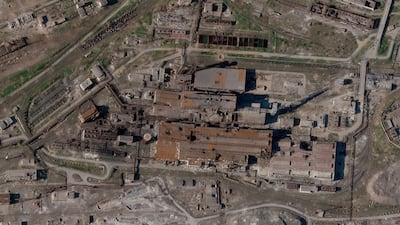
This satellite image from Planet Labs PBC shows damage at the Azovstal steelworks in Mariupol, Ukraine. AP -
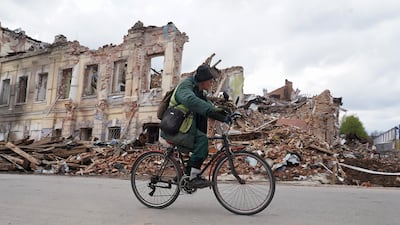
A Ukrainian man rides in front of a destroyed building in Kharkiv which had been shelled by the Russians. EPA -
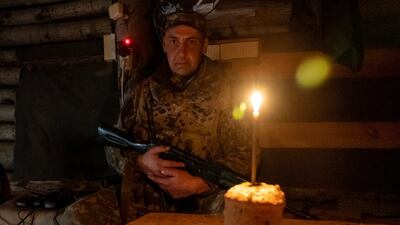
A Ukrainian Territorial Defence fighter in a shelter with an Easter Cake near Kharkiv. Ukrainians mark Orthodox Easter today. EPA -
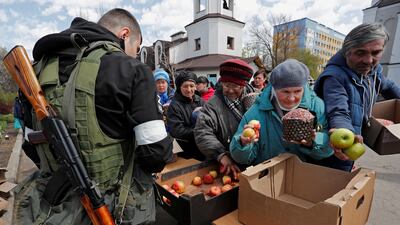
Residents receive Easter cakes and apples handed out by pro-Russian troops on Easter Day at the Svyato-Troitsky Church in the southern port city of Mariupol. Reuters -
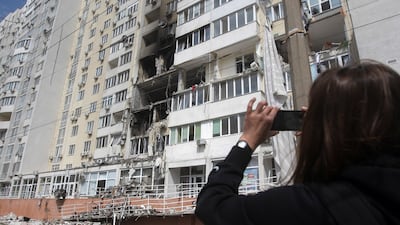
A woman photographs the scene of yesterday's shelling in the southern Ukraine city of Odesa. Eight people were killed, including a three-month child, and about 20 were wounded. EPA -
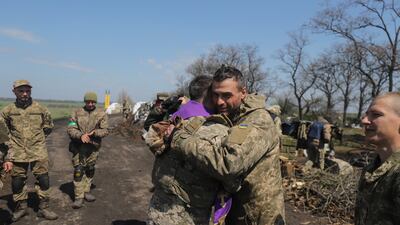
A military chaplain blesses Ukrainian soldiers on the occasion of Orthodox Easter not far from the city of Izyum in Kharkiv. EPA -
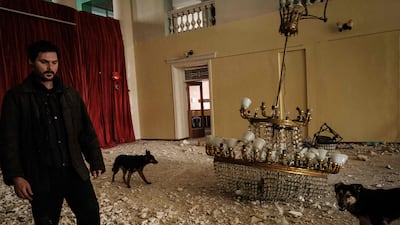
An internally displaced man walks with dogs in the Palace of Culture, which was damaged by shelling in Rubizhne, eastern Ukraine. AFP -
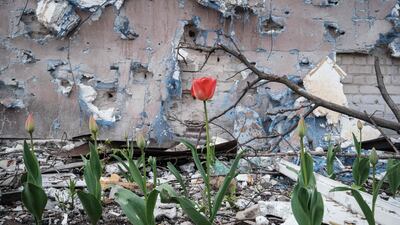
Tulips grow next to a building destroyed by shelling in Rubizhne. AFP -
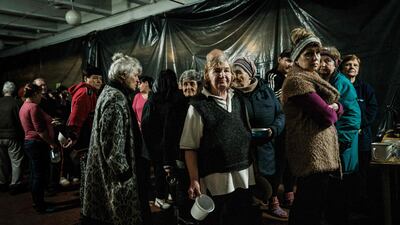
Internally displaced people wait to receive food inside a factory that has been turned into a shelter, in Severodonetsk. AFP -
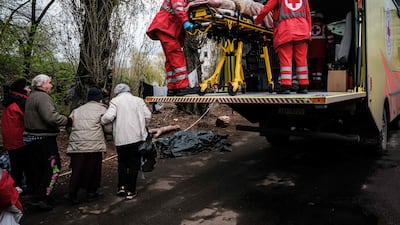
Members of the Ukrainian Red Cross carry a woman, 92, to an ambulance from a bunker at a factory in Severodonetsk. AFP -
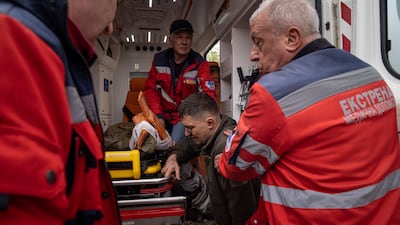
Ambulance workers move an injured Ukrainian serviceman to a hospital in Donetsk. AP -
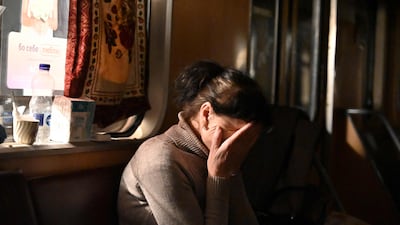
A woman sits inside a subway station that has been turned into a shelter, on the outskirts of second largest Ukrainian city, Kharkiv. AFP -
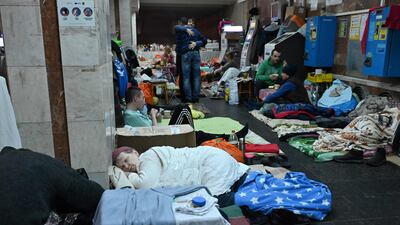
Residents shelter in a subway station in Kharkiv. AFP -
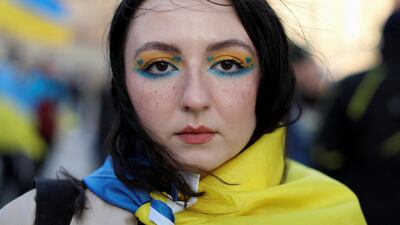
Anastasiya Kryvoho attends a candlelight vigil for Ukraine on the Orthodox Holy Saturday, in Toronto, Canada. Reuters -

Ukrainian President Volodymyr Zelenskyy addresses a press conference with international media in an underground metro station in Kyiv. AFP -
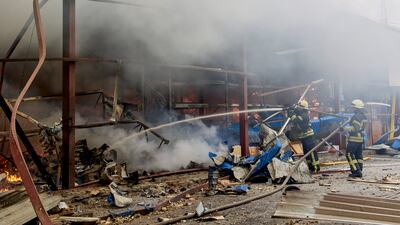
Firefighters work at the scene of a fire after shelling in Kharkiv, Ukraine. EPA -

A family from Myrne, a town occupied by Russian forces, wait to register with police at an evacuation point for people fleeing from Mariupol, Melitopol and surrounding towns. Getty Images -
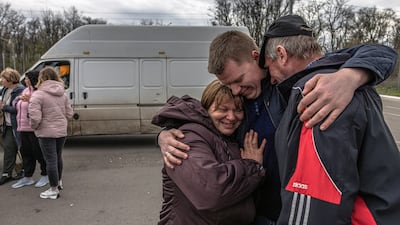
Oleksandr, 25, meets his parents Olga, 49, and Oleksandr, 50, who fled from the Russian-occupied village of Lyubimivka, at the evacuation point in Zaporizhzhia. EPA -
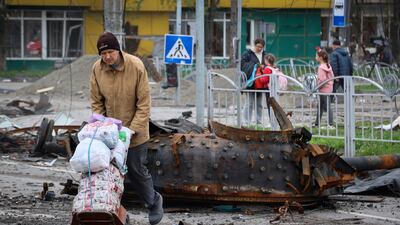
Residents walk near a damaged military vehicle in an area controlled by Russian-backed separatist forces in Mariupol. AP -
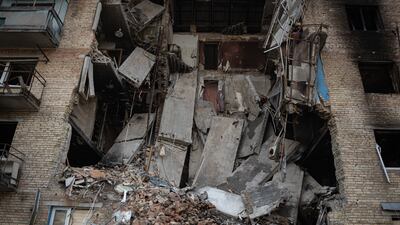
A heavily damaged apartment building in Horenka. Getty Images -
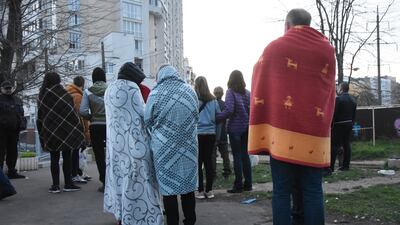
Residents wrapped in blankets stand near their houses damaged by Russian shelling in Odesa. AP -
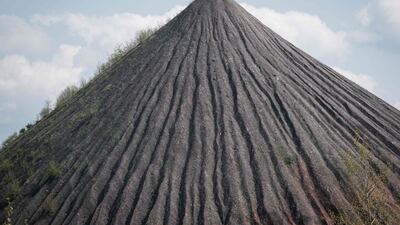
A Ukrainian flag is installed on top of a gob pile in Lysychans, eastern Ukraine. AFP -
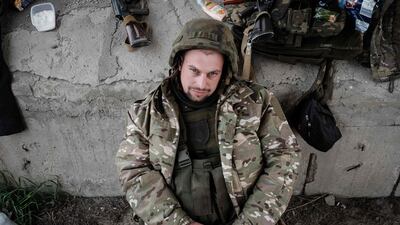
A Ukrainian soldier rests at a checkpoint in Severodonetsk. AFP


Ms Venediktova has spent the past two months travelling through unoccupied Ukraine gathering evidence.
Cases she had already begun investigating in March included a maternity hospital wrecked by shelling and a burnt-out theatre that had been sheltering children.
Her office also announced on Thursday that 10 Russian soldiers were under investigation on suspicion of war crimes in Bucha, where dozens of bodies in civilian clothes were found after Russian troops retreated.
Ms Venediktova said the cases would be prosecuted in Ukraine's domestic courts. But the highest prize would be conviction in an international court.
Ukraine is not a member of the International Criminal Court but it has accepted its jurisdiction in the past, leaving the door open to a tribunal.

