


Moscow’s energy stand-off with its European neighbours has turned the spotlight on two Russian-owned oil refineries in Germany and Italy that are complicating Europe’s efforts to purge Russian fuel from its power grid.
With Chancellor Olaf Scholz saying on Thursday that Germany could "only speculate" whether Russia would cut off fuel exports, a refinery at Schwedt near the Polish border is seen as a weak link in Germany's oil supplies because Russian company Rosneft is the majority shareholder.
“If I call them up and ask them what they’re doing to become independent of Russian energy, they won’t even pick up the phone,” said German Economy Minister Robert Habeck.
In Italy, Russian company Lukoil is the sole shareholder of the ISAB refinery in Sicily, which produces diesel, gasoline and other fuel products and employs hundreds of people.
But Europe’s scramble to rid itself of Russian energy, in order to stop financing the assault on Ukraine and remove a geopolitical weapon from the Kremlin’s hands, has led to suggestions that both plants could be nationalised.
Germany opened the door to that possibility this week when Mr Scholz's ruling coalition proposed legal changes which would allow critical infrastructure to be seized by the government.
Mr Habeck, who said it was hard to understand in hindsight how Rosneft had been allowed to control 54 per cent of Schwedt’s shares, did not commit to taking it over but said ministers were preparing for “all imaginable scenarios”.
He said preparations were being made with Poland, which is partly supplied by the plant in the former East Germany, for “the event that Rosneft is no longer the operator of the refinery”.
This could include replacing Russian oil imports, which come to Schwedt through the Druzhba pipeline, with shipments from elsewhere via the Baltic port of Rostock. Mr Scholz said on Thursday that Germany "has to prepare" for the possibility of Moscow turning off the tap.
Rosneft is a sore subject for Germany because its former chancellor, Gerhard Schroeder, is a member of the oil company’s board and has frequently caused embarrassment in Berlin with Kremlin-friendly remarks.
Mr Schroeder and his successor Angela Merkel are now blamed for letting Germany become dependent on Russian imports for coal, oil and gas. It is unwilling to stop them immediately for fear of economic chaos.
But other oil shipments down the Rhine in western Germany have already been replaced, and a second French-owned refinery in the east is in the process of replacing its Russian contracts, meaning Germany’s reliance on Russian oil has fallen by about two thirds since the invasion.
This means an oil embargo would no longer be a “national economic catastrophe”, said Mr Habeck, although it could still lead to local power disruptions and a spike in already alarmingly high fuel prices.
The European Union, urged on by members including Poland, has agreed an embargo on coal and is discussing a potential ban on oil, but has not found consensus on the gas imports it most relies on.
The situation was given greater urgency on Wednesday when Russian gas supplier Gazprom cut off exports to Poland and Bulgaria for refusing to pay for it with roubles, a demand made by the Kremlin which western powers say is a breach of contract.
Despite the scramble for alternatives, a tracking group, the Centre for Research on Energy and Clean Air, said on Thursday that the EU had sent 46.6 billion euros ($49.1bn) in energy payments to Russia during the two-month war in Ukraine.
Germany provided 9.1bn euros of this, making it the largest European importer, followed by Italy with 6.9bn. A quarter of Russian imports arrived at the ports of Rotterdam, Maasvlakte, Trieste, Gdansk and Zeebrugge.
Italy, like Germany, is trying to diversify its power supply with gas deliveries from outside Russia and investments in renewable energy, but the future of the Lukoil refinery in Sicily remains uncertain.
A spokesman for Minister of Economic Development Giancarlo Giorgetti told Reuters that the ministry was examining the situation, but that there was “concern about the social implications for the area” if Russian oil is stopped.
-
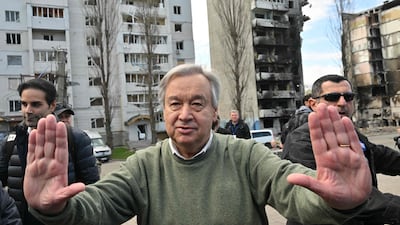
UN Secretary General Antonio Guterres visits Borodyanka, near Kyiv, where Russian forces are accused of killing civilians. AFP -
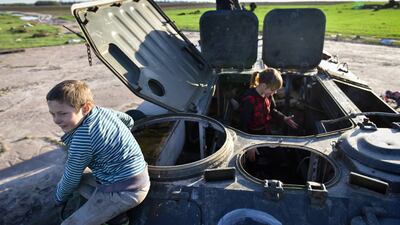
Children play in the wreckage of a Russian armoured vehicle in Lukashivka, Chernihiv region, northern Ukraine. The village has been retaken by Ukrainian forces. EPA -
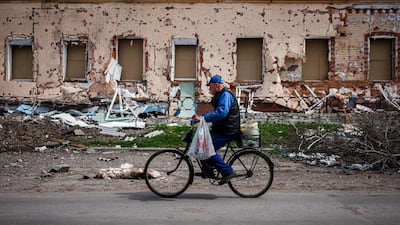
A cyclist passes a destroyed building in Derhachi village, near besieged city Kharkiv, in north-eastern Ukraine. AFP -
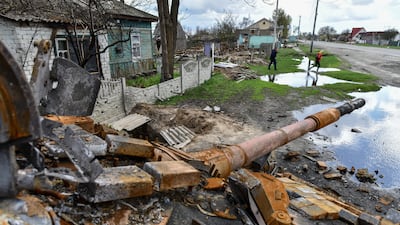
Burnt-out wreckage of a tank in Kolychivka village, Chernihiv region, northern Ukraine. EPA -
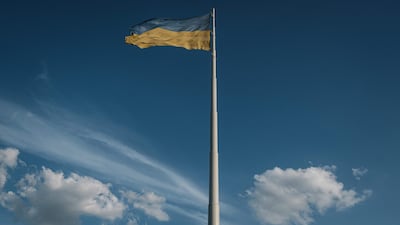
A Ukrainian flag flies in a park in Kramatorsk, Donetsk region, eastern Ukraine. A rocket attack on the city railway station earlier in April killed at least 50 people. AFP -
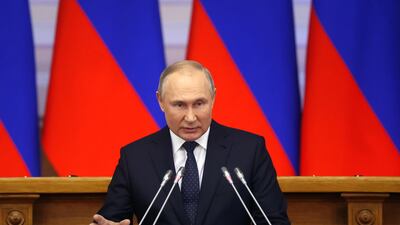
Russian President Vladimir Putin addresses a meeting of MPs in St Petersburg. EPA -

Youngsters Faddei and Oleksandr play in front of a church damaged during Russia's invasion of Ukraine, in the Chernihiv region. Reuters -
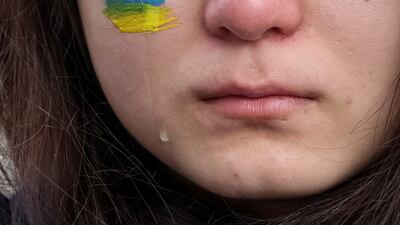
A demonstrator turns emotional as she attends a rally in Kyiv demanding a humanitarian corridor to rescue civilians from Mariupol. Reuters -
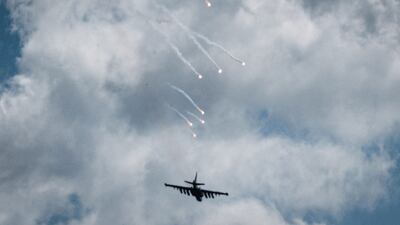
A Ukrainian Sukhoi Su-25 releases decoy flares as it provides air support to Ukrainian ground forces near central city of Yampil. AFP -
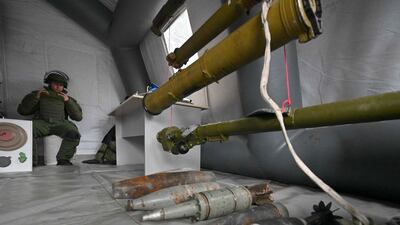
An officer from National Guard of Ukraine surveys weapons left behind by Russian troops in Chernobyl. AFP -

Mr Putin attends a meeting with UN Secretary General Antonio Guterres in Moscow. Reuters -
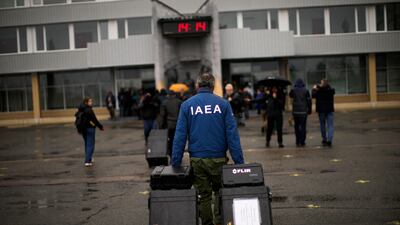
Members of a team from the International Atomic Energy Agency carry equipment as they arrive at the Chernobyl nuclear power plant, in Chernobyl, Ukraine. AP -
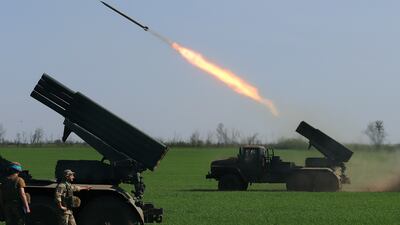
Ukrainian troops fire rockets from the city of Popasna, near Luhansk. EPA -
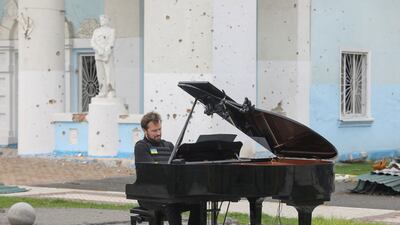
Lithuanian musician Darius Mazintas plays a piano in front of the Central House of Culture destroyed during Russia's invasion, in the town of Irpin, outside Kyiv. Reuters -

Ukrainian refugees Julia, second left, 32, and Miroslava, left, 11, walk away with relatives who received them after they crossed into Poland from Ukraine at the Dorohusk border. AFP -
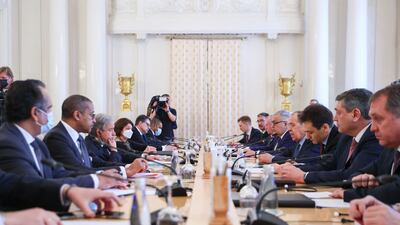
Russian Foreign Minister Sergey Lavrov meets Mr Guterres in Moscow. AFP -
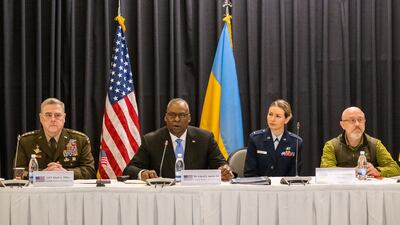
US Chairman of the Joint Chiefs of Staff Gen Mark Milley, left, US Secretary of Defence Lloyd Austin, second left, and Ukrainian Minister of Defence Oleksii Reznikov, right, attend the Ukraine Security Consultative Group meeting at Ramstein airbase in Ramstein-Miesenbach, Germany. Getty Images -
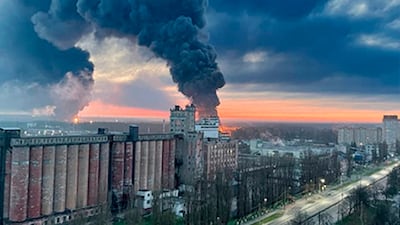
Smoke rises from an oil terminal hit by fire in Bryansk, Russia. AP -
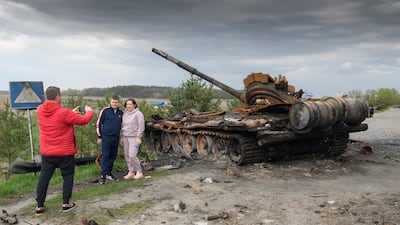
People take pictures by the wreckage of a Russian military vehicle, in the village of Rusaniv, Kyiv region. Reuters -
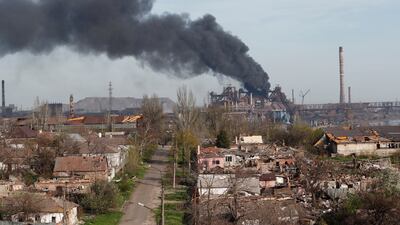
Smoke rises above the Azovstal Iron and Steel Works plant amid fighting in Mariupol, Ukraine. Reuters -
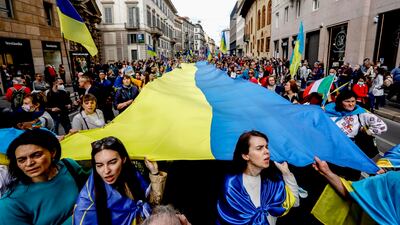
People carry a large Ukrainian flag as they attend a rally to mark the 77th anniversary of Liberation Day in Milan, Italy. The day remembers Italians who fought against the Nazis and Mussolini's troops during the Second World War. EPA -
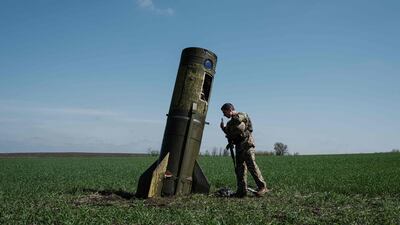
A Ukrainian soldier looks at a Russian ballistic missile's booster stage that fell in a field in Bohodarove, eastern Ukraine. AFP -
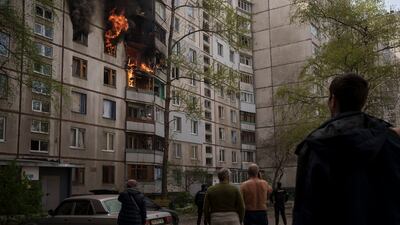
People watch as a residential building burns after Russian bombardment in Kharkiv, Ukraine. AP -

Ukraine's President Volodymyr Zelenskyy meets US Secretary of State Antony Blinken and US Defence Secretary Lloyd Austin. Reuters -
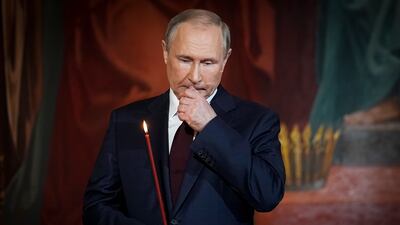
Russian President Vladimir Putin attends the Orthodox Easter service at the Cathedral of Christ the Saviour in Moscow. EPA -
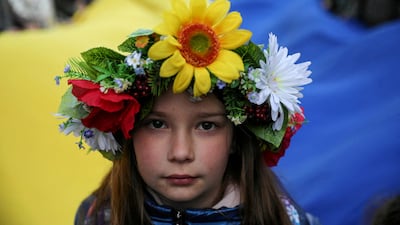
A young girl in front of people carrying a huge Ukrainian flag during a peaceful demonstration entitled 'Solidarity with Ukraine' in Krakow, Poland. Reuters -
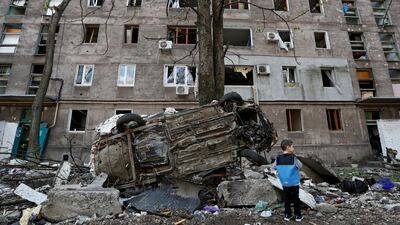
A boy stands next to a wrecked vehicle in front of an apartment damaged during the conflict in the southern port city of Mariupol. Reuters -
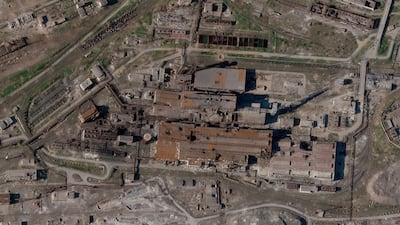
This satellite image from Planet Labs PBC shows damage at the Azovstal steelworks in Mariupol, Ukraine. AP -
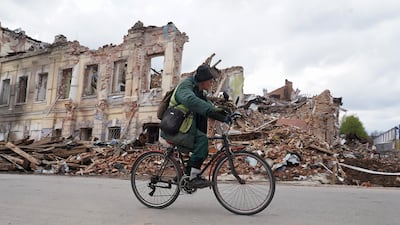
A Ukrainian man rides in front of a destroyed building in Kharkiv which had been shelled by the Russians. EPA -
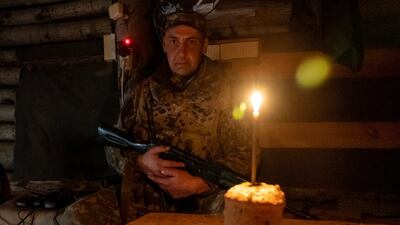
A Ukrainian Territorial Defence fighter in a shelter with an Easter Cake near Kharkiv. Ukrainians mark Orthodox Easter today. EPA -
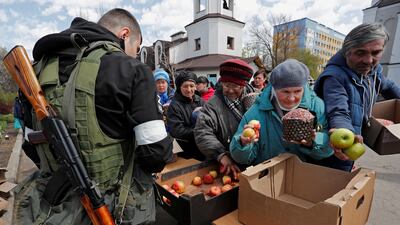
Residents receive Easter cakes and apples handed out by pro-Russian troops on Easter Day at the Svyato-Troitsky Church in the southern port city of Mariupol. Reuters -
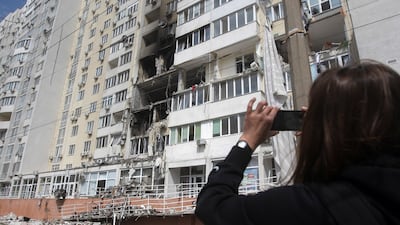
A woman photographs the scene of yesterday's shelling in the southern Ukraine city of Odesa. Eight people were killed, including a three-month child, and about 20 were wounded. EPA -
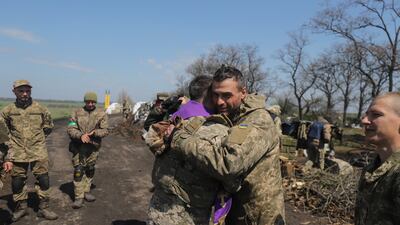
A military chaplain blesses Ukrainian soldiers on the occasion of Orthodox Easter not far from the city of Izyum in Kharkiv. EPA -
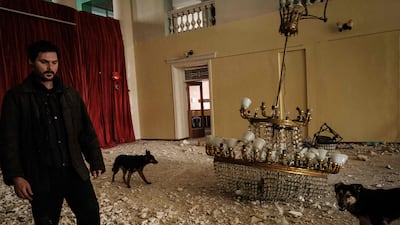
An internally displaced man walks with dogs in the Palace of Culture, which was damaged by shelling in Rubizhne, eastern Ukraine. AFP -
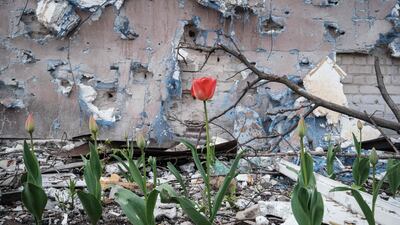
Tulips grow next to a building destroyed by shelling in Rubizhne. AFP -
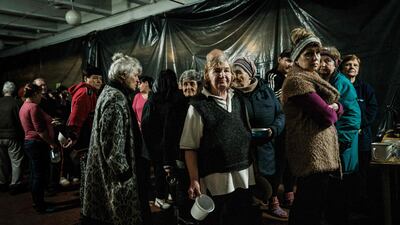
Internally displaced people wait to receive food inside a factory that has been turned into a shelter, in Severodonetsk. AFP -
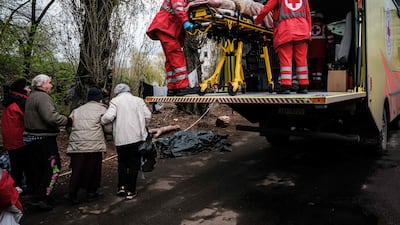
Members of the Ukrainian Red Cross carry a woman, 92, to an ambulance from a bunker at a factory in Severodonetsk. AFP -
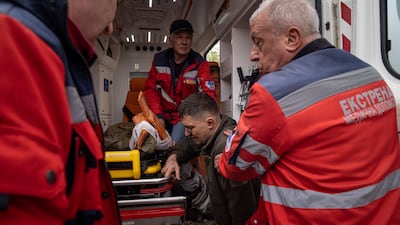
Ambulance workers move an injured Ukrainian serviceman to a hospital in Donetsk. AP -
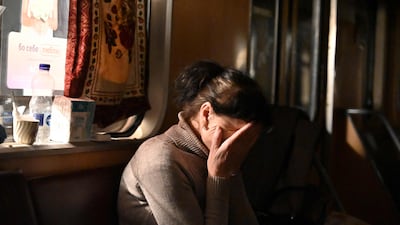
A woman sits inside a subway station that has been turned into a shelter, on the outskirts of second largest Ukrainian city, Kharkiv. AFP -
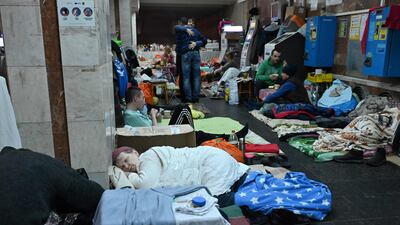
Residents shelter in a subway station in Kharkiv. AFP -
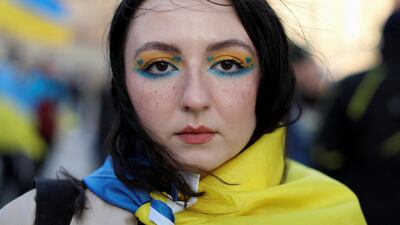
Anastasiya Kryvoho attends a candlelight vigil for Ukraine on the Orthodox Holy Saturday, in Toronto, Canada. Reuters -

Ukrainian President Volodymyr Zelenskyy addresses a press conference with international media in an underground metro station in Kyiv. AFP -
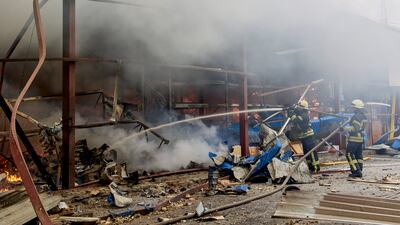
Firefighters work at the scene of a fire after shelling in Kharkiv, Ukraine. EPA -

A family from Myrne, a town occupied by Russian forces, wait to register with police at an evacuation point for people fleeing from Mariupol, Melitopol and surrounding towns. Getty Images -
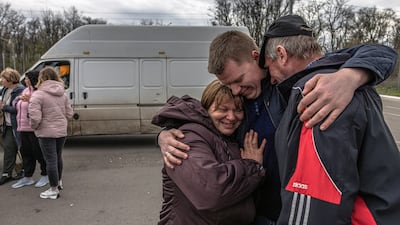
Oleksandr, 25, meets his parents Olga, 49, and Oleksandr, 50, who fled from the Russian-occupied village of Lyubimivka, at the evacuation point in Zaporizhzhia. EPA -
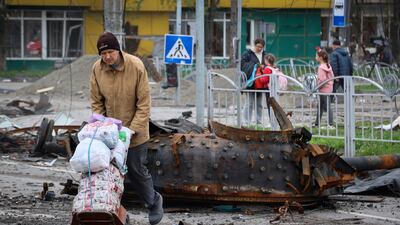
Residents walk near a damaged military vehicle in an area controlled by Russian-backed separatist forces in Mariupol. AP -
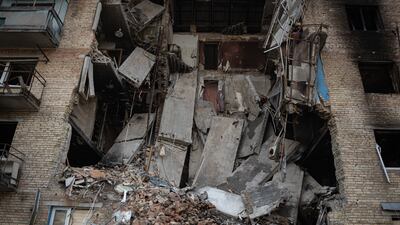
A heavily damaged apartment building in Horenka. Getty Images -
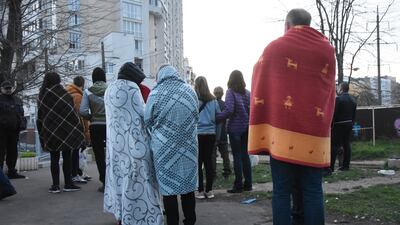
Residents wrapped in blankets stand near their houses damaged by Russian shelling in Odesa. AP -
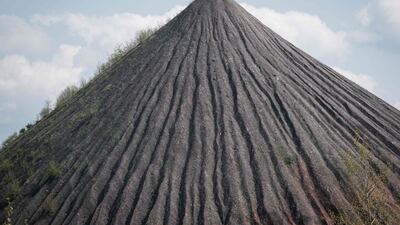
A Ukrainian flag is installed on top of a gob pile in Lysychans, eastern Ukraine. AFP -
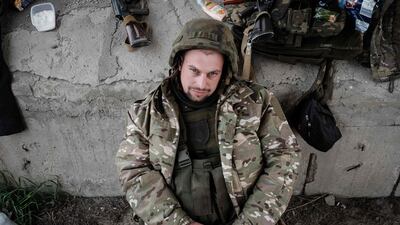
A Ukrainian soldier rests at a checkpoint in Severodonetsk. AFP


At least 1,000 people work at the ISAB plant and the three jetties that handle oil imports, and Lukoil may be unable to source oil from elsewhere because lenders are unwilling to provide it with funds.
Diego Bivona, the head of an industry lobby group in Sicily, has cautioned against what he described as the “demonisation of anything attributable to Russia” in the multiple rounds of sanctions imposed by the EU.
Although Lukoil has distanced itself from what it called the “tragic events” in Ukraine, its president Vagit Alekperov last week resigned after being hit with western sanctions.
Mr Alekperov, worth an estimated $22.5bn, was sanctioned by Britain in a sweep of 206 oligarchs, Kremlin-friendly figures and separatists in breakaway regions of Ukraine.
The research centre’s report on Thursday, written by analysts Lauri Myllyvirta and Hubert Thieriot, said the EU’s measures so far were not cutting Russian revenue because increasing fuel prices were offsetting lower volumes.
“Europe’s desire to keep the door open to fossil fuel shipments and payments for them has prevented more comprehensive sanctions on Russian banks, financial institutions and trade,” the analysts said. “It's time to stop supporting Putin's war crimes.”

