


Live updates: follow the latest news on Russia-Ukraine
Poland believes it could absorb about a million more refugees from Ukraine, western officials have been told.
More than 2.5 million people have crossed the border into Poland since the Russian offensive began, making it the focal point of Europe’s biggest refugee crisis since the Second World War.
About 1.3m of those people are still thought to be on Polish territory, the officials said, after some people who fled the war moved on into neighbouring countries such as Germany, or returned home.
Poland is lobbying its allies for humanitarian assistance, with some refugees sleeping in exhibition centres and sports stadiums. But the crisis has not yet reached the point where they cannot be accommodated under a hard roof.
The number of daily arrivals has fallen from about 150,000 to 20,000 per day. However, modelling based on refugee crises in other countries suggests that a limit would be reached if the pace picked up again and another million arrived.
Polish officials “think they can absorb about another million. But if the numbers keep going … that starts looking very worrying about how you actually accommodate it”, one western official said.
Although Poland has been praised by allies for its handling of the refugee crisis, the contrast between its generosity towards Ukraine and harder line towards mainly Middle Eastern migrants arriving via Belarus has drawn criticism.
-
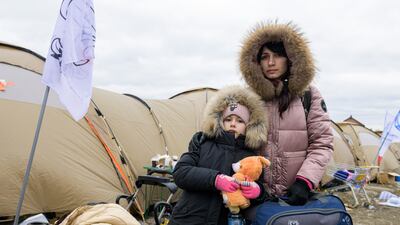
Mykhaila and her daughter from Loubny, central Ukraine, travelled by train to the Ukrainian city of Lviv then took a bus to Medyka on the Polish border, before walking across. Photo: DEC -
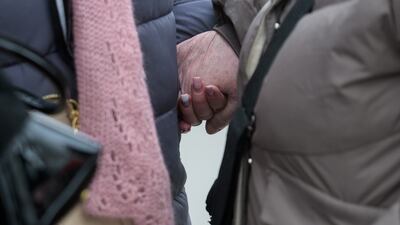
Women hold hands at the Medyka border crossing point, through which thousands of Ukrainian refugees have passed. Photo: DEC -
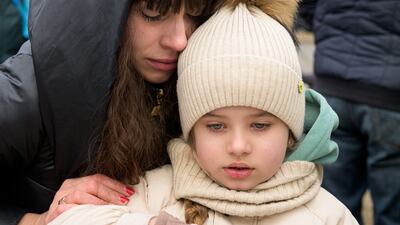
Angelika, 27, and her daughter Diana, 4, from Khmelnytskyi in Ukraine arrive at a reception centre on the outskirts of Przemysl, Poland. Photo: DEC -

Maria, 38, from Chernihiv, left Ukraine with a friend. They came to the Romanian border to wait for another friend before crossing. Photo: Panos Pictures -
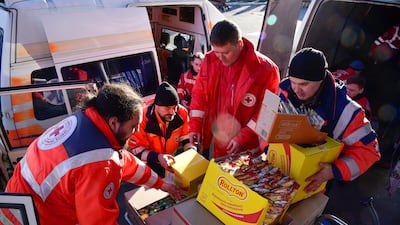
Ukrainian Red Cross staff and volunteers are providing food and other basic necessities to about 8,000 people sheltering in an underground station in Kyiv. Photo: Tebukhukhov Maksym -
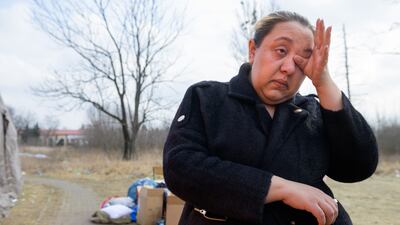
Kristina wipes away tears at Lwowska reception centre on the outskirts of Przemysl, Poland. Photo: DEC -
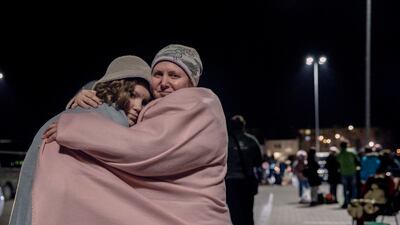
Ira, 45, and her daughter Olena, 12, outside a transit centre in Przemysl, Poland. Photo: Adrienne Surprenant -
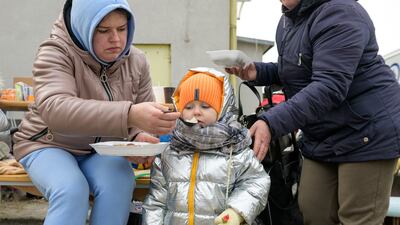
Veronika feeds her son Aleksander at the temporary refugee station in Medyka, eastern Poland. Photo: DEC


The western officials described a mixed picture in the refugee flow from Ukraine, with Russia’s retreat from Kyiv making the west of the country appear more stable but the south and east more vulnerable to bombardment.
Some Ukrainians prefer to stay close to the border in Poland and want to return as soon as possible, western officials said. Ukraine’s border guards say about half a million people have re-entered the country since the war began.
But the risk of what the officials called an “unbelievably bloody conflict” in the south and east, where Russia says it is focusing on control of the disputed Donbas region, raises the possibility of refugee numbers rising again.
An escape from the south and east could put more pressure on Ukraine’s other neighbours, such as Romania and Moldova, which have so far taken in hundreds of thousands of people but not as many as Poland.
Most of the Ukrainians in Poland are thought to be staying in private homes, many with relatives who already lived in the country, but others are being put up in converted exhibition halls or empty supermarkets.
As many as 700,000 Ukrainian children may be in school in Poland, the officials said. The vast majority of refugees leaving Ukraine are women and children.

Refugees who arrive in European Union countries, such as Poland, are eligible for an initial one-year residency permit which allows them to take shelter anywhere in the 27-member union.
More than 320,000 people have arrived in Germany, the interior ministry in Berlin said on Friday.
In Britain, Home Secretary Priti Patel apologised for delays in the visa application process on Friday as she revealed that about 12,000 people have reached the UK from Ukraine.
They are made up of 10,800 people admitted on a family reunion visa and only 1,200 under the umbrella of the Homes for Ukraine scheme, which allows British people to offer private accommodation to refugees.
Another 29,000 visas have been granted to people who have not yet arrived, while others have booked appointments at application centres in Poland but not shown up while they consider their options.
“I'll be very candid, it has taken time,” Ms Patel told the BBC. “Any new scheme takes time, any new visa system takes time.”

