


Live updates: follow the latest news on Russia-Ukraine
Latvia plans to raise its military budget and invest in recruitment and air defence in a response to Russia’s attack on Ukraine that will make it one of Nato’s most prolific spenders.
Ministers in the Baltic country signed off a plan to spend 2.5 per cent of its gross domestic product on defence — a proportion bettered only by the US, Greece and Croatia in the latest ranking of Nato’s 30 members.
It makes Latvia the latest Nato country after Germany, Denmark, Norway and others to commit to spending more on defence after the war in Ukraine upended the European security climate.
The three Baltic states, Latvia, Lithuania and Estonia, are especially concerned about a wider Russian attack on its former Soviet satellites and have urged western powers to impose the toughest possible sanctions on Moscow.
That concern was only heightened after Belarus, which borders Latvia and Lithuania, assisted Russia’s offensive in Ukraine.
Nato has moved to reinforce its eastern flank with more troops and US President Joe Biden has promised that “every inch” of the bloc’s territory will be defended by the alliance’s American-heavy troop contingent.
-
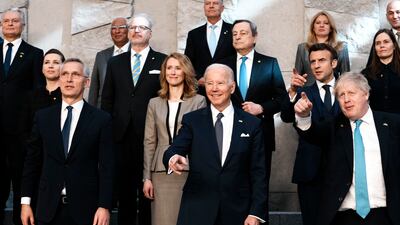
Nato Secretary General Jens Stoltenberg, front left, US President Joe Biden and British Prime Minister Boris Johnson pose for a photo during an extraordinary Nato summit in Brussels. AP Photo -
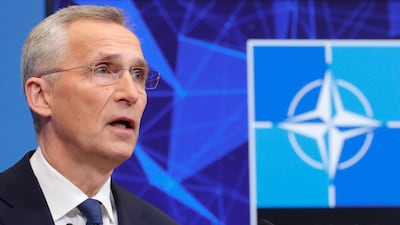
Jens Stoltenberg speaks at a press conference at the end of the summit in Brussels. EPA -
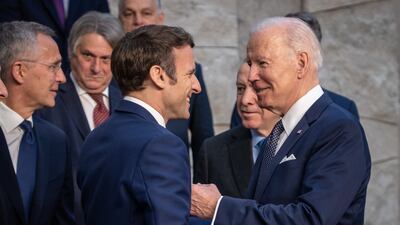
France's President Emmanuel Macron shakes hands with Mr Biden as they arrive at Nato headquarters. AFP -

The leaders gather for a photo in Brussels. AP Photo -
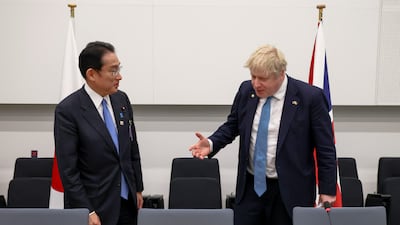
Japanese Prime Minister Fumio Kishida and Boris Johnson attend a bilateral meeting. Getty Images -
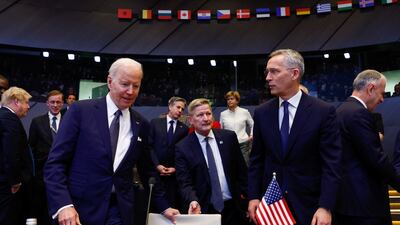
Joe Biden speaks with Jens Stoltenberg during the summit. Reuters -
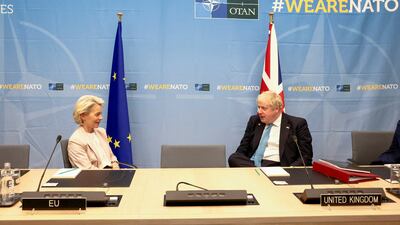
European Commission President Ursula von der Leyen and Boris Johnson. PA -
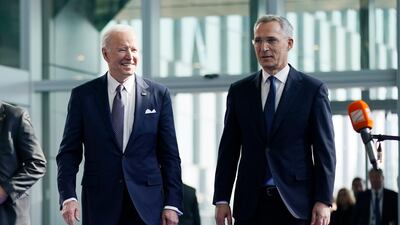
Mr Biden is greeted by Mr Stoltenberg as he arrives for meetings with Nato allies in the Belgian capital. AP Photo -
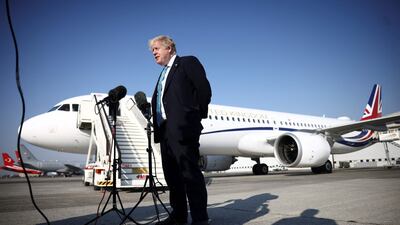
Mr Johnson addresses media representatives after he arrives in Brussels. AFP -
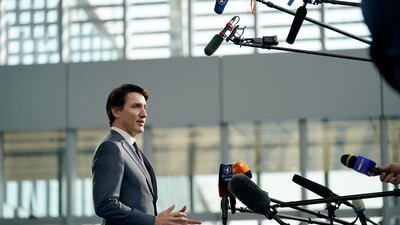
Canada's Prime Minister Justin Trudeau speaks to the press in Brussels. AFP -
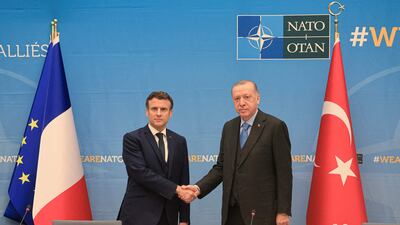
Mr Macron shakes hands with Turkish President Recep Tayyip Erdogan. AFP -
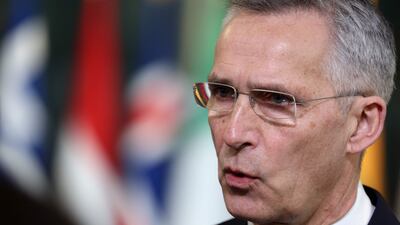
Mr Stoltenberg at Nato's headquarters in Brussels. AFP -
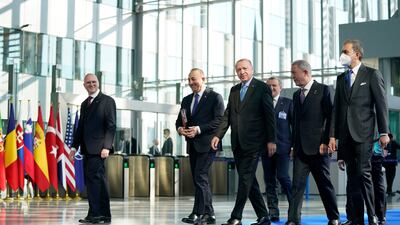
Mr Erdogan with officials including Turkey's Foreign Minister Mevlut Cavusoglu as he arrives in Brussels. AFP -
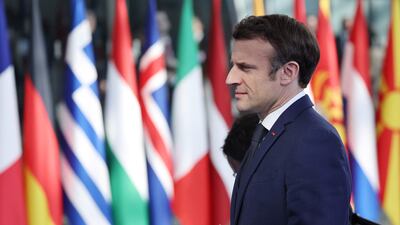
Mr Macron arriving at the summit. AFP


But Latvian Defence Minister Artis Pabriks said the country could not “sit idly by” and assume it will be bailed out by allies if it is attacked, echoing Estonia’s call to prepare a defence of the country rather than rely on deterrence.
“We must immediately take all possible measures to strengthen Latvia's defence and accelerate the development of the capabilities of the national armed forces,” Mr Pabriks said.
Latvia is one of the minority of Nato countries currently meeting the alliance’s target of spending 2 per cent of gross domestic product on defence, a goal which was reaffirmed by leaders at a summit in Brussels last week.
The planned increase to 2.5 per cent by 2025 implies about 100 million euros ($111m) in extra funding which will be used for medium-range air defence systems, ground force mechanisation and cybersecurity, among other upgrades.
Some of the money will go on recruitment, officials said, as Mr Pabriks urged citizens to consider joining the army or signing up for reservist training courses.
“The protection of Latvia is a common responsibility of all of us,” he said.

