


Ukrainian children should be offered up to a year of special lessons at schools and integrated into kindergartens to allow their mothers to look for work, German education advisers have said.
Women and children make up the bulk of the 3.6 million who have fled Ukraine after men of fighting age were banned from leaving the country following Russia’s invasion.
Although many hope to return to Ukraine once it is safe, getting children into schools is still important because it gives them a “slice of normality” and a daily routine and reduces inequalities suffered by refugees, an expert panel said.
It said in a submission to Germany’s 16 state education ministers that integration classes for mothers would go to waste if they could not find childcare while they learnt to speak German and find jobs.
“It’s mainly women and children coming from Ukraine at the moment. Integration offers have to respond to that,” said Petra Bendel, the chairwoman of the Expert Council on Integration and Migration.
Germany has registered more than 200,000 Ukrainian refugees, with others thought to have arrived without alerting authorities. The government expects the number to keep rising as the fighting continues.
Refugees are eligible for education and employment under a European Union-wide scheme that gives them an initial one-year residency permit in the bloc.
In their proposals, the advisers said younger children should be enrolled in normal classes but spend about half their time learning German.
-
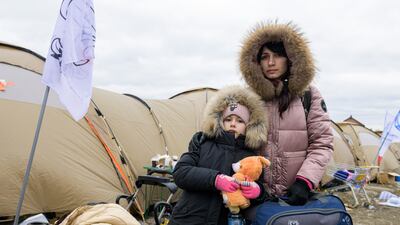
Mykhaila and her daughter from Loubny, central Ukraine, travelled by train to the Ukrainian city of Lviv then took a bus to Medyka on the Polish border, before walking across. Photo: DEC -
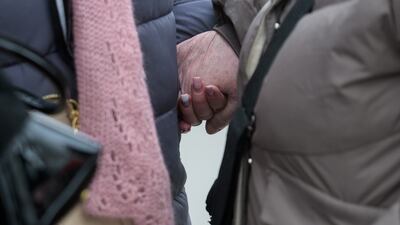
Women hold hands at the Medyka border crossing point, through which thousands of Ukrainian refugees have passed. Photo: DEC -
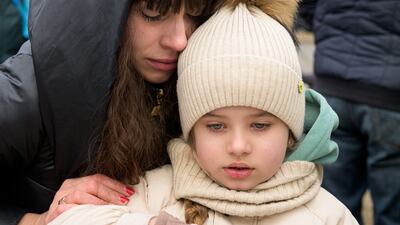
Angelika, 27, and her daughter Diana, 4, from Khmelnytskyi in Ukraine arrive at a reception centre on the outskirts of Przemysl, Poland. Photo: DEC -

Maria, 38, from Chernihiv, left Ukraine with a friend. They came to the Romanian border to wait for another friend before crossing. Photo: Panos Pictures -
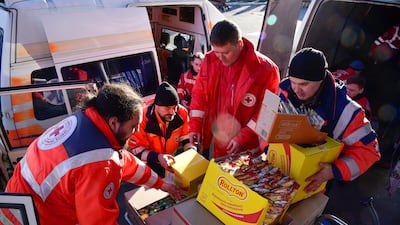
Ukrainian Red Cross staff and volunteers are providing food and other basic necessities to about 8,000 people sheltering in an underground station in Kyiv. Photo: Tebukhukhov Maksym -
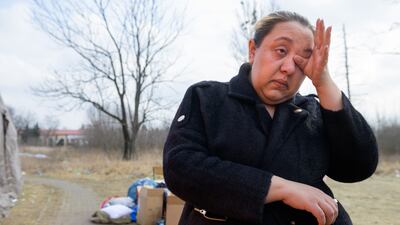
Kristina wipes away tears at Lwowska reception centre on the outskirts of Przemysl, Poland. Photo: DEC -
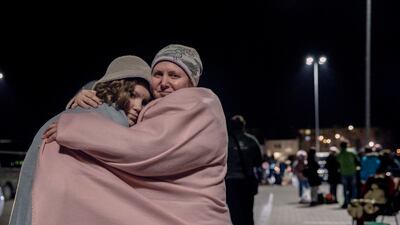
Ira, 45, and her daughter Olena, 12, outside a transit centre in Przemysl, Poland. Photo: Adrienne Surprenant -
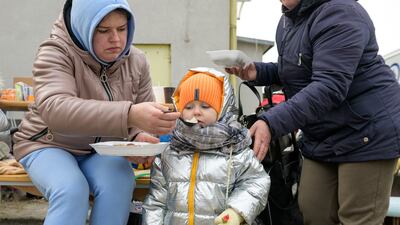
Veronika feeds her son Aleksander at the temporary refugee station in Medyka, eastern Poland. Photo: DEC


Older children who are further behind in German could be given special catch-up lessons but should move into regular classes within a year, while still receiving special attention for their language learning, ministers were told.
Pupils who were close to finishing school when they had to leave Ukraine could be especially disadvantaged and officials should explore whether they could complete their qualifications remotely, the expert panel said.
Claudia Diehl, one of the advisers, said schools should strive to avoid either large groups of Ukrainians joining a school so that they become segregated from other children or lone refugee pupils becoming isolated.
“The experience of earlier refugee movements shows that some refugees’ stays become permanent, even if many Ukrainians are hoping for a swift return,” she said.
“But an early integration into the education system is important regardless of the question of staying or returning.”
The panel said language teachers should offer courses especially for refugee mothers but that they should not receive more favourable treatment than previous migrants whose German classes were disrupted by the pandemic.
Ukrainians with teaching qualifications should also be encouraged to help children starting at schools and kindergartens, it said.

