


French President Emmanuel Macron will host European leaders at the Palace of Versailles this week looking to build on an almost unprecedented show of unity over Russia's invasion of Ukraine to push for deeper defence integration in the EU.
A flurry of diplomacy described by European Council chief as the moment "the Europe of defence was born" saw Germany lift a ban on weapons exports, Sweden and Finland ship arms to Ukraine and even non-EU member Switzerland impose sanctions and curb Russia’s access to its banks.
The “surge of unity” described by Mr Michel delighted senior officials who have long dreamt of what they call European “strategic autonomy”, an idea long championed by Mr Macron and others.
Mr Macron, who holds the EU’s rotating presidency, is expected to pitch deeper military cooperation in Versailles after saying that "our European defence needs to enter a new phase … we can no longer depend on others".
But calls for a more autonomous Europe are bound to run into scepticism from eastern countries who see American power as their key protector against Russia.
Latvia and Lithuania were among the countries to make that point at a summit last year, when calls for EU autonomy surfaced after the US-led withdrawal from Afghanistan and the diplomatic controversy around the Aukus pact.
Concerns about the Russian threat on the eastern flank have only multiplied since President Vladimir Putin ordered a full-scale invasion of Ukraine in what western leaders have described as an attempt to restore a sphere of influence.
US troops have been deployed to Poland and Baltic states to shore up the security of those countries, with President Joe Biden promising to “defend every inch of Nato territory with the full force of American power”.
“This current crisis has just shown to everyone the centrality of the US to European security,” said Ed Arnold, a defence expert at the Rusi think tank and former strategy consultant.
“In certain areas at the moment, such as intelligence, surveillance and reconnaissance, strategic lift, transport and air-to-air refuelling, the Europeans just do not have the capability so they are wholly reliant on the US.”

The EU and Nato are not the only shows in town. The UK leads a so-called Joint Expeditionary Force with Baltic and Nordic allies and the Netherlands, a group which said it plans to “develop our cooperation by land, sea and air even further” after Russia’s assault on Ukraine.
Mr Macron, in turn, is positioning himself as a key leader in Europe after Britain left the EU and Germany’s dominant former chancellor Angela Merkel retired.
His efforts on this front, including his frequent calls with Mr Putin, are partly designed for domestic consumption as Mr Macron fights for re-election, said Dr Paul Smith, a French politics expert at the University of Nottingham.
“You have to look like a statesman or woman,” said Dr Smith. “The idea of keeping the other guy on the end of the phone for an hour — that’s kind of working in his favour.
“The French know that when they are electing a president, they are electing a person that makes foreign policy. People will not want instability and a change of leadership.”
The invasion comes at a time when both Nato and the EU are drawing up new strategic blueprints for the next decade.
The EU’s so-called strategic compass was expected to be unveiled in the coming months, although it relies on a threat analysis drawn up in November 2020 and there are suggestions that a draft text may need to be rewritten.
-
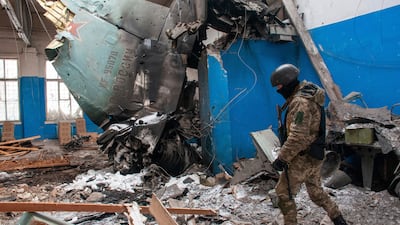
A Ukrainian serviceman walks past the vertical tail fin of a Russian Su-34 bomber lying in a damaged building in Kharkiv, Ukraine. AP Photo -
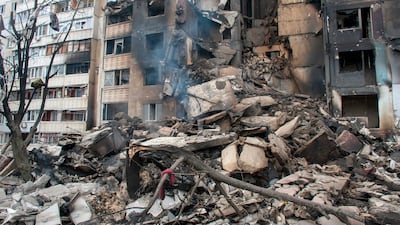
An apartment building damaged after shelling in Kharkiv, Ukraine. AP Photo -
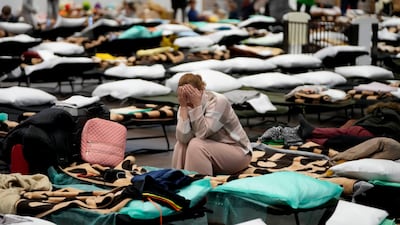
A woman puts her head in her hands as she sits on a cot in a shelter, set up for displaced persons fleeing Ukraine, inside a school gymnasium in Przemysl, Poland. AP Photo -
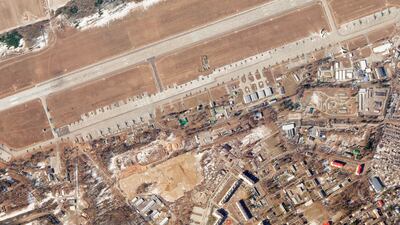
Belarussian and suspected Russian helicopters on the flight line at Machulishchy Air Base outside Minsk, Belarus. AP Photo -
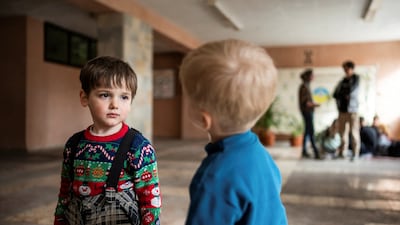
Children look on as people fleeing Russia's invasion of Ukraine shelter in a school, in Drohobych, Ukraine. Reuters -
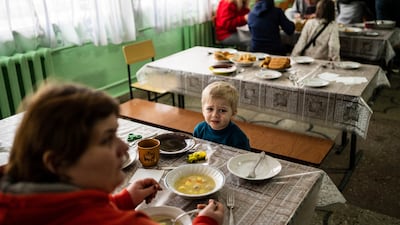
Families eat in the shelter. Reuters -
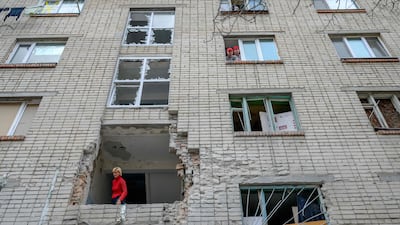
A woman looks out from a building damaged by Russian shelling in Mykolaiv, 100 kilometres away from Odesa, western Ukraine. AFP -
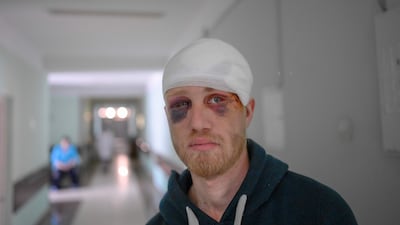
A wounded Ukrainian man waits in the corridor of the central hospital of Mykolaiv. AFP -
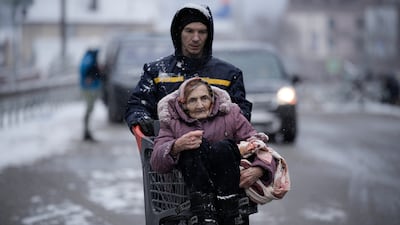
An elderly woman is carried in a shopping cart after being rescued from Irpin, on the outskirts of Kyiv, Ukraine. AP -
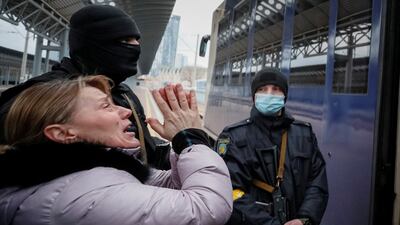
A woman reacts as a train carrying children from Kyiv's Central Children's Hospital leaves the Ukrainian capital on its way to Lviv. Reuters -
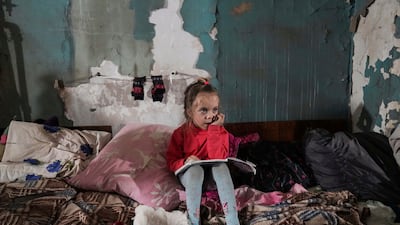
A girl sits in an improvised bomb shelter in Mariupol, Ukraine. AP -
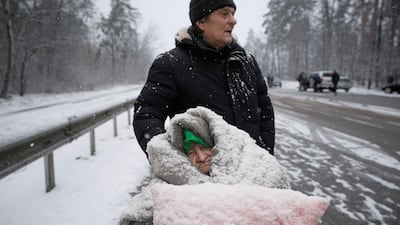
An elderly woman is coated in snow as she sits in a wheelchair after being rescued from Irpin. AP -
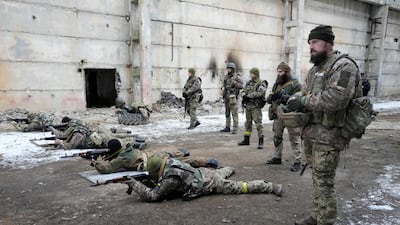
Belarusian volunteers take part in military exercises at the Belarusian Company base in Kyiv. AP -
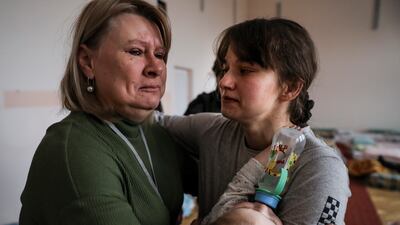
Lessa, left, director of a nursery school turned into a refugee shelter, cries as she hugs Olega, who arrived from Kyiv with her baby, near Lviv. EPA -
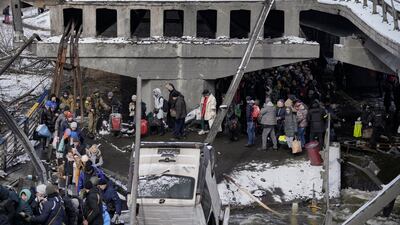
Ukrainians pass a damaged bridge as they flee from Irpin. AP -
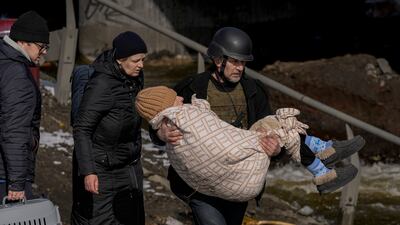
A man carries an elderly woman as people continue to leave Irpin. AP -
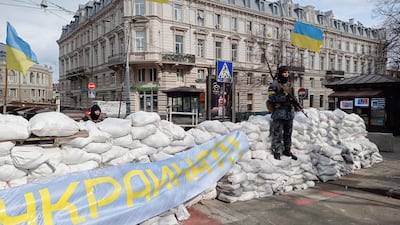
A soldier stands on a barricade made of sandbags in central Odesa, Ukraine. Reuters -
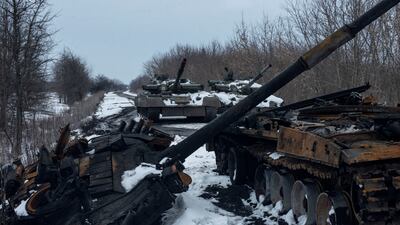
A charred Russian tank and captured tanks in the Sumy region. Reuters -
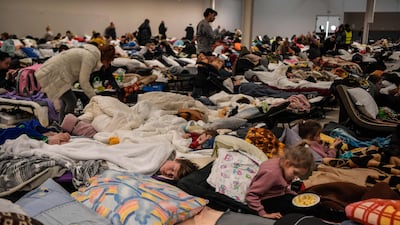
People rest at a temporary shelter for Ukrainian refugees in Przemysl, Poland. AFP -
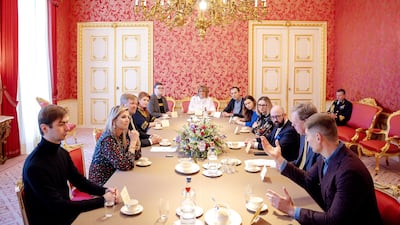
Ukraine's ambassador to the Netherlands, Maksym Kononenko, third right, and his wife Tetiana Doroshenko, fourth left, attend a meeting of members of the Ukrainian community with Dutch King Willem-Alexander, third left, and Queen Maxima, second left, to discuss the situation in Ukraine, in The Hague. EPA -
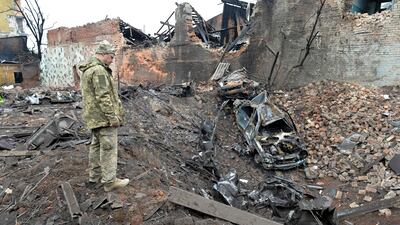
A Ukrainian soldier looks at the destruction after shelling in Ukraine's second-largest city of Kharkiv. AFP -
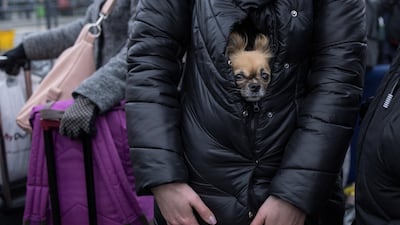
A refugee holds her dog as they wait for trains to Poland in Lviv, Ukraine. Reuters -
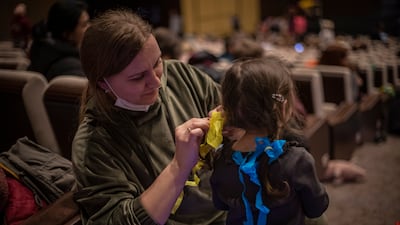
A woman ties ribbons in Ukrainian national flag colours in a girl's hair as people wait at a refugee assistance centre in Prague, Czech Republic. EPA -
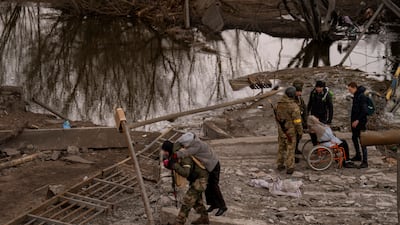
A Ukrainian soldier carries an elderly woman crossing the Irpin river on the outskirts of Kyiv. AP -
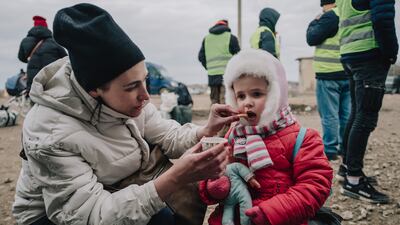
Lena, who had never left Ukraine before fleeing into Moldova, feeds Dasha, 3, soon after crossing the border. Erin Clare Brown for The National -
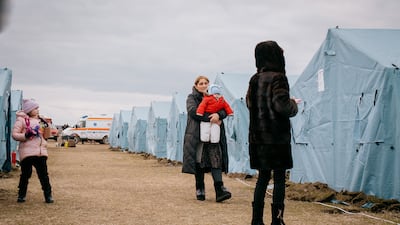
Refugees without immediate plans to move further inland can stay the night in tents set up on Moldova's side of the border. Erin Clare Brown for The National -
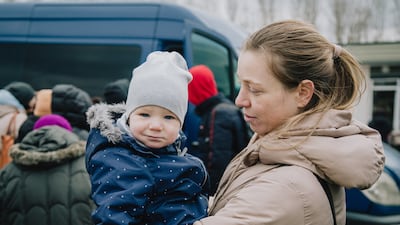
Tatiana and her son wait for a van that will carry them from the Moldovan border to Chisinau. Erin Clare Brown for The National -
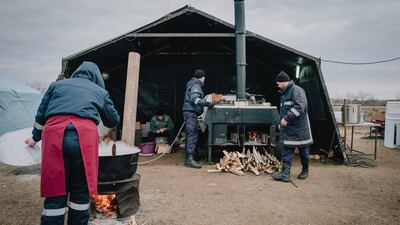
Each night, the Palanca refugee camp in Moldova feeds up to 300 people who arrive with no onward plans. Erin Clare Brown for The National -
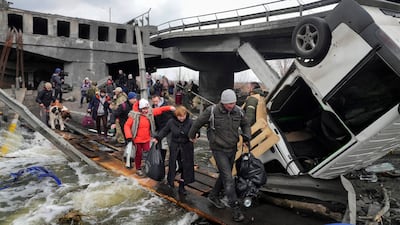
People pass a damaged bridge while fleeing the town of Irpin, close to the Ukrainian capital of Kyiv. AP -
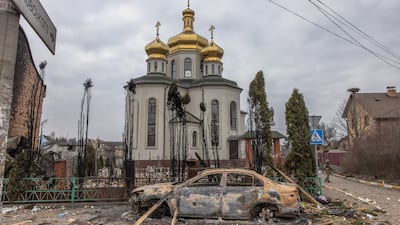
A Ukrainian soldier stands guard next to a church in Irpin. EPA -
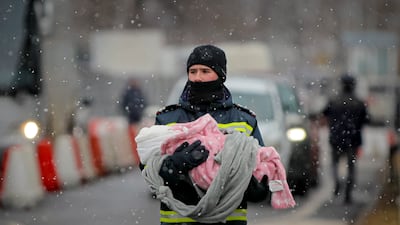
A firefighter holds the baby of a Ukrainian refugee at the border in Romania. AP -
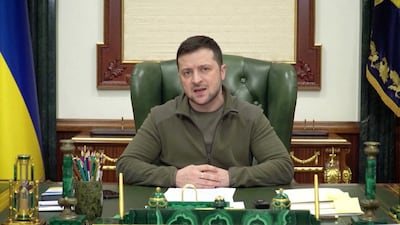
Ukrainian President Volodymyr Zelenskyy speaks in Kyiv. Reuters -
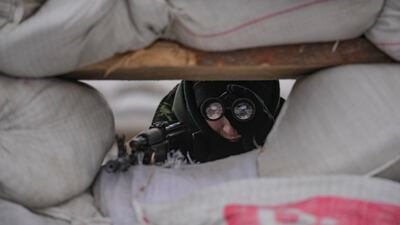
A Ukrainian soldier at a checkpoint in Kyiv. AP -
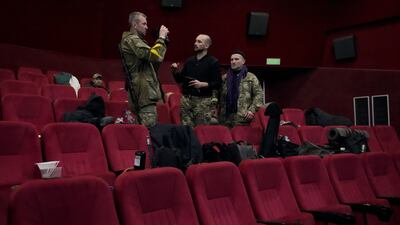
Ukrainian activist Ihor Mazur, left, a veteran of the war in the country's east, looks at a night-vision device in Kyiv. AP -
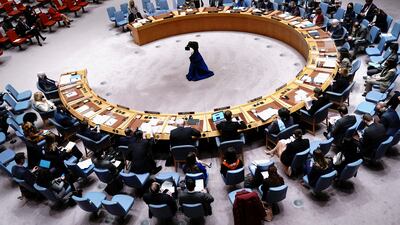
Ambassadors attend a UN Security Council meeting on threats to international security after Russia's invasion of Ukraine, in New York. Reuters -
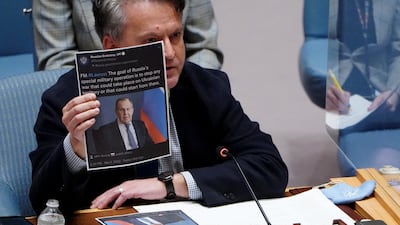
Ukraine's UN ambassador Sergey Kyslytsya holds a paper with an image of Russia's Foreign Minister Sergey Lavrov as he addresses the Security Council in New York. Reuters -
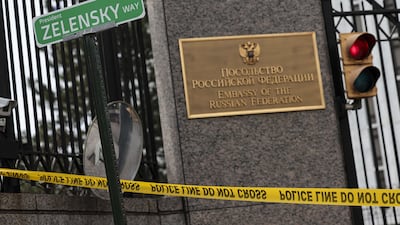
A road sign put up in support of Mr Zelenskyy outside Russia's embassy in Washington. AFP -
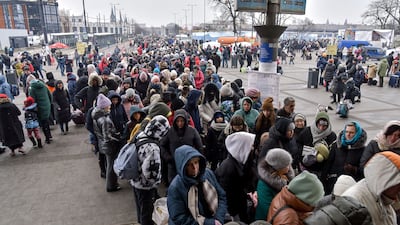
Ukrainian refugees at the train station in Lviv, western Ukraine. EPA -
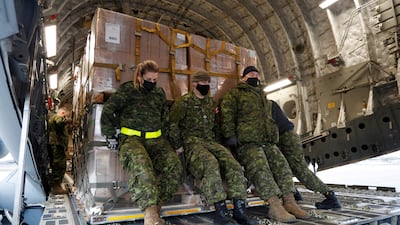
Lethal and non-lethal Ukrainian aid is loaded on to a plane bound for Poland by Canadian soldiers in Trenton, Ontario. Reuters -
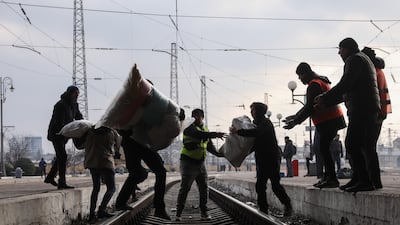
Volunteers carry medical aid and necessities at a train station in Lviv. EPA -
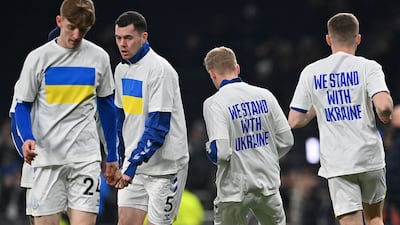
Everton players wear T-shirts in support of Ukraine as they warm up for an English Premier League football match against Tottenham Hotspur. AP -
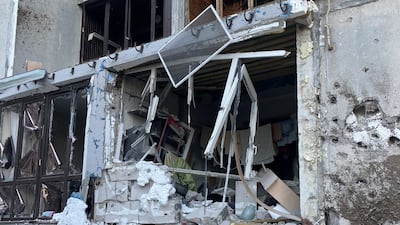
A residential building damaged by Russian shelling in Chernihiv, Ukraine. Reuters -
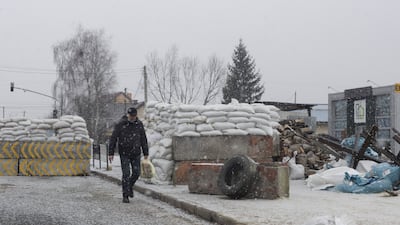
A man walks past a checkpoint in heavy snow in Lviv. Getty -
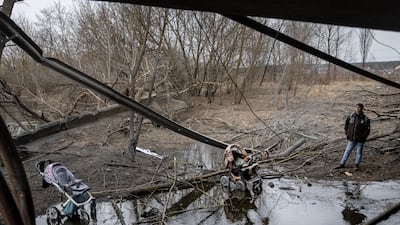
A man fleeing fighting in Irpin waits to cross a river after Russian forces entered the city. Getty -
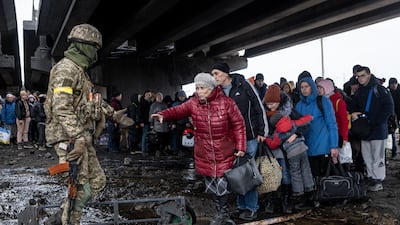
Soldiers assist Irpin residents underneath a damaged bridge as they flee. Getty -
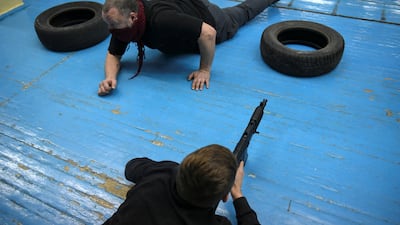
Ukrainian civilians who volunteered to join the Territorial Defence Forces take part in a training exercise in Odesa after Russia's invasion. Reuters -
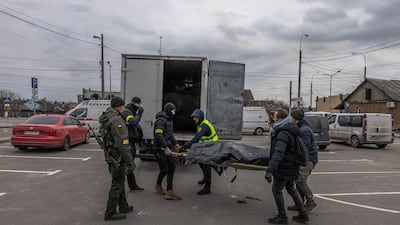
Men carry a body to a lorry as people flee from the frontline town of Irpin. EPA -
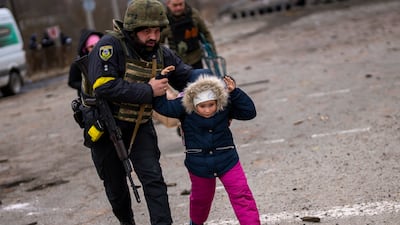
A Ukrainian police officer runs with a child as the sound of shelling echoes nearby in Irpin. AP -
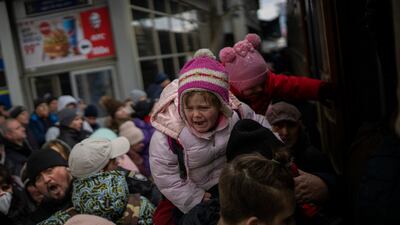
Parents and children struggle to board a train in Lviv. AP


One draft presented to the European Parliament last year called for the establishment of a rapid-reaction force to replace the EU’s current “battle groups”, rotating units that were introduced in 2007 but have never been used.
Individual countries are also increasing defence spending in response to the war in Ukraine, including Poland and Germany, which is planning a one-off 100 billion euro ($109bn) investment in its military.
But such statements are nothing new, said Mr Arnold, and much of Germany’s money will go merely on bringing currently substandard equipment up to scratch.
Nato allies committed to the principle of spending two per cent of GDP on defence after Russia’s annexation of Crimea in 2014. But some countries, notably including Germany, have not met the target.
“We have been here before,” said Mr Arnold. “You have to divorce the political statements from the actual reality of what is happening.
“Since the end of the Cold War, the EU side of defence has always talked quite an ambitious game but then failed to back it up with the money and then also the prioritisation and the resourcing that underpins that.”

