


A decision on salvaging the Iran nuclear deal could be days away and the ball is in Iran’s court, France said on Wednesday.
Indirect talks between Iran and the US on reviving the deal resumed last week and officials from the other parties to the accord — Britain, China, France, Germany and Russia — have shuttled between the two sides trying to close gaps.
“We have reached tipping point now. It's not a matter of weeks, it's a matter of days,” French Foreign Minister Jean-Yves Le Drian told the French Parliament.
“Political decisions are needed from the Iranians. Either they trigger a serious crisis in the coming days, or they accept the agreement which respects the interests of all parties.”
Western diplomats had hoped for a breakthrough by now but tough issues remain unresolved and Iran has rejected any deadline imposed by Western powers.
“We are coming to the moment of truth. If we want Iran to respect its [nuclear] non-proliferation commitments and in exchange for the United States to lift sanctions, there has to be something left to do it,” Mr Le Drian said.

Iran said on Monday it was “in a hurry” to strike a new deal if its national interests were protected and that restoring the pact required “political decisions by the West".
Western diplomats say they are now in the final phase of the talks and believe that a deal is within reach.
The main sticking points are understood to be Iran’s demand for a US guarantee of no more sanctions or punitive measures, and how and when to restore verifiable restrictions on Tehran’s nuclear activity.
-
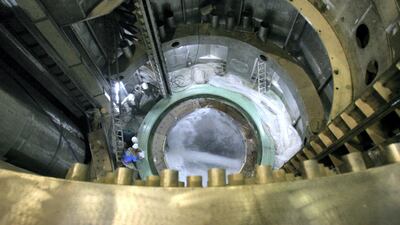
Russian contractors work at the Bushehr nuclear reactor site in 2007. The plant opened four years later. Bloomberg -
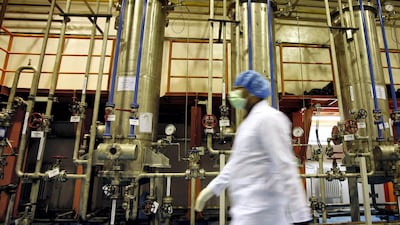
An Iranian technician at the International Atomic Energy Agency inspects the country's Isfahan plant in 2007. Tehran is no longer co-operating with the agency at nuclear sites across the country. EPA -

Workers wait to begin constructing a second reactor at the Bushehr nuclear power plant in 2019. AFP -
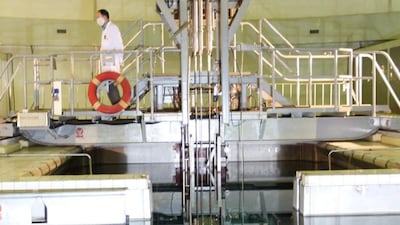
A metal-encased rod with 20 per cent enriched nuclear fuel is inserted into a reactor in Tehran in 2012. AFP -
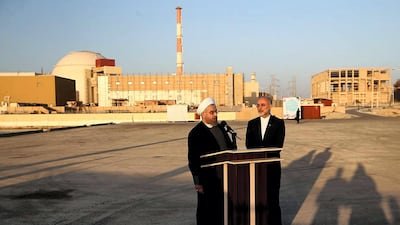
Fomer Iranian President Hassan Rouhani and the country's Atomic Energy Organisation chief Ali Akbar Salehi speak at the Bushehr nuclear site in 2015. AFP -
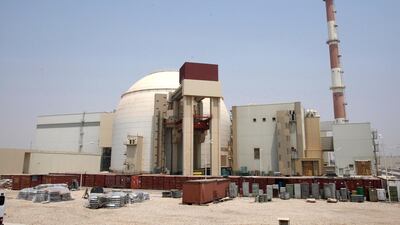
Iran's Bushehr nuclear plant has been restarted. EPA -
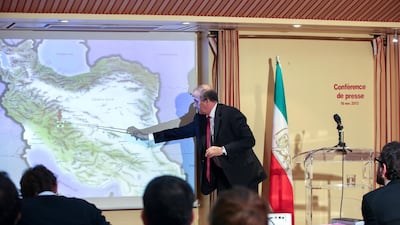
Mehdi Abrichamtchi, chairman of the Peace and Security Committee at the National Council of Resistance of Iran, shows journalists the location of a secret nuclear site in Iran in 2013. AFP -
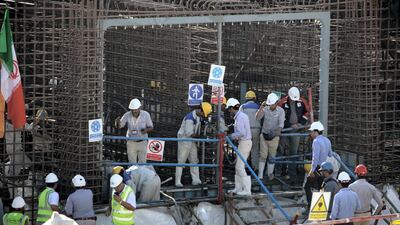
Workers prepare to begin the construction of a second reactor at the Bushehr site. AFP


The agreement began to unravel in 2018 when then-president Donald Trump withdrew the US and reimposed far-reaching sanctions on Iran, which then began breaching the accord's limits on its uranium enrichment activity.
The US State Department has agreed to waive sanctions on Iran's civilian nuclear programme.
The resumption of the waiver, ended by the Trump administration in 2020, “would be essential to ensuring Iran's swift compliance” if a new deal on controlling Tehran's nuclear programme can be reached in talks in Vienna, the State Department official said.
The waiver allows other countries and companies to participate in Iran's civilian nuclear programme without triggering US sanctions on them, in the name of promoting safety and non-proliferation.

