


Two Swiss half-sisters whose mother took them with her when she joined ISIS in the Middle East in 2016 have been repatriated from a desert camp in north-eastern Syria, the Swiss Foreign Ministry said on Tuesday.
The older girl, now 15, had a severe shrapnel wound to her leg, requiring three operations, while the younger was said to be in poor health.
The Foreign Ministry confirmed that it had repatriated the two minors from Al Roj camp in north-east Syria.
"The children arrived on Swiss soil on December 6 at Geneva airport, having passed through Iraq," it said.
The repatriation, believed to be the first of its kind in Switzerland, had the consent of their mother.
The government had said she was still in the camp and had several nationalities, although her Swiss citizenship had been withdrawn for security reasons. The girls have different fathers in Geneva.
The case had been raised by UN human rights experts in April.
Experts said then that the girls had been abducted in 2016 by their mother, who joined ISIS. A senior Swiss official said at the time that it was working to have the girls sent home.
Al Hol and Al Roj camps, run by Syrian Kurdish forces, hold nationals from about 60 countries who fled from ISIS's last enclaves.
-
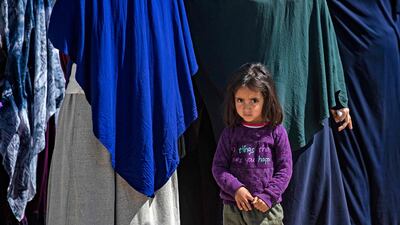
A child stands in front of veiled women at Camp Roj, in Syria's northeastern Hasakah province, where relatives of people suspected of belonging to ISIS are held. AFP -
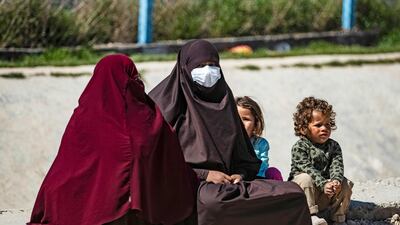
As of October, more than 2,000 people were thought to be living in the camp. AFP -
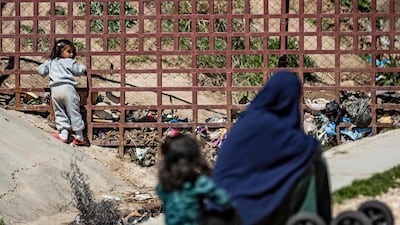
A child plays while a woman sits with another infant on the ground at Camp Roj. AFP -
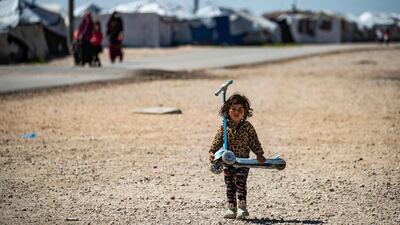
A child carries a scooter along a dirt road at Camp Roj. White tents – visible in the distance – are used to shelter families. AFP -
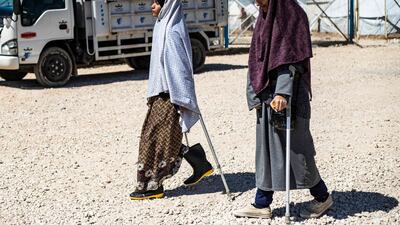
Two women walk with the aid of crutches through the camp. AFP -
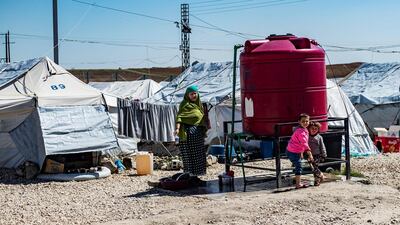
Tanks store the primary source of water for thousands of people, including hundreds of young children. AFP -
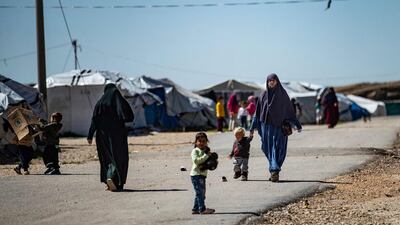
Roj is one of two Kurdish-run displacement camps housing foreign family members of suspected ISIS fighters. AFP -
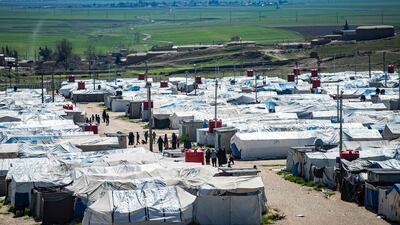
Although it's home to 2,000-plus people, Roj is smaller and better guarded than its overcrowded counterpart Al-Hol. AFP


More than 60,000 people, two thirds of them children, are held in camps for families associated with ISIS fighters.
The International Committee of the Red Cross, which visits the camps, has described them as a "tragedy in plain sight".
The Swiss Foreign Ministry has reaffirmed its 2019 policy on what it calls "travellers motivated by terrorism", which puts Swiss security first.
Repatriation can only be considered for minors in such situations but some mothers refuse to be separated, the ministry said.

