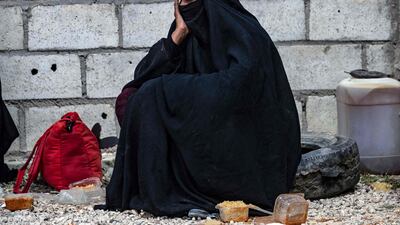
• Hind Saleh Omar lives in a half built house with her children in Al Mansoura, Raqqa, after being released from Al Hol camp at the start of this year. Luke Pierce for The National
    Hind Saleh Omar lives in a half built house with her children in Al Mansoura, Raqqa, after being released from Al Hol camp at the start of this year. Luke Pierce for The National
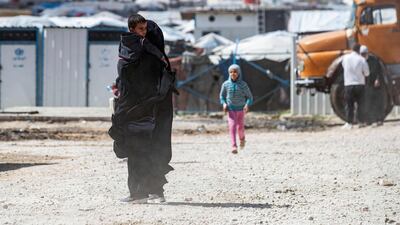
  • Hind Saleh Omar’s children play outside the front of the half-built house that has become their home since being released from Al Hol camp under tribal agreements three months ago. Luke Pierce for The National
    Hind Saleh Omar’s children play outside the front of the half-built house that has become their home since being released from Al Hol camp under tribal agreements three months ago. Luke Pierce for The National
  • Sheikh Abdul Latif Al Faraj, a tribal leader in rural Raqqa sponsored 10 families for release from Al Hol, though he says pressure from the community means he won’t sponsor any more. Luke Pierce for The National
    Sheikh Abdul Latif Al Faraj, a tribal leader in rural Raqqa sponsored 10 families for release from Al Hol, though he says pressure from the community means he won’t sponsor any more. Luke Pierce for The National
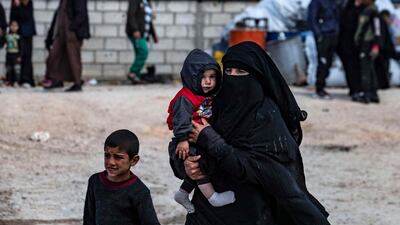
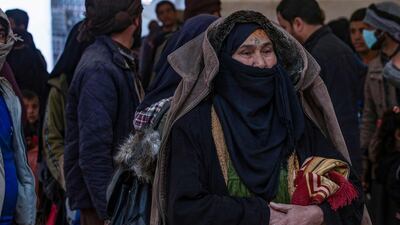
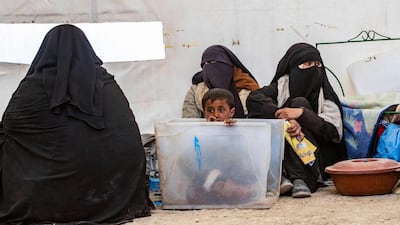
  • A woman released from Al Hol camp with her children under tribal agreements says she has not been accepted by Syrian communities who accuse her of association with ISIS. Luke Pierce for The National
    A woman released from Al Hol camp with her children under tribal agreements says she has not been accepted by Syrian communities who accuse her of association with ISIS. Luke Pierce for The National
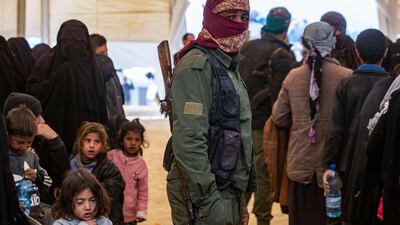
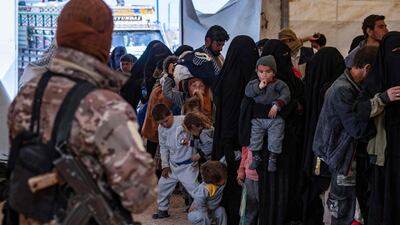
  • The Syrian Democratic Forces keep watch on Al Hol camp, the larger of two Kurdish-run displacement camps for relatives of ISIS extremists in Syria. AFP
    The Syrian Democratic Forces keep watch on Al Hol camp, the larger of two Kurdish-run displacement camps for relatives of ISIS extremists in Syria. AFP

Syrian families released from Al Hol struggle for acceptance after ISIS trauma


Gareth Browne
  • English
  • Arabic

For the shivering woman in a black niqab, being released from Al Hol ought to have been a blessing.

The internment camp in Syria’s north-east is still packed with ISIS families and sympathisers, left behind after the collapse of the group’s "caliphate" two years ago.

With the bodies of victims of executions and beheadings showing up regularly in the camp’s muddy tracks, many of those incarcerated are desperate to get out, but what greets them on the other side of the fence is little better.

Hind Omar and her children were released from the camp three months ago after a tribal elder vouched for the family, allaying concern over any lingering sympathy for ISIS.

The tribal sponsorship system was originally envisaged as a scheme in which those caught up in the war against ISIS could be returned to their home communities with guarantees from figures who knew them personally.

But many of those released are ostracised by Syrian communities still healing from the trauma wrought by ISIS, due to their perceived links to the extremist group.

Ms Omar now lives in a half-built home with her cousin, in the village of Al Mansoura, in Raqqa province.

Their 12 children play in a mound of damp cement sand outside the front door. Inside, the wind rips through gaps in the brickwork. It is not Al Hol but it does not seem to be much better.

A nervous Ms Omar painted a bleak picture of her new life.

“I don’t leave the house except to buy groceries or visit neighbours," she said. "Some people here are very scared [of us], but we are living here without our men."

As ISIS retreated, Ms Omar and her husband went with it. Originally from Idlib, they moved to the Aleppo countryside, then to Deir Ezzor, Hajjin, and finally to Baghouz, the town on the border with Iraq where the extremist group made its last stand.

She is evasive about how she and her husband came to be in ISIS territory but denies they were ever members of the group.

Ms Omar said she had not seen him since they were loaded into separate trucks in Baghouz.

“I know nothing about my husband’s whereabouts," she said. "He’s been away for a little over two years, and I don’t know where he is.

"He wasn’t a fighter or a member of ISIS. He worked as a car mechanic.”

The sheikh who vouched for her family and had her released from Al Hol was a stranger and came from an area she had never visited before, Ms Omar said.

“We were released from the camp following an agreement made by tribal leaders who I don’t know, but Sheikh Anwar Ayoub from Al Mansoura got in touch with us to tell us that he had sponsored us.”

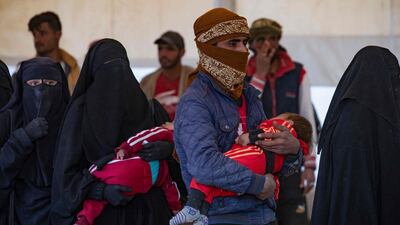
  • A family awaits departure during the release of another group of Syrian families from the Kurdish-run Al Hol camp, Syria. AFP
    A family awaits departure during the release of another group of Syrian families from the Kurdish-run Al Hol camp, Syria. AFP
  • The camp, in the Hasakah governorate of northeastern Syria, holds suspected relatives of ISIS fighters. AFP
    The camp, in the Hasakah governorate of northeastern Syria, holds suspected relatives of ISIS fighters. AFP
  • The sprawling site is home to more than 30,000 people, the majority of them children. AFP
    The sprawling site is home to more than 30,000 people, the majority of them children. AFP
  • The United Nations has called on countries, including the US, the UK and Germany, to repatriate its citizens. AFP
    The United Nations has called on countries, including the US, the UK and Germany, to repatriate its citizens. AFP
  • There are an estimated 10,000 foreign women and children from 57 countries detained at the Al Hol camp and its neighbouring Roj camp. AFP
    There are an estimated 10,000 foreign women and children from 57 countries detained at the Al Hol camp and its neighbouring Roj camp. AFP
  • The UN has warned of fast-spreading disease and coronavirus outbreaks at the camps. AFP
    The UN has warned of fast-spreading disease and coronavirus outbreaks at the camps. AFP
  • This month, Denmark announced it is to repatriate 22 Danish citizens, women and children. AFP
    This month, Denmark announced it is to repatriate 22 Danish citizens, women and children. AFP
  • Under international law, states have a duty to repatriate their citizens and, if there is evidence, to prosecute adults for war crimes or other offences at fair trials in their domestic courts, UN rights experts said. AFP
    Under international law, states have a duty to repatriate their citizens and, if there is evidence, to prosecute adults for war crimes or other offences at fair trials in their domestic courts, UN rights experts said. AFP

Other tribal leaders The National spoke to in Syria said the agreements have become corrupted, with some sheikhs taking payments to vouch for families they did not know.

This has undermined the security guarantees, which are meant to assuage fears that those released might be sympathetic to what remains of ISIS.

The tribal leaders who sponsored the release of people such as Ms Omar and her family insist that those who are taken to their communities are welcomed and reintegrated. They say they are doing their bit to fight extremism.

Last year, Sheikh Abdul Latif Al Faraj sponsored 10 families to leave Al Hol.

While Sheikh Abdul Latif wants to see the scheme succeed, he said he would not continue to sponsor families. The pressures were just too great.

“Our people have the right to hate them [but] I think they can be reintegrated,” he says.

“The camp will not be there forever. It’s better to start reintegrating them now than to let them become more extreme in the camp.”

The camp's civil head, Jaber Mustafa, says that more than 3,000 Syrians have been released through the scheme. On paper, that might be considered a success.

In many cases, however, it has become something quite different – a money-spinner for the tribes.

“The Syrian Democratic Forces to start with did not have a clear mechanism of how they're going to use tribal sponsorship to release these families from Al Hol,” says Haian Dukhan, a research fellow at the Central European University and expert on Syria’s tribes.

“That has created problems.”

Communities traumatised by ISIS are reluctant to take back those with perceived links to the extremist group, while the Kurds say they are losing the patience and resources to keep them locked up in places such as Al Hol.

What happens after their release is a question nobody seems interested in tackling.

The head of a local NGO in Raqqa told The National: "There is absolutely no plan to deal with these people.

"The authorities see releasing people from Al Hol as a solution. Actually, it is just the start of another problem. Reintegrating them is at the bottom of everyone’s list.”

Families such as Ms Omar’s are being ostracised as a result of the rush to get people out of Al Hol without considering how they might rejoin Syrian communities.

As the bitter wind swirls inside her family's one-room living space, it is hard to see any sign of her reintegration.

These releases, Mr Dukhan said, could have serious ramifications for the wider community.

“You’re talking about a tribal community here that believes in the concept of taking revenge,” he said.

“Releasing the wrong people could lead to a cycle of revenge and counter-revenge.”

The significant attention given to foreign nationals, who make up only a small proportion of the camp’s residents, has obscured the dangers associated with reintegrating Syrians, Mr Dukhan said.

“There is a big problem that needs to be solved there when it comes to the local communities in terms of transitional justice and in terms of tribal violence that could erupt.”

Originally built as a refugee camp in the early 1990s for people fleeing the Gulf War, Al Hol has descended into anarchy since it was filled with more than 70,000 people flooding out of Baghouz.

The camp festers with extremist activity and the guards have good reason to fear the inmates.

Those still sympathetic to ISIS openly flaunt their allegiance to the group and aggressively implement its radical interpretation of Sharia within the camp.

Barely 400 soldiers from the Kurdish People’s Protection Units (YPG) guard the centre, now home to more than 60,000 people.

The Kurdish authorities say ISIS has smuggled weapons including silenced pistols into the camp, and the guards stick to the perimeter fence, entering only in overwhelming numbers to deal with major incidents.

They no longer take the risk of accompanying journalists into the camp.

“It was bad at the beginning, then they started to use guns,” said the camp’s manager, a quiet Kurdish woman.

An image grab from a video made released by the YPG shows security forces conducting searches at Al Hol. AFP Photo / YPG Press Office

The murder of a 15-year-old boy last month was the most recent of more than 40 killings in the camp this year.

The Kurdish-led forces responsible for Al Hol's security sent more than 5,000 soldiers to crack down on ISIS sleeper cells operating out of the camp last month.

The camp authorities have also been trying to move high-profile inmates to other camps, with increasing urgency.

About 400 foreign women have been moved to the more secure Roj camp, but tens of thousands of Syrians remain.

The US is leading calls for countries to take back their nationals, with some success, but there is little sign of an enduring solution for the Syrians in Al Hol.

What happens in the camp may determine whether ISIS is able to stage a comeback, Mr Dukhan said.

"We need to think of attempting to break the bond that ISIS created itself and the local communities in Syria and Iraq,” he said.

That process begins with the integration of people such as Ms Omar into Syria’s traumatised population.


COMPANY%20PROFILE
%3Cp%3E%3Cstrong%3EName%3A%3C%2Fstrong%3E%20Floward%0D%3Cbr%3E%3Cstrong%3EBased%3A%20%3C%2Fstrong%3ERiyadh%2C%20Saudi%20Arabia%0D%3Cbr%3E%3Cstrong%3EFounders%3A%20%3C%2Fstrong%3EAbdulaziz%20Al%20Loughani%20and%20Mohamed%20Al%20Arifi%0D%3Cbr%3E%3Cstrong%3ESector%3A%20%3C%2Fstrong%3EE-commerce%0D%3Cbr%3E%3Cstrong%3ETotal%20funding%3A%20%3C%2Fstrong%3EAbout%20%24200%20million%0D%3Cbr%3E%3Cstrong%3EInvestors%3A%20%3C%2Fstrong%3EAljazira%20Capital%2C%20Rainwater%20Partners%2C%20STV%20and%20Impact46%0D%3Cbr%3E%3Cstrong%3ENumber%20of%20employees%3A%20%3C%2Fstrong%3E1%2C200%3C%2Fp%3E%0A
TEACHERS' PAY - WHAT YOU NEED TO KNOW

Pay varies significantly depending on the school, its rating and the curriculum. Here's a rough guide as of January 2021:

- top end schools tend to pay Dh16,000-17,000 a month - plus a monthly housing allowance of up to Dh6,000. These tend to be British curriculum schools rated 'outstanding' or 'very good', followed by American schools

- average salary across curriculums and skill levels is about Dh10,000, recruiters say

- it is becoming more common for schools to provide accommodation, sometimes in an apartment block with other teachers, rather than hand teachers a cash housing allowance

- some strong performing schools have cut back on salaries since the pandemic began, sometimes offering Dh16,000 including the housing allowance, which reflects the slump in rental costs, and sheer demand for jobs

- maths and science teachers are most in demand and some schools will pay up to Dh3,000 more than other teachers in recognition of their technical skills

- at the other end of the market, teachers in some Indian schools, where fees are lower and competition among applicants is intense, can be paid as low as Dh3,000 per month

- in Indian schools, it has also become common for teachers to share residential accommodation, living in a block with colleagues

Who's who in Yemen conflict

Houthis: Iran-backed rebels who occupy Sanaa and run unrecognised government

Yemeni government: Exiled government in Aden led by eight-member Presidential Leadership Council

Southern Transitional Council: Faction in Yemeni government that seeks autonomy for the south

Habrish 'rebels': Tribal-backed forces feuding with STC over control of oil in government territory

Temple numbers

Expected completion: 2022

Height: 24 meters

Ground floor banquet hall: 370 square metres to accommodate about 750 people

Ground floor multipurpose hall: 92 square metres for up to 200 people

First floor main Prayer Hall: 465 square metres to hold 1,500 people at a time

First floor terrace areas: 2,30 square metres  

Temple will be spread over 6,900 square metres

Structure includes two basements, ground and first floor 

The%C2%A0specs%20
%3Cp%3E%3Cstrong%3EEngine%3A%20%3C%2Fstrong%3E3.5-litre%2C%20twin-turbo%20V6%0D%3Cbr%3E%3Cstrong%3ETransmission%3A%20%3C%2Fstrong%3E10-speed%20auto%0D%3Cbr%3E%3Cstrong%3EPower%3A%20%3C%2Fstrong%3E410hp%0D%3Cbr%3E%3Cstrong%3ETorque%3A%20%3C%2Fstrong%3E495Nm%0D%3Cbr%3E%3Cstrong%3EPrice%3A%20%3C%2Fstrong%3Estarts%20from%20Dh495%2C000%20(Dh610%2C000%20for%20the%20F-Sport%20launch%20edition%20tested)%0D%3Cbr%3E%3Cstrong%3EOn%20sale%3A%20%3C%2Fstrong%3Enow%3C%2Fp%3E%0A
In-demand jobs and monthly salaries
  • Technology expert in robotics and automation: Dh20,000 to Dh40,000 
  • Energy engineer: Dh25,000 to Dh30,000 
  • Production engineer: Dh30,000 to Dh40,000 
  • Data-driven supply chain management professional: Dh30,000 to Dh50,000 
  • HR leader: Dh40,000 to Dh60,000 
  • Engineering leader: Dh30,000 to Dh55,000 
  • Project manager: Dh55,000 to Dh65,000 
  • Senior reservoir engineer: Dh40,000 to Dh55,000 
  • Senior drilling engineer: Dh38,000 to Dh46,000 
  • Senior process engineer: Dh28,000 to Dh38,000 
  • Senior maintenance engineer: Dh22,000 to Dh34,000 
  • Field engineer: Dh6,500 to Dh7,500
  • Field supervisor: Dh9,000 to Dh12,000
  • Field operator: Dh5,000 to Dh7,000
Labour dispute

The insured employee may still file an ILOE claim even if a labour dispute is ongoing post termination, but the insurer may suspend or reject payment, until the courts resolve the dispute, especially if the reason for termination is contested. The outcome of the labour court proceedings can directly affect eligibility.


- Abdullah Ishnaneh, Partner, BSA Law 

The Equaliser 2

Director Antoine Fuqua

Starring: Denzel Washington, Bill Pullman, Melissa Leo, Ashton Sanders

Three stars

The Voice of Hind Rajab

Starring: Saja Kilani, Clara Khoury, Motaz Malhees

Director: Kaouther Ben Hania

Rating: 4/5

Why are asylum seekers being housed in hotels?

The number of asylum applications in the UK has reached a new record high, driven by those illegally entering the country in small boats crossing the English Channel.

A total of 111,084 people applied for asylum in the UK in the year to June 2025, the highest number for any 12-month period since current records began in 2001.

Asylum seekers and their families can be housed in temporary accommodation while their claim is assessed.

The Home Office provides the accommodation, meaning asylum seekers cannot choose where they live.

When there is not enough housing, the Home Office can move people to hotels or large sites like former military bases.

Tamkeen's offering
  • Option 1: 70% in year 1, 50% in year 2, 30% in year 3
  • Option 2: 50% across three years
  • Option 3: 30% across five years 
What is graphene?

Graphene is a single layer of carbon atoms arranged like honeycomb.

It was discovered in 2004, when Russian-born Manchester scientists Andrei Geim and Kostya Novoselov were "playing about" with sticky tape and graphite - the material used as "lead" in pencils.

Placing the tape on the graphite and peeling it, they managed to rip off thin flakes of carbon. In the beginning they got flakes consisting of many layers of graphene. But as they repeated the process many times, the flakes got thinner.

By separating the graphite fragments repeatedly, they managed to create flakes that were just one atom thick. Their experiment had led to graphene being isolated for the very first time.

At the time, many believed it was impossible for such thin crystalline materials to be stable. But examined under a microscope, the material remained stable, and when tested was found to have incredible properties.

It is many times times stronger than steel, yet incredibly lightweight and flexible. It is electrically and thermally conductive but also transparent. The world's first 2D material, it is one million times thinner than the diameter of a single human hair.

But the 'sticky tape' method would not work on an industrial scale. Since then, scientists have been working on manufacturing graphene, to make use of its incredible properties.

In 2010, Geim and Novoselov were awarded the Nobel Prize for Physics. Their discovery meant physicists could study a new class of two-dimensional materials with unique properties. 


MATCH INFO

Uefa Champions League semi-final, second leg

Roma 4
Milner (15' OG), Dzeko (52'), Nainggolan (86', 90 4')

Liverpool 2
Mane (9'), Wijnaldum (25')

GOLF’S RAHMBO

- 5 wins in 22 months as pro
- Three wins in past 10 starts
- 45 pro starts worldwide: 5 wins, 17 top 5s
- Ranked 551th in world on debut, now No 4 (was No 2 earlier this year)
- 5th player in last 30 years to win 3 European Tour and 2 PGA Tour titles before age 24 (Woods, Garcia, McIlroy, Spieth)

MATCH INFO

Uefa Champions League, semi-final result:

Liverpool 4-0 Barcelona

Liverpool win 4-3 on aggregate

Champions Legaue final: June 1, Madrid

Why it pays to compare

A comparison of sending Dh20,000 from the UAE using two different routes at the same time - the first direct from a UAE bank to a bank in Germany, and the second from the same UAE bank via an online platform to Germany - found key differences in cost and speed. The transfers were both initiated on January 30.

Route 1: bank transfer

The UAE bank charged Dh152.25 for the Dh20,000 transfer. On top of that, their exchange rate margin added a difference of around Dh415, compared with the mid-market rate.

Total cost: Dh567.25 - around 2.9 per cent of the total amount

Total received: €4,670.30 

Route 2: online platform

The UAE bank’s charge for sending Dh20,000 to a UK dirham-denominated account was Dh2.10. The exchange rate margin cost was Dh60, plus a Dh12 fee.

Total cost: Dh74.10, around 0.4 per cent of the transaction

Total received: €4,756

The UAE bank transfer was far quicker – around two to three working days, while the online platform took around four to five days, but was considerably cheaper. In the online platform transfer, the funds were also exposed to currency risk during the period it took for them to arrive.

ABU%20DHABI'S%20KEY%20TOURISM%20GOALS%3A%20BY%20THE%20NUMBERS
%3Cp%3EBy%202030%2C%20Abu%20Dhabi%20aims%20to%20achieve%3A%3C%2Fp%3E%0A%3Cp%3E%3Cstrong%3E%E2%80%A2%2039.3%20million%20visitors%2C%3C%2Fstrong%3E%20nearly%2064%25%20up%20from%202023%3C%2Fp%3E%0A%3Cp%3E%3Cstrong%3E%E2%80%A2%20Dh90%20billion%20contribution%20to%20GDP%2C%3C%2Fstrong%3E%20about%2084%25%20more%20than%20Dh49%20billion%20in%202023%3C%2Fp%3E%0A%3Cp%3E%3Cstrong%3E%E2%80%A2%20178%2C000%20new%20jobs%2C%3C%2Fstrong%3E%20bringing%20the%20total%20to%20about%20366%2C000%3C%2Fp%3E%0A%3Cp%3E%3Cstrong%3E%E2%80%A2%2052%2C000%20hotel%20rooms%2C%3C%2Fstrong%3E%20up%2053%25%20from%2034%2C000%20in%202023%3C%2Fp%3E%0A%3Cp%3E%3Cstrong%3E%E2%80%A2%207.2%20million%20international%20visitors%2C%3C%2Fstrong%3E%20almost%2090%25%20higher%20compared%20to%202023's%203.8%20million%3C%2Fp%3E%0A%3Cp%3E%3Cstrong%3E%E2%80%A2%203.9%20international%20overnight%20hotel%20stays%2C%3C%2Fstrong%3E%2022%25%20more%20from%203.2%20nights%20in%202023%3C%2Fp%3E%0A
Emergency phone numbers in the UAE

Estijaba – 8001717 –  number to call to request coronavirus testing

Ministry of Health and Prevention – 80011111

Dubai Health Authority – 800342 – The number to book a free video or voice consultation with a doctor or connect to a local health centre

Emirates airline – 600555555

Etihad Airways – 600555666

Ambulance – 998

Knowledge and Human Development Authority – 8005432 ext. 4 for Covid-19 queries

Notable salonnières of the Middle East through history

Al Khasan (Okaz, Saudi Arabia)

Tamadir bint Amr Al Harith, known simply as Al Khasan, was a poet from Najd famed for elegies, earning great renown for the eulogy of her brothers Mu’awiyah and Sakhr, both killed in tribal wars. Although not a salonnière, this prestigious 7th century poet fostered a culture of literary criticism and could be found standing in the souq of Okaz and reciting her poetry, publicly pronouncing her views and inviting others to join in the debate on scholarship. She later converted to Islam.


Maryana Marrash (Aleppo)

A poet and writer, Marrash helped revive the tradition of the salon and was an active part of the Nadha movement, or Arab Renaissance. Born to an established family in Aleppo in Ottoman Syria in 1848, Marrash was educated at missionary schools in Aleppo and Beirut at a time when many women did not receive an education. After touring Europe, she began to host salons where writers played chess and cards, competed in the art of poetry, and discussed literature and politics. An accomplished singer and canon player, music and dancing were a part of these evenings.


Princess Nazil Fadil (Cairo)

Princess Nazil Fadil gathered religious, literary and political elite together at her Cairo palace, although she stopped short of inviting women. The princess, a niece of Khedive Ismail, believed that Egypt’s situation could only be solved through education and she donated her own property to help fund the first modern Egyptian University in Cairo.


Mayy Ziyadah (Cairo)

Ziyadah was the first to entertain both men and women at her Cairo salon, founded in 1913. The writer, poet, public speaker and critic, her writing explored language, religious identity, language, nationalism and hierarchy. Born in Nazareth, Palestine, to a Lebanese father and Palestinian mother, her salon was open to different social classes and earned comparisons with souq of where Al Khansa herself once recited.