


The European Union has voted to reimpose restrictions on travellers from the US and five other countries due to rising Covid infections.
Member countries will keep the option of allowing in fully-vaccinated travellers, but the decision will still be a severe blow to the travel industry.
The guidance from the bloc is a recommendation and any decision on who to let in, and what restrictions to impose, ultimately rests with the governments of each member state. While countries have largely followed the EU guidelines, there have been times when individual nations have diverged from them.
Ultimately, American tourists should expect a mishmash of travel rules across the continent since the EU has no unified Covid-19 tourism policy. Possible restrictions could include quarantines, further testing requirements upon arrival, or even a total ban on all non-essential travel.

Israel, Montenegro, Kosovo, Lebanon and North Macedonia were also removed from the EU’s safe-travel list.
“Non-essential travel to the EU from countries or entities not listed (on the safe list) … is subject to temporary travel restriction,” the European Council said in a statement. “This is without prejudice to the possibility for member states to lift the temporary restriction on non-essential travel to the EU for fully-vaccinated travellers.”
The decision to remove the US from a safe list of countries for non-essential travel reverses the advice that the council gave in June, when the bloc recommended lifting restrictions on all US travellers before the summer tourism season.
That decision came as the US was making major strides with its vaccination programme.
Case numbers in the country have since surged as the more infectious delta variant has spread and large swathes of the population have refused to get vaccinated.
The US had 588 new Covid-19 cases per 100,000 inhabitants in the two weeks ended August 22, according to the European Centre for Disease Prevention and Control, well above the limit of 75 set out in the EU guidelines.
Vaccine hesitancy remains a problem in many locations in the US, where 61 per cent of the eligible population is inoculated against the virus. In contrast, Britain has fully vaccinated over 78 per cent of adults and EU countries have inoculated nearly 70 per cent of those over 18.
The move to restrict visitors from the world’s largest economy is a significant setback for airlines and travel companies that have been pressing for a full reopening of lucrative transatlantic routes. Shares of Air France-KLM, IAG SA and Deutsche Lufthansa AG all came under pressure last week on news of the vote.
“This decision is extremely disappointing for Europe’s airlines and our ailing tourism sector, particularly given the risk of virus transmission among air travellers has proven to be extremely low,” the Airlines for Europe lobby group said in a statement on Monday. “The overwhelming majority of international travellers today are either fully vaccinated, tested or recovered from the virus.”

Airline stocks dropped in the US, likely in anticipation of the EU move.
The American airline industry condemned the latest move from Brussels, insisting it would keep talking to member states to “prioritise the safety and well-being of all travellers.
“The European Union's recommendations are a step backwards, and clearly disappointing to the US airline industry which has worked diligently to safely resume transatlantic service,” lobby group Airlines for America said.
“As the EU has reopened, Americans have been eager to buy tickets, pack their bags and reunite with loved ones who they have not seen in nearly two years.”
The US has been closed to most international travellers since the start of the pandemic, notably to Europeans, even after the EU reopened.
White House Press Secretary Jen Psaki said the US is still developing its international travel policy, including potentially strengthening testing rules and, “over time,” possibly requiring vaccination for all visiting foreign nationals. No final decision has been made, she said.
“The fastest path to reopening travel is for people to get vaccinated, to mask up and slow the spread of the deadly virus,” Ms Psaki said at the White House on Monday. “We continue to work across federal agencies to develop a consistent and safe international travel policy; this includes travel from Europe.”
Travel between the EU and US has been a point of political contention. The Biden administration has kept border restrictions in place despite pressure to allow visitors from allies like the EU that have eased their own curbs. US officials have cited rising delta infections as one reason for that stance.
Adalbert Jahnz, the European Commission spokesman for home affairs, said on Monday that the EU’s executive arm remained in discussions with the Biden administration but so far both sides have failed to find a reciprocal approach.
In addition to the epidemiological criteria used to determine the countries for which restrictions should be lifted, the European Council said that “reciprocity should also be taken into account on a case-by-case basis.”
EU rules specify that for third countries to be allowed non-essential travel into the bloc the trend of new cases should be stable or decreasing, and that no more than 4 per cent of those tested for the virus are positive.
The guidelines also take into account whether variants of concern have been detected in a particular nation and whether it has reciprocated on opening travel.
-
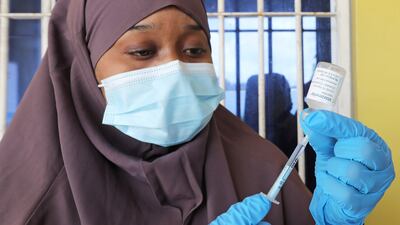
A healthcare worker prepares to administer a Covid-19 vaccine in Mogadishu, Somalia. Reuters -
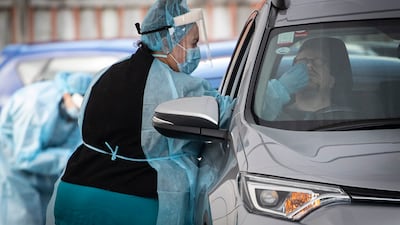
Workers take samples for Covid-19 tests at a drive-through clinic in Auckland, New Zealand. AP -

A monk uses his mobile phone in Ho Chi Minh City, Vietnam. Reuters -

A man reads a newspaper next to closed shops after the government announced an island-wide lockdown in Colombo, Sri Lanka. EPA -

A woman instructs her grandson to clean his hands at the State Fair in Louisville, Kentucky. Reuters -

Medics transport a Covid-positive patient to a hospital in Houston, Texas. AFP -

Members of the security forces guard the Taj Mahal after sunset in Agra, India. EPA -

Vancouver Whitecaps goalkeeper Maxime Crepeau signs autographs before his team's match against Los Angeles FC in Vancouver, Canada. AP -
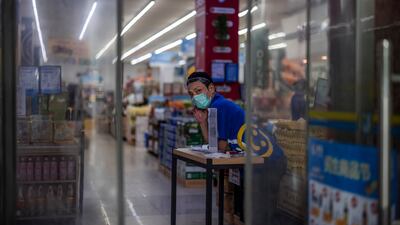
An employee stands at the entrance of a supermarket to check visitors' health app QR codes and body temperature in Shanghai, China. EPA -
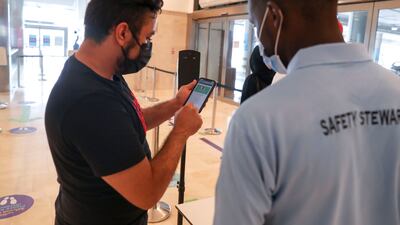
A man shows the green pass on his phone before entering a shopping mall in Abu Dhabi, UAE. Khushnum Bhandari / The National


Germany classified the US as a high-risk area as of August 15, meaning visitors need to show they have been vaccinated, have recovered from the disease or present a negative test result. Travellers would have to be immunised with one of the vaccines approved by the bloc, which includes Pfizer, Moderna, AstraZeneca and Johnson & Johnson.
France, Spain, Italy and Belgium also require some kind of test to show the traveller has Covid antibodies or proof of vaccination. But none have imposed quarantine rules.
More than 15 million Americans a year visited Europe before the coronavirus crisis, and new travel restrictions could cost European businesses billions in lost travel revenue, especially in tourism-reliant countries like Croatia, which has been surprised by packed beaches and hotels this summer.
The EU recommendation does not apply to Britain, which formally left the EU at the beginning of the year and opened its borders to fully vaccinated travellers from the US earlier this month.
The US remains on Britain’s amber travel list, meaning that fully-vaccinated adults arriving from the US to the UK do not have to self-isolate. A negative Covid-19 test within three days before arriving in the UK is required and another negative test is needed two days after arriving.

