

EU countries were urged on Wednesday to contain a refugee wave from Afghanistan by funnelling support to the country’s neighbours.
Austria wants to tap into disaster funds to offer €3 million ($3.5m) to countries that could prevent a refugee surge from reaching Europe’s borders.
The European Commission supports increasing aid after the fall of Kabul prompted desperate escape attempts from the city's airport.
Many Afghans refugees live in Iran and Pakistan, while Uzbekistan and Tajikistan increased border security as the Taliban advanced.
European leaders are determined that Afghans should not overwhelm EU borders in a repeat of the refugee surge from Syria six years ago.
Efforts to curb illegal migration were part of the EU’s proposals at an emergency summit of interior ministers on Wednesday, at which Brussels also announced plans to step up co-operation with Turkey.
“One thing is clear for the EU, and there is unity on this point – the migration of crisis of 2015 cannot be repeated under any circumstances,” Austrian Interior Minister Karl Nehammer said.
“It is important that we offer help on the ground and support Afghanistan’s neighbours to intercept potential waves of migrants and refugees.
“The aim has to be to keep the bulk of people in the region and show the countries helping us that we won’t leave them in the lurch.”
-
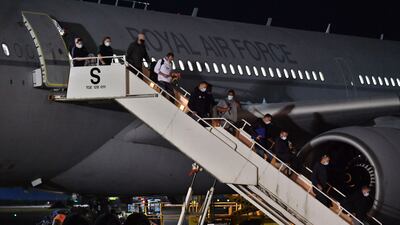
British nationals and Afghan evacuees arrive on a flight from Afghanistan at RAF Brize Norton in Oxfordshire, England. -
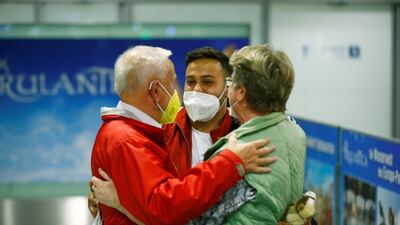
People reunite after a Lufthansa plane transporting evacuees from Kabul, Afghanistan, lands in Frankfurt, Germany. -

An aircraft of Danish DAT airline that transported evacuees from Afghanistan arrives at Copenhagen Airport. -
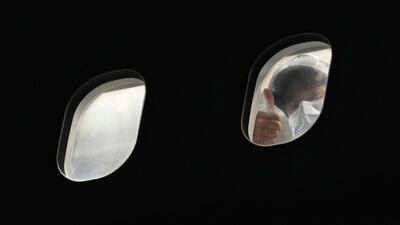
A passenger gives a thumbs up through the window of a plane that had arrived from Afghanistan at RAF Brize Norton air base in England. -

People evacuated from Afghanistan pose in front of a German Bundeswehr airplane after arriving at the airport in Tashkent, Uzbekistan. -
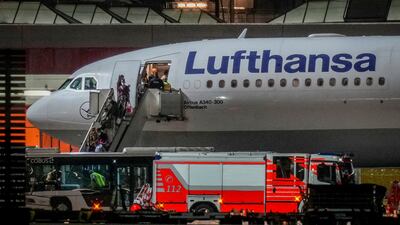
People disembark from a Lufthansa aircraft arriving from Tashkent, Uzbekistan, that landed in Frankfurt, Germany. On board were about 130 people that were evacuated from Afghanistan. -
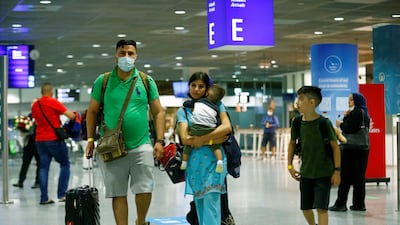
People walk with their bags upon arrival at Frankfurt Airport, Germany, after being evacuated from Kabul. -
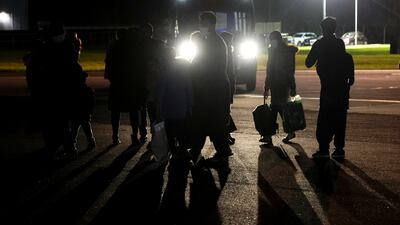
People walk across the tarmac after alighting from a plane from Afghanistan at RAF Brize Norton air base in England. -
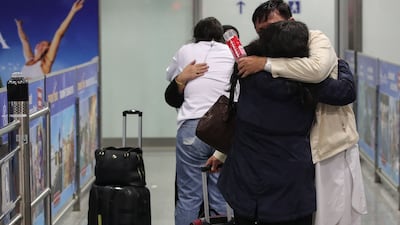
People among the first evacuees from Kabul hug as they arrive at Frankfurt International Airport, Germany. -
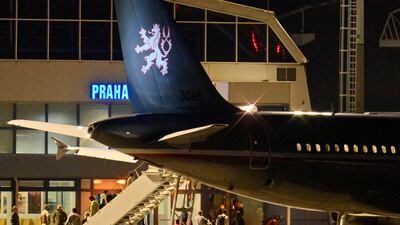
The second Czech evacuation aircraft from Kabul, with 87 passengers on board, stands at the Prague-Kbely airport, Czech Republic, after landing on Tuesday. -
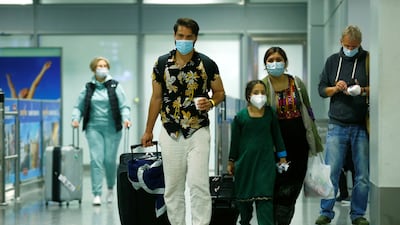
A family arrives at Frankfurt Airport, Germany. -
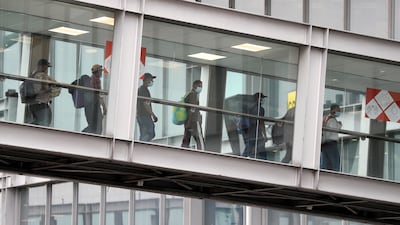
People who have been evacuated from Afghanistan arrive at Roissy Charles-de-Gaulle airport in Paris, France.


EU Home Affairs Commissioner Ylva Johansson said the bloc’s 27 members should offer more legal pathways for Afghan migrants. Women and girls were in a particularly dangerous situation, she said.
She said EU countries should stop deportations to Afghanistan, which several nations have already called off – although Austria still hopes to continue.
"As things stand, the situation in Afghanistan is clearly not safe and it will not be safe for some time. Therefore we cannot force people to return to Afghanistan," she said.
Ms Johansson said that Europe should “discourage and prevent” illegal migration by Afghans desperate to flee Taliban rule. "We should not wait until people arrive at the external borders of the EU," she said.
Small numbers of Afghan civilians are being evacuated from Kabul after helping Nato forces during their 20-year campaign.
Germany is moving people from Kabul to Uzbekistan before flying them on to Europe. France welcomed about 200 Afghans on a flight on Wednesday.
EU foreign policy chief Josep Borrell said diplomats would engage with the Taliban to prevent a “humanitarian and a potential migratory disaster”.
He said Europe would “deal with the Afghan authorities such as they are” after the former Nato-backed government collapsed in a matter of days.
Some city leaders in Europe have promised to take people in, with Munich offering 260 places and Barcelona ready for 50 women and girls.
But Mr Nehammer said uncontrolled migration had to be stopped because of the risk of extremists entering the EU.
“Migration waves and refugee movements always give terrorists the chance to slip under the radar and bring evil and violence to Europe,” he said.
“That means it is paramount that border protection is prioritised and that the EU knows who is coming into its territory.”

Belarus crisis
Efforts to stop illegal migration were stepped up in recent weeks with troops sent to the EU’s eastern borders to halt arrivals from Belarus.
Wednesday’s summit was originally called to address the situation in Belarus, which is suspected of orchestrating the surge of more than 4,000 mainly Iraqi people.
Ministers were briefed on border crossings to Lithuania, which have slowed after Iraq suspended flights to Belarus and guards began pushing people back.
The crisis flared up again on Tuesday when Belarusian guards were accused of entering Lithuania’s territory to push migrants across the border.
Lithuania plans to build a wall on the border with Belarus, while neighbouring Latvia sent troops after some of the migrants entered its territory.
“We strongly support and express solidarity with those countries and we condemn Belarus’s attempt to instrumentalise human beings for political purposes,” said Slovenian Interior Minister Ales Hojs.
“The situation on the ground is changing very rapidly so we have to focus also on Latvia and Poland.”

