

UK Prime Minister Boris Johnson said he was "immensely proud" of Cop26's achievements, but conceded his joy was “tinged with disappointment” after some countries failed to meet the level of ambition demanded by those most threatened by climate change.
Alok Sharma, the president of the Glasgow summit, had earlier said China and India will have to “justify” themselves to climate-vulnerable countries after pressure by the two nations watered down language on coal in the final Cop26 text.
Vulnerable countries, including small island nations, voiced their displeasure at the last-minute change to the wording from “phase out” to “phase down” of coal power, the largest source of greenhouse gas emissions.
Mr Johnson hailed the “truly historic” outcome of the Cop26 summit, describing the agreement as “game-changing”.
But he hastened to indicate that the result did not give him complete satisfaction.
“Of course, my delight at this progress is tinged with disappointment. Those for whom climate change is already a matter of life and death, who can only stand by as their islands are submerged, their farm land turned to desert, their homes battered by storms, they demanded a high level of ambition from this summit," he said.
“While many of us were willing to go there, that wasn’t true of everybody. Sadly that’s the nature of diplomacy," Mr Johnson said, without referring to a particular country.
“We can lobby, we can cajole, we can encourage, but we cannot force sovereign nations to do what they do not wish to do. It’s ultimately their decision to make and they must stand by it."
Cop26 was billed as the last best chance to keep in reach the goal of limiting temperature rises to 1.5°C to avoid the worst impacts of climate extremes.
Nearly 200 countries on Saturday signed a global deal to clamp down on warming after two weeks of negotiations but fell short of what scientists say is needed to contain dangerous rises.
Mr Sharma, the president of the UN climate summit in Glasgow, did however note the inclusion of coal in the deal for the first time.
“I should point out that for the very first time in any of these conferences, the word 'coal' is actually reflected in the text – that again is a first. Yes, of course, I would have liked to ensure that we maintain the 'phase out' and rather than changing the wording to 'phase down.' But, you know, on the way to phasing out, you've got to phase down,” he told Sky News.
“But ultimately, of course, what we need to ensure is that we continue to work on this deal, on the commitments. And on the issue of coal, China and India, of course, are going to have to justify to some of the most climate-vulnerable countries what happened. You heard that disappointment on the floor.”
Mr Sharma said the Glasgow deal was a historic agreement that “we can be really, really proud of".
“But of course, this is just a start. We now need to deliver on the commitments.”
Patricia Espinosa, executive secretary of the UN Framework Convention on Climate Change, said the target was “definitely alive” after the Glasgow summit.
“We are very far from that goal but we did manage to get together this big package of different decisions that will allow us and gives us very, very specific direction on what we need to work on in order to get there,” she said.
The difference between 1.5°C and 2.4°C of temperature increase, which the Climate Action Tracker forecasts the current pledges would result in, is “the survival of millions and millions of people and species”.
“I would like to underline that the huge step forward in our negotiations was the fact that for the first time in this context we mentioned coal and fossil fuels.
The final decisions came after two weeks of negotiations which began with 120 world leaders attending the summit.
Cop26 Environment Ministers - in pictures
-

Espen Barth Eide – Norway. Getty Images -

Dr Jeanne d'Arc Mujawamariya – Rwanda. Rwanda Green Fund / Flickr -
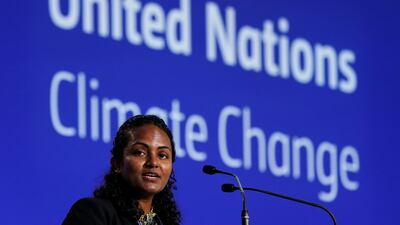
Aminath Shauna – Maldives. Getty Images -
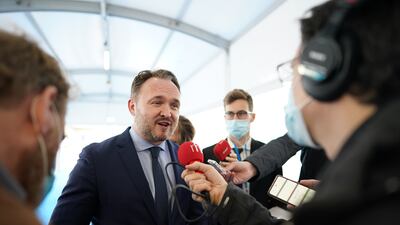
Dan Jorgensen – Denmark. Getty Images -
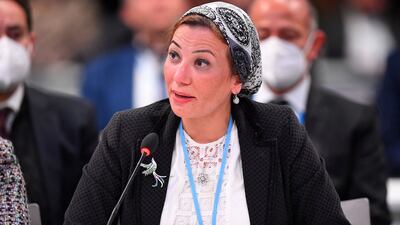
Yasmine Fouad – Egypt. AFP



