
Hundreds of people join the Ramadan evening prayers at Baiturrahman Grand Mosque in the capital of Indonesia’s far western Aceh province.
They wash their hands to prevent the spread of the coronavirus before they perform ablutions and begin their prayers. They come with masks, following a government appeal, but don’t always wear them. Some worshipers bring their own prayer rugs after the carpets at the mosque were rolled up in March.
One congregant, Umar, decided to join a mass prayer at the mosque and wore a mask to make sure he did the right thing as suggested by the government. “I feel not complete if I do the prayer not at the mosque,” Umar said.
The scene stands in sharp contrast to past Ramadans. The mosque in Banda Aceh can accommodate thousands, and people flooded outside the mosque building in past years. This year, not more than 400 worshipers have participated at the evening prayer. They were not packed together, but were not social distancing either.
-
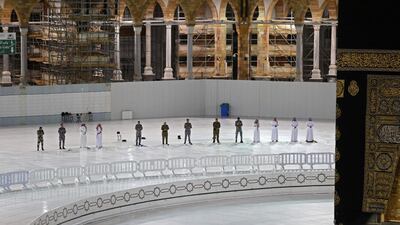
Worshipers perform Isha prayer while keeping distance between them next to the Kaaba in Mecca's Grand Mosque, Islam's holiest site. Saudi Authorities allowed for limit number of worshipers to enter the Grand mosque to perform prayers during the Islamic holy fasting month of Ramadan, amid unprecedented bans on family gatherings and mass prayers due to the coronavirus (COVID-19) pandemic. AFP -
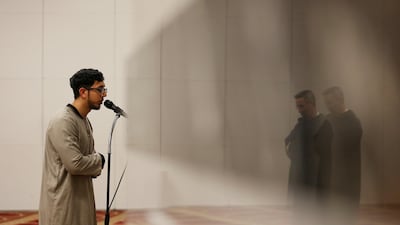
Sheikh Junayd Ahmad leads livestreamed Taraweeh evening prayers, normally bringing a crowd of over a thousand, at the Muslim Association of Puget Sound on the first day of Ramadan during the coronavirus disease (COVID-19) outbreak in Redmond, Washington, U.S. REUTERS -
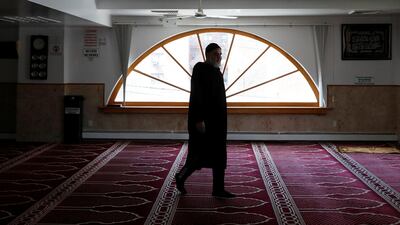
Imam Abdelghani Benyahya arrives to perform the afternoon call to prayer alone during the holiday of Ramadan at the Muslim Center of New York during the outbreak of the coronavirus disease (COVID-19), in the Queens borough of New York City, U.S. REUTERS -

A Palestinian family wearing protective masks walks during the Muslim holy month of Ramadan in an empty alley in the Old City of Jerusalem amid the COVID-19 pandemic. AFP -

Sudanese men wait to break their daytime fast during the Holy Islamic month of Ramadan, amid a curfew due to the coronavirus pandemic, in a street in the capital of Khartoum, Sudan. AP -
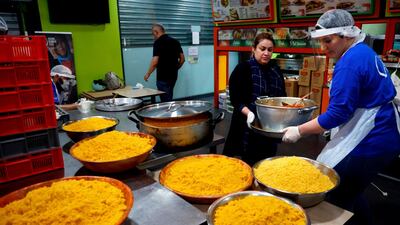
Volunteers of the French Islamic Relief prepare hundreds of meals to offer and distribute to Muslim poor people during the month of Ramadan, in Orly, south of Paris. AFP -

A woman sells dates outside a mosque in Williamsville, Abidjan, Ivory Coast, during the holy month of Muslim Ramadan. Muslims around the world celebrate the holy month of Ramadan by praying at night and abstaining from eating, drinking and sexual acts during the period between sunrise and sunset. Ramadan is the ninth month of the Islamic calendar, and the revelation of the first verse of the Qur'an is believed to have taken place during its last 10 nights. EPA -
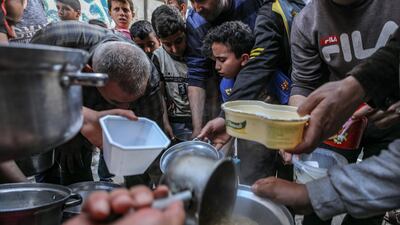
Palestinians gather to get soup offered for free during the Muslim holy month of Ramadan in Gaza City, Gaza Strip. Muslims around the world celebrate the holy month of Ramadan by praying during the night time and abstaining from eating, drinking, and sexual acts during the period between sunrise and sunset. Ramadan is the ninth month in the Islamic calendar, and it is believed that the revelation of the first verse in Koran was during its last 10 nights. EPA -
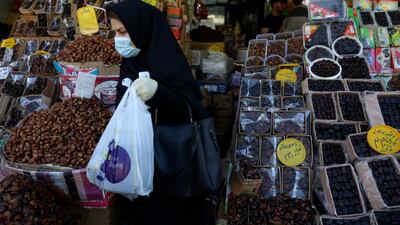
A woman wearing a protective face mask and gloves to help prevent the spread of the coronavirus carries her purchases as she leaves a store which sells dates, a favorite fruit for the Muslim holy fasting month of Ramadan, in southern Tehran, Iran. In Iran, the country that is hit worst in the Middle East by the coronavirus, all religious gathering, congregational prayers and communal Iftar servings, a meal eaten at sunset to break the fast, remain forbidden in the Ramadan and also holy shrines and religious centers also continue to be closed until at least May 4. AP -

A volunteer distributing water, food and juice, signals to fasting drivers on a road in Egypt's Menofia governorate, during the Muslim holy month of Ramadan. AFP -
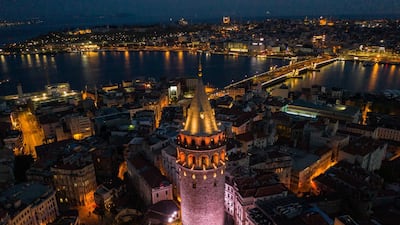
In this aerial photo from a drone, the illuminated roads and square around Istanbul's famous Galata Tower are seen empty on the final day of a four-day lockdown across Istanbul, in Istanbul, Turkey. Turkeys Mosques remain closed due to the spread of the COVID-19 virus as Muslims around the world celebrate Ramadan, the holiest month of the Islamic calendar under lockdown. As of April 26, according to the Health Ministry, Turkey has 2,805 Coronavirus related deaths and confirmed cases have risen to 110,130. Despite the rising numbers Turkey has avoided a full lockdown and continues to implement short lockdowns and constant revisions of current restrictions. The interior ministry continues restrictions on travel between 31 cities, a curfew continues to be in place for anyone over the age of 65 and under 20, schools, cafes, bars and non-essential businesses remain closed. Getty -
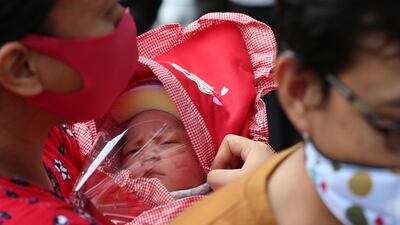
A mother carries her baby with face shield at a hospital in Jakarta, Indonesia. The world's Muslims have begun Ramadan with dawn-to-dusk fasting amid restrictions imposed to slow the pandemic that left many confined to their homes and public venues like parks, malls and even mosques are shuttered. AP -
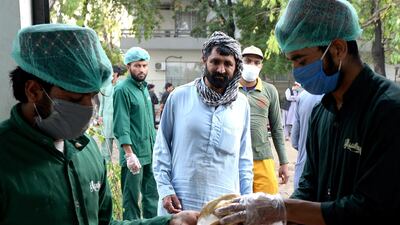
People line up to receive free food as the time to break the fast approaches during the Muslim holy month of Ramadan amid lockdown of the Punjab province due to the ongoing coronavirus COVID-19 disease pandemic in Islamabad, Pakistan. Muslims around the world celebrate the holy month of Ramadan, by praying during the night time and abstaining from eating, drinking, and sexual acts during the period between sunrise and sunset. Ramadan is the ninth month in the Islamic calendar and it is believed that the revelation of the first verse in Koran was during its last 10 nights. EPA -

A woman prays at a mosque during the Muslim holy month of Ramadan in Herat, Afghanistan, amid a lockdown due the ongoing pandemic of the COVID-19 disease caused by the SARS-CoV-2 coronavirus. Muslims around the world prepare to celebrate the holy month of Ramadan, by praying during the ni?ght time and abstaining from eating, drinking, and sexual acts during the period between sunrise and sunset. Ramadan is the ninth month in the Islamic? calendar and it is believed that the revelation of the first verse in Koran was during its last 10 nights EPA -
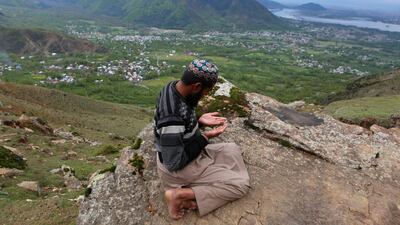
A Kashmiri Muslim man prays on a hill on the third day of fasting month of Ramadan on outskirts of Srinagar, the summer capital of Indian Kashmir. The religious authorities in Kashmir have urged people to pray the congregational Taravih (extended night prayers) and mandatory daily prayers at home to stop the spread of coronavirus in the region. Muslims around the world celebrate the holy month of Ramadan by praying during the night time and abstaining from eating, drinking, and sexual acts during the period between sunrise and sunset. Ramadan is the ninth month in the Islamic calendar. EPA -

A street vendor wears her face mask to help stop the spread of the coronavirus as she sells food for iftar, the breaking of the Ramadan fast, in Tangerang, Indonesia. The world's Muslims have begun Ramadan with dawn-to-dusk fasting amid restrictions imposed to slow the pandemic that left many confined to their homes and public venues like parks, malls and even mosques are shuttered. AP -
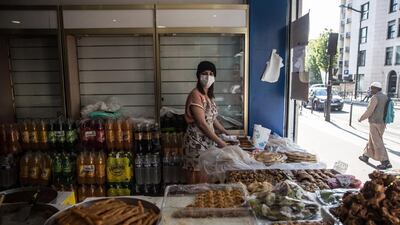
An Algerian shopkeeper with a face mask sells pastry before Iftar time in an Arabic market in Porte de Montreuil area in Paris, France. The majority of the residents around Porte de Montreuil area in Paris are Arab Muslims from North Africa, adherents of Islam across France were unable to take part in the habitual collective prayers this year, as mosques have closed down due to the ongoing pandemic of the COVID-19 disease caused by the SARS-CoV-2 coronavirus. Muslims around the world celebrate the holy month of Ramadan by praying during the night time and abstaining from eating, drinking, and engaging in sexual acts between sunrise and sunset. Ramadan is the ninth month in the Islamic calendar and it is believed that the revelation of the first verse in the Koran occurred during its last 10 nights. EPA -
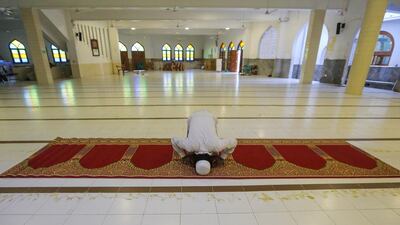
A Sri Lankan Muslim Moulavi prays at the almost deserted Mosque during the Muslim holy month of Ramadan during an island-wide curfew due to the coronavirus pandemic in Colombo , Sri Lanka. Muslims around the world celebrate the holy month of Ramadan, by praying during the night time and abstaining from eating, drinking, and sexual acts during the period between sunrise and sunset. Ramadan is the ninth month in the Islamic calendar and it is believed that the revelation of the first verse in Koran was during its last 10 nights. EPA -
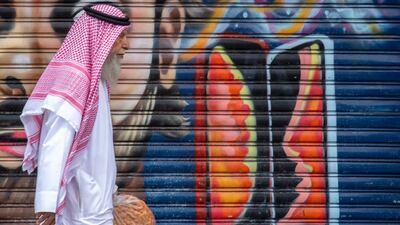
I man holding bread walks past a store mural, in Downtown Amman. Jordanians started the holy month fasting in the context of the COVID-19 Coronavirus curfew, they are allowed outside their homes only between 08 AM and 06 PM. Muslims around the world celebrate the holy month of Ramadan by praying during the night time and abstaining from eating, drinking, and sexual acts during the period between sunrise and sunset. Ramadan is the ninth month in the Islamic calendar and it is believed that the revelation of the first verse in Koran was during its last 10 nights. EPA -
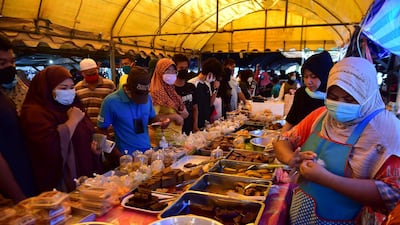
People shop at a food market on the first day of the Muslim holy month of Ramadan in Thailand's southern province of Narathiwat. AFP -
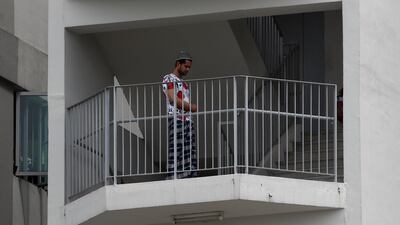
A migrant worker prays during the holy month of Ramadan inside his dormitory, amid the coronavirus disease (COVID-19) outbreak, in Singapore. REUTERS -
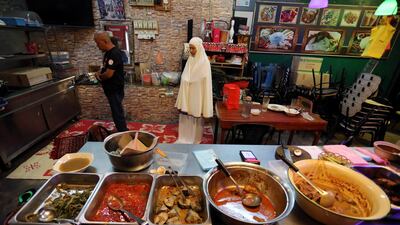
A Muslim family pray inside their restaurant during the holy month of Ramadan, amid the coronavirus disease (COVID-19) outbreak, in Selayang, Malaysia . REUTERS


Indonesia’s Religious Affairs Ministry has issued guidance for people to worship from home, alongside government recommendations for working and learning from home. The Indonesia Ulema Council also previously issued a fatwa advising against congregational prayers in areas where Covid-19 had spread uncontrollably.
Indonesia’s coronavirus outbreak has been most intense in and around the densely populated capital, Jakarta. It has recorded 4,002 cases with 370 deaths from the total 9,511 cases and 773 deaths across the country. The central government reported nine Covid-19 cases in Aceh with no deaths as of Tuesday.
Aceh is the only province in the world’s most populous Muslim nation that practices Shariah law. The region’s autonomy was a concession the central government made in 2001 as part of efforts to end a decades-long war for independence.
The Aceh Ulema Council has allowed daily mass prayers as long as they follow previously announced health protocols, such as wearing masks and bringing their own prayer rugs. Some preachers are shortening sermons so worshipers won’t stay long in a crowd, and some Aceh mosques are not allowing mass prayers, following the central government’s guidance.
The Aceh council’s deputy chairman Faisal Ali said the council only allowed congregational prayers in certain areas. “For people who live in areas where the epidemic of Covid-19 is still under control, they can do the prayers that are held at mosques by limiting the duration,” Ali said.

