• People enjoy a meal inside a tent, at a park in Nanjing, Jiangsu province, China. Reuters
    People enjoy a meal inside a tent, at a park in Nanjing, Jiangsu province, China. Reuters
  • French tenor Stephane Senechal sings at his window for the inhabitants of his street in Paris, France. EPA
    French tenor Stephane Senechal sings at his window for the inhabitants of his street in Paris, France. EPA
  • People practice social distancing as they sit on chairs spread apart in a waiting area for take-away food orders at a shopping mall in hopes of preventing the spread of the coronavirus in Bangkok, Thailand. AP Photo
    People practice social distancing as they sit on chairs spread apart in a waiting area for take-away food orders at a shopping mall in hopes of preventing the spread of the coronavirus in Bangkok, Thailand. AP Photo
  • A restaurant is seen closed as a woman walks past at an empty commercial area after local authorities restricted the activities of restaurants, bars, gyms, movie theaters and other similar businesses in West Palm Beach, Florida, US. Reuters
    A restaurant is seen closed as a woman walks past at an empty commercial area after local authorities restricted the activities of restaurants, bars, gyms, movie theaters and other similar businesses in West Palm Beach, Florida, US. Reuters
  • A passenger looks out the window as a medical worker walks past her carriage of a train with Ukrainians evacuated from Riga at a railway station in Kiev. AFP
    A passenger looks out the window as a medical worker walks past her carriage of a train with Ukrainians evacuated from Riga at a railway station in Kiev. AFP
  • People wearing face masks as a precautionary measure against covid-19 'elbow bump' as they stand in Greenwich in south London. AFP
    People wearing face masks as a precautionary measure against covid-19 'elbow bump' as they stand in Greenwich in south London. AFP
  • Ben Zwiehoff, the German national team's racing cyclist in the mountain bike cross-country discipline works on his balance on his bike in his flat, in Essen, western Germany. AFP
    Ben Zwiehoff, the German national team's racing cyclist in the mountain bike cross-country discipline works on his balance on his bike in his flat, in Essen, western Germany. AFP
  • Gonzaga Yiga, a 49-year-old community chairperson, appeals to residents through a speaker from the tallest building of the area, in Kampala, Uganda. AFP
    Gonzaga Yiga, a 49-year-old community chairperson, appeals to residents through a speaker from the tallest building of the area, in Kampala, Uganda. AFP
  • A nurse anesthetist gestures during the disinfection of ambulances, in Brest, western France. AFP
    A nurse anesthetist gestures during the disinfection of ambulances, in Brest, western France. AFP
  • A general view shows Serbian military personal setting up beds inside a hall at the Belgrade Fair to accommodate people suffering from mild symptoms of the coronavirus disease. AFP
    A general view shows Serbian military personal setting up beds inside a hall at the Belgrade Fair to accommodate people suffering from mild symptoms of the coronavirus disease. AFP
  • A picture shows the Houses of Parliament at the end of an empty Westminster Bridge in central London, the morning after Britain ordered a lockdown to slow the spread of the novel coronavirus. AFP
    A picture shows the Houses of Parliament at the end of an empty Westminster Bridge in central London, the morning after Britain ordered a lockdown to slow the spread of the novel coronavirus. AFP
  • People queue at the Immigration Office in Bangkok, as Thailand moves to close its borders after a spike in the number of coronavirus cases in the past week. AFP
    People queue at the Immigration Office in Bangkok, as Thailand moves to close its borders after a spike in the number of coronavirus cases in the past week. AFP
  • An aerial view of empty Octavio Frias de Oliveira bridge, a cable-stayed bridge, on the first day of lockdown imposed by state government in Sao Paulo, Brazil. Reuters
    An aerial view of empty Octavio Frias de Oliveira bridge, a cable-stayed bridge, on the first day of lockdown imposed by state government in Sao Paulo, Brazil. Reuters
  • A man passes by an LED outdoor screen during the coronavirus outbreak in Brasilia, Brazil. Reuters
    A man passes by an LED outdoor screen during the coronavirus outbreak in Brasilia, Brazil. Reuters
  • A man attends customers through an opening from which hangs a handwritten sign that reads in Spanish: "Pharmacy on duty," in Caracas, Venezuela. AP Photo
    A man attends customers through an opening from which hangs a handwritten sign that reads in Spanish: "Pharmacy on duty," in Caracas, Venezuela. AP Photo
  • A deer walks across a pedestrian crossing in Nara, Japan. AP Photo
    A deer walks across a pedestrian crossing in Nara, Japan. AP Photo

India cuts off global supply of malaria drug tipped in coronavirus care


  • English
  • Arabic

India has banned the export of a malaria drug backed by US President Donald Trump amid a run on supplies globally, even as scientists continue to search for conclusive evidence of its effectiveness against the novel coronavirus.

Exports of hydroxychloroquine will be limited to fulfilling fully paid existing contracts, while certain shipments on humanitarian grounds may also be allowed on a case-by-case basis, said a statement issued on Wednesday by the Directorate General of Foreign Trade.

The ban also does not apply to factories in its special economic zones.

India has some of the world’s largest manufacturers of the finished drug as well as its component ingredients, and the move is likely to crimp global supply at a time when the  medicine is receiving unprecedented global attention.

“India is probably buying time to ensure its local needs are met first,” said Kunal Dhamesha, an analyst at SBI Capital Markets.

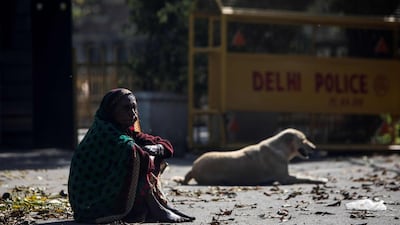
  • A woman sits next to a dog on a deserted street during the first day of a 21-day government-imposed nationwide lockdown in New Delhi. AFP
    A woman sits next to a dog on a deserted street during the first day of a 21-day government-imposed nationwide lockdown in New Delhi. AFP
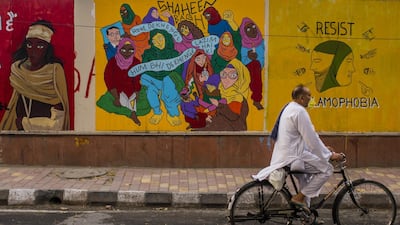
  • A man with a protective mask rides a moped on a deserted road, amid a nationwide lockdown to slow the spread of coronavirus, in New Delhi, India. Getty Images
    A man with a protective mask rides a moped on a deserted road, amid a nationwide lockdown to slow the spread of coronavirus, in New Delhi, India. Getty Images
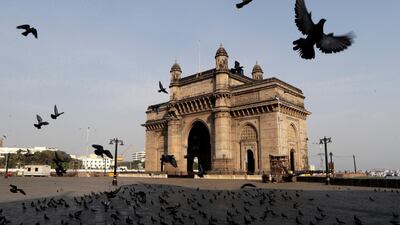
  • Pigeons fly at a deserted Gateway of India monument in Mumbai, India. AP Photo
    Pigeons fly at a deserted Gateway of India monument in Mumbai, India. AP Photo
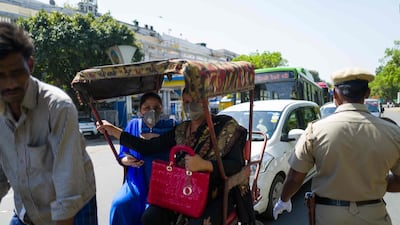
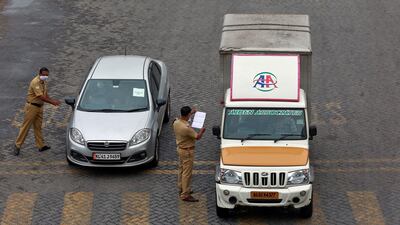
  • A policeman checks motorists at a roadblock during the first day of a 21-day government-imposed nationwide lockdown, in New Delhi. AFP
    A policeman checks motorists at a roadblock during the first day of a 21-day government-imposed nationwide lockdown, in New Delhi. AFP
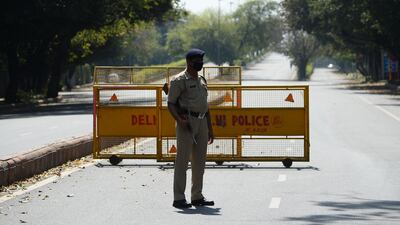
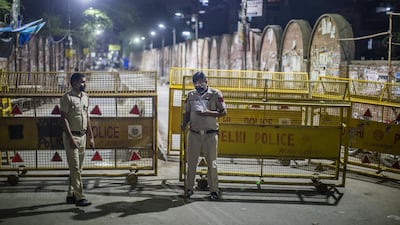
  • A policeman stands guard at a checkpoint the day after Indian Prime Minister Narendra Modi announced a 21-day government-imposed nationwide lockdown, in New Delhi. AFP
    A policeman stands guard at a checkpoint the day after Indian Prime Minister Narendra Modi announced a 21-day government-imposed nationwide lockdown, in New Delhi. AFP
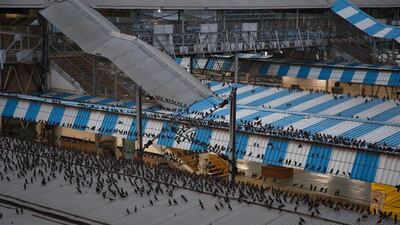
  • Birds flock on the roofs of a railway station in Prayagraj, India. AP Photo
    Birds flock on the roofs of a railway station in Prayagraj, India. AP Photo
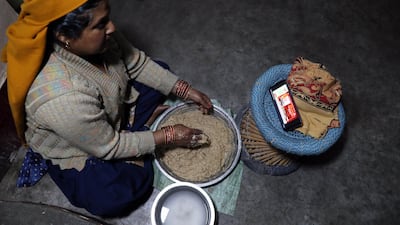
  • A woman watches Indian Prime Minister Narendra Modi's address to the nation on a cell phone, in Kangra, India. EPA
    A woman watches Indian Prime Minister Narendra Modi's address to the nation on a cell phone, in Kangra, India. EPA
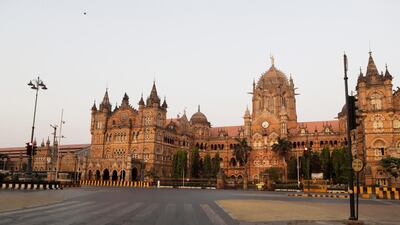
  • Chhatrapati Shivaji Maharaj Train Terminus in Mumbai, India, is deserted. AP
    Chhatrapati Shivaji Maharaj Train Terminus in Mumbai, India, is deserted. AP
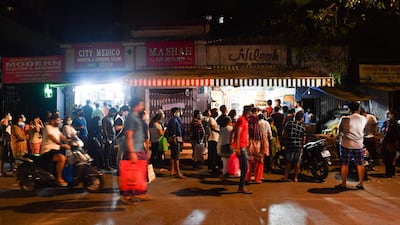
  • People lineup outside stores to buy groceries following Indian Prime Minister's announcement of a government-imposed nationwide lockdown. AFP
    People lineup outside stores to buy groceries following Indian Prime Minister's announcement of a government-imposed nationwide lockdown. AFP
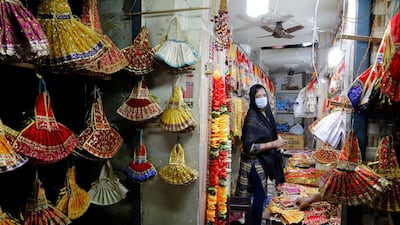
  • A Hindu woman wearing a mask shops for religious items on the eve of the Hindu festival Navratri in Prayagraj, India. AP Photo
    A Hindu woman wearing a mask shops for religious items on the eve of the Hindu festival Navratri in Prayagraj, India. AP Photo
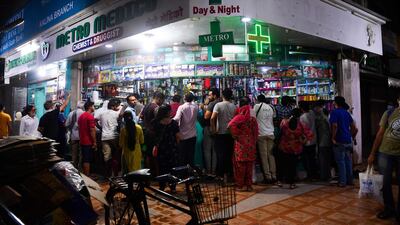
  • People gather at a pharmacy to buy supplies following Indian Prime Minister's announcement of a government-imposed nationwide lockdown, in Mumbai. AFP
    People gather at a pharmacy to buy supplies following Indian Prime Minister's announcement of a government-imposed nationwide lockdown, in Mumbai. AFP
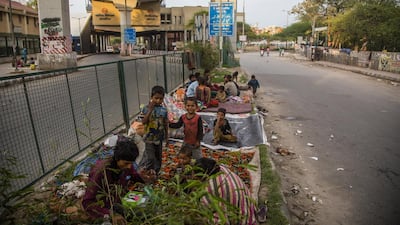
  • Homeless Indian children sit in the middle of a deserted road, amid a nationwide lockdown, in New Delhi. Getty Images
    Homeless Indian children sit in the middle of a deserted road, amid a nationwide lockdown, in New Delhi. Getty Images
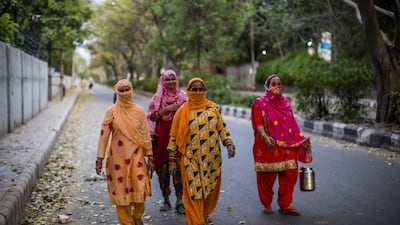
  • Indian women carry containers to buy milk as they walk on a deserted road amid a nationwide lockdown, in New Delhi, India. Getty Images
    Indian women carry containers to buy milk as they walk on a deserted road amid a nationwide lockdown, in New Delhi, India. Getty Images
  • Indian policemen stand guard at a deserted commercial hub as they enforce a lockdown, in New Delhi, India. Getty Images
    Indian policemen stand guard at a deserted commercial hub as they enforce a lockdown, in New Delhi, India. Getty Images
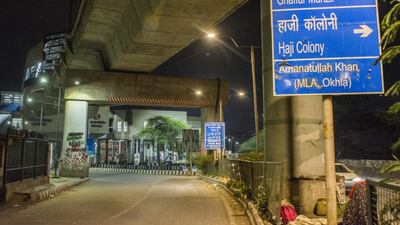
  • A night view of a deserted road, amid a nationwide lockdown, in New Delhi, India. Getty Images
    A night view of a deserted road, amid a nationwide lockdown, in New Delhi, India. Getty Images
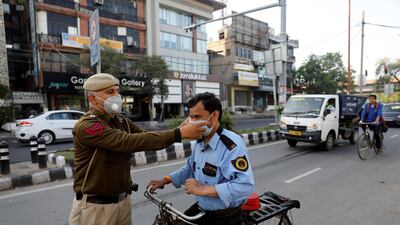
  • A policeman adjusts the mask of a security guard in New Delhi, India. Reuters
    A policeman adjusts the mask of a security guard in New Delhi, India. Reuters
  • Police officers stop vehicles and check their papers on a highway during 21-day nationwide lockdown in Kochi, India. Reuters
    Police officers stop vehicles and check their papers on a highway during 21-day nationwide lockdown in Kochi, India. Reuters
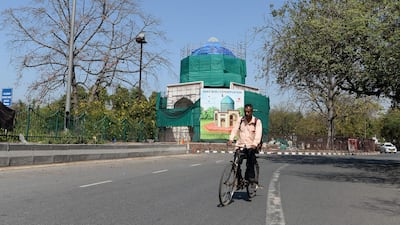
  • A man cycles along a deserted road in New Delhi. AFP
    A man cycles along a deserted road in New Delhi. AFP
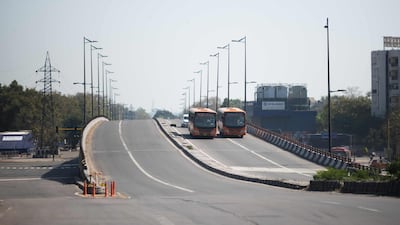
  • Two buses are driven on a deserted street during the first day of a 21-day government-imposed nationwide lockdown, in New Delhi. AFP
    Two buses are driven on a deserted street during the first day of a 21-day government-imposed nationwide lockdown, in New Delhi. AFP

Hospitals and consumers in the US are stockpiling the drug after Mr Trump called it a “game-changer” in the treatment of the coronavirus and vowed to make it widely available.

China, Europe and South Korea have also said it could be one of several treatments for Covid-19 patients, while India itself recommends that healthcare workers take it regularly as a preventive measure.

Jordan has begun testing hydroxychloroquine on patients with Covid-19 and Bahrain on Tuesday said it has had some success.

But the studies are far from conclusive, and doctors advise against self-medicating, especially after a man in the US state of Arizona died after taking the drug’s more toxic predecessor, chloroquine.

Study Results

There is no conclusive scientific evidence that hydroxychloroquine can treat the infection from the novel pathogen.

A small Chinese study published in the Journal of Zhejiang University showed that patients who received the medicine did not defeat the virus any more effectively than those who did not take it.

Some top scientists, including immunologist and White House advisor Anthony Fauci, say reports that hydroxychloroquine might work are anecdotal.

They say the studies need further investigation before the drug’s use is encouraged.

As the pandemic spreads and shuts down large parts of the global economy, hundreds of clinical trials are being launched.

Scientists are studying the effectiveness of everything from anti-flu drugs and antibody-containing plasma from recovered patients to traditional Chinese herbal medicine.

More than 420,000 people have been infected worldwide and almost 20,000 killed in the widening pandemic.

Boosting Capacity

While the verdict is still out on the treatment’s effectiveness, pharmaceutical companies have been racing to increase production of the cheap and decades-old medicine.

Before the export ban was announced, Indian pharma company Cadila Healthcare, the world’s largest maker of the drug, said it plans to boost capacity more than tenfold to meet surging global demand.

Cadila’s shares fell as much as 7.7 per cent in Mumbai on Wednesday.

Sharvil Patel, the drugmaker’s managing director, said all of Cadila’s hydroxychloroquine capacity was currently banned from export.

The company has one factory in a special economic zone, but that plant is not approved by the Food and Drug Administration to make the medicine for the US market. Mr Patel said Cadila will apply to the FDA immediately for such permission.

“We’re still scaling up – there’s no restrictions on that,” he said. “If we are able to meet the Indian government’s supply needs then we can ask to lift the export ban.”

Malaria and lupus drug

Hydroxychloroquine was put in the spotlight after a small study of about 40 patients admitted to hospital with Covid-19 in France.

In that research, the drug appeared to help clear the virus from patients’ bodies, samples taken from nasal swabs suggested. Experts have criticised the design of the study, calling it interesting but far from definitive.

Some researchers believe the drug may have antiviral and anti-inflammatory properties that might suppress virus replication while also avoiding the body mounting an excessive immune response that could cause further damage to the lungs.

Hydroxychloroquine and the more toxic drug it is derived from, chloroquine, are also commonly used to treat rheumatoid arthritis and lupus. Neither drug has been approved by the US FDA to treat Covid-19.

In the Chinese study, one patient treated with the malaria drug progressed to severe disease. Four patients given the medicine developed diarrhoea and signs of potential liver damage, compared with three who received  conventional treatment.

The researchers concluded that additional studies using larger numbers of patients were needed to fully investigate the drug’s risks and benefits.