
From squalid refugee camps in Bangladesh, Rohingya who fled a brutal Myanmar military crackdown are calling on Aung San Suu Kyi to acknowledge the mass atrocities as she defends her country against genocide charges at the UN's top court.
The Nobel Peace Prize laureate defended the actions of Myanmar's military at the UN's top court on Wednesday, saying that the allegations brought by Gambia of genocide against Rohingya Muslims were "misleading and incomplete".
But the violence in 2017 sparked a mass exodus of some 740,000 Rohingya to refugee settlements in Bangladesh border towns, where survivors are still haunted by the rape and murder of loved ones by soldiers and vigilante mobs.
-
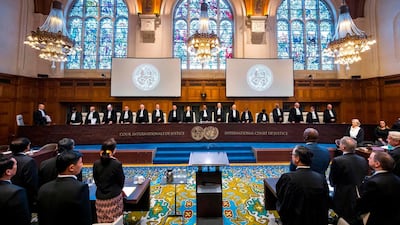
A handout photo released by the International Court of Justice shows a general view of The International Court of Justice (ICJ) holding a public hearing in the case concerning the Application of the Convention on the Prevention and Punishment of the Crime of Genocide (The Gambia v. Myanmar) at the Peace Palace in The Hague, with Myanmar's State Counsellor Aung San Suu Kyi (5thL) and Gambian politician and lawyer Abubacarr Marie Tambadou (4thR) attending. AFP -
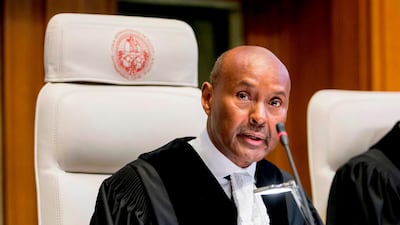
A handout photo released by the International Court of Justice shows International Court of Justice (ICJ) Judge and court president Abdulqawi Ahmed Yusuf speaking during a public hearing in the case concerning the Application of the Convention on the Prevention and Punishment of the Crime of Genocide (The Gambia v. Myanmar) at the Peace Palace in The Hague. AFP -
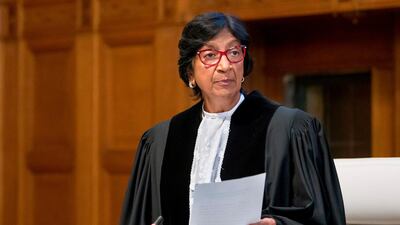
A handout photo released by the International Court of Justice shows International Court of Justice (ICJ) Judge Navanethem Pillay attending the public hearing in the case concerning the Application of the Convention on the Prevention and Punishment of the Crime of Genocide (The Gambia v. Myanmar) at the Peace Palace in The Hague. AFP -
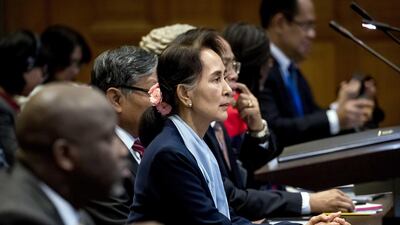
epa08062118 Abubacarr Tambadou (L front, seated), minister of justice of The Gambia, and Aung San Suu Kyi (C), Myanmar State Counselor, on the second day before the International Court of Justice (ICJ) in the Peace Palace, The Hague, The Netherlands, 11 December 2019. Myanmar State Counselor Aung San Suu Kyi defended her country at the International Court of Justice against accusations of genocide filed by The Gambia, following the 2017 Myanmar military crackdown on the Rohingya Muslim minority. EPA/KOEN VAN WEEL -
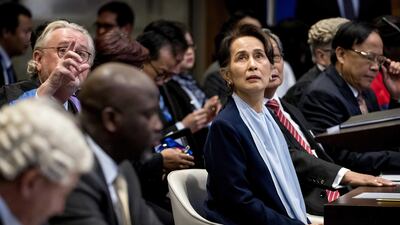
epa08062116 Abubacarr Tambadou (2-L front, seated), minister of justice of The Gambia, and Aung San Suu Kyi (C), Myanmar State Counselor, on the second day before the International Court of Justice (ICJ) in the Peace Palace, The Hague, The Netherlands, 11 December 2019. Myanmar State Counselor Aung San Suu Kyi defended her country at the International Court of Justice against accusations of genocide filed by The Gambia, following the 2017 Myanmar military crackdown on the Rohingya Muslim minority. EPA/KOEN VAN WEEL -
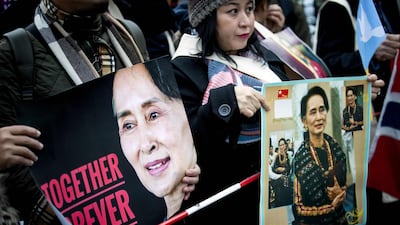
TOPSHOT - Protesters in support of Myanmar's State Counsellor Aung San Suu Kyi hold pictures in front of the Peace Palace of The Hague on December 11, 2019, following Aung San Suu Kyi's second day of hearing on the Rohingya genocide case. Aung San Suu Kyi is set to speak out in Myanmar's defence at the UN's top court on December 11, 2019, a day after the former democracy icon was urged to "stop the genocide" against Rohingya Muslims. Once hailed internationally for her defiance of Myanmar's junta, the Nobel peace laureate will this time be on the side of the southeast Asian nation's military when she takes the stand at the International Court of Justice. - Netherlands OUT / AFP / ANP / Koen Van WEEL -
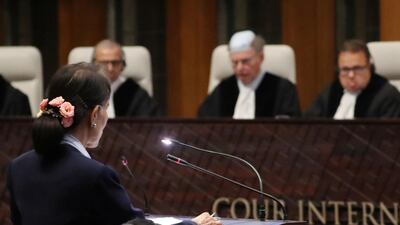
Myanmar's leader Aung San Suu Kyi speaks in front of the judges on the second day of hearings in a case filed by Gambia against Myanmar alleging genocide against the minority Muslim Rohingya population, at the International Court of Justice (ICJ) in The Hague, Netherlands December 11, 2019. REUTERS/Yves Herman -
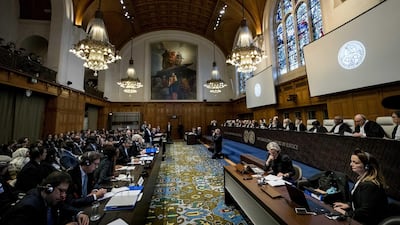
epa08062075 A general view of the court room in the Peace Palace as Myanmar State Counselor Aung San Suu Kyi (C-L, back) stands during the second day before the International Court of Justice (ICJ), in The Hague, The Netherlands, 11 December 2019. Myanmar State Counselor Aung San Suu Kyi defended her country at the International Court of Justice against accusations of genocide filed by The Gambia, following the 2017 Myanmar military crackdown on the Rohingya Muslim minority. EPA/KOEN VAN WEEL -
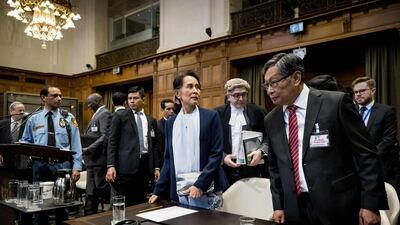
Myanmar's State Counsellor Aung San Suu Kyi (C) stands before the UN's International Court of Justice on December 11, 2019 in the Peace Palace of The Hague, on the second day of her hearing on the Rohingya genocide case. Aung San Suu Kyi appears at the UN's top court today, a day after the former democracy icon was urged to "stop the genocide" against Rohingya Muslims. Once hailed internationally for her defiance of Myanmar's junta, the Nobel peace laureate will this time be on the side of the southeast Asian nation's military when she takes the stand at the International Court of Justice. - Netherlands OUT / AFP / ANP / Koen Van WEEL -
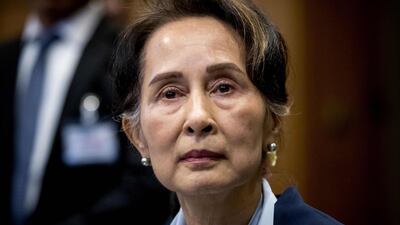
Myanmar's State Counsellor Aung San Suu Kyi looks on before the UN's International Court of Justice on December 11, 2019 in the Peace Palace of The Hague, on the second day of her hearing on the Rohingya genocide case. Aung San Suu Kyi appears at the UN's top court today, a day after the former democracy icon was urged to "stop the genocide" against Rohingya Muslims. Once hailed internationally for her defiance of Myanmar's junta, the Nobel peace laureate will this time be on the side of the southeast Asian nation's military when she takes the stand at the International Court of Justice. - Netherlands OUT / AFP / ANP / Koen Van WEEL -
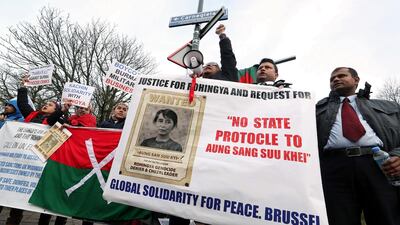
People demonstrate against Myanmar's leader Aung San Suu Kyi on the second day of hearings in a case filed by Gambia against Myanmar alleging genocide against the minority Muslim Rohingya population, outside the International Court of Justice (ICJ) in The Hague, Netherlands December 11, 2019. REUTERS/Yves Herman -
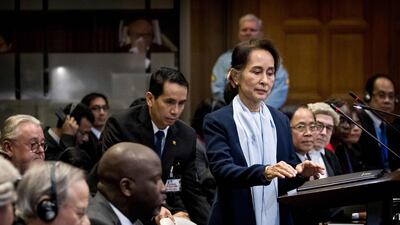
Myanmar's State Counsellor Aung San Suu Kyi (R) stands before the UN's International Court of Justice on December 11, 2019 in the Peace Palace of The Hague, on the second day of her hearing on the Rohingya genocide case. Aung San Suu Kyi appears at the UN's top court today, a day after the former democracy icon was urged to "stop the genocide" against Rohingya Muslims. Once hailed internationally for her defiance of Myanmar's junta, the Nobel peace laureate will this time be on the side of the southeast Asian nation's military when she takes the stand at the International Court of Justice. - Netherlands OUT / AFP / ANP / Koen Van WEEL -
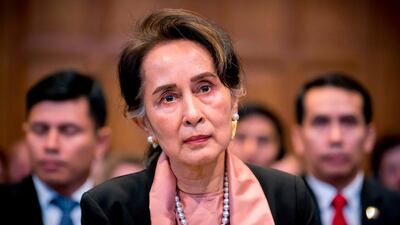
TOPSHOT - A handout photo released on December 10, 2019 by the International Court of Justice shows Myanmar's State Counsellor Aung San Suu Kyi attending the start of a three-day hearing on the Rohingya genocide case before the UN International Court of Justice at the Peace Palace of The Hague. Nobel peace laureate Aung San Suu Kyi faced calls for Myanmar to "stop the genocide" of Rohingya Muslims as she personally led her country's defence at the UN's top court on December 10. - RESTRICTED TO EDITORIAL USE - MANDATORY CREDIT "AFP PHOTO / UN Photo/ICJ/ Frank Van BEEK" - NO MARKETING NO ADVERTISING CAMPAIGNS - DISTRIBUTED AS A SERVICE TO CLIENTS --- / AFP / UN Photo/ICJ / Frank Van BEEK / RESTRICTED TO EDITORIAL USE - MANDATORY CREDIT "AFP PHOTO / UN Photo/ICJ/ Frank Van BEEK" - NO MARKETING NO ADVERTISING CAMPAIGNS - DISTRIBUTED AS A SERVICE TO CLIENTS ---


"Suu Kyi cannot deny anything. The international community must listen to our voice because we are the real victims," Sayed Ulla, a Rohingya leader, said from one of the camps in Bangladesh.
"I want to see the convicts go to the gallows. They killed us mercilessly. I won't get back my family," said widow Saida Khatun, who witnessed her parents, husband and three children being slaughtered.
"Only seeing them [perpetrators] being punished for their deeds will make me happy."
Widow Dildar Begum said her village of Tula Toli was razed and two of her children killed.
Revealing scars she said were caused by soldiers smashing her head with boots and rifle butts after raping her, Ms Begum recalled how her husband and two sons, aged one and five, were hacked to pieces.
"I still can hear my sons' voices in my dreams cursing me as I failed to save them," the 35 year old said, breaking down in tears.
UN investigators have concluded that the 2017 violence amounted to genocide, with Doctors Without Borders (MSF) estimating that at least 6,700 Rohingya were killed in the first month of the crackdown alone.
The case brought by the tiny West African nation of Gambia is the first international legal attempt to bring Myanmar to justice over the crisis.
Gambia, acting on behalf of the 57-nation Organisation of Islamic Cooperation, asked the ICJ to take emergency measures to halt Myanmar's "ongoing genocidal actions" against the Rohingya.

Myanmar's military has insisted its crackdown was needed to root out Rohingya militants who attacked border police posts in 2017.
Ms Suu Kyi has kept silent over the plight of the minority and defended the same generals who once kept her under house arrest for 15 years.
The hearing comes amid growing impatience in Dhaka over the presence of the refugees, who now number about a million, after two failed attempts to voluntarily repatriate them back to Myanmar's Rakhine state.
Before Ms Suu Kyi's ICJ appearance, hundreds of refugees gathered at one of the camps on Tuesday morning, chanting "Gambia, Gambia" and raising their fists.
"We prayed and chanted slogans for Gambia for filing the case against Myanmar," one refugee, who asked to remain anonymous, said after the rally.
"We hope we'll get justice."

