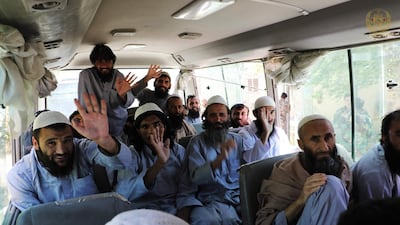
Afghan authorities released hundreds more Taliban prisoners on Tuesday, as calls grew for the militants to extend a ceasefire beyond its third and final day.
The pause in fighting – which came into effect on Sunday to mark the Muslim holiday of Eid Al Fitr – was, for the most part, holding across the country, officials said.
The government responded to the Taliban's three-day ceasefire offer by announcing plans to release up to 2,000 insurgent prisoners.
On Monday, 100 were released and the government said they plan to release another 900, marking the biggest group of Taliban prisoners to be freed yet.
The exact number could vary subject to legal procedures, National Security Council spokesman Javid Faisal told AFP.
Abdul Wasi, 27, from Kandahar province, much of which is under Taliban control, said he was a "holy warrior" when he was detained eight years ago.
"I was told ... to [fight] until all foreign troops are driven out of our country," Wasi, sporting a long beard and wearing a traditional shirt-and-trouser shalwar kameez, told AFP moments after he was freed.
He said he was happy about the US-Taliban deal paving the way for all foreign forces to leave Afghanistan by May next year, and that he wanted a permanent ceasefire.
"If the foreign troops exit, we won't fight," he said as he boarded a Kabul-bound bus along with other freed Taliban members.
The prisoners had signed written pledges not to return to the battlefield, but Qari Mohammadullah, another freed inmate, vowed to continue fighting if foreign forces remain in Afghanistan.
Each freed inmate was given the equivalent of about $65 in Afghan currency.
The council, in a statement on Twitter, said the release of prisoners was to "advance the cause of peace, including the continuation of the bilateral ceasefire and the immediate start of direct negotiations".
-

Muslims wear protective masks and attend Friday prayers at a mosque, amid concerns about the spread of coronavirus, in Kabul, Afghanistan on March 20, 2020. Reuters -

General view of the deserted Ghulam Haider Khan High school following Afghan authorities' orders to shut down schools for a month as a preventive measure against the coronavirus, in Kabul on March 19, 2020. AFP -
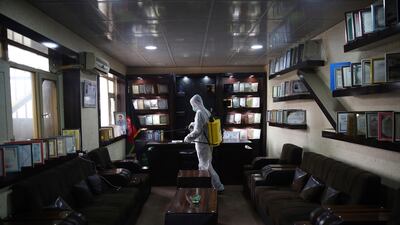
A volunteer in a protective suit sprays disinfectant in the offices of a local police station to help curb the spread of coronavirus in Kabul, Afghanistan, on March 23, 2020. AP Photo -
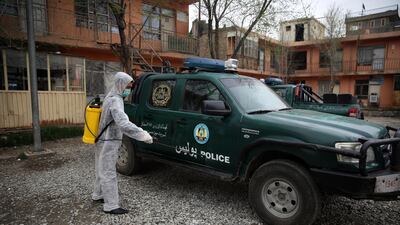
A volunteer in a protective suit sprays disinfectant on a police truck outside a local police station to help curb the spread of coronavirus in Kabul, Afghanistan, on March 23, 2020. AP Photo -
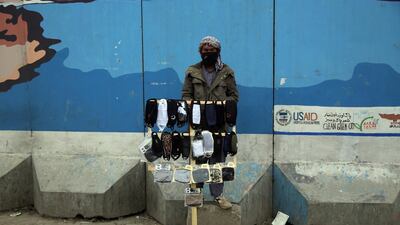
A street vendor selling protective masks that could help curb the spread of the new coronvirus waits for customers in Kabul, Afghanistan, on March 23, 2020. AP Photo -
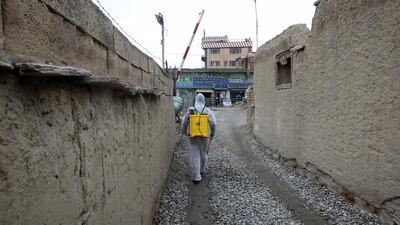
A worker disinfects area around a police station during a volunteered campaign of disinfecting areas and distributing face mask with gloves to fight against coronavirus in Kabul, Afghanistan, on March 23, 2020. According to the ministry of health of Afghanistan at least one person has died and 44 others are confirmed to be infected with coronavirus in the country. EPA -
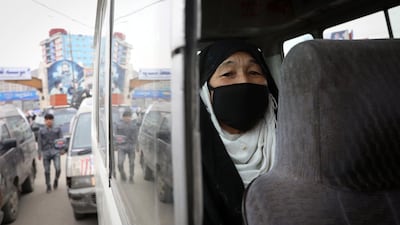
An Afghan woman wearing a face mask sitting in a bus in Kabul, Afghanistan, on March 23, 2020. EPA -
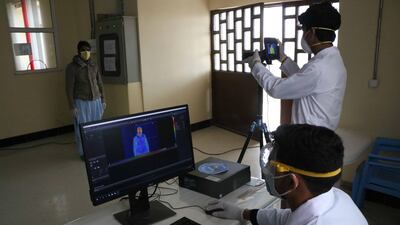
Health workers screen people crossing into Afghanistan from Iran on March 22, 2020. EPA -
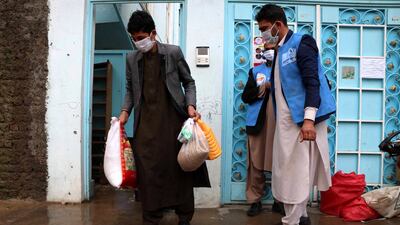
Afghan men receive free rations distributed in Herat, Afghanistan, on March 24, 2020. EPA -

Afghan women receive free rations distributed in Herat, Afghanistan, on March 24, 2020. EPA -
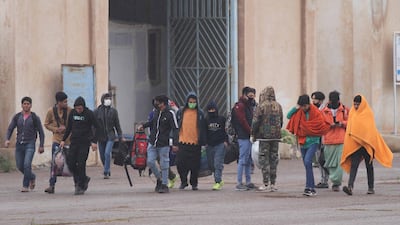
People cross into Afghanistan from Iran on March 22, 2020. EPA -
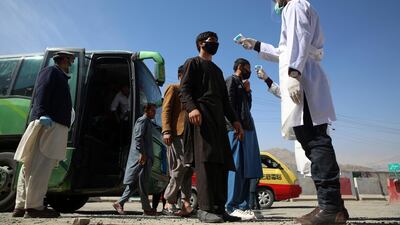
Afghan health workers measure the temperature of bus passengers in an effort to prevent the spread of the coronavirus, as they enter Kabul trough the city's western gate, on March 22, 2020. AP Photo -

A health worker wearing a protective suit sprays disinfectant outside of a building during an awareness campaign for coronavirus, in Jalalabad, Afghanistan on March 19, 2020. Reuters -
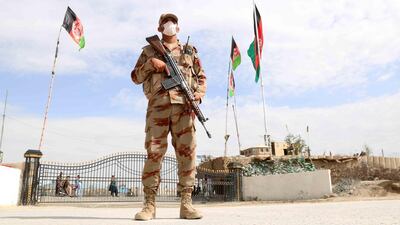
A Pakistani soldier stands guard at the Pakistan-Afghanistan border as it remains closed due to coronavirus, in Chaman, Pakistan, on March 20, 2020. EPA


The ceasefire, only the second of its kind in the 19-year-old conflict, raised hopes of an extended truce that could pave the way for long-awaited peace talks between the Taliban and Afghan government.
"Extend the ceasefire. Save lives," Shaharzad Akbar, head of Afghan Human Rights Commission, said on Twitter.
"End the violence so that we can all focus on making services available to the most vulnerable across the country, on expanding access to human rights, so that we have space to breathe."
A Taliban source said the group could extend the ceasefire by seven days if the government speeds up the release of prisoners.
Another insurgent source said militants planned to release about 200 Afghan security force personnel they hold.
The Taliban have insisted that they want some 5,000 members held by the government released as agreed in a deal with the United States.
The US-Taliban deal signed in February paved the way for all foreign forces to leave the country by next year.
It also stipulated that the Afghan government would release up to 5,000 Taliban prisoners, and the militants would free about 1,000 national security personnel.
Prior to this week's releases, Kabul had freed about 1,000 Taliban inmates, while the insurgents had let about 300 Afghan security forces captives go.
US Secretary of State Mike Pompeo, while welcoming the latest developments, insisted that Taliban prisoners should not return to the battlefield once freed.
President Ashraf Ghani has said his administration was ready to begin the peace negotiations, critical to ending the war in the impoverished country.

