A motorcade carrying former Sri Lankan president Gotabaya Rajapaksa leaves the VIP complex of Bandaranaike International Airport, Colombo, on September 2. EPA

Gotabaya Rajapaksa returns to Sri Lanka after fleeing protester anger


  • English
  • Arabic

Sri Lanka’s former president Gotabaya Rajapaksa has returned to the country seven weeks after fleeing when tens of thousands of protesters stormed his home and office in a display of anger over the country’s economic crisis.

Mr Rajapaksa flew into Colombo’s Bandaranaike International Airport at around midnight on Friday from Bangkok via Singapore. He was welcomed by lawmakers from his party before travelling in a heavily guarded motorcade to a government-owned house allocated to him as a former president, at the centre of the capital, Colombo.

On July 13, the ousted leader, his wife and two bodyguards left aboard an air force plane for the Maldives, before travelling to Singapore from where he officially resigned. He flew to Thailand two weeks later.

Mr Rajapaksa has no court case or arrest warrant pending against him. The only court case he was facing — for alleged corruption during his time as the secretary to the ministry of defence under his older brother’s presidency — was withdrawn when he was elected president in 2019 because of constitutional immunity.

Gotabaya Rajapaksa waves to supporters in Colombo after the announcement of his election victory on November 17, 2019. AP Photo

Mr Rajapaksa and his brother, the former prime minister, were forced to step down after months of protests over Sri Lanka's worst economic crisis. The situation in the bankrupt country was made worse by global factors such as the Covid-19 pandemic and Russia’s invasion of Ukraine, but many blamed the once-powerful Rajapaksa family for severely mismanaging the economy and tipping it into crisis.

The economic meltdown has caused months-long shortages of essentials such as fuel, medicine and cooking gas due to a severe shortage of foreign currency. Although cooking gas supplies were restored through World Bank support, shortages of fuel, critical medicines and some food items continue.

The island nation has suspended repayment of nearly $7 billion in foreign debt due this year. The country’s total foreign debt amounts to more than $51 billion, of which $28 billion has to be repaid by 2027.

On Tuesday, President Ranil Wickremesinghe, who took over after Mr Rajapaksa resigned, and his administration reached a preliminary agreement with the International Monetary Fund for a $2.9bn bailout package over four years to help the country recover.

Mr Rajapaksa, a former military officer, was elected on promises to uplift the economy and ensure national security after ISIS-inspired bomb attacks killed some 270 people in churches and hotels on Easter Sunday in 2019. He relinquished his American citizenship when he contested the election because laws at the time made dual citizens ineligible from holding political office.

As a top defence official he is accused of overseeing human rights violations by the military during a military campaign to defeat rebels who fought a three-decade civil war for an independent state for the country’s ethnic minority Tamils.

In April, protesters started camping outside the president’s office in the heart of Colombo and chanted “Gota, go home”, a demand for Mr Rajapaksa to quit, which quickly became the rallying cry of the movement.

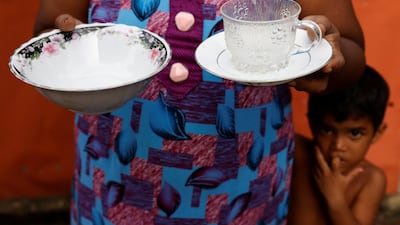
  • Nilanthi Gunasekera, 49, holds her family’s last remaining handful of dried fish. She is one of the millions of Sri Lankans battling a sharp decline in living standards. All photos: Reuters
    Nilanthi Gunasekera, 49, holds her family’s last remaining handful of dried fish. She is one of the millions of Sri Lankans battling a sharp decline in living standards. All photos: Reuters
  • Dilhani Wathsala, 14, eating lunch cooked by Gunasekera, her mother. 'Before the economic crisis, we ate well and we served meat or fish to our kids at least three or four times a week. Now fish is out of the reach of our family and so is meat,' said Gunasekera.
    Dilhani Wathsala, 14, eating lunch cooked by Gunasekera, her mother. 'Before the economic crisis, we ate well and we served meat or fish to our kids at least three or four times a week. Now fish is out of the reach of our family and so is meat,' said Gunasekera.
  • 'We had a good business at our kiosk,' said food kiosk owner Chandra Thushari Peiris, 42. 'Since we used to eat the leftovers from our kiosk we didn't have any problem with food.'
    'We had a good business at our kiosk,' said food kiosk owner Chandra Thushari Peiris, 42. 'Since we used to eat the leftovers from our kiosk we didn't have any problem with food.'
  • 'But during the pandemic, and more so the present economic crisis, we didn't get any customers. Although we want to restart we don't have any capital,' Ms Peiris said.
    'But during the pandemic, and more so the present economic crisis, we didn't get any customers. Although we want to restart we don't have any capital,' Ms Peiris said.
  • 'Our water and electricity supplies were disconnected during the Covid-19 crisis but still we had food,' said road sweeper W.M. Irangani, 58, 'but this is far, far worse,' she said.
    'Our water and electricity supplies were disconnected during the Covid-19 crisis but still we had food,' said road sweeper W.M. Irangani, 58, 'but this is far, far worse,' she said.
  • Ms Irangani added: 'I am scared to borrow as I have no way of repaying. Already I am in huge debt. I only pray that this economic crisis improves for all and we have enough food to eat.'
    Ms Irangani added: 'I am scared to borrow as I have no way of repaying. Already I am in huge debt. I only pray that this economic crisis improves for all and we have enough food to eat.'
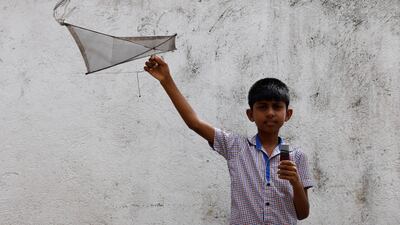
  • Oshada Fernando, 11, plays with a kite his uncle made for him. 'With the economic crisis we haven't bought any toys for our son,' said his mother, 42-year-old Anusha Priyadarshini.
    Oshada Fernando, 11, plays with a kite his uncle made for him. 'With the economic crisis we haven't bought any toys for our son,' said his mother, 42-year-old Anusha Priyadarshini.
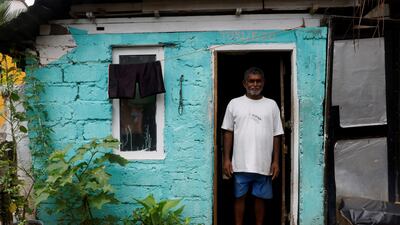
  • 'Just a couple of months back some robbers broke into our house and stole the small gas cylinder and the cooker we had,' said Vidyathipathige Nihal, 62.
    'Just a couple of months back some robbers broke into our house and stole the small gas cylinder and the cooker we had,' said Vidyathipathige Nihal, 62.
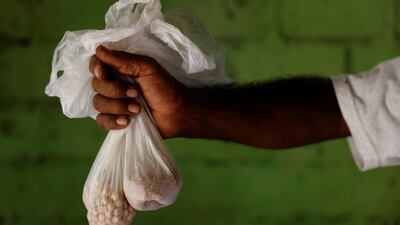
  • Mr Nihal, holding two small bags of chickpeas and rice, the only grain his family currently has, is now forced to cook with firewood.
    Mr Nihal, holding two small bags of chickpeas and rice, the only grain his family currently has, is now forced to cook with firewood.
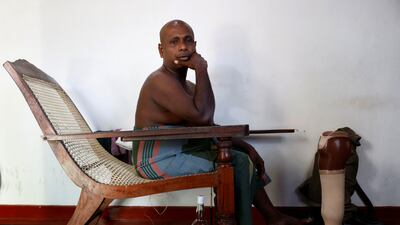
  • 'I joined the Sri Lanka Army in 1989, and in 1992 I lost my leg to a land mine,' said retired soldier Saman Priyantha, 51.
    'I joined the Sri Lanka Army in 1989, and in 1992 I lost my leg to a land mine,' said retired soldier Saman Priyantha, 51.
  • Mr Priantha said he is receiving a pension but it is not enough to feed and look after his family of five.
    Mr Priantha said he is receiving a pension but it is not enough to feed and look after his family of five.
  • "I am a heart patient and have to take medicine every day," said Manel Peiris, 68. "Hospitals used to issue medicine for three months. But ... hospitals don't have medicine and so we are asked to buy from pharmacies."
    "I am a heart patient and have to take medicine every day," said Manel Peiris, 68. "Hospitals used to issue medicine for three months. But ... hospitals don't have medicine and so we are asked to buy from pharmacies."
  • She said that sometimes her husband has to borrow or get an advance from his workplace to buy the medicine.
    She said that sometimes her husband has to borrow or get an advance from his workplace to buy the medicine.
  • 'For the last two years, I have sewn clothes for a kids' clothing shop,' said K.P.R. Priyadarshani, 54, who lives with her 16-year-old son Ramika Lakdin.
    'For the last two years, I have sewn clothes for a kids' clothing shop,' said K.P.R. Priyadarshani, 54, who lives with her 16-year-old son Ramika Lakdin.
  • Ms Priyadarshani said that with the onset of the economic crisis, people don't have money to buy food, let alone clothes.
    Ms Priyadarshani said that with the onset of the economic crisis, people don't have money to buy food, let alone clothes.
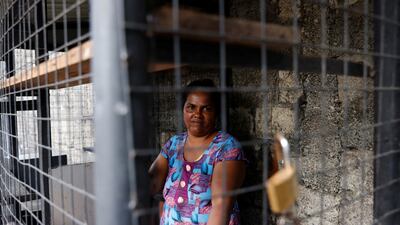
  • Sivaraja Sanjeewan, 31, takes a bath at a public well at Wanathamulla, Colombo.
    Sivaraja Sanjeewan, 31, takes a bath at a public well at Wanathamulla, Colombo.
  • Auto rickshaw driver Mr Sanjeewan said: 'We have a tap water connection but it's very difficult to pay water and electricity bills in addition to the rising costs of food. So now I bathe in a public well more often to save money."
    Auto rickshaw driver Mr Sanjeewan said: 'We have a tap water connection but it's very difficult to pay water and electricity bills in addition to the rising costs of food. So now I bathe in a public well more often to save money."
  • As desperation grows, the government is seeking a multi-billion-dollar bailout in talks with the IMF, but major financial assistance is still months away, so few Sri Lankans are expecting to see light at the end of the tunnel soon.
    As desperation grows, the government is seeking a multi-billion-dollar bailout in talks with the IMF, but major financial assistance is still months away, so few Sri Lankans are expecting to see light at the end of the tunnel soon.

The demonstrations dismantled the Rajapaksa family’s grip on politics. Before Mr Rajapaksa resigned, his older brother stepped down as prime minister and three more close family members quit their Cabinet positions.

The country’s new president, Mr Wickremesinghe, has cracked down on protests since taking office. His first action as leader included dismantling the protest tents in the middle of the night as police forcibly removed demonstrators from the site and attacked them.

There is genuine fear among people who want to protest now, said Bhavani Fonseksa, with the independent think tank Centre for Policy Alternatives.

“Whether people will take to the streets to demonstrate again is still to be seen, especially since there’s been so much repression since Ranil Wickremesinghe came to power. Several protesters have been arrested so there is genuine fear,” she said.

There is no way Gotabaya will be forgiven for his transgressions but I think now there is more bitterness than public rage that awaits him
Dayan Jayatilleka,
Sri Lankan former diplomat and political analyst

Dayan Jayatilleka, a former diplomat and political analyst, said the ruling SLPP party would welcome Mr Rajapaksa back, but did not think his return would spark people to flood the streets again. “They will be sour — it is still far too early for him to return,” he said.

“There is no way Gotabaya will be forgiven for his transgressions but I think now there is more bitterness than public rage that awaits him,” Mr Jayatilleka said.

For Nazly Hameem, an organiser of the protest movement, the former president’s return isn’t an issue “as long as he is held accountable”.

“He is a Sri Lankan citizen so no one can prevent him from coming back. But as someone who wants justice against the corrupt system, I would like to see action taken — there should be justice, they should file cases against him and hold him accountable for what he did to the country.”

“Our slogan was ‘Gota, go home’ — we didn’t expect him to flee, we wanted him to resign. As long as he doesn’t involve himself in active politics, it won’t be a problem.”

With reporting from Associated Press.

The alternatives

• Founded in 2014, Telr is a payment aggregator and gateway with an office in Silicon Oasis. It’s e-commerce entry plan costs Dh349 monthly (plus VAT). QR codes direct customers to an online payment page and merchants can generate payments through messaging apps.

• Business Bay’s Pallapay claims 40,000-plus active merchants who can invoice customers and receive payment by card. Fees range from 1.99 per cent plus Dh1 per transaction depending on payment method and location, such as online or via UAE mobile.

• Tap started in May 2013 in Kuwait, allowing Middle East businesses to bill, accept, receive and make payments online “easier, faster and smoother” via goSell and goCollect. It supports more than 10,000 merchants. Monthly fees range from US$65-100, plus card charges of 2.75-3.75 per cent and Dh1.2 per sale.

2checkout’s “all-in-one payment gateway and merchant account” accepts payments in 200-plus markets for 2.4-3.9 per cent, plus a Dh1.2-Dh1.8 currency conversion charge. The US provider processes online shop and mobile transactions and has 17,000-plus active digital commerce users.

• PayPal is probably the best-known online goods payment method - usually used for eBay purchases -  but can be used to receive funds, providing everyone’s signed up. Costs from 2.9 per cent plus Dh1.2 per transaction.

'The worst thing you can eat'

Trans fat is typically found in fried and baked goods, but you may be consuming more than you think.

Powdered coffee creamer, microwave popcorn and virtually anything processed with a crust is likely to contain it, as this guide from Mayo Clinic outlines: 

Baked goods - Most cakes, cookies, pie crusts and crackers contain shortening, which is usually made from partially hydrogenated vegetable oil. Ready-made frosting is another source of trans fat.

Snacks - Potato, corn and tortilla chips often contain trans fat. And while popcorn can be a healthy snack, many types of packaged or microwave popcorn use trans fat to help cook or flavour the popcorn.

Fried food - Foods that require deep frying — french fries, doughnuts and fried chicken — can contain trans fat from the oil used in the cooking process.

Refrigerator dough - Products such as canned biscuits and cinnamon rolls often contain trans fat, as do frozen pizza crusts.

Creamer and margarine - Nondairy coffee creamer and stick margarines also may contain partially hydrogenated vegetable oils.

FIGHT CARD

Welterweight Mostafa Radi (PAL) v Tohir Zhuraev (TJK)

Catchweight 75kg Leandro Martins (BRA) v Anas Siraj Mounir (MAR)

Flyweight Corinne Laframboise (CAN) v Manon Fiorot (FRA)

Featherweight Ahmed Al Darmaki (UAE) v Bogdan Kirilenko (UZB)

Lightweight Izzedine Al Derabani (JOR) v Atabek Abdimitalipov (KYG)

Featherweight Yousef Al Housani (UAE) v Mohamed Arsharq Ali (SLA)

Catchweight 69kg Jung Han-gook (KOR) v Elias Boudegzdame (ALG)

Catchweight 71kg Usman Nurmagomedov (RUS) v Jerry Kvarnstrom (FIN)

Featherweight title Lee Do-gyeom (KOR) v Alexandru Chitoran (ROU)

Lightweight title Bruno Machado (BRA) v Mike Santiago (USA)

SHAITTAN
%3Cp%3E%3Cstrong%3EDirector%3A%20%3C%2Fstrong%3EVikas%20Bahl%3Cbr%3E%3Cstrong%3EStarring%3A%20%3C%2Fstrong%3EAjay%20Devgn%2C%20R.%20Madhavan%2C%20Jyothika%2C%20Janaki%20Bodiwala%3Cbr%3E%3Cstrong%3ERating%3A%20%3C%2Fstrong%3E3%2F5%3C%2Fp%3E%0A
Asian Cup 2019

Quarter-final

UAE v Australia, Friday, 8pm, Hazza bin Zayed Stadium, Al Ain

MATCH INFO

Uefa Champions League last 16, second leg
Liverpool (0) v Atletico Madrid (1)
Venue: Anfield
Kick-off: Thursday, March 12, midnight
Live: On beIN Sports HD

How to tell if your child is being bullied at school

Sudden change in behaviour or displays higher levels of stress or anxiety

Shows signs of depression or isolation

Ability to sleep well diminishes

Academic performance begins to deteriorate

Changes in eating habits

Struggles to concentrate

Refuses to go to school

Behaviour changes and is aggressive towards siblings

Begins to use language they do not normally use

How to come clean about financial infidelity
  • Be honest and transparent: It is always better to own up than be found out. Tell your partner everything they want to know. Show remorse. Inform them of the extent of the situation so they know what they are dealing with.
  • Work on yourself: Be honest with yourself and your partner and figure out why you did it. Don’t be ashamed to ask for professional help. 
  • Give it time: Like any breach of trust, it requires time to rebuild. So be consistent, communicate often and be patient with your partner and yourself.
  • Discuss your financial situation regularly: Ensure your spouse is involved in financial matters and decisions. Your ability to consistently follow through with what you say you are going to do when it comes to money can make all the difference in your partner’s willingness to trust you again.
  • Work on a plan to resolve the problem together: If there is a lot of debt, for example, create a budget and financial plan together and ensure your partner is fully informed, involved and supported. 

Carol Glynn, founder of Conscious Finance Coaching

The biog

Hobby: Playing piano and drawing patterns

Best book: Awaken the Giant Within by Tony Robbins

Food of choice: Sushi  

Favourite colour: Orange

How does ToTok work?

The calling app is available to download on Google Play and Apple App Store

To successfully install ToTok, users are asked to enter their phone number and then create a nickname.

The app then gives users the option add their existing phone contacts, allowing them to immediately contact people also using the application by video or voice call or via message.

Users can also invite other contacts to download ToTok to allow them to make contact through the app.


UPI facts

More than 2.2 million Indian tourists arrived in UAE in 2023
More than 3.5 million Indians reside in UAE
Indian tourists can make purchases in UAE using rupee accounts in India through QR-code-based UPI real-time payment systems
Indian residents in UAE can use their non-resident NRO and NRE accounts held in Indian banks linked to a UAE mobile number for UPI transactions

The%20specs
%3Cp%3E%3Cstrong%3EEngine%3A%20%3C%2Fstrong%3E3.5-litre%20twin-turbo%20V6%20%0D%3Cbr%3E%3Cstrong%3EPower%3A%20%3C%2Fstrong%3E456hp%20at%205%2C000rpm%0D%3Cbr%3E%3Cstrong%3ETorque%3A%20%3C%2Fstrong%3E691Nm%20at%203%2C500rpm%0D%3Cbr%3E%3Cstrong%3ETransmission%3A%20%3C%2Fstrong%3E10-speed%20auto%20%0D%3Cbr%3E%3Cstrong%3EFuel%20consumption%3A%20%3C%2Fstrong%3E14.6L%2F100km%0D%3Cbr%3E%3Cstrong%3EPrice%3A%20%3C%2Fstrong%3Efrom%20Dh349%2C545%0D%3Cbr%3E%3Cstrong%3EOn%20sale%3A%20%3C%2Fstrong%3Enow%3C%2Fp%3E%0A

Mercer, the investment consulting arm of US services company Marsh & McLennan, expects its wealth division to at least double its assets under management (AUM) in the Middle East as wealth in the region continues to grow despite economic headwinds, a company official said.

Mercer Wealth, which globally has $160 billion in AUM, plans to boost its AUM in the region to $2-$3bn in the next 2-3 years from the present $1bn, said Yasir AbuShaban, a Dubai-based principal with Mercer Wealth.

Within the next two to three years, we are looking at reaching $2 to $3 billion as a conservative estimate and we do see an opportunity to do so,” said Mr AbuShaban.

Mercer does not directly make investments, but allocates clients’ money they have discretion to, to professional asset managers. They also provide advice to clients.

“We have buying power. We can negotiate on their (client’s) behalf with asset managers to provide them lower fees than they otherwise would have to get on their own,” he added.

Mercer Wealth’s clients include sovereign wealth funds, family offices, and insurance companies among others.

From its office in Dubai, Mercer also looks after Africa, India and Turkey, where they also see opportunity for growth.

Wealth creation in Middle East and Africa (MEA) grew 8.5 per cent to $8.1 trillion last year from $7.5tn in 2015, higher than last year’s global average of 6 per cent and the second-highest growth in a region after Asia-Pacific which grew 9.9 per cent, according to consultancy Boston Consulting Group (BCG). In the region, where wealth grew just 1.9 per cent in 2015 compared with 2014, a pickup in oil prices has helped in wealth generation.

BCG is forecasting MEA wealth will rise to $12tn by 2021, growing at an annual average of 8 per cent.

Drivers of wealth generation in the region will be split evenly between new wealth creation and growth of performance of existing assets, according to BCG.

Another general trend in the region is clients’ looking for a comprehensive approach to investing, according to Mr AbuShaban.

“Institutional investors or some of the families are seeing a slowdown in the available capital they have to invest and in that sense they are looking at optimizing the way they manage their portfolios and making sure they are not investing haphazardly and different parts of their investment are working together,” said Mr AbuShaban.

Some clients also have a higher appetite for risk, given the low interest-rate environment that does not provide enough yield for some institutional investors. These clients are keen to invest in illiquid assets, such as private equity and infrastructure.

“What we have seen is a desire for higher returns in what has been a low-return environment specifically in various fixed income or bonds,” he said.

“In this environment, we have seen a de facto increase in the risk that clients are taking in things like illiquid investments, private equity investments, infrastructure and private debt, those kind of investments were higher illiquidity results in incrementally higher returns.”

The Abu Dhabi Investment Authority, one of the largest sovereign wealth funds, said in its 2016 report that has gradually increased its exposure in direct private equity and private credit transactions, mainly in Asian markets and especially in China and India. The authority’s private equity department focused on structured equities owing to “their defensive characteristics.”

In-demand jobs and monthly salaries
  • Technology expert in robotics and automation: Dh20,000 to Dh40,000 
  • Energy engineer: Dh25,000 to Dh30,000 
  • Production engineer: Dh30,000 to Dh40,000 
  • Data-driven supply chain management professional: Dh30,000 to Dh50,000 
  • HR leader: Dh40,000 to Dh60,000 
  • Engineering leader: Dh30,000 to Dh55,000 
  • Project manager: Dh55,000 to Dh65,000 
  • Senior reservoir engineer: Dh40,000 to Dh55,000 
  • Senior drilling engineer: Dh38,000 to Dh46,000 
  • Senior process engineer: Dh28,000 to Dh38,000 
  • Senior maintenance engineer: Dh22,000 to Dh34,000 
  • Field engineer: Dh6,500 to Dh7,500
  • Field supervisor: Dh9,000 to Dh12,000
  • Field operator: Dh5,000 to Dh7,000
How to protect yourself when air quality drops

Install an air filter in your home.

Close your windows and turn on the AC.

Shower or bath after being outside.

Wear a face mask.

Stay indoors when conditions are particularly poor.

If driving, turn your engine off when stationary.

UAE currency: the story behind the money in your pockets
The Matrix Resurrections

Director: Lana Wachowski

Stars:  Keanu Reeves, Carrie-Anne Moss, Jessica Henwick 

Rating:****

ALL THE RESULTS

Bantamweight

Siyovush Gulmomdov (TJK) bt Rey Nacionales (PHI) by decision.

Lightweight

Alexandru Chitoran (ROU) bt Hussein Fakhir Abed (SYR) by submission.

Catch 74kg

Omar Hussein (JOR) bt Tohir Zhuraev (TJK) by decision.

Strawweight (Female)

Seo Ye-dam (KOR) bt Weronika Zygmunt (POL) by decision.

Featherweight

Kaan Ofli (TUR) bt Walid Laidi (ALG) by TKO.

Lightweight

Abdulla Al Bousheiri (KUW) bt Leandro Martins (BRA) by TKO.

Welterweight

Ahmad Labban (LEB) bt Sofiane Benchohra (ALG) by TKO.

Bantamweight

Jaures Dea (CAM) v Nawras Abzakh (JOR) no contest.

Lightweight

Mohammed Yahya (UAE) bt Glen Ranillo (PHI) by TKO round 1.

Lightweight

Alan Omer (GER) bt Aidan Aguilera (AUS) by TKO round 1.

Welterweight

Mounir Lazzez (TUN) bt Sasha Palatkinov (HKG) by TKO round 1.

Featherweight title bout

Romando Dy (PHI) v Lee Do-gyeom (KOR) by KO round 1.

MATCH INFO

Manchester City 1 Chelsea 0
De Bruyne (70')

Man of the Match: Kevin de Bruyne (Manchester City)

Updated: September 03, 2022, 6:54 AM