


A senior Pakistani official has rejected claims that his country is partly responsible for the collapse of the Afghan government, and urged Western nations not to abandon Afghanistan after their troops leave Kabul this month.
National Security Adviser Moeed Yusuf said Islamabad’s support for the US-led war on terror had led to severe economic and humanitarian consequences as militant groups have targeted Pakistan.
Pakistan, and in particular its powerful Inter-Services Intelligence agency, has often faced accusations that it continues to support the Taliban, which has captured almost all of Afghanistan after a shockingly rapid advance across the country.
Senior Taliban leaders have previously found refuge in Pakistan.
On allegations that Taliban fighters were crossing easily from Pakistan into neighbouring Afghanistan, Mr Yusuf said it was impossible to keep track of every single Afghan refugee, with hundreds of thousands of them in Pakistan.
He said the Afghan authorities in the last two decades had shown little interest in securing the porous border between the two countries, despite Pakistan's warnings.
Mr Yusuf told a webinar organised by the London-based Policy Exchange: “What were we saying? Only a political settlement is possible, do not try and manufacture a military solution in a context of Afghanistan, nobody has been able to do it, it will not work.
“The international forces wanted to go for total victory. We kept saying the government, its legitimacy is challenged, Afghans don't take it as legitimate. They live in a bubble … they are corrupt. We were told no, this is what we have invested in, it is all good.”
-
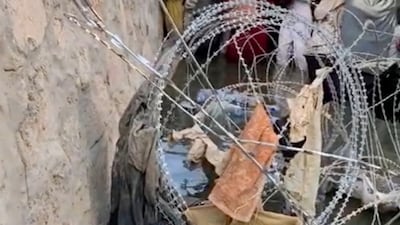
Hundreds of people arrive at Afghanistan's Hamid Karzai International Airport hoping for a flight out of the country. Reuters -
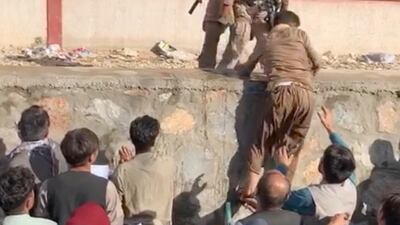
People desperate to flee Taliban-ruled Afghanistan try and climb over the wall to enter the airport. Reuters -
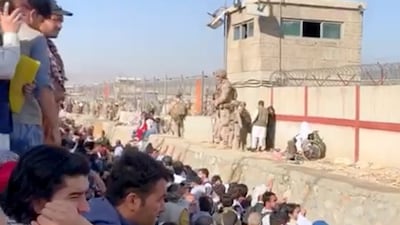
People wait to board a plane out of Kabul. Reuters -

A girl waits with her parents for Afghan relatives at a processing centre for refugees at the Dulles Expo Centre in Virginia, the US. Reuters -
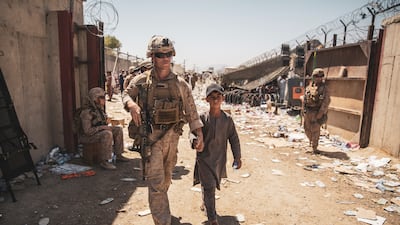
A US Marine escorts a child back to his family at Hamid Karzai International Airport, Kabul. Reuters -
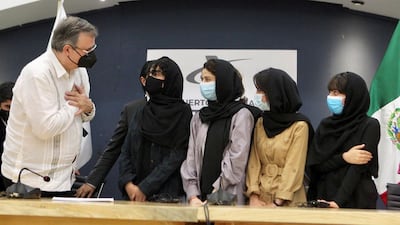
Mexico's Foreign Minister Marcelo Ebrard welcomes members of Afghanistan's robotics team after they arrive in Mexico to apply for humanitarian status. Reuters -
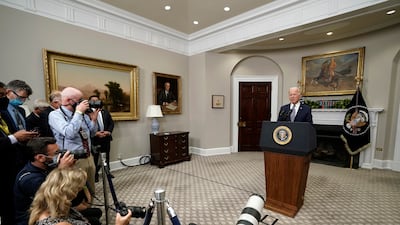
US President Joe Biden discusses Afghanistan at the White House in Washington. EPA -
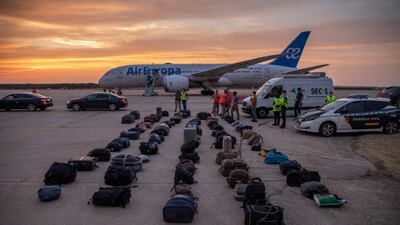
Personal items belonging to people who fled Kabul lie on the ground at Torrejon Military Air Base in Madrid, Spain. Getty Images -

Members of Task Force 1-194 fly to Hamid Karzai International Airport on a C17 Globemaster. Reuters -
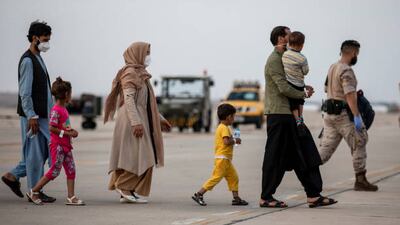
Afghan families disembark from a plane at Torrejon Military Air Base in Madrid, Spain. Getty Images -
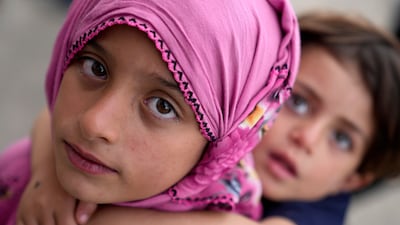
Afghan children arrive at the Ramstein US Air Base, Germany. AP Photo -
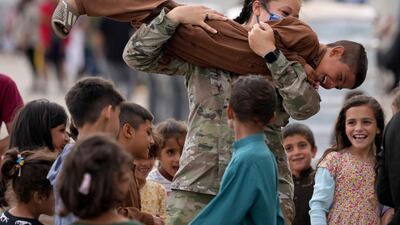
A US soldier plays with Afghan children at the Ramstein US Air Base, Germany. AP Photo -
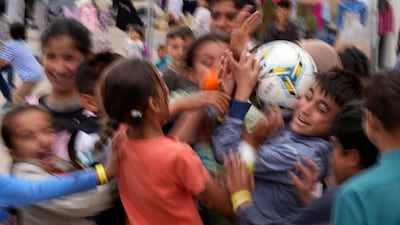
Young children play with a ball at the Ramstein US Air Base, Germany. AP Photo -
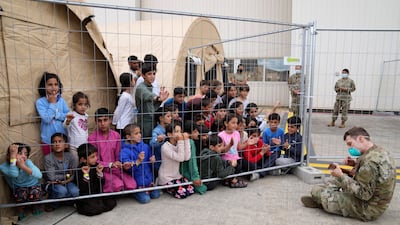
A US soldier entertains Afghan children at the Ramstein US Air Base, Germany. AP Photo -
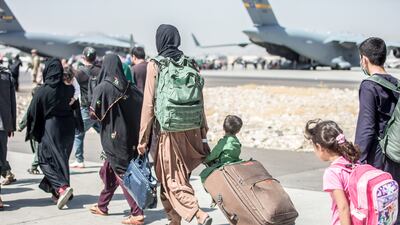
People prepare to leave Kabul. Reuters -
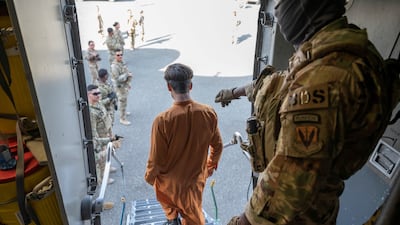
An Afghan evacuee arrives on a C-17 Globemaster III aircraft at Ali Al Salem Air Base, Kuwait. Reuters


He said there was a misconception that Pakistan was somehow involved in the peace deal between the US and the Taliban, and American troop withdrawals.
Mr Yusuf cited a meeting he was present at in Uzbekistan last month, where Afghan President Ashraf Ghani told Pakistan's Prime Minister Imran Khan that Afghanistan’s forces would fight to the last man.
“What is the result? An embarrassment for everybody, a capitulation of the Afghan army, President Ghani fleeing away. Why did no Afghan stand up?
“This wasn't because of Pakistan. Pakistan did not tell the Afghan army not to fight, Pakistan did not tell President Ghani to leave.”
Mr Yusuf said that collective lessons must be learnt and a humanitarian crisis prevented. He urged the international community not to turn its back on Afghanistan, as it had done in the 1990s, and said Pakistan’s foreign minister was touring Afghanistan's neighbours to find a consensus.
“We hope that the Western world will get included in that consensus on how to keep the government inclusive, how to ensure moderation and human rights, and then how to assist to ensure that a country runs and the average Afghan does not suffer”, he said.

