

Follow the latest updates on Afghanistan here
Kabul has yielded to the Taliban, closing the circle from its fall from power nearly two decades ago. The flight from the Afghan capital has begun, with thousands of Afghans desperate to follow their president, Ashraf Ghani, out of the country. US President Biden, six weeks after ordering US troops out of Afghanistan after a 20-year presence, has ordered 5,000 to return to evacuate thousands of American civilians.
Over the weekend every remaining major Afghan city fell with stunning rapidity. The Taliban’s armed forces then halted on Kabul’s outskirts, apparently waiting for a peaceful transition of power to be finalised.
For all the Taliban’s assurances that there will be no retribution, the mood in Kabul will be utter dread and trepidation.
-

Kabul residents riding a bicycle celebrate as Northern Alliance fighters enter the Afghan capital in November 2001 after the collapse of Taliban rule. -

Fighters from the Afghan opposition Northern Alliance celebrate the withdrawal of the Taliban in November 2001. -

Northern Alliance fighters sing patriotic songs as they enter the capital Kabul in November 2001. -
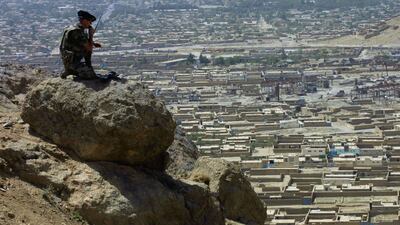
A French soldier, part of the International Security and Assistance Force, stands on a boulder overlooking Kabul during a patrol in August 2002. -
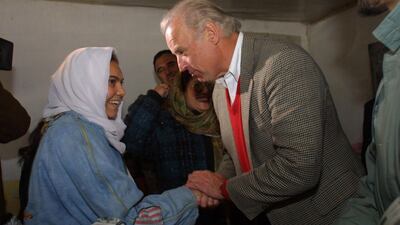
Joe Biden, a US senator at the time, meets a female student at Ariana High school in January 2002, during a visit to Kabul. -
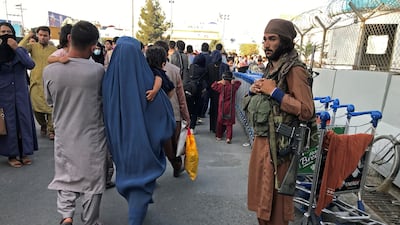
A member of the Taliban stands guard as people walk to the entrance gate of Hamid Karzai International Airport in Kabul on Sunday. -
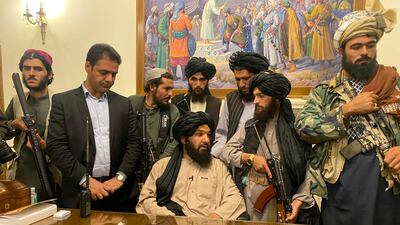
Taliban fighters take control of the Afghan presidential palace in Kabul after President Ashraf Ghani fled the country on Sunday. -
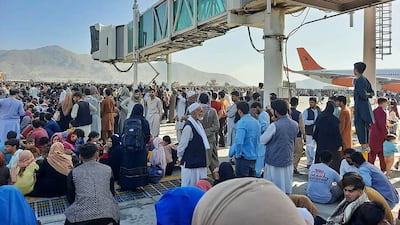
A crowd of Afghans on the tarmac of Kabul's airport as they try to flee the country in August. -
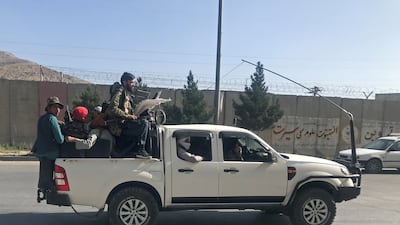
Taliban fighters ride on a truck through Kabul on Sunday. -
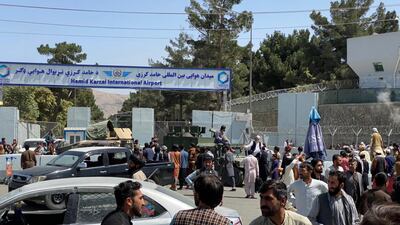
Members of the Taliban stand guard outside the Hamid Karzai International Airport as people try to flee the country.


How different from late 2001 and early 2002, in the weeks after the Taliban had been removed from power by a US-led military coalition in retaliation for providing a safe haven to Osama bin Laden, which he used to plan the September 11 attacks.
Five years of brutal fundamentalist rule that banned girls’ education and female employment and flogged men whose beards were too short, ended overnight. The Taliban ceded the capital without a fight, much as they will recapture it now.
The mood then was elation and relief at the sudden absence of fear of retribution. Women were able to walk in the streets without a burqa or the presence of a male relative. Children were able to fly their kites and photo booths and music shops could ply their trade, as the Taliban’s bans on all forms of artistic expression were swept away.
Day by day, things happened that had been unthinkable in the darkest days. Staff at the InterContinental Hotel could not conceal their relief at receiving international guests again. The Taliban had ordered the destruction of most stock in its precious bookshop and the swimming pool to be emptied of water. A member of the reception staff told me that “at last we can breathe again”.
Afghan exiles began returning to the country, giving up comfortable lives in the US or UK to join the rebuilding effort. Many had fled the Soviet occupation in the 1980s or the destructive civil war that followed in the 1990s. Two canny and charismatic US-based Afghan brothers established a hotel and restaurant in their old family home in the heart of the city that quickly became the place for reporters and aid workers to hang out. It served great mantu, dumplings with yoghurt sauce.
-
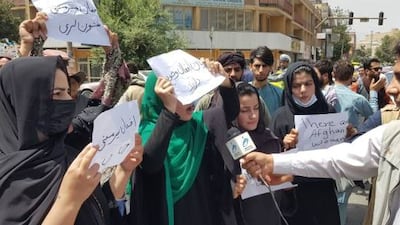
Afghan women, holding placards, gather to demand the protection of women's rights in front of the Presidential Palace in Kabul, Afghanistan. -
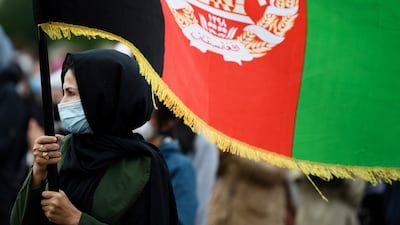
A person holds the flag of Afghanistan during a protest against support for the Taliban, in Berlin, Germany. -
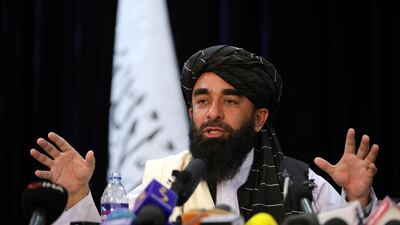
Taliban spokesman Zabihullah Mujahid speaks at his first news conference in Kabul. -
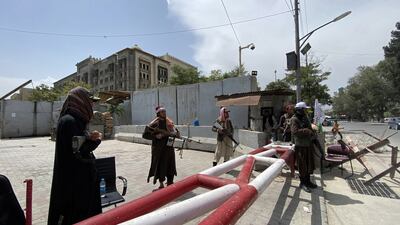
Taliban fighters stand guard outside the Green Zone where most of the embassies are situated. -
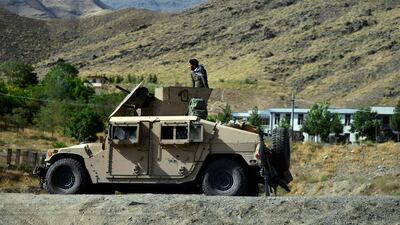
Afghan security forces patrol on humvee vehicle along a road in Bazarak town of Panjshir province. -
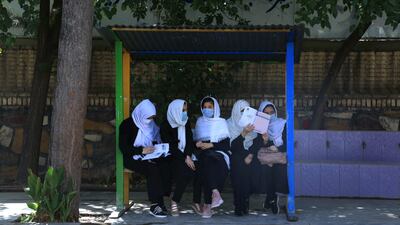
Schoolgirls sit in a schoolyard in Herat. -
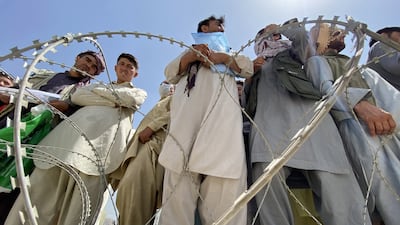
Afghans wait outside the Hamid Karzai International Airport to flee the country. -
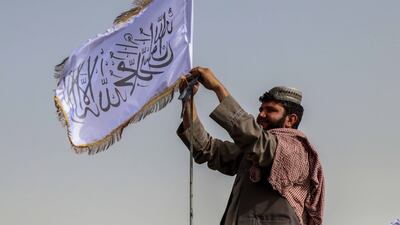
A Taliban fighter raises their flag on a vehicle as they patrol in Kandahar. -
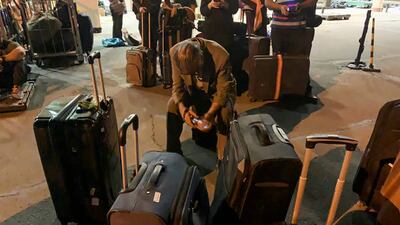
French citizens and their Afghan colleagues wait to board a French military transport plane at the airport in Kabul after the Taliban's stunning military takeover of the Afghanistan. -
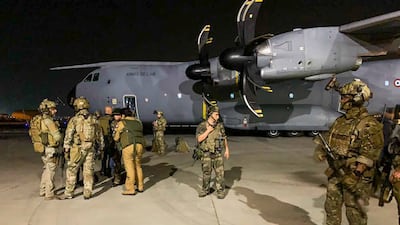
French soldiers at the airport in Kabul as they arrive to help French citizens and their Afghan colleagues to flee after the Taliban takeover. -

A US Air Force C-17 Globemaster III transport aircraft filled with about 640 Afghans fleeing to Qatar from Kabul, Afghanistan. -
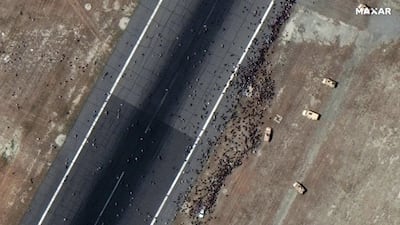
Crowds on the tarmac of Kabul International Airport, Afghanistan. Several people were reportedly killed at the airport on August 16 as Afghans tried to hang on to a moving US military plane leaving the airport. -
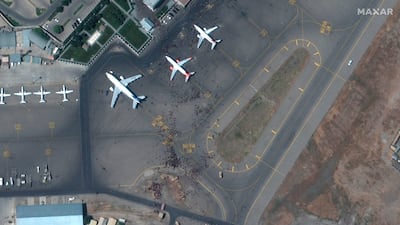
A satellite photo shows swarms of people on the tarmac at Kabul International Airport, also known as Hamid Karzai International Airport. Afghans rushed on to the tarmac of the capital's airport on Monday as thousands tried to flee the country after the Taliban seized power with stunning speed. -
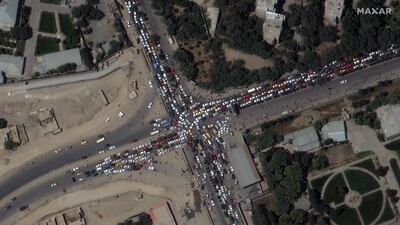
A traffic jam outside Kabul International Airport, Afghanistan after Taliban co-founder Abdul Ghani Baradar declared victory and an end to the decades-long war in the country. President Ashraf Ghani fled and conceded that the insurgents had won the 20-year war. -
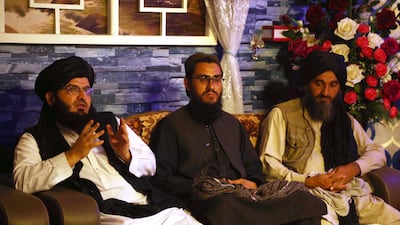
Qari Muhammad Hanif, centre, director of the Taliban's cultural and Information department, talks to journalists in Jalalabad, Afghanistan. -
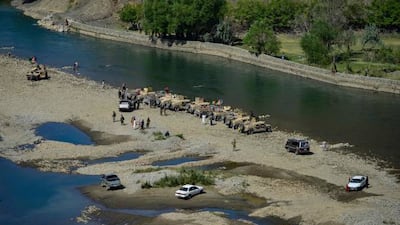
Humvee vehicles from the Afghan Security Forces in Panjshir province, Afghanistan. -
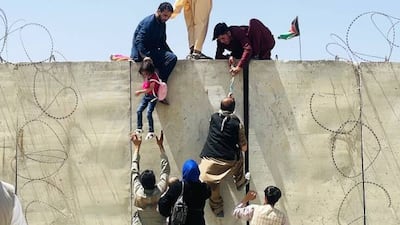
Thousands of Afghans rushed to Hamid Karzai International Airport in an attempt to flee the Afghan capital, Kabul. -
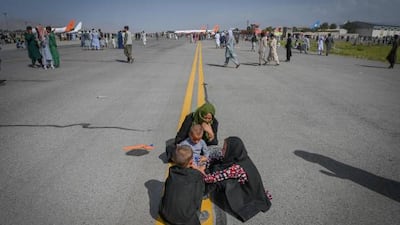
Afghans on the tarmac at Kabul airport in Kabul after a swift end to the 20-year war in the country. Thousands of people mobbed the city's airport trying to flee the group's rule. -
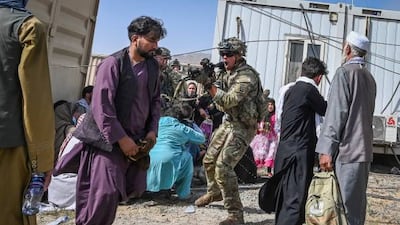
A US soldier keeps close watch on Afghan passengers at Hamid Karzai International Airport, Kabul. Thousands of people packed the airport trying to flee Taliban rule. -
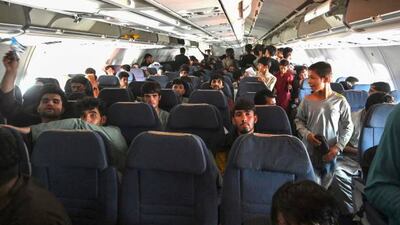
Passengers sit inside a plane as they wait to leave the runway of Kabul after the stunningly swift end of Afghanistan’s 20-year war. -
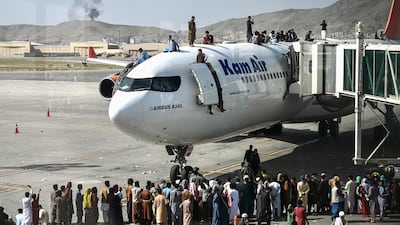
People climb on top of a plane in Kabul. -
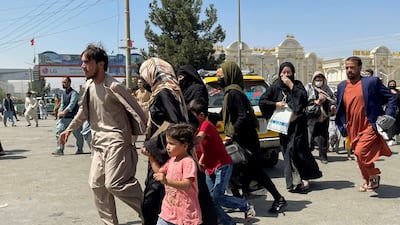
People try to enter Hamid Karzai International Airport in Kabul, Afghanistan. -
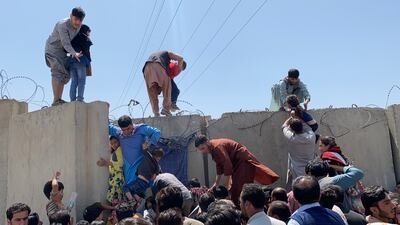
People cross the boundary wall of Hamid Karzai International Airport to flee the country after rumours that foreign countries were removing people even without visas. -
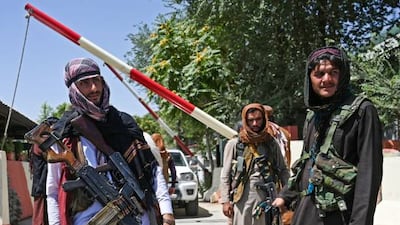
Taliban fighters stand guard along a roadside near Zanbaq Square in Kabul. -
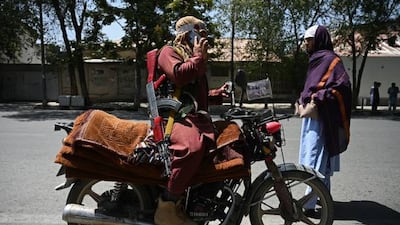
A Taliban fighter sits on his motorcycle by a road in Shahr-e Naw, Kabul. -
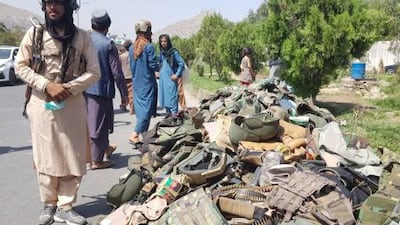
Talibs patrol the streets of Kabul as the militants take control of Afghanistan. after President Ashraf Ghani fled the country. -
Afghans gather on the asphalt at Hamid Karzai International Airport, Kabul. -
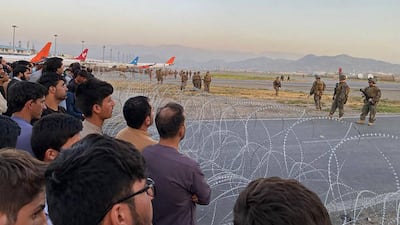
Afghans gather by the runway in Kabul as US soldiers stand guard. -
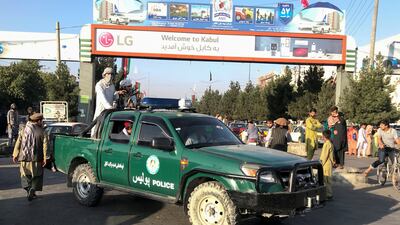
Taliban fighters on a police vehicle outside Hamid Karzai International Airport in Kabul, Afghanistan. -

Baradar Akhund, a senior official of the Taliban, with a group of men, makes a video statement. -

Taliban fighters take control of the presidential palace in Kabul, after Afghanistan's President Ashraf Ghani fled the country. -
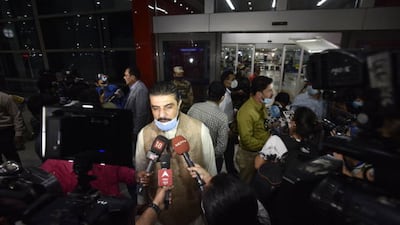
Passengers from Kabul arrive at Indira Gandhi International Airport in New Delhi, India. -
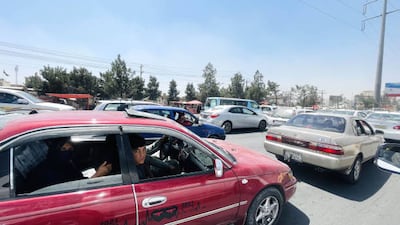
Families on a motorway trying to flee Kabul. -
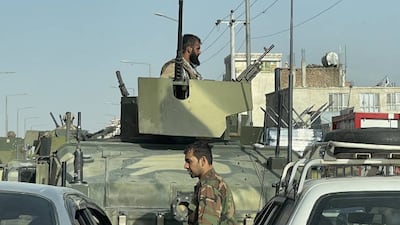
Afghan security forces on patrol in Kabul. -
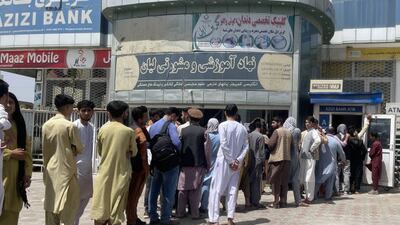
People line up outside Azizi Bank to withdraw cash during a run on deposits. -
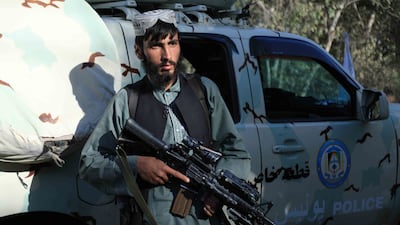
Taliban fighters use a captured Afghan security forces vehicle at a checkpoint in Herat. -
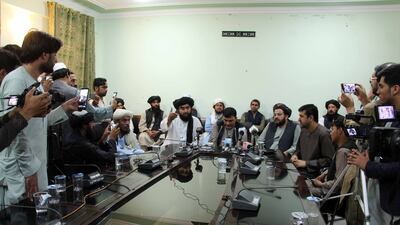
Ahmadullah Muttaqi, centre left, the Taliban's director for information and culture, addresses journalists. -
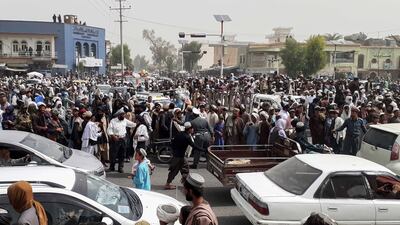
Police officers conduct their duties after the Taliban took control of Kandahar. -
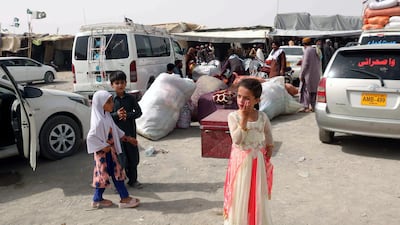
People prepare to cross into Afghanistan, at Pakistan's Chaman border. Pakistani authorities reopened the border with Afghanistan on August 13 after it had been closed for several days. -
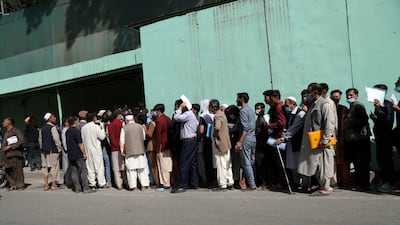
Afghans wait in long lines for hours to get visas at the Iranian embassy, in Kabul. -

Taliban fighters patrol after taking control of Jalalabad. -
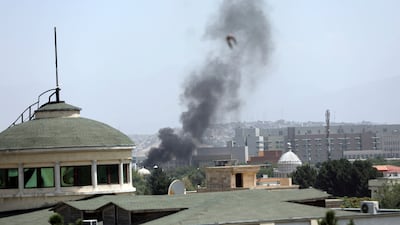
Smoke rises near the US embassy in Kabul. Taliban fighters reached the outskirts of the Afghan capital on Sunday. -
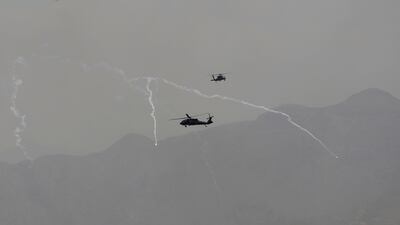
Anti-missile decoy flares are used by US Black Hawk military helicopters, while a surveillance blimp flies over Kabul. -
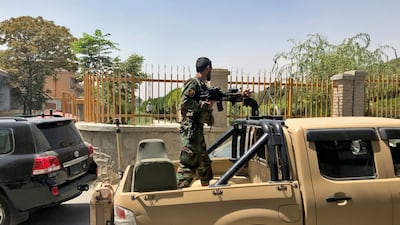
An Afghan soldier keeps watch on a street in Kabul. -
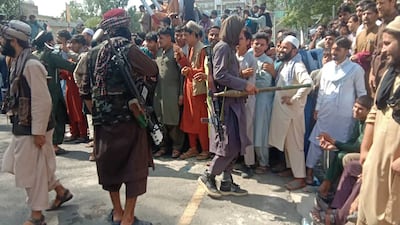
Taliban fighters and local people gather in Jalalabad province, east of Kabul. -
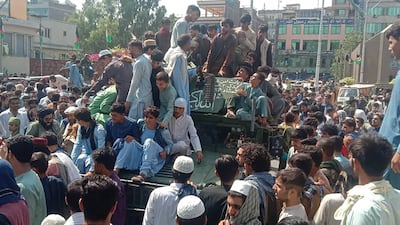
Taliban fighters sit on an Afghan Army Humvee in Jalalabad province. -
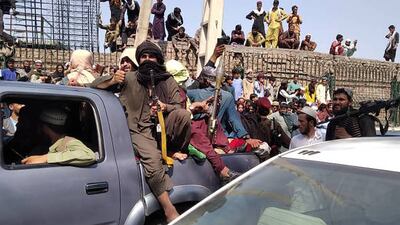
Taliban fighters travel along a street in Jalalabad province. -
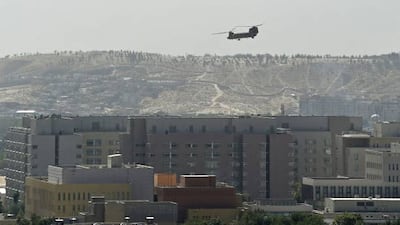
A US Chinook military helicopter flies over the US embassy in Kabul. -
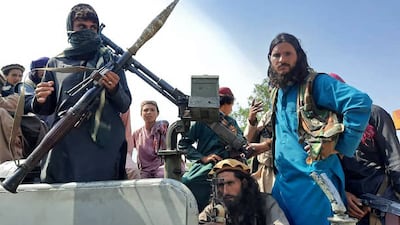
Heavily armed Taliban fighters gather in eastern Laghman province. -
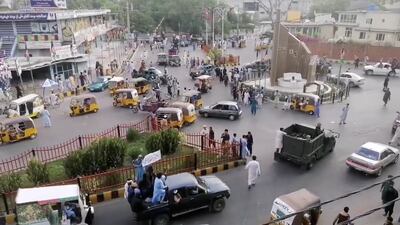
Militants wave a Taliban flag from the back of a pickup truck in Jalalabad. -
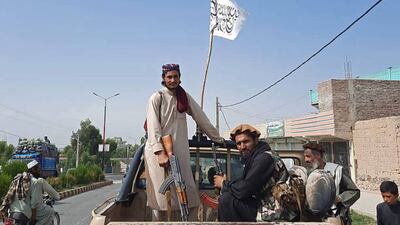
Taliban fighters drive through the streets of Laghman province. -
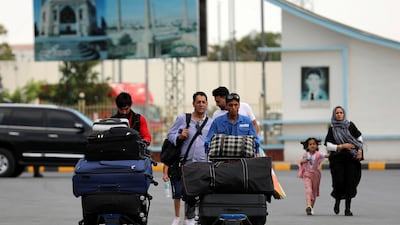
People head to the departures area of Hamid Karzai International Airport in Kabul as the Taliban approach the city. -
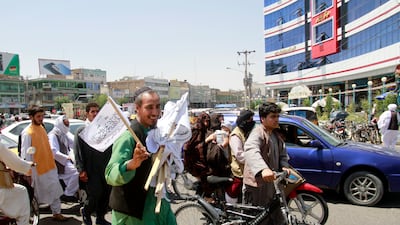
A man sells Taliban flags in western province Herat. -
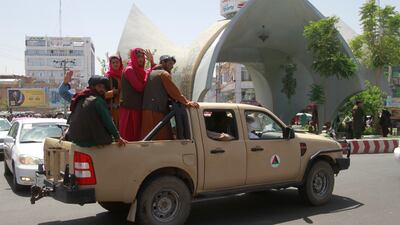
Taliban fighters travel in an Afghan Army vehicle in Herat. -
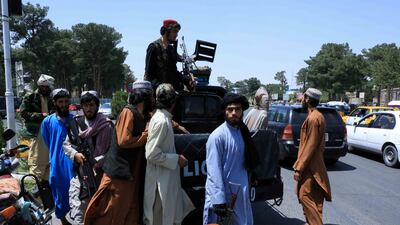
Taliban forces patrol a street in Herat. -

Taliban militants raise their flag as they gather a day after taking control of key southern city Kandahar. -

Members of the Afghan security forces stand guard along the roadside in Panjshir province. -

Afghanistan's President Ashraf Ghani and acting defence minister Bismillah Khan Mohammadi visit a military site in Kabul. -
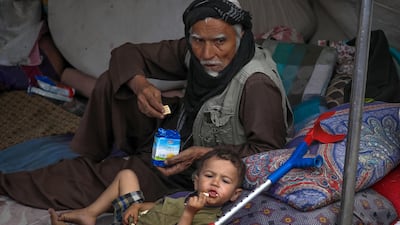
Internally displaced families from northern provinces take shelter in a public park in Kabul. -
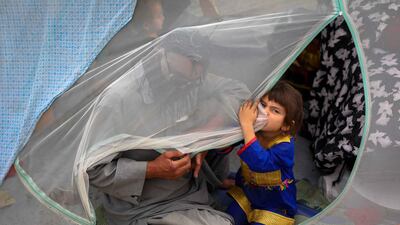
Families that fled their homes because of fighting between the Taliban and Afghan security forces take shelter in a public park in Kabul. -

Many of those seeking safety in Kabul have been sleeping on the streets. -
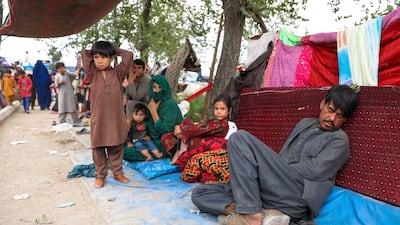
Thousands of those internally displaced have been arriving in Kabul. -
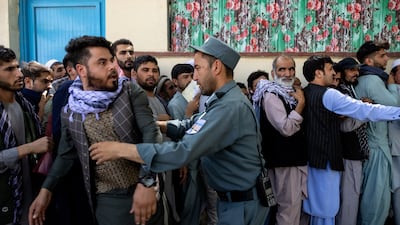
Afghans have been waiting for hours in long queues outside the passport office in Kabul, with many people desperate to leave the country.


The aid community flooded in, creating such competition for office and residential space that price increases in the city’s better neighbourhoods outpaced those in London.
As a reporter, it was hard at times not to be drawn in by the sense that a better future might really take hold. I interviewed Sima Samar, a doctor and social activist appointed by interim president Hamid Karzai to a Cabinet position as minister of women’s affairs, the first woman ever to hold such a high position. She was perfect for the role. In defiance of the Taliban, she had run health clinics in Pakistan near the Afghan border that catered mainly to women.
Her eyes full of conviction, she told me: “People say I make too much noise. So I say, ‘why did they appoint me?' I am not confrontational, but I have to say what I want for women.”
Ms Samar represented dramatic new possibilities for Afghanistan, but less than 18 months after our interview her political role in rebuilding the country ended. Accused of questioning Sharia in a newspaper interview, which she vehemently denied, she was condemned by religious conservatives, and, lacking a political base of her own, was left out of Mr Karzai’s first permanent government in 2003.
That spoke volumes about the difficulties of rebuilding and stabilising Afghanistan, a country beset by decades of civil war, volatile and often corrupt tribal rule, weak central authority, ethnic hostility and meddling from neighbouring states and international powers.

The US has spent $80 billion since 2002 in security and reconstruction efforts, despite being so heavily distracted by Iraq. It built up an Afghan army and police force only for them to be beset by problems of high casualty rates, desertions and instances of corruption, although they were credible enough on the surface to help justify the US withdrawal.
The Taliban melted away but never disappeared, as British and American troops discovered in the bloody and costly battle for the militia’s heartland provinces in the south. Pakistan continued to offer them a base and support, as part of its regional power struggle with India, and gradually their strength revived. Presidents Karzai and then Ghani could, meanwhile, never create a credible central government.
There were other markers along the way to today’s capitulation. Isolated bombings in Kabul, Taliban gains here and there in rural areas, then a brutal Taliban gun attack in 2018 on the InterContinental Hotel, by then restored to something approaching its glory days of the 1970s. Kabul will be a very different place from today.
Alex Spillius was a foreign correspondent for The Daily Telegraph covering south Asia and South-East Asia from 1996-2004.

