Sudan’s Al Burhan accuses rival Rapid Support Forces of war crimes in UN speech


Willy Lowry
  • English
  • Arabic

Sudanese army chief Gen Abdel Fattah Al Burhan accused the rival paramilitary Rapid Support Forces of war crimes and called for its designation as a terrorist group, in a speech to the UN General Assembly in New York on Thursday.

“These rebel groups have committed crimes against humanity and war crimes in many corners of Sudan,” Gen Al Burhan said of the RSF, which the army has been fighting for five months.

“They have carried out ethnic cleansing and forced displacement, as well as sexual violence and killing based on ethnicity.

“They are guilty of torture and actions that amount to war crimes in Darfur, Khartoum and other places,” he said.

He also called for the international community to designate the RSF as a "terrorist group" and said, without elaborating, that the paramilitary's outside “sponsors” must be held accountable.

Gen Al Burhan's army has been locked in vicious fighting with the RSF, led by his one-time ally Gen Mohamed Dagalo, since mid-April. The war is essentially a battle for political and military supremacy in the vast Afro-Arab nation of 48 million people.

Shortly before Gen Al Burhan spoke, Gen Dagalo – better known as Hemedti – said in a video message to the UN that his forces were fully prepared for a ceasefire and comprehensive political talks to end the conflict.

Gen Dagalo appeared in military uniform, seated behind a desk with a Sudanese national flag behind him, as he read out his speech. His location was not clear.

Most of his recent communications have been audio messages, and his whereabouts have been a source of speculation.

“Today, we renew our commitment to the peaceful process to put a halt to this war,” he said. “The RSF are fully prepared for a ceasefire throughout Sudan to allow the passage of humanitarian aid … and to start serious and comprehensive political talks.”

Fighting was initially centred in the Sudanese capital but has since spread to several parts of the country, including the western region of Darfur, an area that has seen decades of violence.

RSF forces are trying to “obliterate the history” of Sudan, Gen Al Burhan has claimed.

Gen Al Burhan, who flew to New York from Port Sudan, where he has been based since fleeing Khartoum, sought to portray himself as Sudan’s rightful leader and said he was “committed to our previous pledges to transfer power to the people of Sudan”.

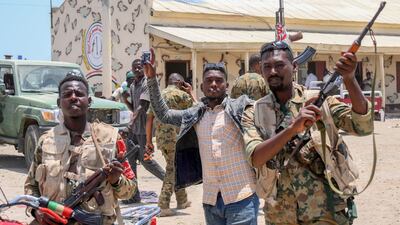
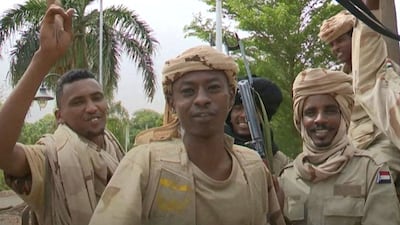
  • Sudanese army soldiers, loyal to army chief Gen Abdel Fattah Al Burhan, pose for a picture at the Rapid Support Forces base in the Red Sea city of Port Sudan on April 16. AFP
    Sudanese army soldiers, loyal to army chief Gen Abdel Fattah Al Burhan, pose for a picture at the Rapid Support Forces base in the Red Sea city of Port Sudan on April 16. AFP
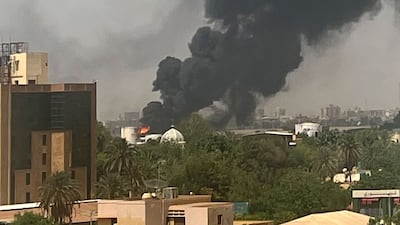
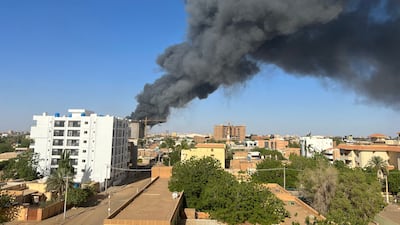
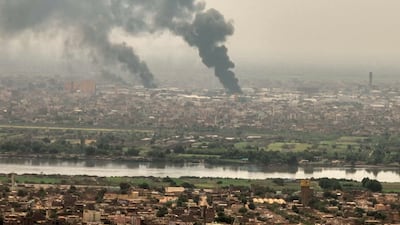
  • Smoke billows above residential buildings in Khartoum on April 16 as fighting in Sudan raged for a second day in battles between rival generals. AFP
    Smoke billows above residential buildings in Khartoum on April 16 as fighting in Sudan raged for a second day in battles between rival generals. AFP
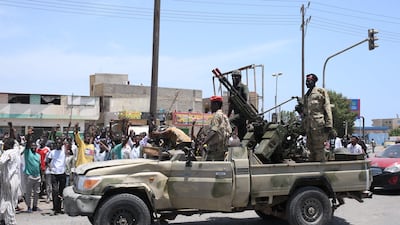
  • Sudanese greet army soldiers in Port Sudan on April 16. AFP
    Sudanese greet army soldiers in Port Sudan on April 16. AFP
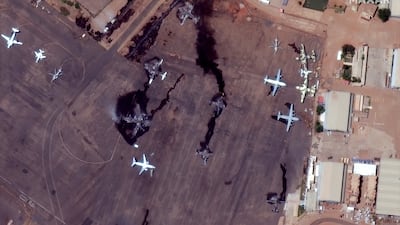
  • Destroyed planes at Khartoum International Airport on April 17. Reuters
    Destroyed planes at Khartoum International Airport on April 17. Reuters
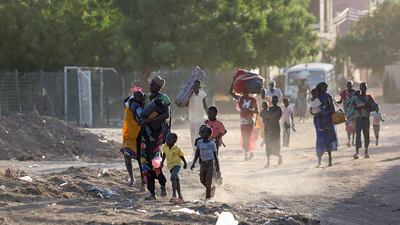
  • People flee Khartoum during clashes between the paramilitary RSF and the army on April 19. Reuters
    People flee Khartoum during clashes between the paramilitary RSF and the army on April 19. Reuters
  • A column of smoke rises behind buildings near the airport area in Khartoum on April 19 following the collapse of a 24-hour truce. AFP
    A column of smoke rises behind buildings near the airport area in Khartoum on April 19 following the collapse of a 24-hour truce. AFP
  • People flee their neighbourhoods amid fighting between the army and RSF in Khartoum on April 19. AFP
    People flee their neighbourhoods amid fighting between the army and RSF in Khartoum on April 19. AFP
  • Black smoke covers the sky above Khartoum on April 19. AFP
    Black smoke covers the sky above Khartoum on April 19. AFP
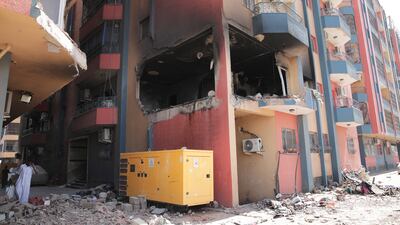
  • Residential buildings damaged in fighting in Khartoum on April 20. AP
    Residential buildings damaged in fighting in Khartoum on April 20. AP
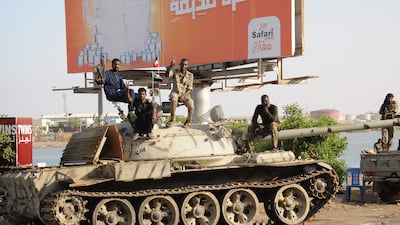
  • Sudanese army soldiers sit on top of a tank in the Red Sea city of Port Sudan on April 20. AFP
    Sudanese army soldiers sit on top of a tank in the Red Sea city of Port Sudan on April 20. AFP
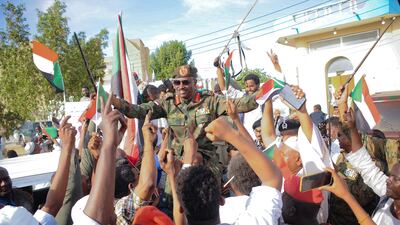
  • People carry Othman Mohamed, a senior general loyal to Gen Al Burhan, on their shoulders in Port Sudan on April 20. AFP
    People carry Othman Mohamed, a senior general loyal to Gen Al Burhan, on their shoulders in Port Sudan on April 20. AFP
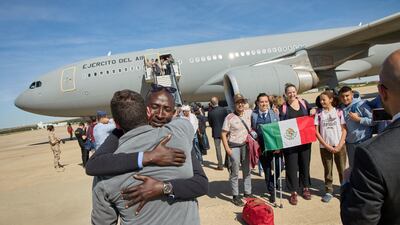
  • A Sudanese evacuee is embraced after disembarking from a Spanish Air and Space Force plane at Torrejon de Ardoz Airbase, Spain, on April 24. Reuters
    A Sudanese evacuee is embraced after disembarking from a Spanish Air and Space Force plane at Torrejon de Ardoz Airbase, Spain, on April 24. Reuters
  • People gather as they flee clashes between the RSF and the army in Khartoum on April 24. Reuters
    People gather as they flee clashes between the RSF and the army in Khartoum on April 24. Reuters
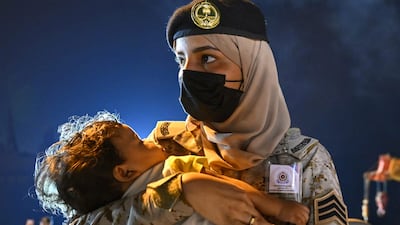
  • A member of the Saudi Royal Navy carries a child who was evacuated from Sudan, in Jeddah on April 24. Photo: SPA
    A member of the Saudi Royal Navy carries a child who was evacuated from Sudan, in Jeddah on April 24. Photo: SPA
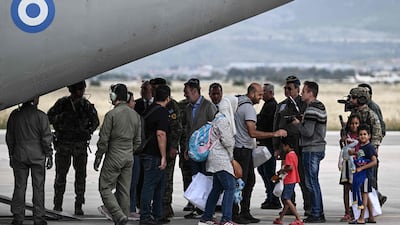
  • Greek citizens arrive in Greece from Sudan on board a military plane on April 25. AFP
    Greek citizens arrive in Greece from Sudan on board a military plane on April 25. AFP
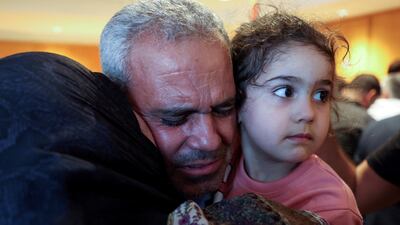
  • Ali Mazloum, a Lebanese citizen who was evacuated from Sudan, is welcomed upon his arrival at Beirut airport on April 25. Reuters
    Ali Mazloum, a Lebanese citizen who was evacuated from Sudan, is welcomed upon his arrival at Beirut airport on April 25. Reuters
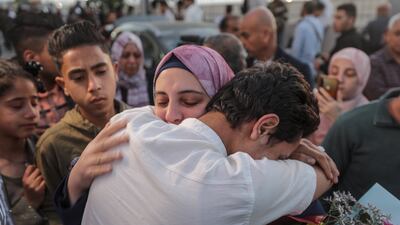
  • Palestinian evacuees from Sudan arrive at Rafah crossing, between Egypt and the Gaza Strip on April 28. EPA
    Palestinian evacuees from Sudan arrive at Rafah crossing, between Egypt and the Gaza Strip on April 28. EPA
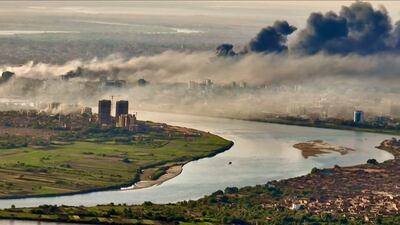
  • Black smoke rises over Khartoum on April 28. AFP
    Black smoke rises over Khartoum on April 28. AFP
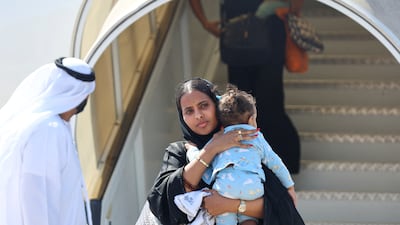
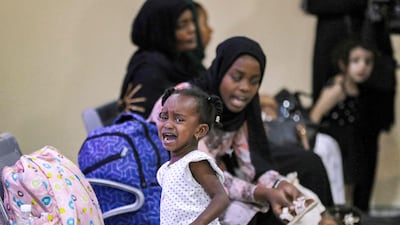
  • A woman and child evacuated from Sudan arrive in Abu Dhabi on April 29. Reuters
    A woman and child evacuated from Sudan arrive in Abu Dhabi on April 29. Reuters
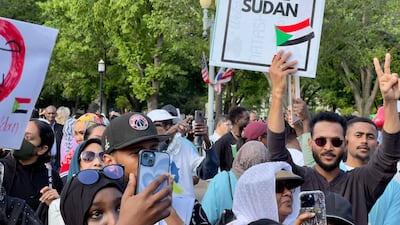
  • Activists demonstrate in front of the White House in Washington, calling on the US to intervene to stop the fighting in Sudan on April 29. AFP
    Activists demonstrate in front of the White House in Washington, calling on the US to intervene to stop the fighting in Sudan on April 29. AFP
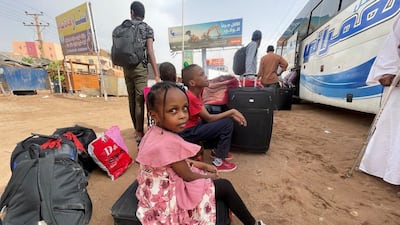
  • Children fleeing Sudan arrive at Wadi Karkar bus station in Aswan, southern Egypt, on April 30. EPA
    Children fleeing Sudan arrive at Wadi Karkar bus station in Aswan, southern Egypt, on April 30. EPA
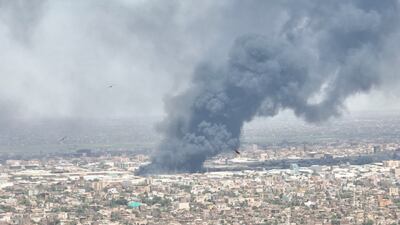
  • Clouds of black smoke billow over Khartoum as fighting continues on May 1. Reuters
    Clouds of black smoke billow over Khartoum as fighting continues on May 1. Reuters
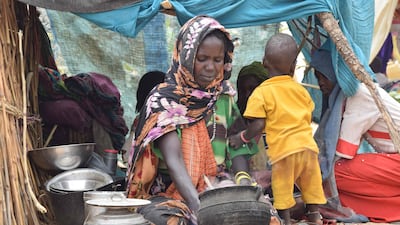
  • A Sudanese refugee who crossed into Chad cooks a meal in a makeshift shelter at a camp in Koufroun, near Echbara, on May 1. AFP
    A Sudanese refugee who crossed into Chad cooks a meal in a makeshift shelter at a camp in Koufroun, near Echbara, on May 1. AFP
  • People board a Russian military aircraft during an evacuation operation at Khartoum airport on May 2. EPA
    People board a Russian military aircraft during an evacuation operation at Khartoum airport on May 2. EPA
  • A boy holds bullet cartridges as clashes between the RSF and the army continue in Khartoum on May 13. Reuters
    A boy holds bullet cartridges as clashes between the RSF and the army continue in Khartoum on May 13. Reuters
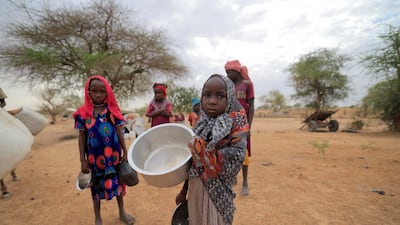
  • A Sudanese girl who fled the conflict in Sudan's Darfur region carries a pot on her way to collect water near the border between Sudan and Chad on May 12. Reuters
    A Sudanese girl who fled the conflict in Sudan's Darfur region carries a pot on her way to collect water near the border between Sudan and Chad on May 12. Reuters
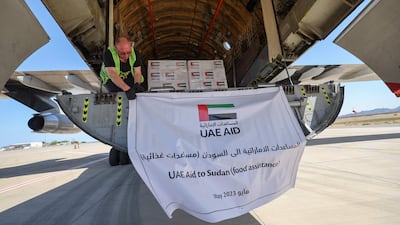
  • Members of staff offload aid supplies provided by the World Health Organisation and UAE Aid from a plane that arrived from the Emirates at Port Sudan on May 5. AFP
    Members of staff offload aid supplies provided by the World Health Organisation and UAE Aid from a plane that arrived from the Emirates at Port Sudan on May 5. AFP
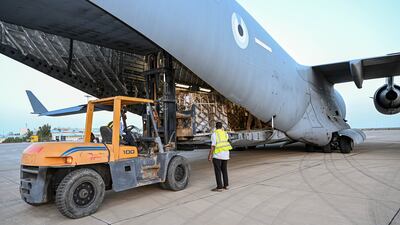
  • The UAE sent three aid planes to support the Sudanese people on May 8. Photo: Wam
    The UAE sent three aid planes to support the Sudanese people on May 8. Photo: Wam
  • RSF fighters gather near the presidential palace in Khartoum on May 1. AFP
    RSF fighters gather near the presidential palace in Khartoum on May 1. AFP
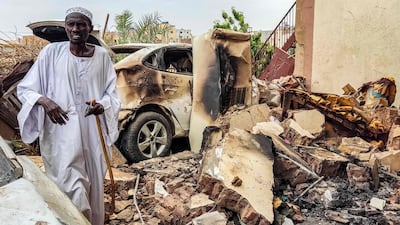
  • A man inspects the damage as he walks near a destroyed building and car in the Azhari district of Khartoum on June 6. AFP
    A man inspects the damage as he walks near a destroyed building and car in the Azhari district of Khartoum on June 6. AFP
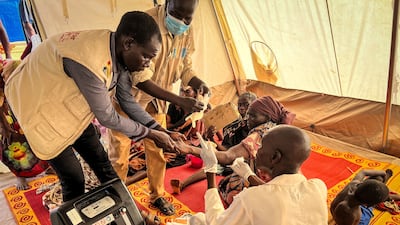
  • Wounded Sudanese refugees who fled conflict in West Darfur receive medical support from Doctors Without Borders and health ministry staff at a hospital in Adre, Chad, on June 16. Reuters
    Wounded Sudanese refugees who fled conflict in West Darfur receive medical support from Doctors Without Borders and health ministry staff at a hospital in Adre, Chad, on June 16. Reuters
  • Evacuees from Sudan arrive at Baghdad International Airport on June 18. AFP
    Evacuees from Sudan arrive at Baghdad International Airport on June 18. AFP
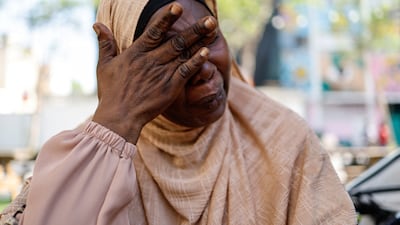
  • Suad Fissa, 40, an asylum seeker and factory worker from Darfur, cries as she speaks about her missing children in Tel Aviv, Israel, on June 24. Reuters
    Suad Fissa, 40, an asylum seeker and factory worker from Darfur, cries as she speaks about her missing children in Tel Aviv, Israel, on June 24. Reuters

The war has plunged Sudan into a humanitarian crisis, which the UN High Commission for Refugees fears is only going to worsen.

An estimated five million Sudanese have now been forced from their homes, including more than one million who sought refuge in neighbouring nations, chiefly Chad, Egypt and South Sudan, stretching the region's capacity to respond to humanitarian needs.

Those trapped in Khartoum have been suffering lengthy cuts to power and water supplies, scarce health care and soaring food and fuel prices.

Gen Al Burhan said the conflict was no longer just a Sudanese problem.

“I would like to assure you that the danger of this war is now a threat to regional and international peace and security,” he told the General Assembly.


Tips for used car buyers
  • Choose cars with GCC specifications
  • Get a service history for cars less than five years old
  • Don’t go cheap on the inspection
  • Check for oil leaks
  • Do a Google search on the standard problems for your car model
  • Do your due diligence. Get a transfer of ownership done at an official RTA centre
  • Check the vehicle’s condition. You don’t want to buy a car that’s a good deal but ends up costing you Dh10,000 in repairs every month
  • Validate warranty and service contracts with the relevant agency and and make sure they are valid when ownership is transferred
  • If you are planning to sell the car soon, buy one with a good resale value. The two most popular cars in the UAE are black or white in colour and other colours are harder to sell

Tarek Kabrit, chief executive of Seez, and Imad Hammad, chief executive and co-founder of CarSwitch.com

Specs

Engine: Dual-motor all-wheel-drive electric

Range: Up to 610km

Power: 905hp

Torque: 985Nm

Price: From Dh439,000

Available: Now

Zodi%20%26%20Tehu%3A%20Princes%20Of%20The%20Desert
%3Cp%3E%3Cstrong%3EDirector%3A%20%3C%2Fstrong%3EEric%20Barbier%26nbsp%3B%3C%2Fp%3E%0A%3Cp%3E%3Cstrong%3EStarring%3A%20%3C%2Fstrong%3EYoussef%20Hajdi%2C%20Nadia%20Benzakour%2C%20Yasser%20Drief%3C%2Fp%3E%0A%3Cp%3E%3Cstrong%3ERating%3A%3C%2Fstrong%3E%204%2F5%3C%2Fp%3E%0A
How Apple's credit card works

The Apple Card looks different from a traditional credit card — there's no number on the front and the users' name is etched in metal. The card expands the company's digital Apple Pay services, marrying the physical card to a virtual one and integrating both with the iPhone. Its attributes include quick sign-up, elimination of most fees, strong security protections and cash back.

What does it cost?

Apple says there are no fees associated with the card. That means no late fee, no annual fee, no international fee and no over-the-limit fees. It also said it aims to have among the lowest interest rates in the industry. Users must have an iPhone to use the card, which comes at a cost. But they will earn cash back on their purchases — 3 per cent on Apple purchases, 2 per cent on those with the virtual card and 1 per cent with the physical card. Apple says it is the only card to provide those rewards in real time, so that cash earned can be used immediately.

What will the interest rate be?

The card doesn't come out until summer but Apple has said that as of March, the variable annual percentage rate on the card could be anywhere from 13.24 per cent to 24.24 per cent based on creditworthiness. That's in line with the rest of the market, according to analysts

What about security? 

The physical card has no numbers so purchases are made with the embedded chip and the digital version lives in your Apple Wallet on your phone, where it's protected by fingerprints or facial recognition. That means that even if someone steals your phone, they won't be able to use the card to buy things.

Is it easy to use?

Apple says users will be able to sign up for the card in the Wallet app on their iPhone and begin using it almost immediately. It also tracks spending on the phone in a more user-friendly format, eliminating some of the gibberish that fills a traditional credit card statement. Plus it includes some budgeting tools, such as tracking spending and providing estimates of how much interest could be charged on a purchase to help people make an informed decision. 

* Associated Press 

Indoor cricket in a nutshell

Indoor Cricket World Cup - Sep 16-20, Insportz, Dubai

16 Indoor cricket matches are 16 overs per side

8 There are eight players per team

There have been nine Indoor Cricket World Cups for men. Australia have won every one.

5 Five runs are deducted from the score when a wickets falls

Batsmen bat in pairs, facing four overs per partnership

Scoring In indoor cricket, runs are scored by way of both physical and bonus runs. Physical runs are scored by both batsmen completing a run from one crease to the other. Bonus runs are scored when the ball hits a net in different zones, but only when at least one physical run is score.

Zones

A Front net, behind the striker and wicketkeeper: 0 runs

B Side nets, between the striker and halfway down the pitch: 1 run

Side nets between halfway and the bowlers end: 2 runs

Back net: 4 runs on the bounce, 6 runs on the full

Updated: September 22, 2023, 6:13 PM