
South Africans showed frustration over international reaction to the new Covid-19 variant Omicron and the subsequent travel bans imposed with most of them calling it a “betrayal”.
That other countries where the strain had been detected were not subjected to similar measures was a contentious issue.
People braced for a not-so-jolly ‘family meeting’, as broadcasts from President Cyril Ramaphosa are called, in the run-up to the holiday season.
In the past two years, such ‘meetings’ resulted in hard lockdowns for South Africa that included being confined to home, no domestic travel expect for emergencies and a ban on alcohol sales.
Mr Ramaphosa met this weekend with the National Command Council, established to oversee the government’s reaction to the pandemic. A decision on whether more restrictions will be imposed has yet to be made.
Should another full lockdown be imposed, public anger is likely to be substantial. The grinding controls imposed on the populace were at least partly to blame for riots in July that saw mobs loot and burn hundreds of businesses in KwaZulu-Natal province, in violence that killed at least 250 people.
Mr Ramaphosa may be reluctant to pile on more local restrictions on top of international isolation.
Prominent South African academic, Adam Habib, director for the School of Oriental and African Studies at the University of London, challenged UK Health Secretary Sajid Javid to apply the same standards to all countries.
“Health Secretary Javid, now that the new Covid variant has been detected in Belgium, can we expect a flight ban on Belgium or Europe? Or are such ‘strategic’ responses reserved solely for countries on the African continent?” Mr Habib said.
Even the World Health Organisation has questioned the latest border controls. Dr Mary Stephen, technical officer at the WHO's Africa regional office in Brazzaville, Republic of the Congo, said closures do slow the spread of Covid-19 but will not stop it.
“There are other tried-and-tested methods, such as countries that require testing before travel, and many also require testing on arrival,” Dr Stephen said.
Instead, countries should be commending South Africa for making the information known as quickly as possible, she said.
“What we need at this time is solidarity to recognise the early reporting of this variant, not the closure of borders against South Africa and other southern African countries," she said. "We are all in this together.”
Economic concerns
The near total global travel ban that came after last week’s announcement of the new variant added to the likelihood of another full lockdown and threatened to swamp a fragile economic recovery.
By this weekend, foreign citizens and residents working abroad scrambled to find flights out of the country. The timing of the border shutdowns could hardly be worse. This is the time of year South Africa's tourism sector – that counts towards nearly 10 per cent of gross domestic product – prepares for high season.
About 300,000 visitors arrive from Britain alone over a three-month period from December to February, South African government statistics show, spending as much as 10 billion rand ($610 million) during their stay.
The loss of foreign arrivals over the crucial peak season of Christmas and New Year would devastate an industry already on its knees after repeated lockdowns over the past two years.
Tourism officials had hustled over the past year to try revive the industry, reaching out to international trade counterparts and attending virtual travel expositions, said acting chief executive of South African Tourism, Sthembiso Dlamini.
“Our efforts were just starting to pay off, with an increase in bookings. We also saw more flights into the country and more airline partnerships on South African routes.”
Caught by surprise
The suddenness of the border closures appeared to have caught the authorities by surprise.
Foreign Minister Naledi Pandor described the decision as “rushed” and said she would engage with the UK government as well as others that had placed travel bans on the country.
"Our immediate concern is the damage that this decision will cause to both the tourism industries and businesses of both countries," she said.
“We should at least allow for domestic tourism to continue. This will be a chance for people to get out and see this beautiful country of ours.”
-
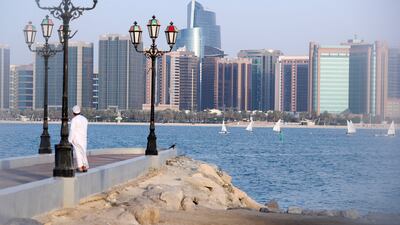
The UAE has suspended entry to travellers from South Africa, Namibia, Lesotho, Eswatini, Zimbabwe, Botswana and Mozambique over concerns about the Omicron coronavirus variant. Khushnum Bhandari / The National -

Oman has suspended entry to travellers from South Africa, Namibia, Botswana, Zimbabwe, Mozambique, Lesotho and Eswatini from November 28. Getty -
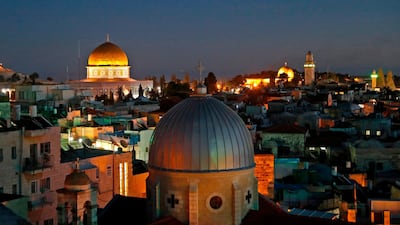
All foreign citizens will be stopped from entering Israel for 14 days from November 27. AFP -

Jordan's Interior Ministry has announced an entry ban on non-Jordanian travellers coming from South Africa, Botswana, Namibia, Zimbabwe, Mozambique, Lesotho and Eswatini. Alamy -

Kuwait is to suspend direct flights from South Africa, Namibia, Botswana, Zimbabwe, Mozambique, Lesotho, Eswatini, Zambia and Malawi from Sunday. Photo: Four Seasons Hotel Kuwait -
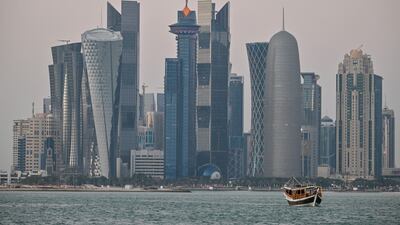
Qatar Airways said on November 27 it had banned entry to travellers from South Africa, Zimbabwe and Mozambique. AFP -
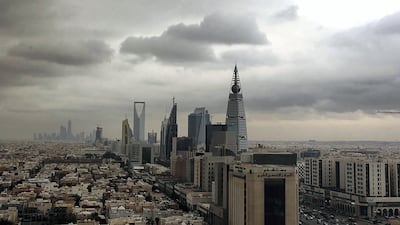
Saudi Arabia suspended flights to and from South Africa, Namibia, Botswana, Zimbabwe, Mozambique, Lesotho and Eswatini on November 26. Reuters


“We had just come off the UK’s red list and now we are back on it again, when people have already booked to come here,” said Bonang Mohale, president of Business Unity South Africa, the country’s largest chamber of commerce.
Even before Covid-19 struck in early 2020, South Africa was struggling with record high unemployment, had just been relegated to junk status by ratings agencies and was suffering rolling power cuts that hampered life for all its citizens, Mr Mohale said.
For many people, their personal circumstances worsened during the pandemic. A survey published last year showed that during the height of the coronavirus lockdowns in May and June, 2020, that one in four South African households reported going hungry and were unable to purchase enough food.
“When the pandemic found us, we were already at our lowest ebb,” Mr Mohale said. “Frankly, the economy cannot afford another lockdown. Ten times more people will be killed by hunger than by the virus.”

