

A deep space experiment has resulted in the receiving of a laser-beamed message from 16 million kilometres away, Nasa reported this week - an event that could revolutionise the future of deep space missions.
The laser transceiver that made the connection is on board the Psyche spacecraft, which is on a two-year mission headed for the asteroid belt between Mars and Jupiter, Science Alert reported.
Psyche will spend the next six years travelling about 3.6 billion kilometres to reach the outer part of the main asteroid belt, the location of a metal asteroid bearing its name.
Along for the ride is the Deep Space Optical Communications technology demonstration, or DSOC, which was designed to carry out Nasa's most distant experiment of high-bandwidth laser communications.
The spacecraft made contact with the Hale Telescope at the Palomar Observatory in California.
The mission achieved “first light” - the successful sending and receiving of its first batch of data - on November 14 when the laser transceiver locked on to Jet Propulsion Laboratory's powerful uplink laser beacon at its Table Mountain Observatory, IFL Science reported.
This allowed the DSOC’s transceiver to aim its downlink laser at Caltech’s observatory 130km away.
“Achieving first light is one of many critical DSOC milestones in the coming months, paving the way toward higher-data-rate communications capable of sending scientific information, high-definition imagery, and streaming video in support of humanity’s next giant leap: sending humans to Mars,” Trudy Kortes, director of Technology Demonstrations at Nasa, said in a statement.
Psyche is scheduled for a fly-by around Mars and so tests will continue to be carried out to refine and improve this innovative communication method.
Nasa's Mars-like habitat – in pictures
-

The bedrooms inside the Chapea Mars-like habitat. Photo: Nasa -
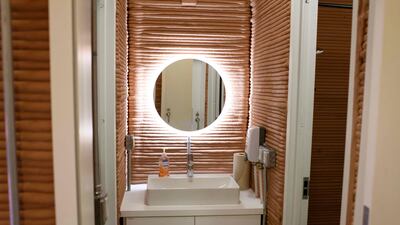
A bathroom inside Chapea’s Mars Dune Alpha at the Johnson Space Centre in Houston, Texas. AFP -
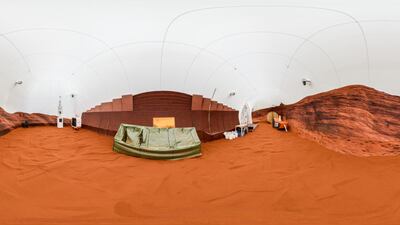
The 'sandbox', where a crew of four will simulate spacewalks and geology experiments. Photo: Nasa -
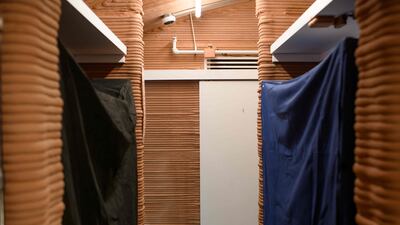
A hallway. AFP -
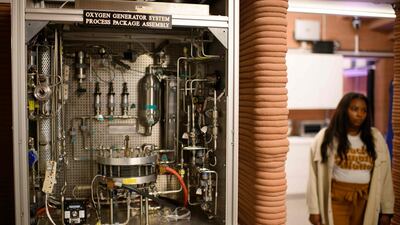
The oxygen generator system in Houston. AFP -

Inside Mars Dune Alpha. AFP -
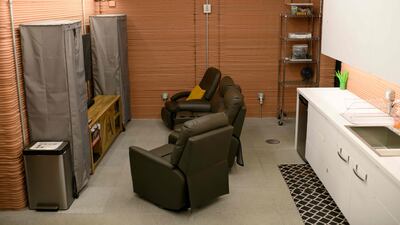
The living room and dining area. AFP -
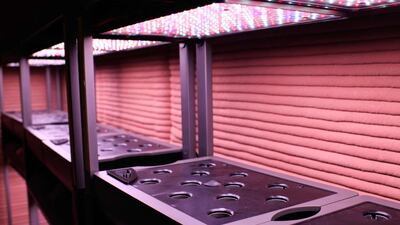
An area to grow plants in the habitat. AFP -
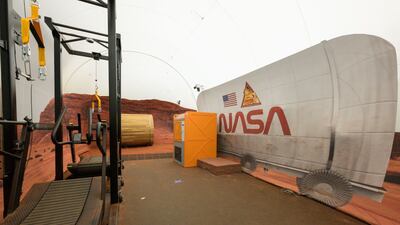
A treadmill in the habitat, where a crew of four will live and work in for a year. Photo: Nasa -
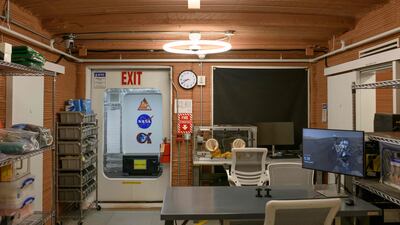
The workroom. AFP



